How to Facilitate Creativity

How to 'Teach' Creating
The IBDP Music course cultivates creativity through compositional tasks across its components. Students progress from writing within stylistic conventions (Exploring Music in Context) and experimenting with musical ideas, to presenting original works. The HL component, The Contemporary Music Maker, further includes collaborative interaction, potentially with creativity. This page offers pedagogical strategies to guide students through this entire creative spectrum.
“Abstract Art” Photo by Mayur Deshpande on Unsplash

A stroll through Hong Kong Island last weekend brought me past a store with the curious name "SofaGoodSofa".
While the product was clear, the name lacked a certain marketing finesse that would compel a second look.
My mind immediately offered an alternative: Sofa So Good.
This playful pun, I felt, was more memorable, promoting the product's quality, and appealing directly to my own fondness for wordplay.
A Store with a Querky Name on Hong Kong Island, taken on October 5, 2025
Whether you agree with my branding critique is beside the point. The moment crystallised a fundamental challenge in our work as music educators:
How do we guide students toward more effective compositional choices without imposing our own aesthetic preferences?
This dilemma lies at the heart of teaching composition. It's a scenario every music educator knows: a student presents a piece containing a jarring harmonic shift, for example. The instinctive, traditional feedback might be for the teacher to state, "Harmonically, this passage doesn't quite work; the previous section used conventional chords, making this sudden shift to unrelated harmonies feel out of place."
While technically this may be a worthy comment, such a directive places the student in a difficult position. They are left with only two options: 1) defend their creative choice (often without the theoretical vocabulary to do so) or 2) make the change to please the instructor. In both scenarios, the opportunity for genuine, internalised learning is diminished. The student is not learning how to think like a composer; they could perhaps be learning simply how to obey one.
This leaves us with a pressing question for any educator:
How do we construct a learning environment where the student is the one who identifies the need for change and possesses the tools to enact it?
Therefore, I thought that it might be worth exploring some pedagogical strategies that empower student creativity without the direct imposition of our own artistic sensibilities. While not an exhaustive list, the following headings provide a framework for developing compositional skills in our students through personal discovery and reflection.
- Structural Cohesion
- Idiomatic Instrumentation and Range
- Textural Clarity and Interest
- Stylistic Consistency
- Expressive Range and Dynamics
Structural Cohesion
Students could undertake a structural analysis of their composition draft by creating a visual map, charting elements such as dynamics, textural density, and harmonic tension across the timeline of the piece. Following this visualisation, they will critically reflect on the narrative arc and structural coherence revealed by the map, identifying specific sections where the flow could be enhanced. Based on this analysis, they will then propose a set of revisions designed to strengthen the piece's overall dramatic impact and formal logic.
Here is an example of a map of "Chi" by University Professor Augusta Read Thomas.
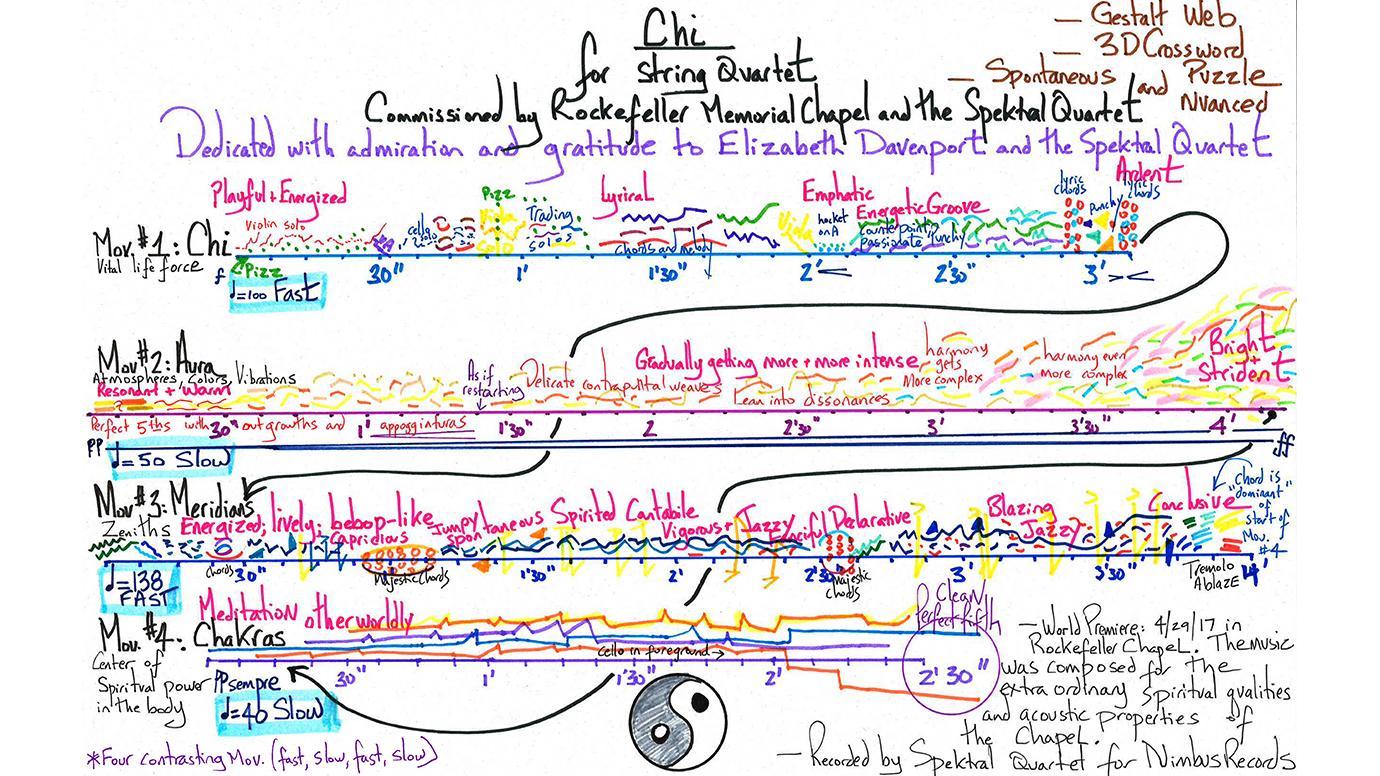
Witynski, M. (2021, February 19). Drawn to music: Art exhibition opens a window into composers’ creative process. UChicago News. https://news.uchicago.edu/story/drawn-music-art-exhibition-opens-window-composers-creative-process
One further idea that could be adopted would be to have students deconstruct their draft compositions by noting each major formal section (see below) or principal musical ideas onto individual notecards. Students will then rearrange these cards, adding new elements to them, to create three new structural possibilities for their piece. For example:
Possibility 1: Introduction ⟶ Theme A ⟶ Theme B ⟶ Bridge ⟶ Theme A ⟶ Coda
Possibility 2: Introduction ⟶ Theme A ⟶ Bridge I ⟶ Theme B ⟶ Bridge II ⟶ Theme A ⟶ Coda
Possibility 3: Introduction ⟶ Bridge I ⟶ Theme A ⟶ Modified Bridge ⟶ Theme B ⟶ Coda
After experimenting with the different forms, the teacher could pose a simple, open-ended question:
"Which of these new versions is most effective, and why?"
This forces students to defend their choices based on musical logic and dramatic impact, improving their first draft to discover potentially more compelling ways to shape their composition.
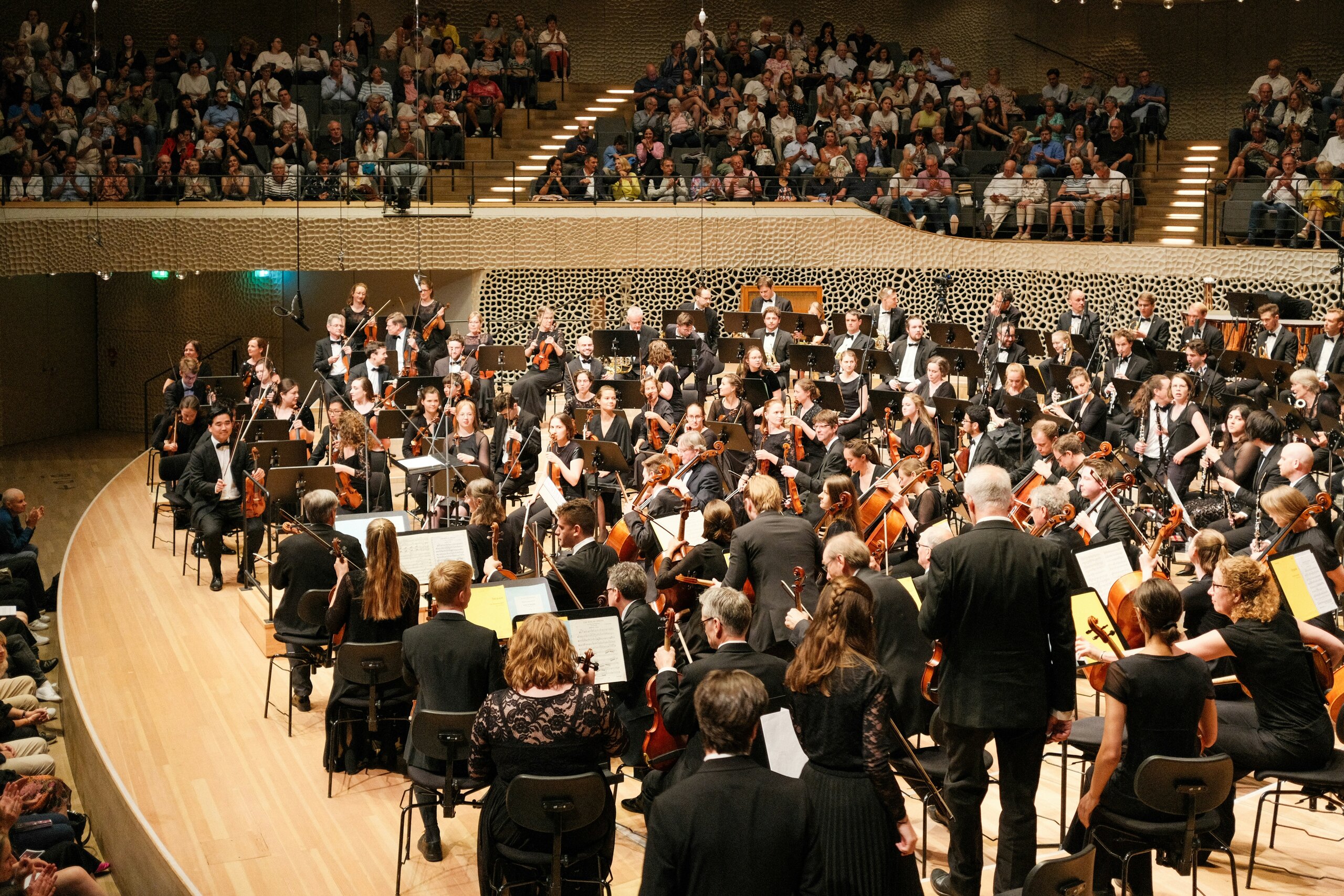
To effectively address idiomatic writing, students could move beyond theoretical research and engage in a collaborative, practical feedback session. Where feasible, the composer should partner with a student musician who plays the instrument in question. The partner will perform a "test-play" of the composition, providing real-time, experiential feedback on passages that feel natural, resonant, and technically logical versus those that are awkward or physically impractical to execute. This direct consultation offers invaluable, performer-centric insights that notation software or textbooks cannot often provide.
Photo by Robert Katzki on Unsplash
The student should then use this feedback as a primary guide for revision, supplementing it with research into the instrument's standard techniques, range, and tonal characteristics to ensure the final piece is both musically expressive and pragmatically performable.
Texture is a fundamental aspect of musical interest and expression. A common issue in student compositions is a texture that remains static, overly dense, or lacks a clear hierarchy, which can cause the music to feel monotonous or lack a clear focus. The goal is to move students toward thinking of texture as a dynamic, shapeable element that can be used to articulate form, highlight important material, and create contrast.
Warm-Up Questions After a First Draft:
- If you had to describe the 'layers' of sound in this section, what would they be? Is there a clear primary layer?
- Does the texture change to signal the arrival of a new section, or does it stay the same throughout?
- Is every instrument contributing something essential, or are some parts merely 'doubling' or filling space?
Strategies to Adopt for Student Reflection:
- Have the student analyse their score by labeling each layer in a given section as either Foreground (the main melodic material), Middle ground (countermelodies, rhythmic hooks), or Background (harmonic material, bass line, pulse).
- Ensure there is a sense of hierarchy. If too many parts are competing for the foreground, the student must decide on the primary material and consider reassigning the other parts to supportive roles.
- The point here is that the student is deciding on these changes based on the design of this activity
Further Activities:
Activity 1

Direct the student to identify the two main sections of their piece. They must then recompose one of these sections to exist at the opposite end of the textural spectrum. If one is dense and homophonic, the other could become sparse and contrapuntal, for example.
- Teaching Objective: To consciously use texture as a primary tool for creating formal contrast and structural clarity.
Activity 2
- For a selected passage, ask the student to mute or remove one instrumental part entirely.
Ask the student these questions for reflection:
Is the essential character of the music lost?
What specific element disappeared? Its rhythmic drive? Harmonic colour?
Photo by Cody Chan on Unsplash
- Teaching Objective: This helps identify students to reflect on whether a part is superfluous or crucial. They can then rewrite the part to ensure its role is unique and contributes to the broader objectives.
In the Exploring Music in Context component, stylistic consistency is the primary measure of a student's research-based analysis and practical understanding of selected materials representative of their selected Area of Inquiry (for more about this you may visit HERE). Inconsistencies can arise when 'foreign' ideas are introduced, revealing a gap between theoretical knowledge and practical application. It is important that students (and teachers) realise that one of the primary functions of the Exploring as a Creator component is to foster informed creativity, where students make deliberate compositional choices grounded in their research, thereby demonstrating a synthesis of their investigative and creative skills.
Potential Activity
- Ask the student to take a short section of their piece and arrange it in a completely different style
Question for the Musical Journal:
What fundamental elements did you have to change to transform work?
How did changing the genre alter the role of the core musical elements in your piece?
Having worked in a new style, what specific techniques or ideas from it would you consider adapting to your original composition to improve it?
This process highlights the essential components of the original style that may be underdeveloped in the student draft.
To move students beyond basic dynamic changes and to cultivate a sophisticated expressive range, instruction should focus on the interconnection of musical elements in service of a dramatic narrative.
Again, I think that one could begin by having students visually map the intended "emotional arc" of their piece, identifying the climax, moments of tension, and points of release. The core goal here is to shift thinking from using dynamics as merely a control of volume toward, but through multiple, simultaneous parameters.
Ask student to locate these ideas in other works or offer them as examples that they may wish to consider in their own creative endeavour:
Example 1:
Teach that a crescendo can be achieved by adding instruments or thickening harmonies, while a decrescendo can involve thinning the ensemble.
John Williams - "The Throne Room" from Star Wars: A New Hope
(opening portion of this video)
Example 2:
Demonstrate that the strategic use of staccato, legato, accents, other expressive devices, and even silence can create local points of intensity and release.
Miles Davis - "So What" (from 1'31")
Example 3:
Show how increasing the rate of harmonic change can build excitement, while a sustained or static harmony can create stability or even suspense. The use of dissonance and resolution can of course be indicative of emotional expression.
The Beatles - "Let It Be"
The opening section here is essential one chord every two bars:
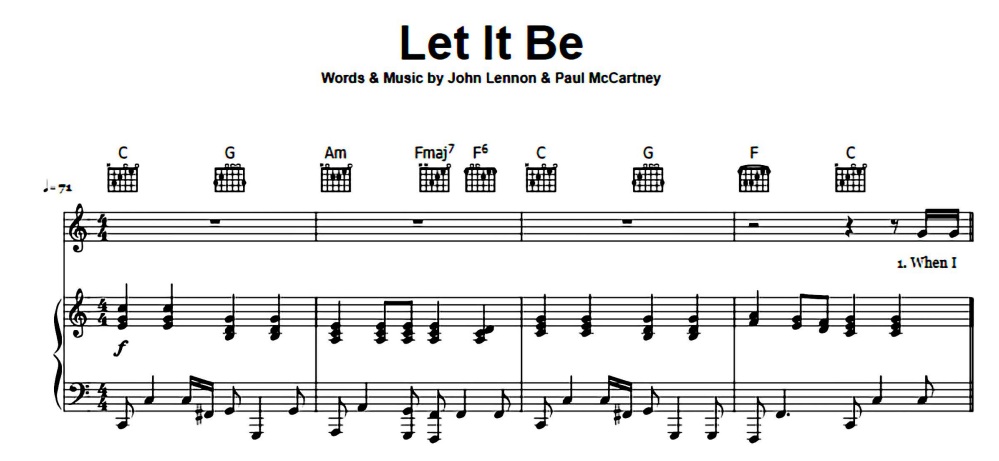
And later the harmonic rhythm to a far greater pace of change (from 1'45", see below).
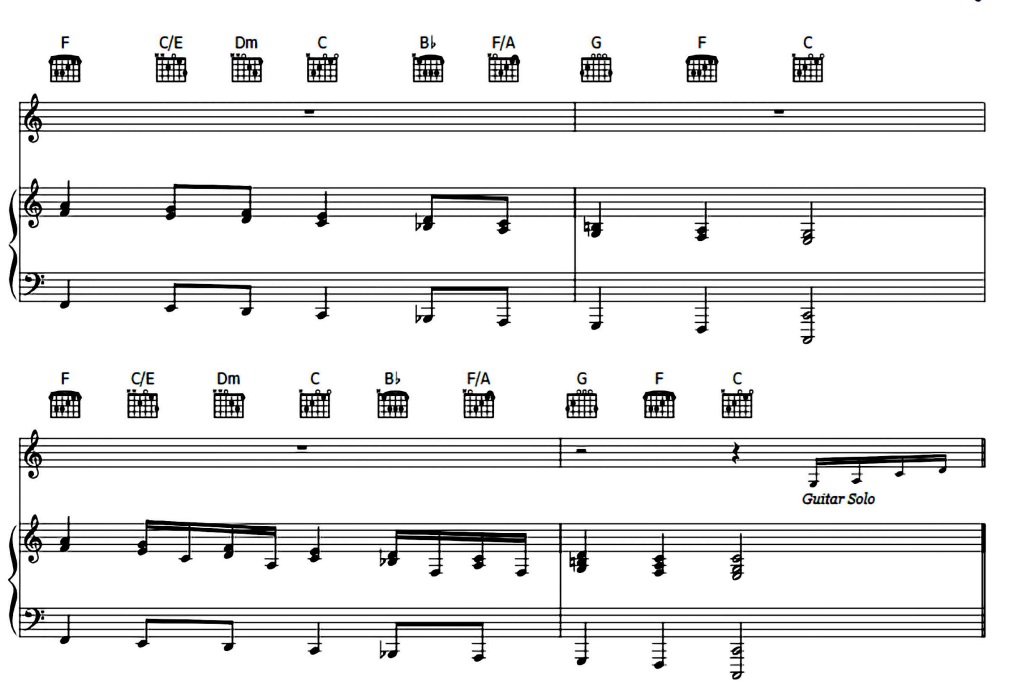
These excerpts have been extracted from this PDF page:
https://danjovi.com/wp-content/uploads/2020/08/Beatles-Let-It-Be-Sheet-Music.pdf
Example 4:
Encourage the use of the entire range of the ensemble; a melodic line rising into a higher register naturally increases intensity, while a descent can provide a sense of conclusion or calm.
Queen - “Bohemian Rhapsody” (from 3'08")
Example 5:
Provide examples of when instrumental color can be used solely for expressive purposes.
Debussy - “Prélude à l'après-midi d'un faune”
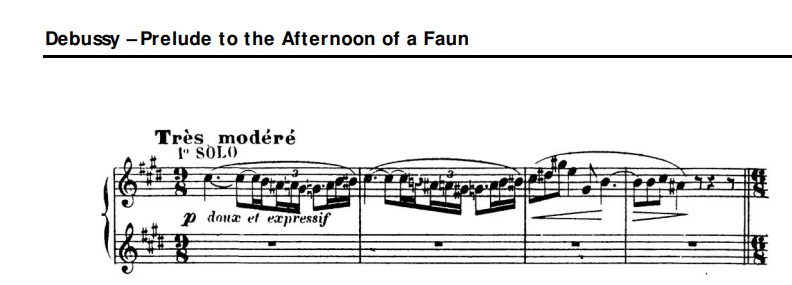 This extract has been extracted from the following:
https://e.thinkib.net/music/blog/64746/how-to-facilitate-creativity#elf_fls1_aWIvbXVzaWMvaW1hZ2Vz
Ultimately, the aim is for students to understand that expression is holistic. The most compelling compositions are those where dynamics, articulation, texture, and harmony work in concert to create a unified emotional journey.
The core objective for music educators is to cultivate a learning environment where students become the primary agents of their own creative development. Rather than directly “correcting” perceived flaws in a composition, which risks imposing the teacher's aesthetic and stifling authentic voice, our role is to facilitate self-discovery. This involves designing reflective activities that prompt students to analyse their own work critically.
Here is a summary of what has been suggested for consideration:
Structural Cohesion
Visual mapping helps students see the structural and emotional arc of their piece, leading them to identify areas for enhancement.
Idiomatic Instrumentation and Range
Peer collaboration with performers to gain practical, idiomatic feedback, moving beyond theoretical knowledge.
Textural Clarity and Interest
Analysing texture and expression through labeling and comparative exercises, empowering students to make deliberate choices about hierarchy and contrast.
Stylistic Consistency
Stylistic transformation activities that reveal the essential elements of a genre through comparison and adaptation.
Expressive Range and Dynamics
Rearranging formal sections to explore alternative structural possibilities, guided by open-ended questions about their effectiveness.
By providing frameworks, models, and probing questions instead of directives, we empower students to develop their critical thinking and compositional intuition. The ultimate aim is to foster independent musicians who can reflect, evaluate, and refine their work based on a deep understanding of musical principles and their own artistic intentions.