Summer Challenge
Our Summer Holiday Challenge to students and teachers alike includes seeking out and making art, and observing the world.
We have queued up 3 challenges below for pre-IB students, who will start the program next year, with added extensions for 2nd Year students highlighted at the end of each challenge. For first-year students in IB, make sure to invest in a sketchbook to get started with the activities below…
Work that is made and produced in the summer before IB Visual Arts begins cannot be used in any examined material; however, it's a great time to support emerging student understandings and making experiences.
Students in the 2nd year are allowed to produce work in the summer months, provided you can authenticate that the work is theirs. This could include purely formative experiences (like the art-viewing ideas in Challenge #1) or aspects of larger projects where you are still able to see the work and development of ideas across a few stages.
Seeking Art
Since we're all likely to enjoy a bit of free time over the summer holidays, with the potential to travel, let's make use of this incredible opportunity to soak up and enjoy art in the real world, in person.
Challenge #1:
If seeing an art museum or gallery isn't already on your itinerary of things to do, add it to the top of your list! Activate your art viewing experience using the following prompts:
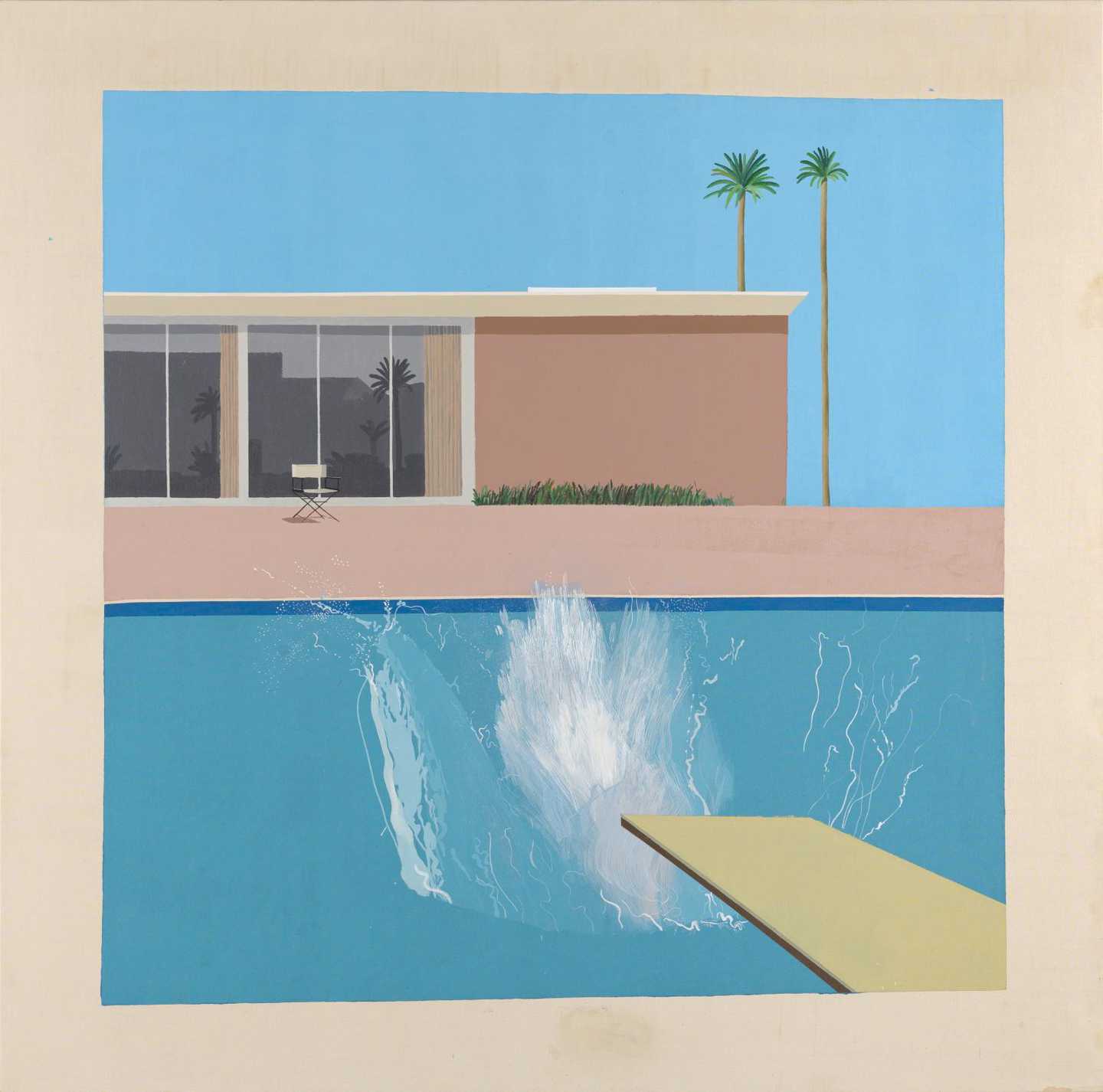
- Step 1: Take a photo of an artwork that you see in person which represents place or time.
- Step 2: Also take a photo of the image label, if there is one, to document the artist, artwork title, and medium for future reference.
- Step 3: Make a 20-minute sketch of the artwork in your sketchbook (this can be done after seeing the work or in person at the gallery or museum).
- Step 4: Reflect and add a few notes below your recreation: How does this artwork reflect time or place? What features pulled you into this artwork? What did you notice about the work after recreating the work?
Note: Sketching an artwork isn't just about “copying” - it's much more than that! Recreating a work of art allows you to see it in more detail and experience the work with careful thought and attention. Sometimes this will even give rise to new ideas. Jot them down or sketch these ideas as they come to you…
Extension for Year Two Students:
In addition to finding an artwork that represents time or place in some way, shape or form, do a bit of extra scratching and reading to learn more about the artist and their context. What makes this work matter?
- What is significant about the way the artist has used…materials…technology…aesthetics?
- Which cultural traditions….spiritual understandings…social circumstances...histories…give the work additional value?
- Consider the geographic place where the work was made and where it is displayed: what layers of meaning do these add?
- If it's a historic artwork, how has the meaning of the work changed according to when it was originally displayed and for audiences today?
You're likely to already have art-viewing on your radar! If you catch your students before the end of the school year, remind them of local institutions or find out where they might be headed over the summer to offer suggestions.
“Challenge #1” connects to our two introductory units about Place and Time and could be used as a starting point for a discussion on situating and context at the start of your next school year with new IB students.
Where am I? Unit Plan
Designed as an introduction to the course, Where am I? invites students to explore and situate themselves within their local contexts through a teacher-led unit of inquiry. Students will have the opportunities...
It's About Time, Unit Plan
The focus of this unit is primarily on developing conceptual thinking skills. The abstract nature of the topic (time), the provocative activities, and the inquiry questions are designed to encourage students...
This Challenge is another way to engage Year 2 students, to ensure they're actively engaging with art in the summer months. To tie this into the tasks they'll need to complete in Year 2, consider giving them the additional HW to conduct some research into the “cultural significance” of the work so that they can start to build those skills for their future AP (HL) or CS (SL).
If you're unable to make it to a museum or gallery in person, we have some other resources lined up for you here on our Virtual Art Viewing page.
Making Art
“Drawing is a way of coming upon the connection between things" (John Berger). In other words, when your hands are busy, your mind will start to make new connections and generate creative thoughts.
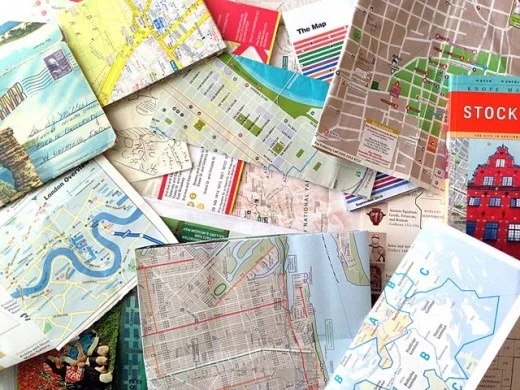
Challenge #2:
Get your hands on a tangible, real map of a place you live or have lived in or that is somehow meaningful to you. You can order a new or used one online, visit a 2nd-hand bookstore and buy an old Atlas, ask around for old National Geographics, or visit your local tourism bureau for a local tourist map. The key point is to find a map that isn't just printed from online, as the type of paper and quality of ink are material properties that can elevate this experience.
Follow our 🌱 Seed: Psycho Geographies 🌱 to explore this challenge.
Extension & Adaptation for Year Two Students:
Use the “Psycho Geographies” prompt as a starting point for a set of ideas to drive a new inquiry and future artwork. Keep in mind the following questions to connect this prompt to your developing artistic practice:
- What material, technical, aesthetic, or conceptual threads are running through my body of works so far?
- How could I employ this prompt to further these ideas?
If the Seed: Pyscho Geographies feels too disconnected from your body of artworks, don't force it! Instead, peruse our 🌱 Seed Bank 🌱 for other starting points.
This is a low-stakes activity and a great way to engage students who haven't taken art before. It also ties into our “Where am I?” providing an easy segue into this unit, should you choose to start your course with some of these ideas. Even if you don't start with this unit, by asking students to keep their hands busy, you have an immediate conversation starter for the first day of school and an easy way to get to know students and some information about their background and what places matter to them. This is a precursor to developing a sense of background context, which is essential to the course.
Observing New Viewpoints
Developing a “good eye” is a skill that anyone can learn. Photography offers an accessible opportunity for learning how to frame new viewpoints in interesting ways. It also prompts us to stop and take notice. By recording a moment or scene that we observe, we show we are paying attention to the world around us.
Many of you will have cell phones with a camera; however, if you have access to other tools, consider exploring this challenge with film (a disposable, point-and-shoot, or manual camera), a digital SLR camera, or a black-and-white self-printing camera.
Challenge #3:
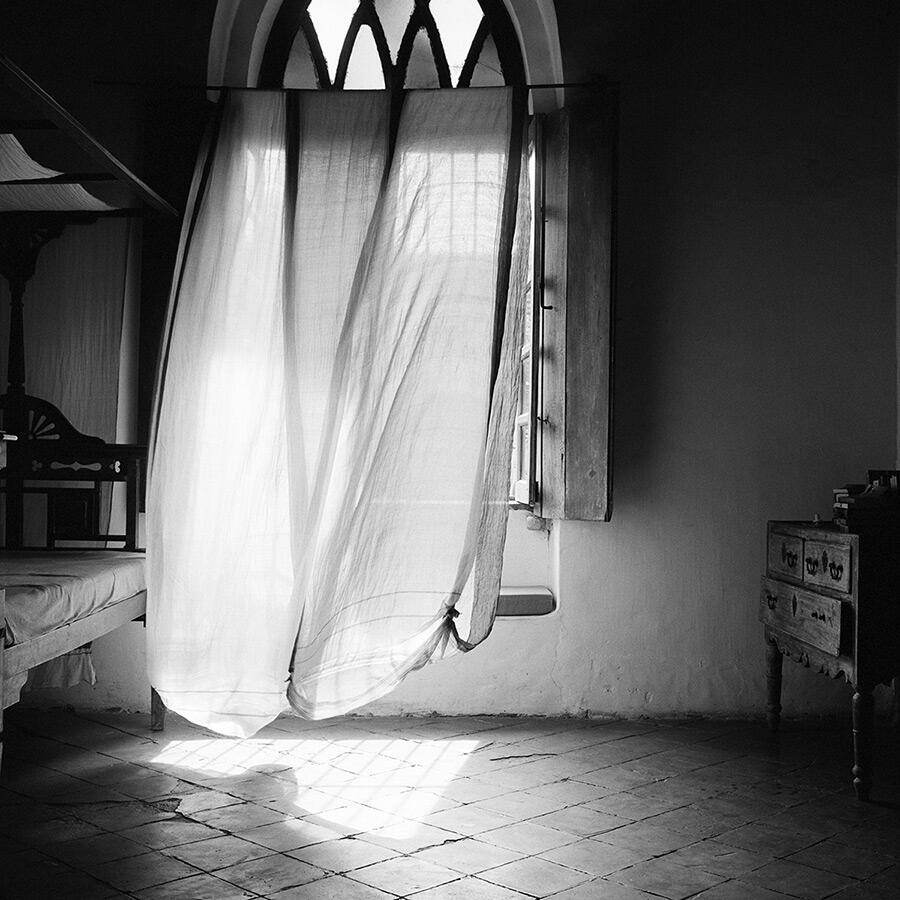
Keep your eyes open, observe, and look for interesting viewpoints to photograph to capture a sense of place. Your subject matter can be abstract, a color, texture, close-up of an object, full scene, or landscape, etc.). Try taking photos in familiar and new places to achieve variety. Use these prompts as a guide:
- Unusual ways to frame your vision - lying on your back, using a reflection, viewing something through an opening
- Think about color as an overall tone or a contrasting element.
- Show yourself indirectly in a place, using only reflections, shadows, etc.
- Take a series (as many as you like) and select the TOP 10 photos that showcase a variety of viewpoints, while also capturing a “sense of place.”
- Explore the photographic compositional ideas shared in this handout, Tips and Tricks for Photo Compositions.
Adaptation for Year Two Students:
Rather than focusing on “a Sense of Place,” as the guiding focus, use photography as a way to capture potential ideas for future artworks in an engaging and meaningful way. With the immediacy of the camera, you can quickly build a library of source images to pull from for future inquiries. Consider the following adaptations as they connect to stylistic, material, or conceptual interests you've been building upon in your recent Artworks.
- Textures
- Colors
- Motifs (patterns, recurring imagery, symbols)
- Visuals as metaphors for concepts (an open door, absence, partially in view)
- New perspectives (up close, far away, worm's eye view, bird's eye view, cropping)
- Freezing a moment in time
Challenge #3 derives from our resource “A (new) Sense of Place." This forms a part of our unit “Where am I?” or used as an introductory conversation on context and situating at the start of year 1. Furthermore, as a quick warm-up activity at the start of the school year, ask students to bring their photos and curate a quick exhibition. Engage students in dialogues with one another and start building classroom community from day one.
A (new) Sense of Place
The title of Gauguin's painting Where have we come from, where are we now, where are we going?[1]asks a marvelously complex question, one that a lifetime of art making can only begin to address. The middle...
Sticky Note Critiques
Sticky Note critiques are an accessible option for students to give feedback to their peers. This strategy can be used for students to give one another feedback mid-process or through a more formal critique...
References:
“24 Hours in Paris: Tale of a Map by Libby Vanderploeg.” Prêt-à-Voyager, 24 Aug. 2014, https://www.pret-a-voyager.com/2014/08/24-hours-in-paris-tale-of-a-map-by-libby-vanderploeg/.
“Tate.” Understanding David Hockney’s A Bigger Splash, Tate, https://www.tate.org.uk/art/artworks/hockney-a-bigger-splash-t03254/understanding-david-hockneys-bigger-splash.
“Photo Composition Tricks & Tips.” ChatGPT, generated by OpenAI, 18 May 2026.