Artemis II
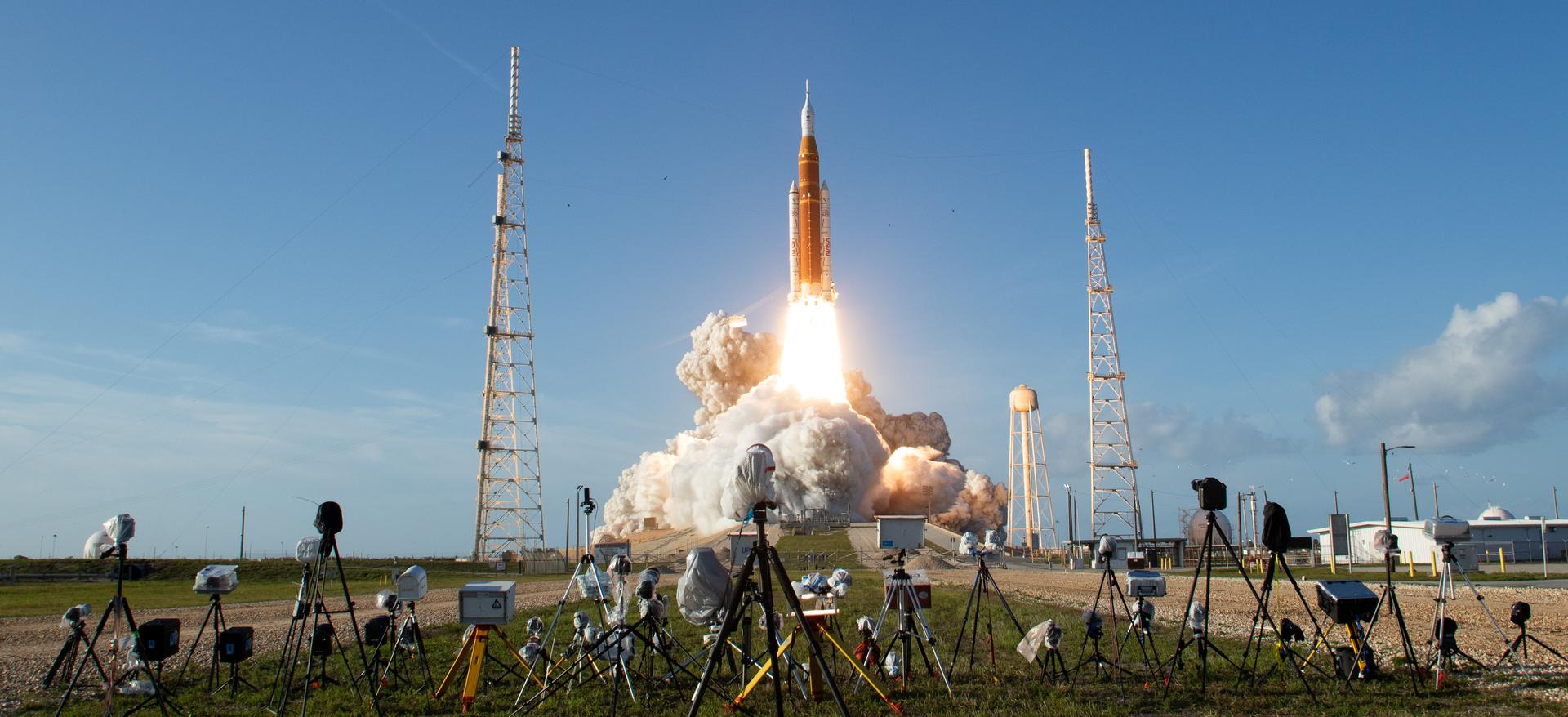
In September of 1962, John F. Kennedy, President of the United States of America, said, “We choose to go to the Moon in this decade, and do the other things, not because they are easy, but because they are hard”. Well, he wasn't wrong - space exploration is literally rocket science! And, of course, the thing about rocket science is that, when humans are involved, the peril greatly compounds the difficulty and the expense. All of this probably helps to explain the fifty-year gap between the end of NASA’s Apollo programme and the recent Artemis missions.
Readers will by now be aware of the success of the Artemis II mission to take astronauts around the Moon and back to Earth. This was in preparation for an expected return to the lunar surface, a process that led the crew of the Orion spacecraft to travel further from our planet than anyone before. At this point, let's resist the temptation to invoke the famous mission statement of a certain Captain James T. Kirk! But let's see if we can demystify some of that rocket science…
Gravitational potential
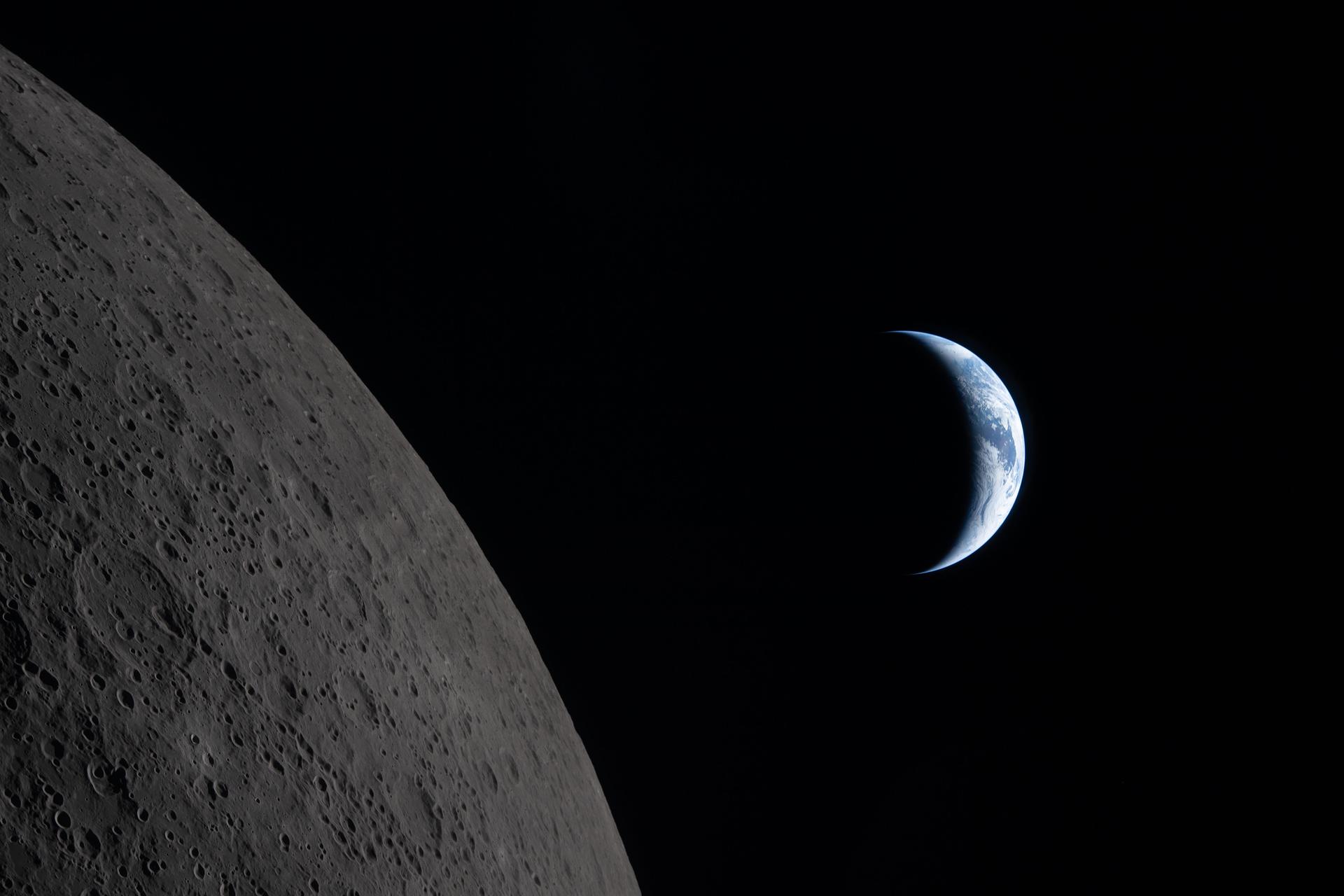
These monumental space programmes were named after the twins Artemis and Apollo, whose similarly challenging births (in Greek mythology) came at the end of an unnaturally protracted labour (the result of a spell put on their mother Leto by Hera, wife of their father Zeus)! JFK also mentioned (in reference to a mountaineering analogy), ”space is there, and we're going to climb it”, a reasonable assertion since working against the Earth's gravitational field to get to the Moon involves climbing out of one potential well before falling into its less deep neighbour.
Forces and momentum
Visiting other celestial bodies is particularly tricky. Not only are they constantly moving in relation to “home”, but “home” itself will have changed position, with respect to the Sun, upon one's expected return. Also, in accordance with conservation of momentum and Newton's third law, your rocket accelerates away from the launch pad as a reaction to the downward thrust of the ejected propulsive fuel: a realisation in the late 19th century which led to Konstantin Tsiolkovsky’s famous equation relating the change in a spacecraft's velocity to its changing mass and exhaust velocity.
Artemis II was by necessity a return trip, so mission control exploited the idea of a free return trajectory, whereby, having orbited the Earth a couple of times to make the necessary rocket “burns” while ejecting multiple stages of the launch system, the remaining spacecraft was set on course to metaphorically grab hold of the Moon's gravitational field, swinging around for a “free” ride back to Earth! This is a complex manoeuvre, which is all the more amazing when one considers that the Apollo Guidance Computer had about as much processing power as a pocket calculator!
Conservation of energy
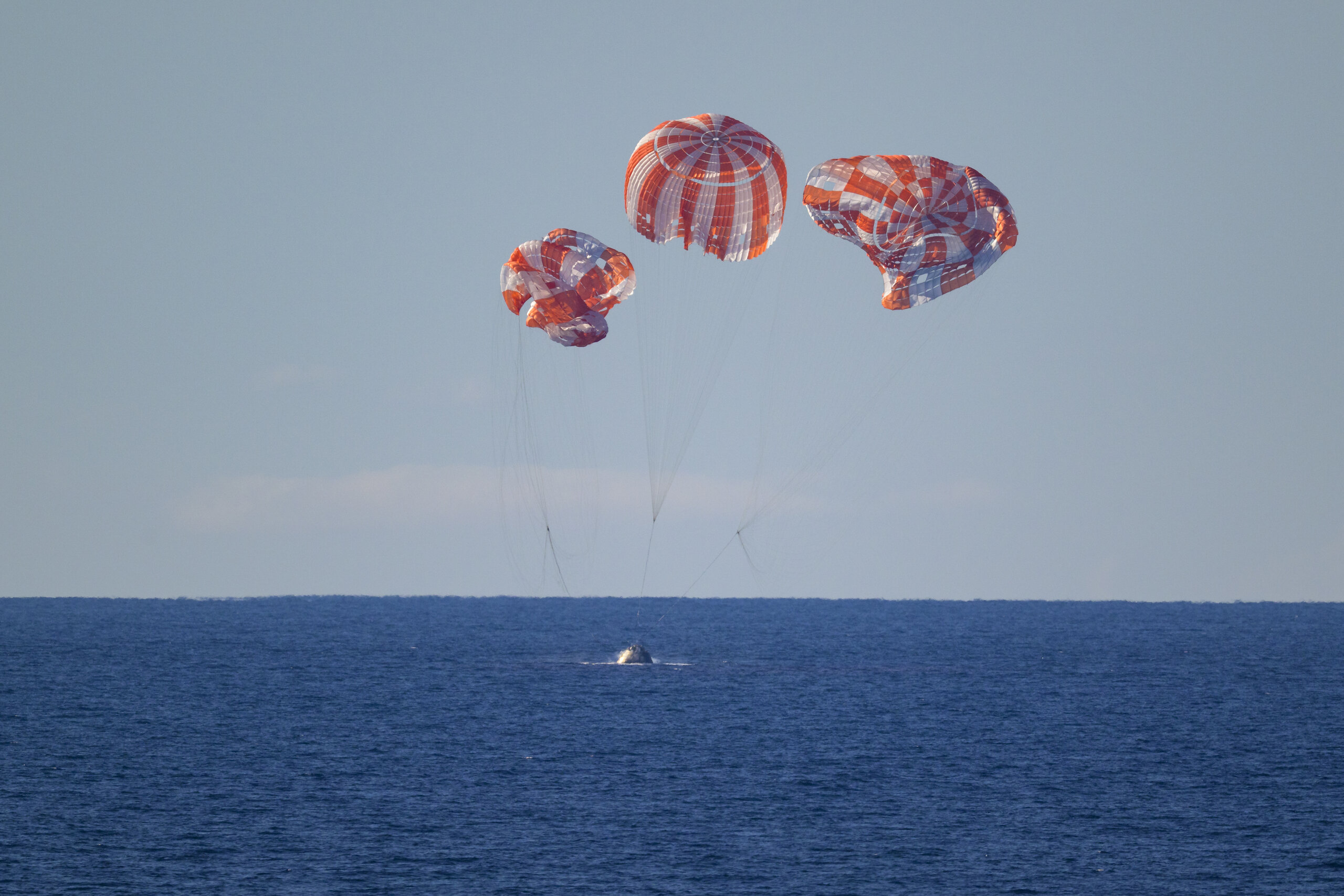
Arguably, re-entry through the atmosphere is the most dangerous element of the entire journey as the Orion capsule experiences temperatures of over 2500 °C due to extreme air compression ahead of the heat shield as it plunges towards the Earth's surface at 11 km s-1! This exchange of kinetic energy with thermal energy provides braking - something of a mixed blessing for those on board right up until those beautiful parachutes deploy!
One can only hope that future Artemis missions, and indeed all piloted space missions, go safely and smoothly. None of us wants to watch a repeat of Apollo 13's drama on our screens in the future - Tom Hanks deserves a long and peaceful retirement!
Photographs
- Artemis II Recovery, NASA/Bill Ingalls, https://www.nasa.gov/image-detail/artemis-ii-recovery-68/
- The Edge of Two Worlds, NASA, https://www.nasa.gov/image-detail/amf-art002e009285/
- Artemis II Launch, NASA/Aubrey Gemignani, https://www.nasa.gov/image-detail/amf-nhq202604010226/