Left hand, right hand
Imagine you take a wire and suspend it in a magnetic field. If you pass current through that wire, which way will it deflect?
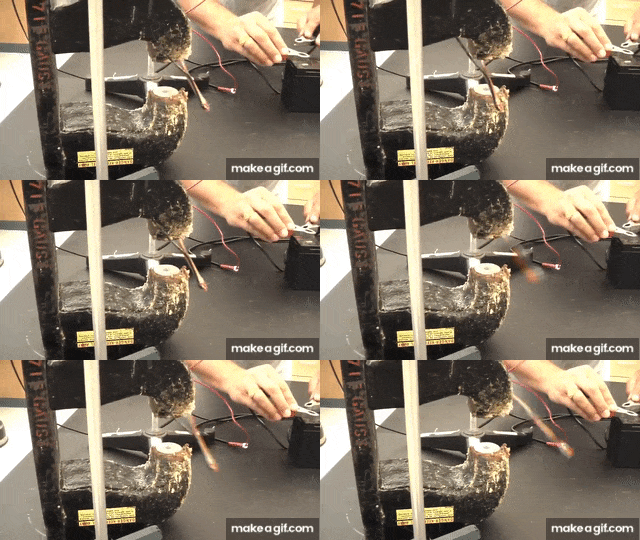
The magnetic field points downward, and the current is coming out of the screen. It's a straightforward application of the… Fleming Left-Hand Rule? Or “the” right hand rule? Chris and Emma's textbook (Pearson), along with the Oxford and Hodder texts, use Fleming's hand rules. But the Cambridge textbook just uses a single right-hand rule.
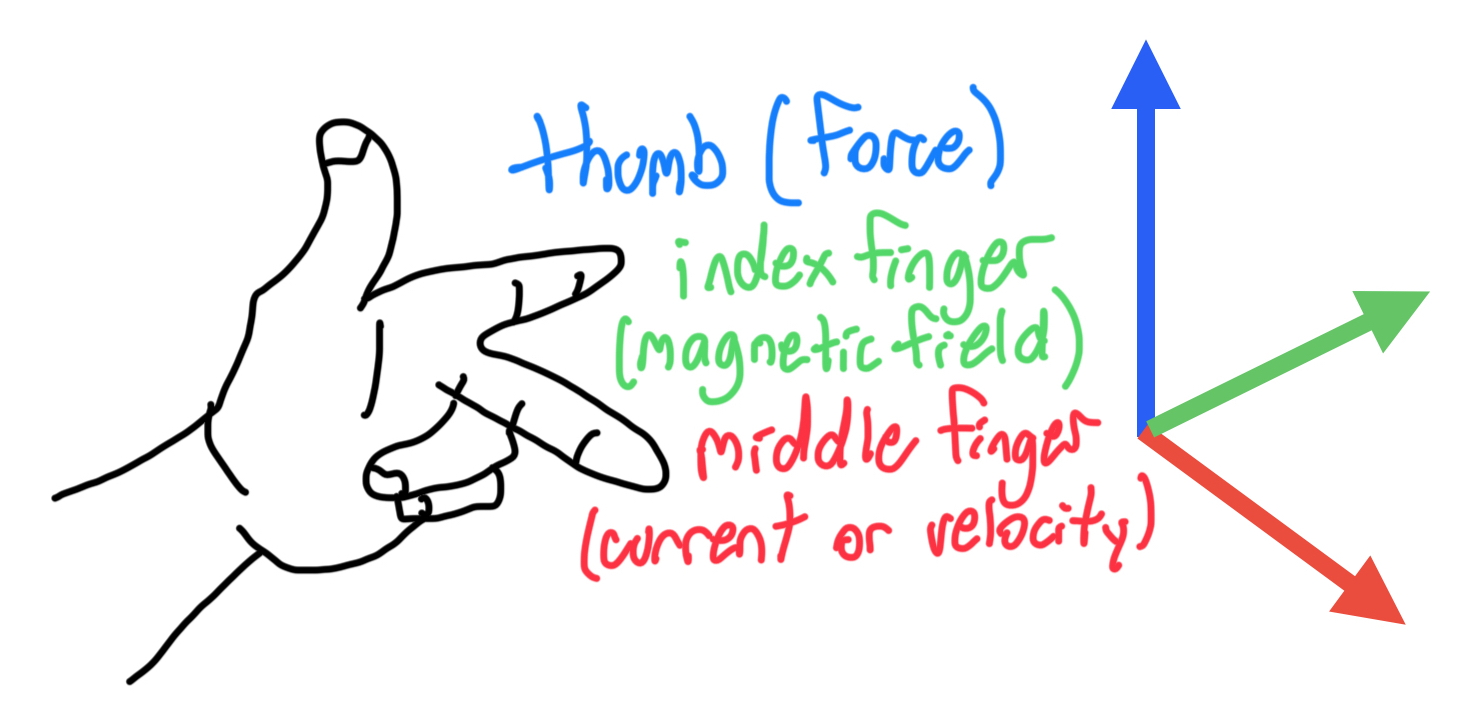
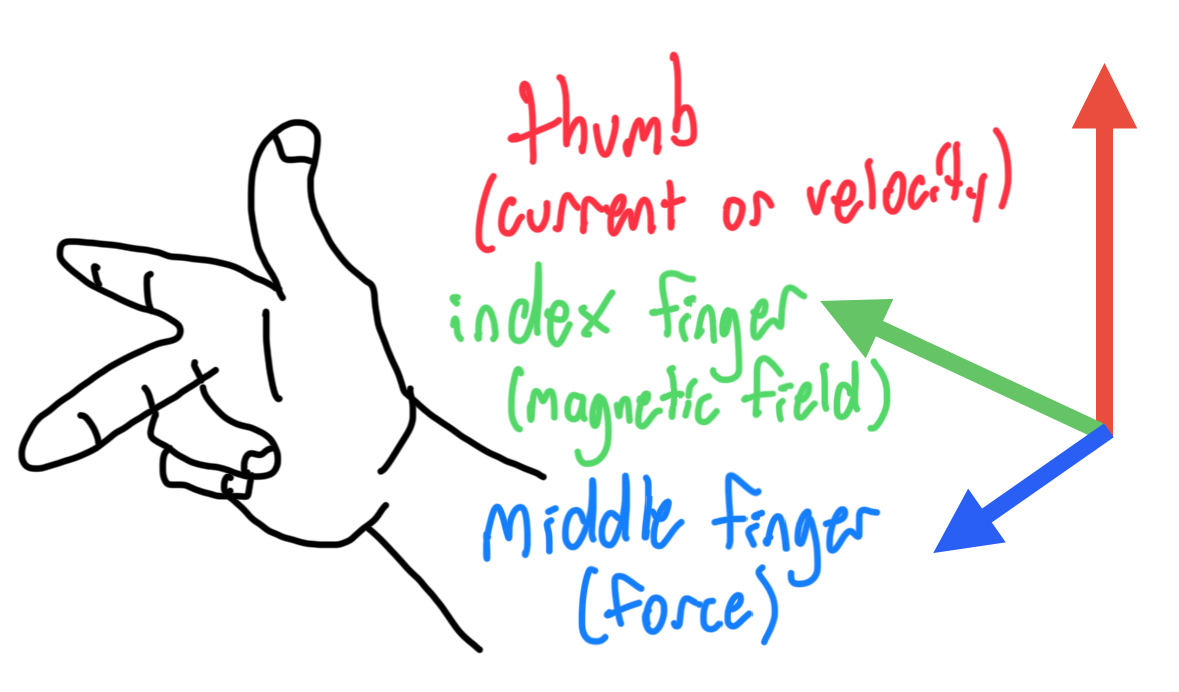
Fleming's Hand Rules tend to be used in the UK. In the example above, the middle finger shows the direction of the current, the index finger indicates the direction of the magnetic field, and the thumb shows the direction of the resulting force.
In the USA, it is more typical to use a right-hand rule. The thumb shows the direction of the current, the index finger indicates the direction of the magnetic field, and the middle finger (or palm, if one prefers the “slap” rule) indicates the direction of the resulting force.
In the UK system, a right hand rule is also employed when calculating the direction of current produced in a generator: the thumb now indicates the direction of the resulting current. In the USA system, the same right hand rule is used, with the thumb still showing the direction of the current. The USA system sometimes uses a left hand rule to deal with the flow of electrons instead of conventional current. There is also a corkscrew right hand rule, showing the direction of the magnetic field established by a current, but that seems to be used universally.
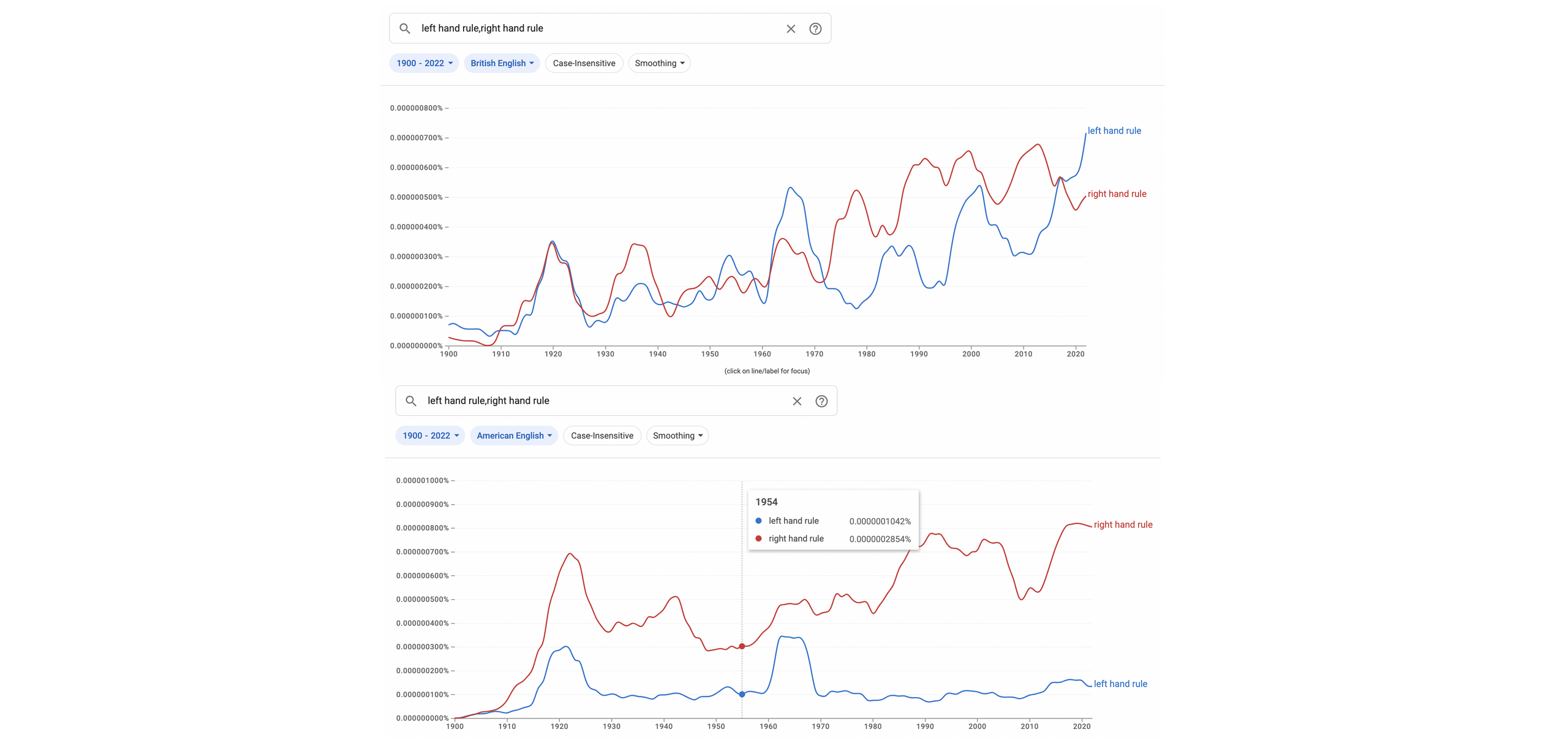
This paper (published in the March 2026 edition of the American Journal of Physics) recounts an interesting history of the development of sign conventions in the English-speaking world. But while a standardized definition was reached for the sign of the electric charge carrier (negative, unfortunately) and the direction of magnetic fields (rendering the north geographic pole a south magnetic pole), we are left with a variety of mnemonic hand rules.
Which hand rules did you learn as a student? And which hand rules do you use in your teaching?