Inquiry 2: Cultural connection & understanding
Teaching Cultural Connection and Understanding (Student Section - Inquiry 2: Who am I with others?)
This is the teacher page for Student Section Inquiry 2: Who am I with others?. What role does culture play in our lives? How do you connect what is happening directly around you with what is happening globally? Here we start to explore the significance of our cultural identity and diversity with our students which they may initially start to explore in LCS. Intercultural understanding and interpersonal skills such as empathy and communication are linked greatly. This inquiry is flexible in which contexts it could apply and also has exercises to enable students to transfer skills to new contexts.
INQUIRIES can be ….
| Directed ⇆ | Guided ⇆ | Open |
Teacher-led Appropriate in the early stages of the CP and PPS course as students come to understand the course and the process. Also really supportive when addressing specific learning outcomes | Shared After the initial direction of the inquiry is established, students have more choice to shape its direction. The idea of co-construction comes into play with students and teachers in dialogue to decide the direction. Scaffolding required but students working towards accountability. | Student-led Students choose every stage of their inquiry. There might be natural opportunities for this later on in the course in CP2 as well as after a more teacher-led/guided inquiry as students use that as the foundation and model for design |

Within the structure of a PPS inquiry, as a teacher adapts to the needs of the class and individual students, there will undoubtedly be a necessary mix of directed, guided and open. This is not about making a linear progression from directed to open over the course.
Corresponding Student Section
Inquiry 2: Who am I with others?
The world in which I liveWhat role does culture play in your life? How do you connect what is happening directly around you with what is happening globally? Here we start to explore the significance of...
 The why
In this module, we explore how we interact and connect with the world around us, particularly focusing on interpersonal skills such as communication and collaboration. In terms of contexts, it's important that you can see how this might work in many contexts but Language and Cultural Studies is a suggestion because of the focus on Intercultural Understanding here as well. In terms of concepts, we are taking the concept of Connections but you could easily see this applying to Identities as well. The reflexive exercise below also enables students to consider Systems thinking too.
| Learning outcome | Concepts | Contexts | Content | Skill domain: |
LO2—Develop and apply communication and interpersonal skills in a variety of contexts. LO4—Develop and apply intercultural understanding in a variety of contexts. | Change Connections Identities Perspectives Systems Well-being | Potentially 1 or many! Personal life Community engagement Language and Cultural Studies Reflective Project | Creating a visual depiction of what culture can mean to one personally. Mind maps of thinking routines and visual prompts to discuss global issues | Intrapersonal skills Change management & conflict mediation Intercultural Understanding Civic and social responsibility |
 Before you start, have a look at the table here. Do some initial research for definitions to lay the foundation for the Interpersonal and Intercultural Understanding Skill Domains in particular. However, move your thinking on to where any of these concepts and skills have come up in any of your CP, personal and professional life so far.
 What is my culture? Written/Visual response
This is an opportunity for students to create a knowledge artefact that can either kickstart their LCS portrait or be part of a general development of interpersonal and intercultural understanding skills. Encourage a diversity of response here - yes, written and visual stand out as best for the discussion that comes next.
After creating their initial response, students could use AI to identify the most accurate prompt to generate an image that reflects their experiences most accurately. They can return to this in the final exercise as they consider their portfolio evidence. This is a great exercise for students to question what AI produces and apply critical thinking.

Now develop your ideas with written and/or visually to illustrate your understanding of what culture means to you.
You might use some of the following words and prompts to help you further with your choices and annotations.
Values and Norms: these are an individual's internalized beliefs and values about how they should behave in a given situation. What do you hold as most important in your life?
Empathy: this is the ability to understand and share the feelings of another. Who do you feel you understand the most in the world around you? Who would you like to understand more?
Commonalities: this means shared attributes and values. Who do you find you have most shared values with?
Environment: The environment in which you live and thrive can influence your values, behaviour and ambitions. Also, your cultural values can affect how one sees the environment in terms of the natural world. What sort of environments do you inhabit and which one do you feel the most comfortable in?
Personality: Individualism focuses on the rights and concerns of each person whereas collectivism stresses the importance of the community. Some cultures are more individualistic than others. Equally some cultures are more collectivist. This can impact how one's personality develops. How do these attitudes show up in the world around you? What do you think about this?
Teacher notes: you might want to create a digital or physical gallery based on how students have responded to this exercise. It could be a whole class exercise first so students get a wider spectrum of perspectives before partnering up with someone to discuss in detail.
 Now share and discuss your ideas with each other.
Where are the commonalities? Who has a different response to you?
Can you deduce who might have a different perception or outlook to you in terms of culture, environment and values and norms, who might have a different perception or outlook to you?
Who might share your experience across the world?
'While we celebrate our diversity, what surprises me time and time again as I travel around the constituency is that we are far more united and have far more in common with each other than things that divide us'.
Jo Cox, 1974-2016
Same, Different, Connect, Engage
Pair up with someone and discuss your work from the Activate section. Then agree on someone to discuss with whom you ordinarily would presume you are very different to. Discuss together your responses to the following question together.
Same: In what ways might this person and you be similar?
Different: In what ways might the person and you be different?
Connect: How might the person and you be connected as human beings?
Engage: What would you like to ask, say, or do with the person if you had the chance?
Reflect on this exercise: How did you find the process of communicating your ideas in this exercise? How did you connect and how were you different? Has it made you view your original visual you created, differently?
Language and Cultural Studies/Community Engagement/Reflective Project
This process is beneficial, for many contexts in the CP.
Self and Critical Reflexivity: The exercise you have just done where you considered yourself, your partner and the world around you in terms of beliefs, you are practicing great critical thinking and in particular critical reflexivity. This routine is excellent for seeing how the personal, local and global play a part in the significance of a topic or situation and how they all connect together. Equally suitable for considering how the personal has more wider significance.
We can transfer this to thinking about to deepen our thinking and understanding about the world around us and new contexts. Above you have taken an exercise that has real value for Language and Cultural Studies but here we are going to see how other contexts could be impacted by this type of thinking.
How do the local and global connect together?
 The 3 Whys
Ever feel like big topics have nothing to do with you? Or don't you know how to think about them?
This routine is excellent for seeing how the personal, local and global play a part in the significance of a topic or situation and how they all connect together. Equally suitable for considering how the personal has more wider significance.
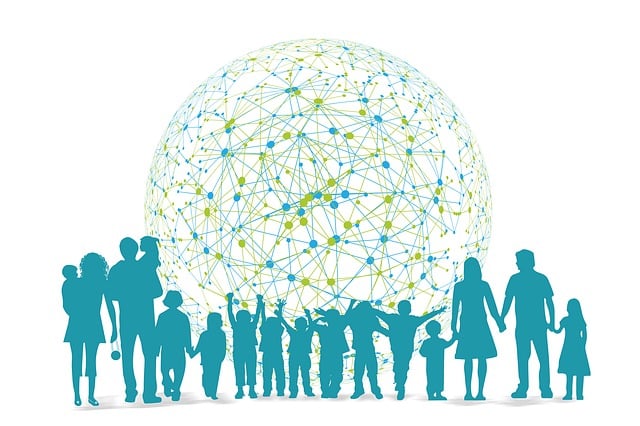
Let's use this picture as a prompt: What topic or issue does it represent?

Why might this [topic, question] matter to me?
Why might it matter to people around me [family, friends, city, nation]?
Why might it matter to the world?
Document and reflect on your Inquiry in your PPS portfolio
International-mindedness and the lifelong learner
This is at the heart of an IB education and has three key elements: intercultural understanding, multilingualism and global engagement. Whatever role you have in your IB community - in your case, STUDENT! - It's worth thinking about how these three factors link to the IB Learner Profile.
The Learner Profile
Balanced, Risk-taker, Reflective, Communicator, Open-mindedness
Caring, Knowledgeable, Principled, Inquirer, Thinker
Consider your whole CP course, personal and professional life as well as what you see in the world around you.
How have the ideas explored here link to the wider context of your course and life?
What would be the best way of sharing this with your peers, class, community?