Inquiry 4: How can I think for myself?

Working towards being independent
As you progress through your CP, you will have already heard words that crop up in lots of different areas. For example, compare, contrast, evaluate, synthesise, imagine and predict. Not to mention areas such as critical and creative thinking as well as problem-solving. There is a real benefit to having a common language like this and developing thinking skills across the board. The best bit is that by developing these transversal skills, you will be able to do more by yourself.
The why
In this module, we are exploring how we can develop thinking skills as a way to make decisions for ourselves, reflect successfully and develop a confident voice. Developing critical, creative and practical thinking skills will enable you to take a bit of ownership of many areas of your life and not just your studies. Remember the way you think about things, is the backbone of everything we do. For example the way you think about how you are developing intrapersonal skills, your sense of identity and intercultural understanding, how you communicate in with others and your interpersonal skills, and how you make reasoned ethical judgements - these are all reflected in the learning outcomes of PPS.
| Learning outcome | Concepts | Contexts | Content | Skill domains |
LO1—Develop and apply intrapersonal skills in a variety of contexts. LO3 – Develop and apply thinking skills in a variety of contexts | Change Connections Identities Perspectives Systems Well-being | Personal life Informal learning Professional life CRS and DP courses Community engagement Language and Cultural Studies Reflective Project |
| Thinking skills Critical thinking Creative thinking Ethical decision-making Information literacy Problem-solving Reflection and reflexivity Systems thinking |
The Thinking skills toolbox for critical, creative and problem-solving thinking strategies
 In your reflective project, you will be using a learning journal and you might have started using one already in Community Engagement and Language and Cultural Studies. One role a learning journal can play that of a manual full of processes to help you with problem-solving. In this introduction, we look at various processes that will connect you through a PPS lens to different contexts you are working in.
Building on your experience
Take each of the four bullet points and note down different places for each one where you practise that skill. Try and find at least two. You can use your experience in different CRS or DP subjects, core elements or personal and professional settings outside of school. If you get stuck on a point, move onto the next one.
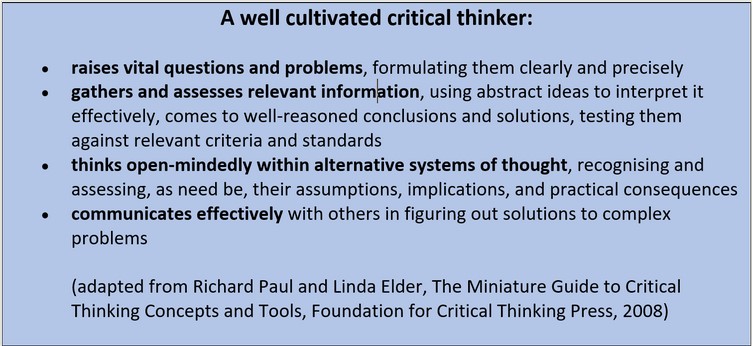
Explore the transversal skills here
You will have heard a lot of these words but you would be forgiven for not being totally sure what they mean.
- For example, ‘systems thinking’ is a holistic approach to problem-solving that focuses on how the different parts of a whole are interconnected and influence one another. Have you stopped to think how this might play a part in your studies, professional and personal life?
- When it comes to critical thinking in the reflective project, for example, we are looking to build skills that allow you to understand not just why something is significant but also the balance of particular perspectives and being able to take up a personal position yourself
Critical thinking: objectively analyze information, evaluate arguments, and make reasoned judgements
Creative thinking: the ability to consider problems or situations from new perspectives to generate original and innovative ideas or solutions
Ethical decision-making: evaluating options and making choices based on moral principles, values, and standards to determine the right course of action
Information literacy: recognize when information is needed and to find, evaluate, use, and communicate it effectively and ethically
Problem-solving: the process of identifying, analyzing, and implementing a solution to an issue or obstacle to achieve a desired outcome
Systems thinking: a holistic approach to problem-solving that focuses on how the different parts of a whole are interconnected and influence one another
 Reflecting on thinking skills
Look at the definitions here, and order the thinking skills in terms of ones you feel you have developed or are developing the most in your CP. Which ones would you most like to develop further and which areas of the course will it affect? Now think about the wider contexts in your life. Where else do you use these skills?
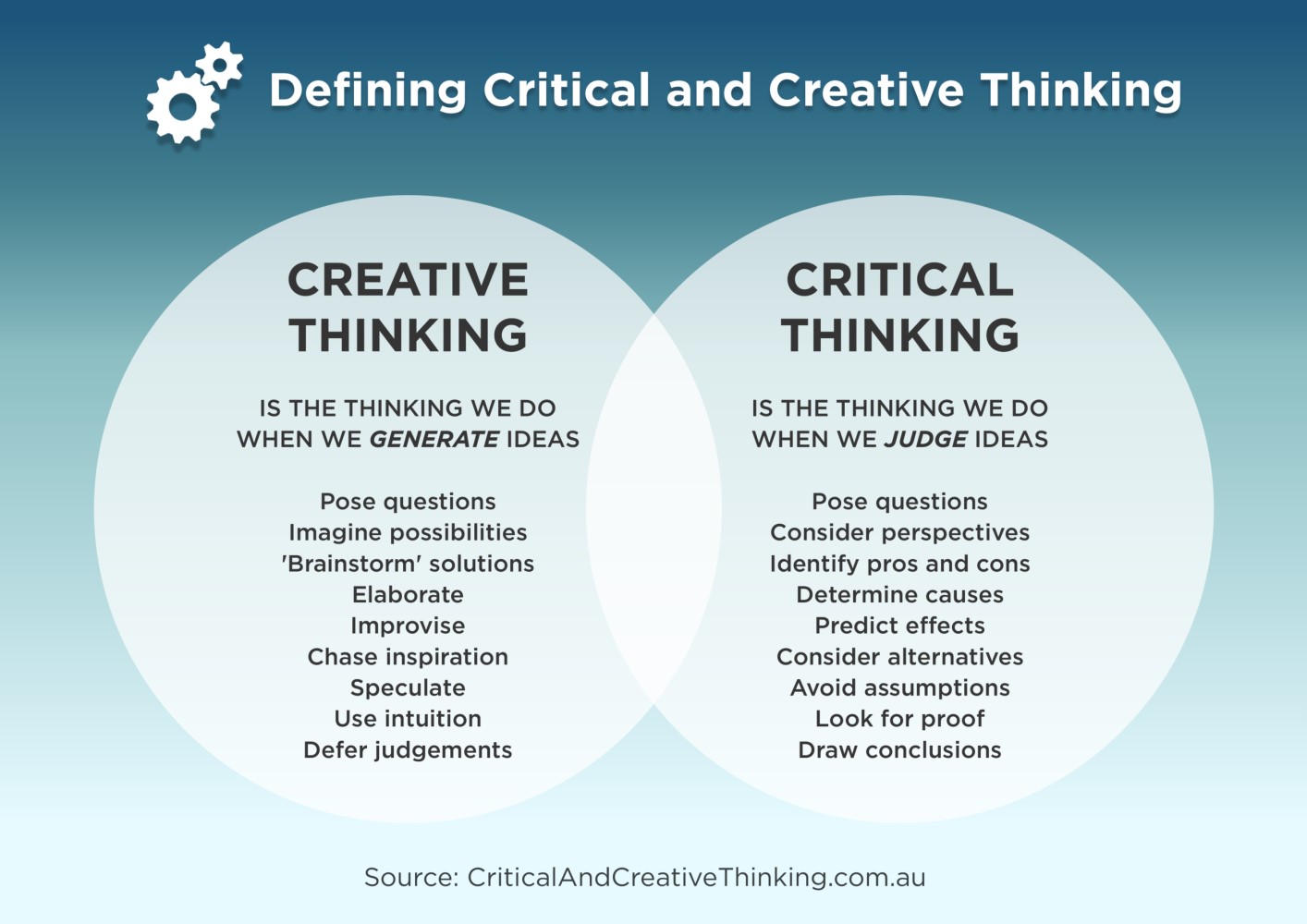
When do we use critical and creative thinking?[1]
 Below is a visual that depicts the difference between creative and critical thinking. Discuss the differences with a partner, and then create your own creative and critical thinking visual which shows an overview of where you generate and judge ideas in your CP course.
Academic Integrity: You are welcome to use AI to start generating ideas (just be aware of the ethical issues associated with sustainability when it comes to generating an image using AI)
What does my thinking reveal about myself?
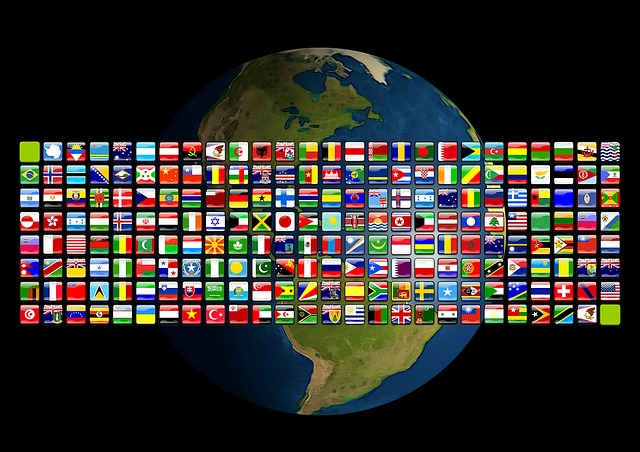
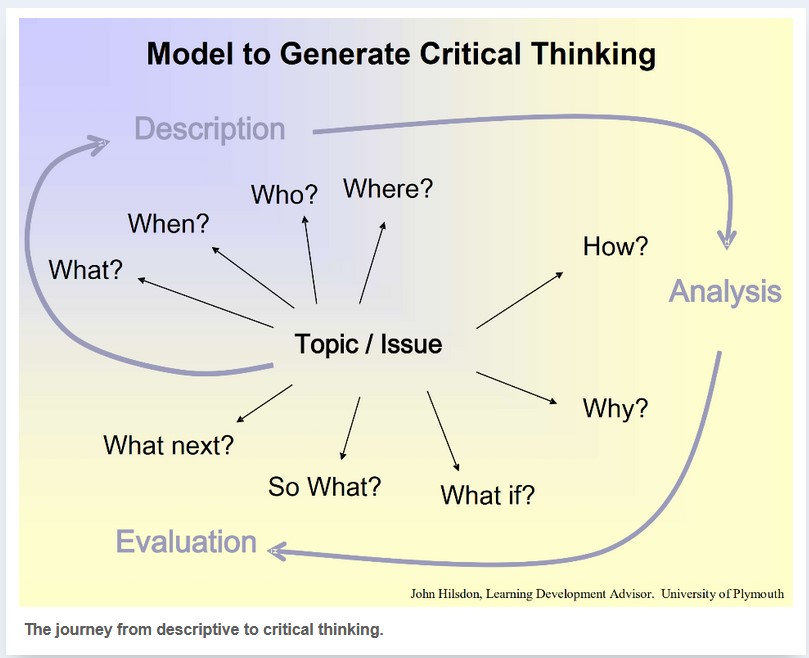
Intercultural Understanding: Take a picture of a flag familiar to you. This can represent the culture that you most identify with, or one that you feel a connection with such as the Pride flag ... or even a pirate flag if you like! You are going to look at it and build out from descriptive to analytical to critical thinking. You will notice we don't necessarily use all the question stems.
What is the flag? When was it designed? Who designed it? Where does it represent?
How did it come to look like that? Why does it look like that?
So what? Why is it important the flag looks like that? What if it had a different design/[significant event] hadn't happened?
 Ethical decision-making
Look at the visuals you may have created in the last two stages. With a partner or in a small group:
- share your visuals and discuss what you discovered here
- imagine you have an ethical dilemma to explore connected with a career field of interest. Discuss how you would use creative and critical thinking to explore an ethical dilemma? Where have you already had experience considering multiple perpectives, weigh up the strengths and weaknesses of different arguments and come to a position of your own?
Footnotes
1. www.criticalandcreativethinking.com.au