Learning journal introduction

The Reflective project learning journal
By the time the students get to the RP process, they should have some decent self-management and thinking skills to tap into for the mandatory RP Learning journal. This could be reflexive thinking practices from LCS or narrative assessment processes from CE. The best advice for the RP LJ is for students to build a toolkit of varied, accessible communication styles that are relevant to them.
An imperfectly perfect analogy to capture the importance of the learning journal[1]
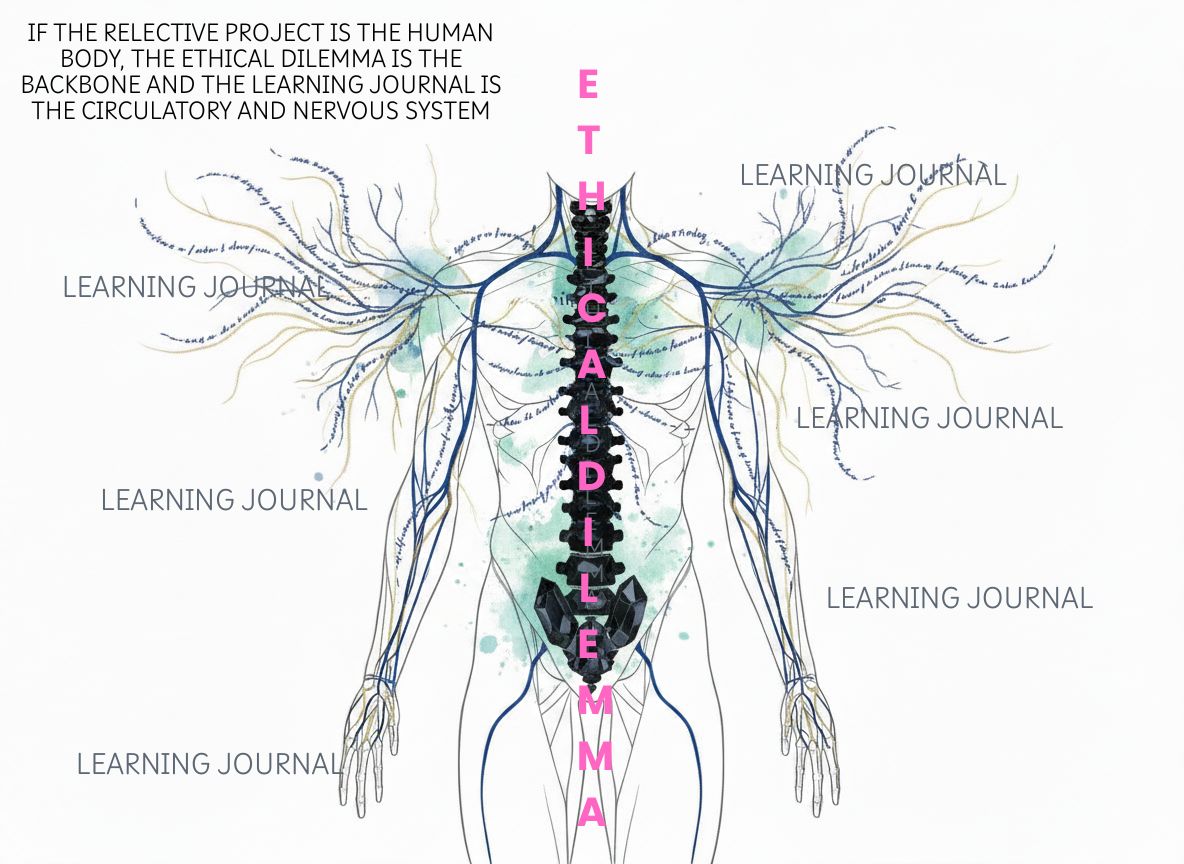
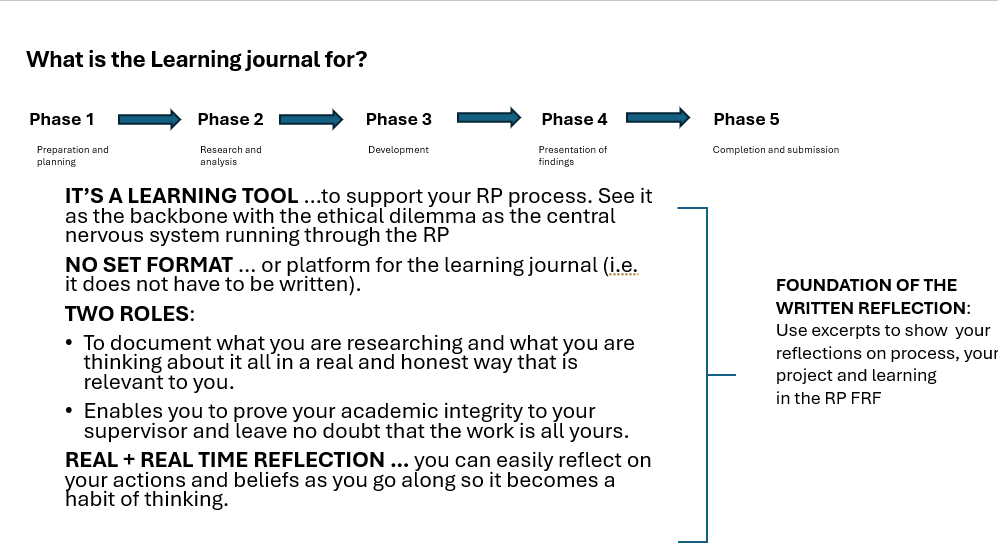

The Learning journal supports each phase of the learning journey. Start using the criteria early to get the students used to them. They reveal a lot about not just the content of the LJ but how students can build their critical, ethical, reflective and reflexive thinking about the content they include in their LJ.
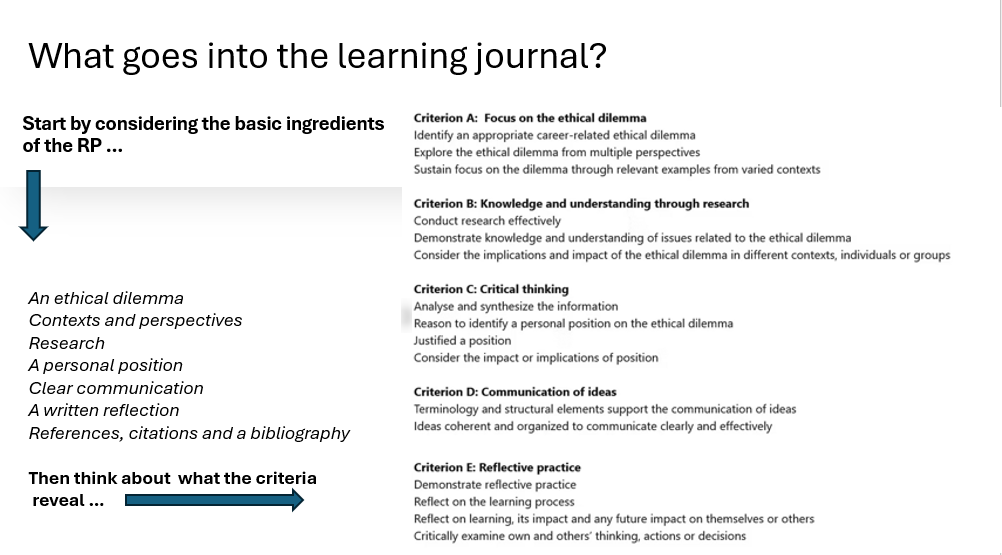
As a summary, here is possible content and ways of responding students could consider by phase.
Phase 1: Questions, ethical issues and dilemmas of interest, connecting dilemma to you, ethical frameworks and thinking tools, perspectives, contexts, transcripts, audio recordings, group chats with peers, lists of sources, annotated source list, chats about question with peers, problem-solving question mindmap, egs of formats, mindmaps of different formats connected to question, check-ins on own position connected to ED...
Phase 2: initial questions, citations and annotated bibliography ongoing, ethical thinking tools, own opinion, mindmaps on impact, tools that have helped spot bias, thoughts on formats, your position and how you justify it ....
Phase 3: voice notes, impact of personal postion on you and others, visuals of developing formats, explore format purpose/audience/language/structure, different types of reflective thinking - examine your actions, explore your thinking, explore why your actions had the impact they did, consider the effect of your beliefs on yourself and others, the wider impact of beliefs on society and the world.
Phase 4: notes on what to include in your presentation, questions you want to ask, first thoughts on feedback from peers and supervisor, further thoughts on feedback after time to think, what is next in terms of questions and action plan ...
Phase 5: Collate, curate and create your written reflection using the LJ implicitly and explicitly.
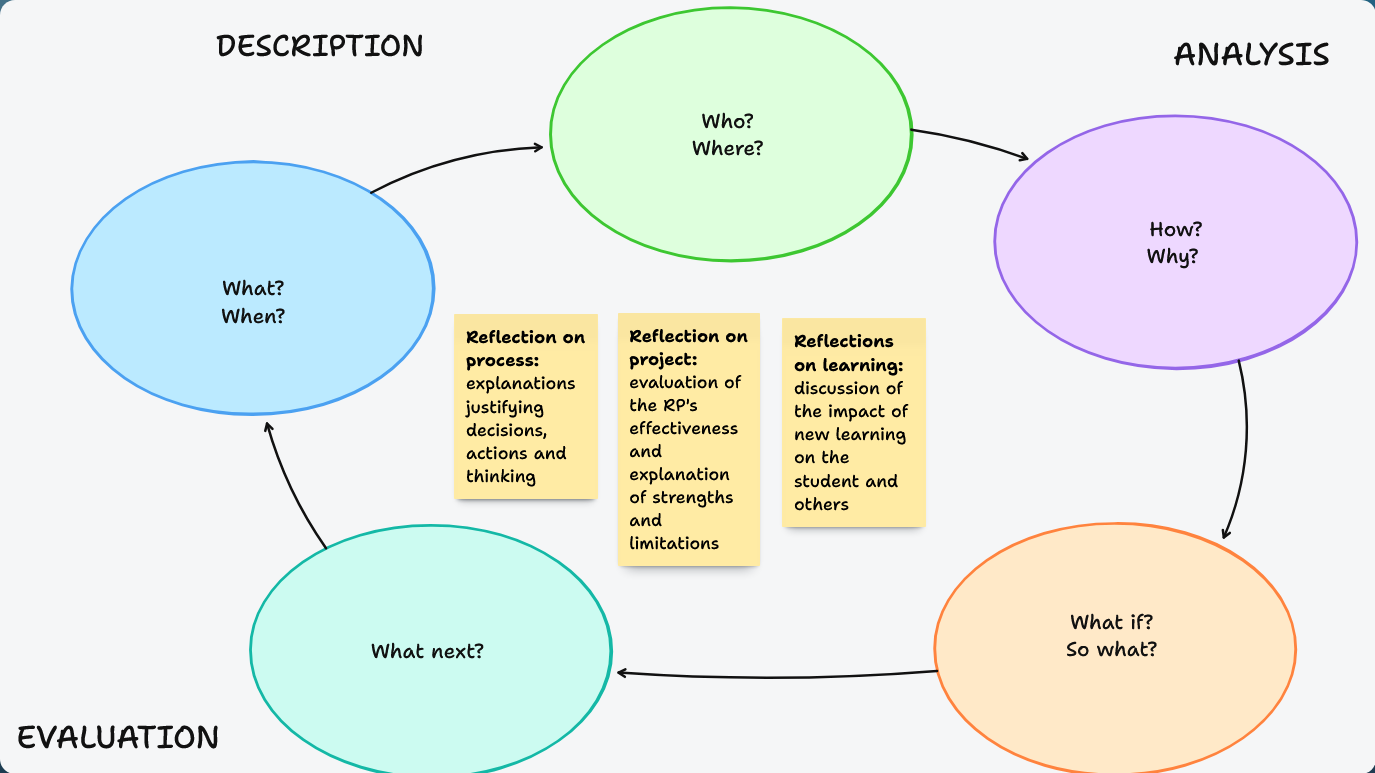
Building your questioning power
Use the three parts of reflection and reflexivity in Criterion E to move questioning from descriptive to analytical to evaluative. Here I have adapted and transferred Elder and Paul's critical thinking questioning process to the reflective and reflexive purpose of the LJ.
Footnotes
1. use.ai for the prompt and Canva for the editing