Reflective & reflexive tools

Creating a reflective and reflexive toolbox
The requirement to be reflective and reflexive is present in all four elements of the core; this is something that takes time to build up. Let's start with just some reflective and reflexive thinking routines that develop these skills across the programme and students can keep in their learning journal as a reminder of tools at their disposal, continually use and also build upon should they wish.
A must watch for every CP teacher. In this quick watch, BBC Radio 4's Whats Up Docs Dr Chris and Dr Xand Van Tulleken capture what reflexivity is really about.
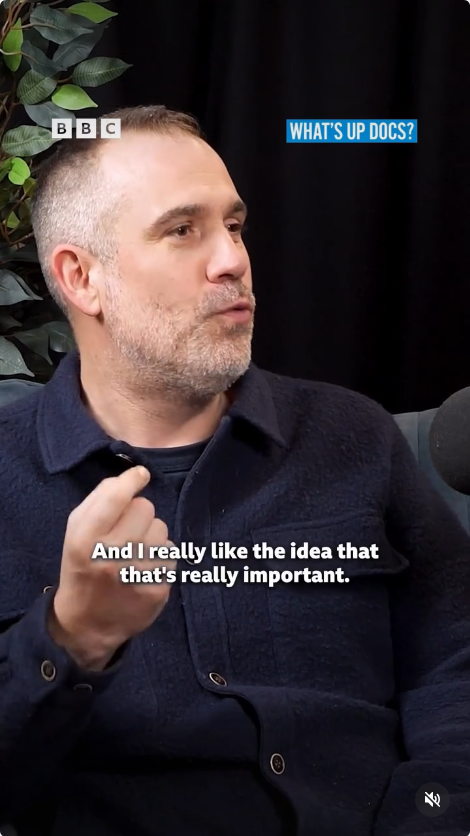
'Last night you and I were chatting on the phone, and you were talking about how do you make a difference in the world, what can you do? And it reminded me of this interview I heard with Seamus Heaney, amazing Irish poet, and the interviewer says, "Do you think learning poetry by heart will make you a better person?" He said, "No." But he said, "I think it'll make you better at being a person." And I really liked this idea. I've always thought about it, and I think those are the things we do on the show. There are episodes where I go, "Why was that so good?" 'Cause it didn't, it didn't change my behavior. It didn't change my life in a substantial, tangible way. But it allowed me to sort of live in the world with a bit more knowledge and with a bit more understanding of how everything relates to me and to situate myself at this sort of grand scheme of things. And I really like the idea that that's really important, that being better or worse is not the main thing. Just to exist in a more sort of complete way, that you're engaged with the world around you, understand how you fit in and what's going on. That's like a thing that is really worth doing'.
Reflection and reflexivity
What role does reflection and reflexivity play in each core element?
Here is a summary below of each element; it is colour coded so you can see the connections between them.
In Community Engagement students practise reflection and reflexivity for:
- critical self-awareness and intentionality in action. CE students are not afraid to question their thoughts and actions.
- recognizing and examining their own thinking, emotions, and biases
- understanding how personal perspectives and experiences shape behaviour
- engage with others and situations openly and thoughtfully.
Ultimate goal? Foster personal growth, deeper learning, and more conscious, ethical engagement with the world.
In Language and Cultural Studies students practise reflection and reflexivity to:
- connect personal experiences of language and culture with critical analysis and self-awareness.
- to understand learning and intercultural experiences and examine interactions with others
- question their own assumptions, positionality, and the origins of their viewpoints
build awareness of how their actions and perspectives influence, and are influenced by, broader cultural and social contexts.
Ultimate goal? Navigate issues of identity, perspective, and intercultural understanding, deepening both self-knowledge and empathy toward others.
In PPS students practise reflection and reflexivity to:
- support both personal and professional growth.
- make meaningful connections between their experiences, actions, and conceptual understanding.
- critically and metacognitively review learning; evaluate what worked, what impact their actions had, and how they might improve.
- increase ownership of throughout their learning as well as set goals for future learning at the conclusion of an inquiry.
Ultimate goal? Develop deep, self-aware, and adaptable strategies as a learner who can connect their experiences to broader understanding and growth.
In the Reflective Project students practise reflection and reflexivity as a core part of the project and are assessed in criterion E. Regular reflective and reflexive practise enables students to:
- keep academic integrity in their learning journal, produce a final written reflection (RP/FRF), and discuss their learning in a viva voce with their supervisor.
- reflect authentically and meaningfully so this leads to deeper self-awareness, critical thinking, and ethical understanding.
- connect reflection with personal growth throughout their lives
carry metacognitive, process, critical and reflexive practice into both their professional and wider life contexts.
Ultimate Goal? Students internalize reflective habits and connect these to personal growth, responsible citizenship and lifelong learning
 Learning journals and PPS portfolio reflection and reflexive tools
Put this in your students' learning journals and PPS portfolio for the whole core, whether in physical or digital mode.
Summary
Metacognitive reflection: examine your thinking and its effects
Process reflection: explore the effect of actions
Critical reflection: think critically about the ‘why’ of actions and effects
Self-reflexivity: consider the effect of belief on yourself and others
Critical reflexivity: think critically about how & why beliefs come about, and how & why they have the impact they do
Learning journal and portfolio reflection and reflexivity tools
Whether you are working within PPS, Language and Cultural Studies, Community Engagement or the reflective project, these are your reflective and reflexive aims.
Examine your thinking and its effects: What am I thinking and what's the effect of this?
Explore the effect of actions: What are my actions and what's the effect of them?
Think critically about the ‘why’ of actions and effects: Why did I take these actions and why did they have the impact they did?
Consider the effect of belief on yourself and others: What do I believe, why do I believe it and what effect does this have on myself and others?
Think critically about how & why beliefs come about, and how & why they have the impact they do:
Taking a step back and thinking about the wider systems, how and why do these beliefs come about and how and why do they have the impact they have?
A little more on reflexivity
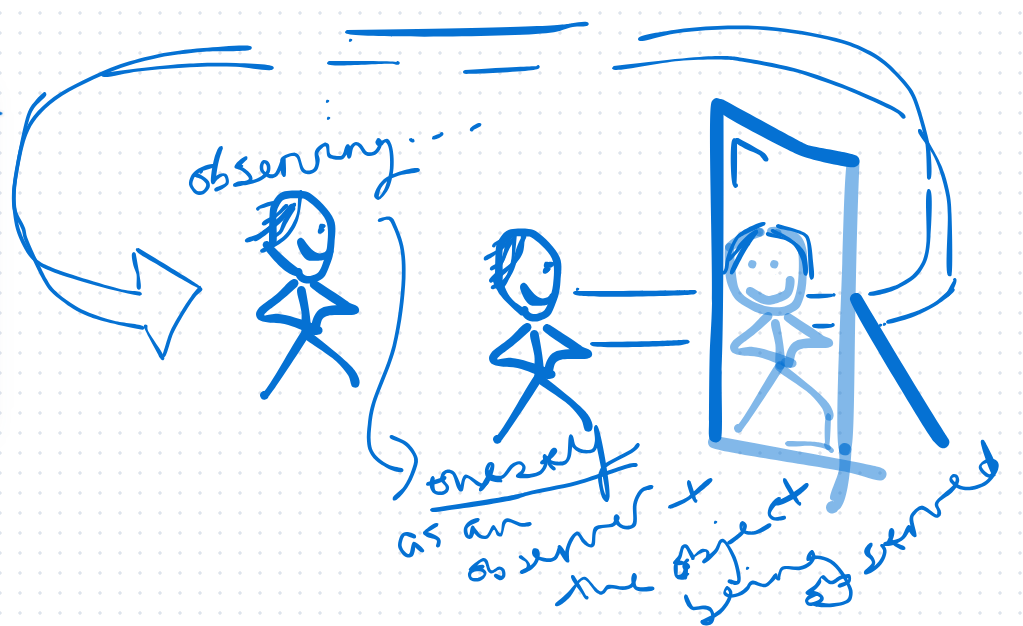
‘The basic position of reflexivity is analyzing the self recursively and critically in relation to the object, context, and process of inquiry. It’s more than just reflection, which is what we get when we look in a mirror. Rather, it’s like trying to look at yourself looking in the mirror’[1]
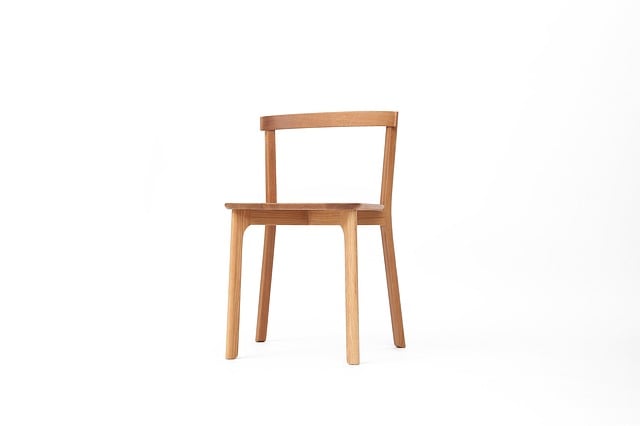
‘Reflexivity in social theory refers to the concept that the act of observation influences both the observer and the subject being observed. This circular relationship highlights how individuals and societies shape each other through experiences and interactions’. Consider each part of a chair - the legs, the seat, the back - and how they individually play a part to form the whole.
Examining your thinking and its effects
Connect-Extend-Challenge
When to use this? Use this routine after exploring a piece/pieces of research or had a discussion with peers or your supervisor.
Consider what you have just read, seen, or heard, and then ask yourself
• How are the ideas and information connected to what you already know?
• What new ideas did you get that broadened your thinking or extended it in different directions?
• What challenges or puzzles emerge for you?
Examining the effect of your actions
ESP+I
When to use this? Use this routine throughout your learning process when you want to take a step back and examine the choices you are making and the actions you are taking
Experience: What were the actions and/or activities that moved your thinking and learning ahead?
Struggles: Where did you struggle with or found challenging and so had to overcome?
Puzzles: What questions therefore came up for you throughout this about your area of focus?
+Insights: Right now, what new insights do you have on your area of focus and your actions so far?
Examining the why of your actions and their effect
I used to think …. but now I think … why is that?
This is an extension of a simple but effective thinking routine[2] that's excellent for tracking how your thinking is changing and evolving. The extra part is to answer ‘I used to think … but now I think …’ and then ask ‘why is that?’
Steps
- Look over your thoughts and ideas you have developed and the processes you have followed. How has your thinking changed?
- Fill in your thoughts with the following prompt: I used to think … but now I think.
- Why do you think your thinking has changed or developed in this way?
Examining the impact of belief on oneself and others
The 3 Whys[3]
When to use this? Use this routine when you want to know why your ideas, thoughts and beliefs, that have emerged in your learning, actually matter. So what?
Why might this [topic, thought, belief] matter to me? (Think about your understanding and beliefs already and link)
Why might it matter to people around me [family, friends, city, nation]? (Think about your understanding and beliefs already and link)
Why might it matter to the world? (Think about your understanding and beliefs already and link)
Examining how and why beliefs come about, and how and why they have the impact they do
People, Parts and Interactions[4]
This moves your reflexive thinking from prioritising yourself and your beliefs to thinking wider about all the different parts in society that exist but interconnect together to form a bigger system. These parts - or systems - affect every aspect of our lives such as our environment, types of government, communication, how we work, travel and eat, and our healthcare.
When to use this? This is great to use when you have a project that involves understanding different perspectives from individuals, groups or bigger bodies such as government, school, communities etc. Perhaps you are exploring aspects of language and culture in LCS, or researching the foundations of a new potential community project in CE. Equally this is important for developing your positionality in the reflective project.
What are the parts of the system?
Who are the people connected to the system?
How do the people in the system interact with each other and with the parts of the system?
How does a change in one element of the system affect the various parts and people connected
to the system?
Footnotes
1. https://annettemarkham.com/2017/02/reflexivity-for-interpretive-researchers/
2. Adapted from Harvard Project Zero, I used to think … but now I think https://pz.harvard.edu/sites/default/files/I%20Used%20to%20Think%20-%20Now%20I%20Think_2.pdf
3. Harvard Project Zero, The 3 Whys, https://pz.harvard.edu/sites/default/files/The%203%20Whys_0.pdf
4. Adapted from Harvard Project Zero, People, Parts and Interactions, https://pz.harvard.edu/sites/default/files/Parts%20People%20Interactions_1.pdf