Ethical thinking in the RP process + criteria
Galvanise the whole CP core
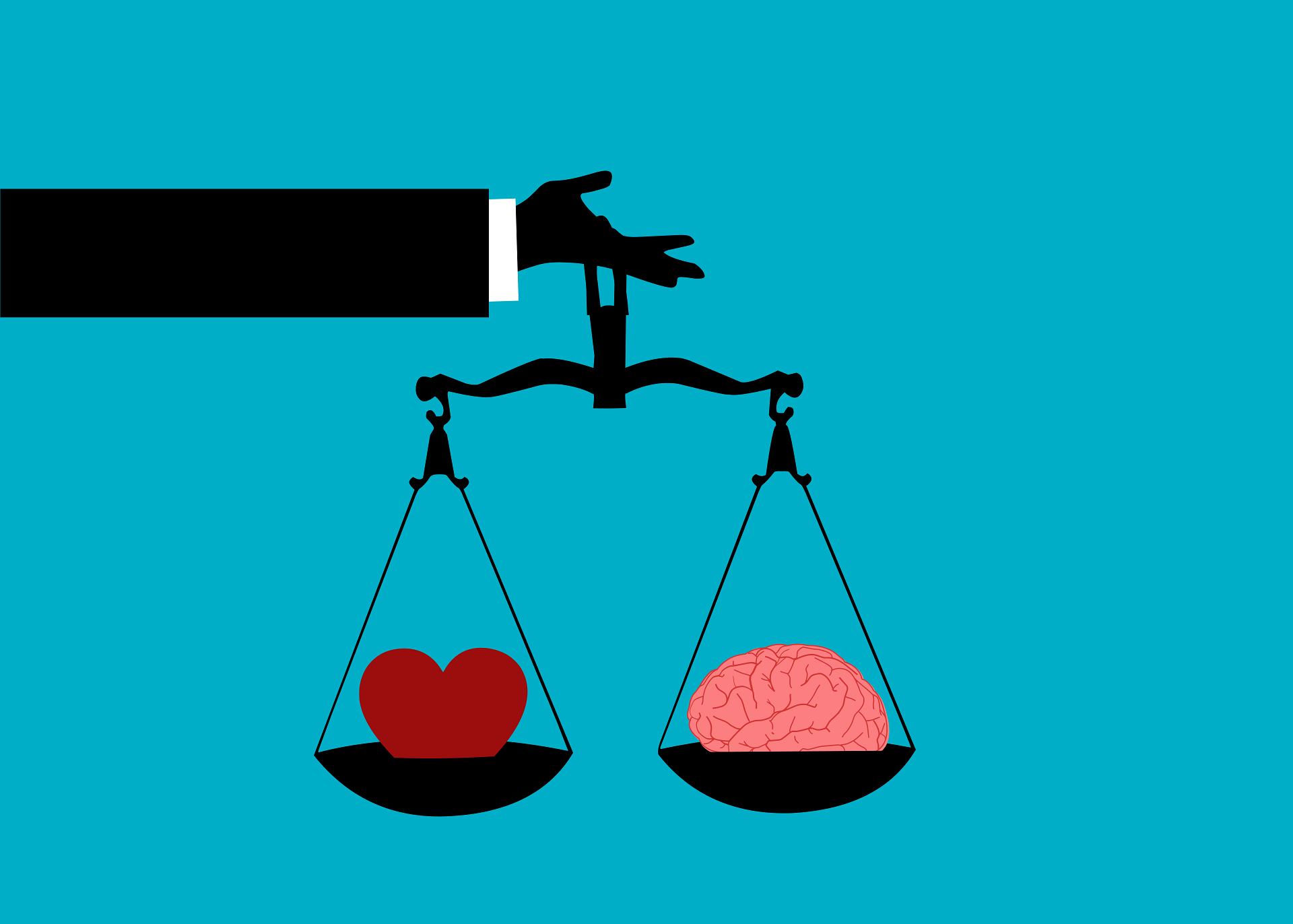
Ethics and ethical thinking is a common thread throughout the CP core. At the heart of ethical thinking is the ability to consider the dynamics of people, actions and consequences in varied contexts in a balanced way. Developing ethical thinking is a complex process that takes time not just over the CP course and the Reflective project; however, all of it is great practice for the realities students will navigate in the future which decision-making can rarely be in black and white.
Ethical thinking runs throughout the RP as students explore the ethical dilemma connected to their career field of interest. The reflective project process is an exercise in exploring the student's own ethical compass as they consider the strengths and weaknesses of different perspectives before coming to their own personal position. Starting with defining the ethical dimension and exploring ethical frameworks, students can get into the mindset of ethical thinking to shape the reflective project. But how to begin? Firstly, start with a definition of ethics; then compare it to a definition of morals to see how they differentiate from each other.
Ethics
Ethics centres around the behaviour/s of the individual in society. They can be seen as moral principles within a society or culture that direct, guide or suggest behaviours, actions and choices in the individual. In this context, morality can be seen as an individual's own individual set
In regards to the reflective project, ethics are not just about what is right and wrong but about the many examples of rules of conduct or behaviour. Overall, ethics here ties in with the notion of international-mindedness that is so important to IB education; the idea that people can think, feel and act in ways that can be deemed acceptable or unacceptable to others with no clear cut answer as to who is right or wrong. Furthermore, context plays a huge role; the where, when, how and why has an impact on the ethical decisions taken by the individual in that situation.
Morals
Establishing the difference between Ethics and Morals can be tricky as they are terms that are often used interchangeably. Making the distinction can help students anticipate some of the outcomes of exploring their own ethical dilemma; there will be differences of perspective and behaviour that they may agree or disagree with.
This video puts the significance of ethics and ethics education in everyday life into context. One of the reasons the students are embarking on this process is because it parallels the ethical frameworks, choices and thinking that happen in the workplace.
Thinking routines to promote ethical thinking
The main objective for exercises in ethical thinking is for students to consider multiple perspectives in a balanced way before deciding on their personal ethical viewpoint.Then students can compare their original first thoughts with a more nuanced level of thinking. This thinking routine below, attributed to and adapted from Harvard Project Zero, and why they work so well is that it is never presumed that the student knows what questions to ask. Most importantly is to remember the word 'routine' - these are habits of mind, to be visited often so the structure becomes a familiar process. With this familiarity, comes confidence, clarity of communication and enhanced critical thinking.
 Same and Different
This is a Harvard Project Zero thinking routine that helps students go beyond superficial observations of similarities and differences. It is an excellent routine to carry out for students to appreciate that ethical dimensions, issues and dilemmas are not black and white or contain polar opposites: often the truth is murky and grey with subtleties and degrees of difference.
'Choose a debate, incident or object in which opposing views are clearly apparent or images that look different but are grouped together.
1. First glance: What was the first impression you had about this?
2. Perspective Taking: From what other points of view could this be perceived? What would one say from those points of view?
3. Same and Different: What are the similarities? Differences? How is this case the same and different at the same time?'[1]
 Varying the activity
1. As a whole class activity, especially with a bigger class size, once the thinking routine has been established, different groups can be given a specific and relevant stakeholder from the initial prompt, to develop and research further. The evaluation of similarities and differences can be done as a whole class where their responses to stage 3 above can be expanded upon and more and more complexities developed.
2. On an individual level, students can carry out this activity when using a specific article they are utilising for the ethical issue they are researching. The identification of specific stakeholders, visibly recording the different points of view and recording similarities and differences should be a habitual part of their research process. Students might consider recording their ideas in a venn diagram to help them visualise this process.

Visualise your ethical thinking journey
A great activity is for students to take the criteria and create a visual to demonstrate the way they will use ethical thinking throughout the RP journey. They can use AI initially and then critique its output to show how they have utilised the characteristics of the criteria
Through this activity, we can think about how ethical thinking is implicitly and explicitly referenced in the reflective project process. Use the annotated summary of criteria below to assist your exploration of the criteria through an ethical thinking lens.
Criterion A: Focus on the ethical dilemma - 6 marks
Identify an appropriate career-related ethical dilemma (CRS or other career field)
Explore the ethical dilemma from multiple perspectives
Sustain focus on ethical dilemma with relevant examples from varied contexts.
Criterion A immediately invites us to see the ethical dilemma from multiple perspectives and contexts. We find a focus and establish the ethical dilemma as the backbone of the whole RP.
Phase 1: The project proposal presented to peers and supervisors is a key place to ensure that all areas of criterion A have been accounted for in the initial stages and now it is up to the students to keep hold of that ethical dilemma and develop it.
Criterion B: Knowledge and understanding through research - 6 marks
Conduct research effectively
Demonstrate knowledge and understanding of issues related to the ethical dilemma
Consider the implications and impact of the ethical dilemma in different contexts and different individuals and groups
Again, Phase 1, the scope of research is explored to ensure that the student can embark on this process successfully. As we move into Phase 2 with Research and Analysis, the students' ethical thinking will be firmly attached to their research skills; firstly, that they are actually researching ethically; secondly, what their research reveals about their ethical dilemma and impacts their thinking. The more the student researches, the more they can explicitly recognise bias and the impact and implications of this on their understanding of their ethical dilemma. The student might incorporate any learning from this phase into Phase 4 and their presentation of findings.
Criterion C: Critical thinking - 8 marks
Analyse research and synthesise the information
Identify a personal position on the ethical dilemma
Justify your position
Consider the impact and implications of your position
By now we can see where our journey with the ethical dilemma has got us. The more the student researches, the more synthesis can take place which means spotting the connections and patterns in their findings. Put it simply, the student has built up their knowledge base and they are moving towards finding out where they really stand on it. Critical Thinking is developing all the time throughout the RP process alongside and because of reflection and reflexivity, so cannot be allocated to one phase as such. However, undeniably, as students move from Phase 2 towards the development and drafting stage of their RP, this is where the critical thinking of the RP comes into the fore. It is not enough to know about the ethical dilemma - what do they think about it. More than that, where do they stand with their own position and what would be the impact and implications of thinking this way. The student might incorporate any learning from this phase into Phase 4 and their presentation of findings.
Criterion D: Communication of ideas - 6 marks
Appropriate and effective use of terminology and structural elements to communicate ideas
Coherent and organised ideas to communicate clearly and effectively
Criterion D is very much about the choice of formats and their successful use to showcase the exploration of this ethical dilemma and this is very much about Phase 3: Development. How appropriate is the format to the career field? How successfully are its codes and conventions incorporated? Does it enable the student to communicate their exploration of an ethical dilemma and the position they hold in the clearest way possible? It's placing the ethical dilemma in a format that considers Purpose, Audience, Language and Structure. The student might incorporate any learning from this phase into Phase 4 and their presentation of findings.
Criterion E: Reflective practice
Reflect on the learning process
Reflect on your learning, its impact and future impact on yourself and others
Critically examine your own and others' thinking, actions or decisions
Critical reflexivity, in particular, becomes almost synonymous with ethical thinking as it involves active identification of one's own thinking in comparison/contrast to others. This area not only reflects on the process the student undertook but the ‘so what?’ of their learning; ethical thinking surrounding their actions and beliefs. The learning journal develops process, metacognitive, critical reflection and self- and critical reflexivity throughout the whole process and the student will lean into all of this in Phase 5 in their written reflection and viva voce.
Aim:
Key reflective project skills explored
Prepare: Working individually, look at the gallery photos on the CP website and think about responses to the following questions:
Step 1: Gallery walk: Here, you will build understanding by starting with the familiar and expanding1. Take the first photo of the church and think about the story being portrayed. Go with your instinctive reaction What type of human behaviour and decision-making are being suggested by the photo? What possible ethical issues are being shown? What ethical issues or dilemmas do you think this picture relates to locally or globally right now? What difference does context make? 2. Now look at each of the photos in turn and consider: What type of human behaviour and decision-making are being suggested by the photo? What possible ethical issues are being shown? What ethical issues or dilemmas do you think this picture relates to locally or globally right now? What difference does context make? |
Explore: Independent Inquiry: Here you will develop understanding and empathy for multiple perspectives and consider the impact context can have.1. Choose one of the photos on the website as stimulus to find 2-3 further photos that share this ethical context Consider the following question to reflect upon in your learning journal What connects the images you have chosen? How do they show different perspectives? Can you identify different systems involved? Think people/business/governments/bodies. How does culture play a part? |
| Action: Take three ‘stakeholders’ in the issue you have uncovered. Write or role-play a short piece in the first person where you try to present the point of view they might hold |
Reflect:How challenging did you find this exercise? Were your responses balanced? How hard or easy was it to temporarily ignore your own point of view initially? What challenges are there for you in presenting multiple perspectives in your Reflective project? |
| Share: Looking back on this exercise, talk to a partner and share not just your results from the exercise but where you found it easy or difficult to think from certain perspectives. |


1. Taking the first photo of the church: think about what story is being portrayed. Go with your instinctive reaction.
What type of human behaviour and decision-making are being suggested by the photo?
What ethical dimension is being shown?
What ethical issues do you think this picture relates to locally or globally right now?
2. Now look at each of the photos in turn and consider:
What ethical issue is depicted?
What are the local or global stories of the issue?
What different cultures are shown?
Are there differences of perception here?
Step 2: Independent Inquiry: Develop understanding of multiple perspectives and empathy



Students can choose one of the photos here as stimulus to find 2-3 further photos that share an ethical dimension or specific ethical issue. Then consider the Inquiry, Action and Reflective questions that follow in their RRS.
Inquiry: What connects the images you have chosen? How do they show different perspectives? Whose perspective do you most relate to? Can you identify different people/business/governments/bodies that are involved in this issue? How are different cultures involved?
Action: Take three ‘stakeholders’ in the issue you have uncovered. Write a short piece in the first person where you try to present the point of view they might hold
Reflect: How challenging did you find this exercise? Were your responses balanced? How hard or easy was it to ignore your own point of view? What challenges are there in presenting multiple perspectives in your reflective project? What do you need to present different perspectives in a balanced way?
 tudents in teams research morality tests and the type of questions that are asked. What are morality tests for? They then create their own morality test of ten questions.
Extend this by students taking 'the hardest morality test ever' and reflect on their findings. Go back to their teams and discuss points they feel comfortable discussing before reviewing their test.
Use the same approach for the Assessment criteria and Approaches to Learning
Make explicit reference to it and establish prior learning and experience
Make it useful with ways to practice it so students can experience how it works
Make it transferrable by having moments to consider where they have used this skill before, how they are developing it and where it might be useful in the future.
Make it visible by have the students record and reflect upon the processes they have used
The key to students being able to identify skills and use them in a range of situations is to teach the skill explicitly before incorporating it implicitly in a range of contexts. The IB's suggestions for ATL skills in the 5 key areas of Self-management, Social, Communication, Research and Thinking skills are not exhaustive and you are encouraged to contextualise and add to these as appropriate.
The development of ATL skills are implicit and explicit in the reflective project assessment criteria. Here we focus on a key ATL skill that directly relates to the skills needed for the reflective project as established by Criteria A and B specifically. We also acknowledge that the development of ethical thinking skills takes place under the umbrella Learning Outcome 5 of PPS. The opportunity for explicit focus and exploration on ATL skills is clear. For specific, deep and quality reflection, you could zoom in on this area in particular:
ATL Skills area
Social Skills
Specific ATL skills explored
Practice empathy
Make fair and equitable decisions [2]
Link to the reflective project
Criterion B: 'demonstrate awareness and understanding of the impact of the ethical dilemma on a local/global community and the cultural influences on, and perceptions of, the ethical dilemma'[3]
Footnotes
1. undefined
2. Adapted from the IB's ATL skills as part of the ATL website and DP: Principles into Practice
3. IBO, The Reflective Project Guide, for use from 2016, p28