Exam Tips

There is no magic trick for improving your mathematics grade overnight. Improvement comes from practice, good study habits and learning from your mistakes. However, there are plenty of small things you can do before and during an examination that can help you perform at your best. Think of them as marginal gains: small improvements that, when added together, can make a real difference. This page brings together some of the most useful exam tips for Mathematics: Analysis and Approaches.
Memorise Key Facts
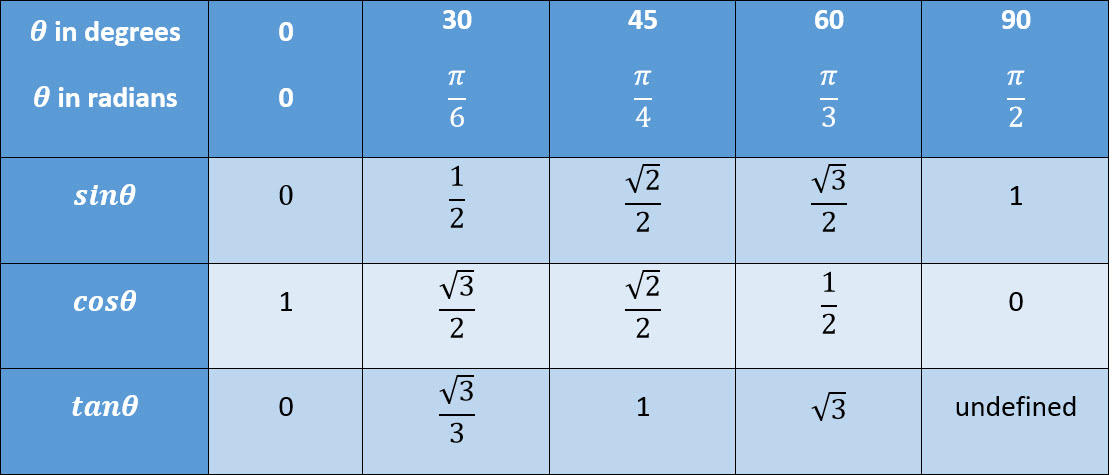
Exact Trigonometric Values
You definitely need to know these before Paper 1.
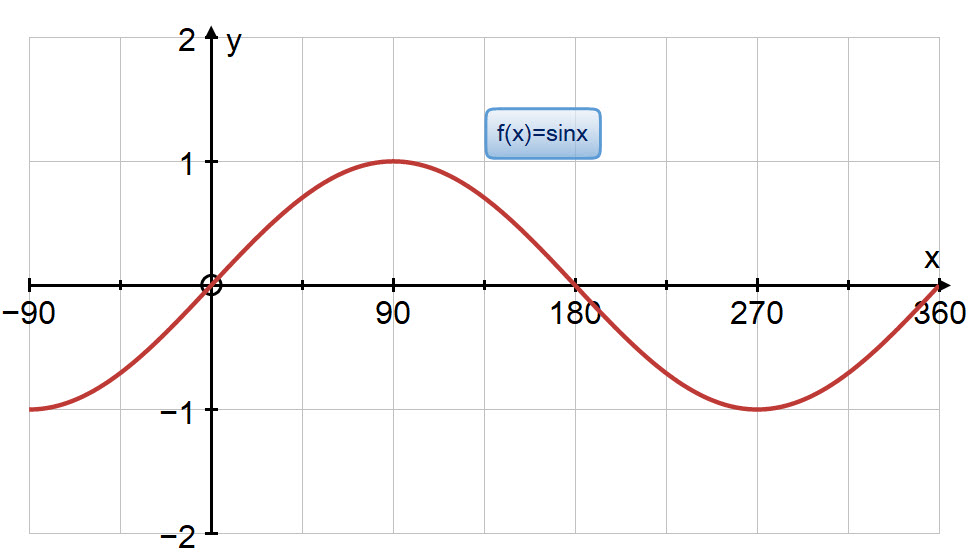
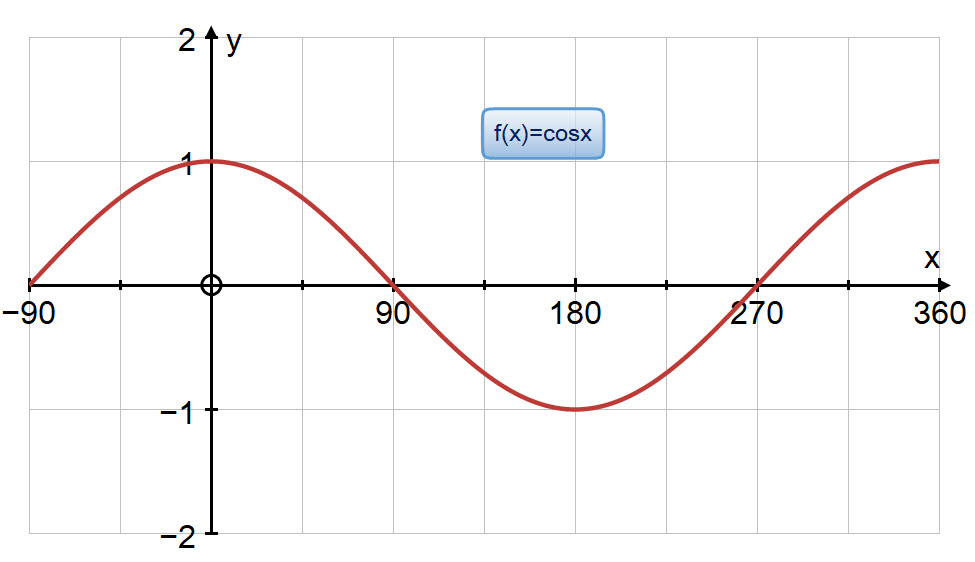
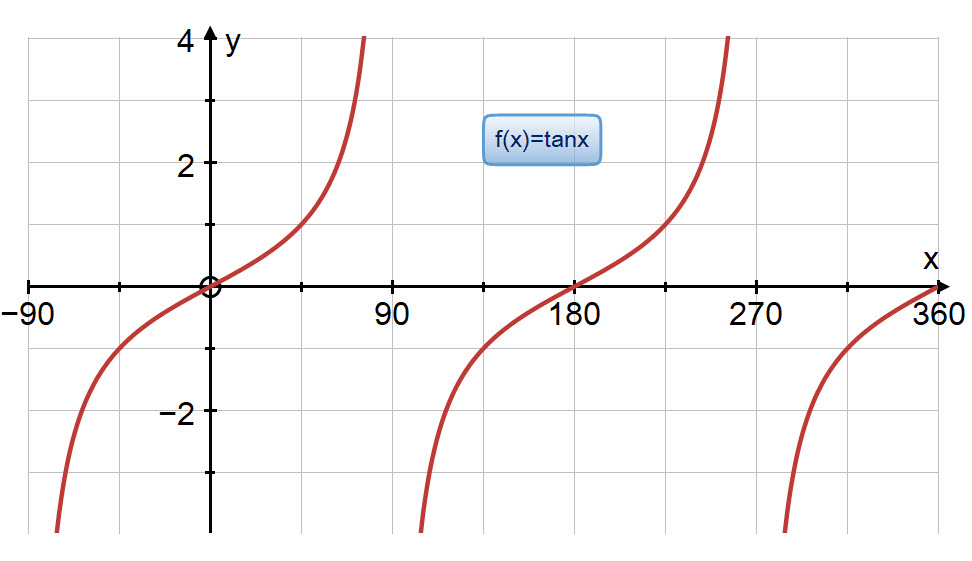
Graphs of Sine, Cosine and Tangent Functions
Make sure you know how to sketch these graphs and use them to identify the key properties of the functions.
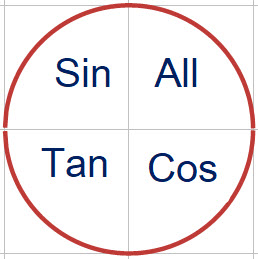
Some students like to use the following diagram to remember the quadrants in which each trigonometric ratio is positive.
Chain Rule
You should know how to use the Chain Rule to differentiate a composite function. You may also be required to use it when a question is written in function notation. The general form below is not given in the formula booklet.
h(x)=f(g(x))
h'(x)=f'(g(x))g'(x)
This is useful for answering exam questions such as the following:
Consider two functions f and g and their derivatives f' and g' . The following table shows values of the functions and their derivatives at x = -1, 0 and 1.
| -1 | 0 | 1 | |
|---|---|---|---|
| f(x) | -2 | 1 | 6 |
| g(x) | 3 | -1 | 1.5 |
| f'(x) | 2 | 3 | 4 |
| g'(x) | 4 | -2 | 3 |
h(x)=(f\circ g)(x)
Find h'(0)
Answer = -4
h'(x) = f'(g(x))g'(x)
h'(0) = f'(g(0))g'(0)
h'(0) = f'(-1)g'(0)
h'(0) = 2 \times(-2)
h'(0) = -4
There are other formulas that can be derived from the Chain Rule. Memorising these can help you work more efficiently in an examination.
Integration by Recognition
These integrals can all be found using integration by substitution, but recognising them directly can save you a lot of time.
 Properties of the Vector Product
There are several properties of the vector product that do not appear in the formula booklet.
Properties of Complex Numbers
There are several properties of complex numbers that do not appear in the formula booklet.
Argument identities are understood modulo 2\pi.
Timing
In the examinations, you are given 5 minutes of reading time. Make good use of it. You are not allowed to write during this time, but you can use it to organise yourself, gather your thoughts and decide how you will approach the paper. When you practise full papers under timed conditions, include the reading time so that you become used to using it effectively. Here are some suggestions:
- Quickly look through the whole paper and check that there are no missing questions or pages. This also helps you avoid overlooking a question at the end.
- Identify some questions that look familiar and start thinking about how you might approach them.
- There will probably be some unfamiliar-looking questions. Don't panic. Once you have warmed up, you may be in a much better position to tackle them.
- Take a few deep breaths.

Papers 1 and 2 are divided into two sections. The marks available for Sections A and B are approximately equal, so aim to divide your time accordingly. Many students spend too long on Section A and then run out of time on Section B. Questions often become more challenging as you progress through a section, so do not spend too long struggling with one difficult question. If you are stuck, move on and come back to it later if you have time. HL Paper 3 has a different structure, but the same principle applies: use the number of marks available as a guide to how much time you should spend on each part.
Command Terms
Show That vs Verify
The command term show that is there to help you. You know the result you are trying to reach and, if you cannot derive it, you can usually continue with the next part using the result given in the question. When you are asked to show that , you should avoid working backwards from the stated answer.
A question that asks you to verify requires you to provide evidence that a result is correct, perhaps by substituting a value into a formula.
Here are two examples to show the difference:
Example 1
Point A (-2,k)lies on the line \mathbf{r}=\begin{pmatrix}1\\2\end{pmatrix}+s\begin{pmatrix}-1\\3\end{pmatrix}
Show that k = 11
Here you must avoid starting with k = 11 and simply verifying that A lies on the line.
Start with the fact that A lies on the line and use the x-coordinate to find the value of s .
\begin{pmatrix}-2\\k\end{pmatrix}=\begin{pmatrix}1\\2\end{pmatrix}+s\begin{pmatrix}-1\\3\end{pmatrix}
-2 = 1 - s
s = 3
Now use this value of s to find k .
k = 2 + 3s
k = 2 + 3\times 3
k = 11
Example 2
Let f(x) = ax² + 12x + c.
A horizontal line intersects the graph of f at x = -2 and x = 6.
a) Find the equation of the axis of symmetry.
b) Hence, show that a = -3.
a) The axis of symmetry lies halfway between x = -2 and x = 6.
\frac{-2+6}{2}=2
The axis of symmetry is x = 2.
b) We should not substitute a = -3 into the function and simply verify that the axis of symmetry is x = 2. Instead, we should start from the result found in part a). The word hence tells us that this part should follow from the previous result.
For the general quadratic function, f(x) = ax² + bx + c, the equation of the axis of symmetry is x = \frac{-b}{2a}
For our function, f(x) = ax² + 12x + c, the equation of the axis of symmetry is x = \frac{-12}{2a}
Hence \frac{-12}{2a}=2
-6 = 2a
a = -3
Sketch vs Plot
In questions that ask you to sketch , you are not expected to produce a perfectly accurate graph. You should show the important features, such as intercepts, local maxima and minima, endpoints and asymptotes where relevant.
In questions that ask you to plot , you are usually expected to mark points accurately using the scale provided.
Here is an example of what might be expected when you are asked to sketch a graph:
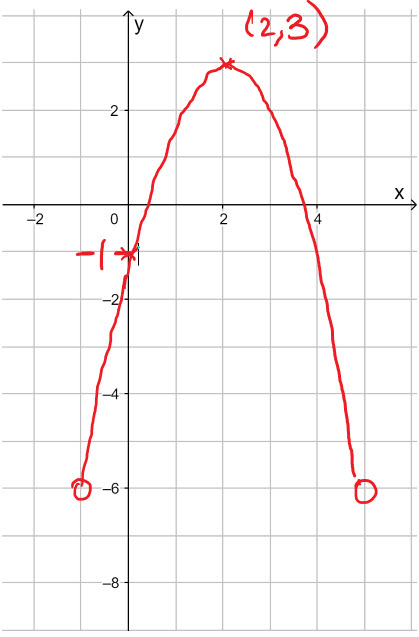
f(x)=-(x-2)^2+3
a) Write down the vertex of the graph of f .
b) Sketch the graph of f for -1\le x\le 5on the grid below
a) The vertex is (2, 3).
b) The sketch should include the vertex, the y-intercept and the endpoints of the function.
Hence
The word hence tells you that you are expected to use something you found in the previous part. Ignoring this may waste time and may prevent you from earning all of the available method marks.
Here is an example:
The first three terms of a geometric sequence are 4m + 5, 10, m - 1.
a) Write down an expression for the common ratio, r .
b) Hence, show that 4m² + m - 105 = 0.
a) Since this is a geometric sequence, the common ratio can be found by dividing the second term by the first.
r = \frac{10}{4m+5}
b) The word hence tells us that we need to use the result from part a).
Using the same idea, the ratio can also be found by dividing the third term by the second.
r = \frac{m-1}{10}
Hence , \frac{10}{4m+5}=\frac{m-1}{10}
100 = (4m+5)(m-1)
100 = 4m² + m - 5
0 = 4m² + m - 105
This question also includes the command term show that . We should not solve the quadratic first and then substitute the values of m into the sequence merely to verify the result. We need to derive the stated equation from the information given.
Hence or otherwise
This is similar to hence , but gives you more freedom. The previous part may suggest a useful or efficient method, but you may use an alternative valid approach.
Write down
This usually means that little or no working is required. You should normally be able to give the answer directly.
Accuracy
On calculator papers, you can lose marks if you do not give answers to an appropriate degree of accuracy. Make sure you understand the difference between rounding to 3 decimal places and rounding to 3 significant figures. This is an easy habit to get right.
Here's a quick recap of significant figures:
- Significant figures provide a consistent way of expressing the accuracy of numerical answers.
- The first significant figure is the first non-zero digit.
- Start counting from this digit.
- Any zeros between non-zero digits are significant.
- For 3 significant figures, stop at the third significant digit.
- Use the next digit to decide whether to round up or down.
Example 1
0.00305
The 1 st significant figure is 3
The 2 nd significant figure is 0 (the zero between 3 and 5 is SIGNIFICANT)
The 3 rd significant figure is 5
Example 2
Round the following numbers to 3 significant figures:
a) 82 761 \approx82 800
b) 0.001358 \approx0.00136
c) 57.0098 \approx57.0
 Ready for a quick Quiz?
Round the following numbers to 3 significant figures
5.11405 \(\approx \)
Round the following numbers to 3 significant figures
7074.75 \(\approx \)
Round the following numbers to 3 significant figures
0.003056 \(\approx \)
Round the following numbers to 3 significant figures
100059 \(\approx \)
Round the following numbers to 3 significant figures
38999 \(\approx \)
Graphical Calculator Skills
- Make sure your calculator is set up correctly and that you know how to put it into the required examination mode. Practise using it in this mode before the real examination so that there are no surprises.
- On calculator papers, do not automatically use an analytical method when a numerical method would be quicker. Once you have set up an equation correctly, use your calculator to solve it when appropriate.
- If a question is worth several marks, a calculator answer alone is unlikely to be sufficient. Show the mathematical setup and any important intermediate steps.
- If you use a graph to justify an answer, sketch the relevant features and label important values and axes.
- Keep full calculator accuracy during your working and round only your final answer. Using calculator memory can help you avoid premature rounding.
Other Useful Tips
- Read the questions carefully. Underline key information and command terms. This slows you down just enough to think about what the question is asking and may give you a clue about how to start.
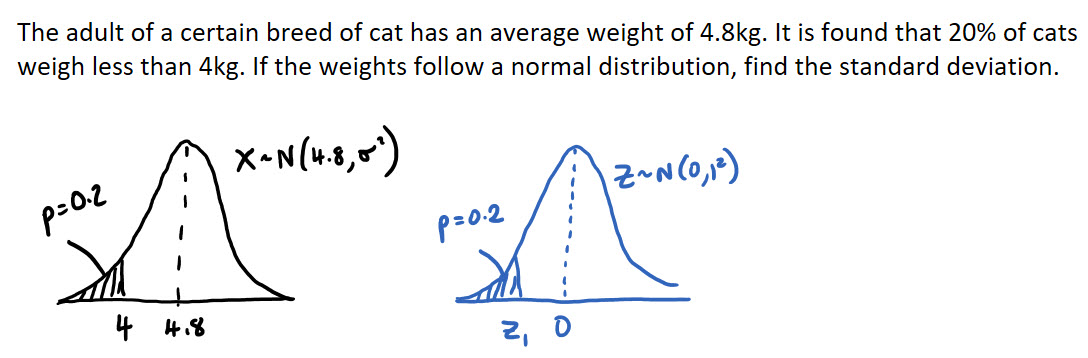
- Show your mathematical thinking. Write down useful information, equations and reasoning rather than doing everything mentally. In the question below, for example, recognising that the situation involves a binomial distribution can earn credit.

- Draw diagrams and graphs to help you visualise the problem.

The formula booklet is your friend. Use your own copy throughout the course and become familiar with where everything is. You do not need to memorise every formula it contains, but you do need to know what the formulas mean and when to use them. You can annotate your revision copy, but remember that the copy you receive in the examination will be clean and unannotated.
- Pick up every mark you can. If you cannot do part b), you may still be able to do part c). Later parts are not always dependent on earlier ones. Use results given in show that questions to continue when you get stuck.
- Check your answers. If you have time at the end of the examination, go back through your work carefully. Look especially for unanswered parts, sign errors, incorrect rounding and results that do not seem reasonable.
- Don't cross out useful working just because you think your final answer may be wrong. Unless you are replacing it with a better solution, some of your method may still be correct and could earn marks.

Don't try to predict the next paper. After Paper 1, it can be tempting to assume that topics which did not appear must come up on Paper 2. There may be overlap between papers, so continue to prepare across the whole syllabus rather than trying to guess what will be tested.
- Get a good night's sleep. You need to be fresh for the examination. An extra hour of sleep may be more valuable than an extra hour of late-night revision.