What is knowledge?
ToK is about knowledge. We use knowledge every day to do things in the world. It is something that we human beings make. We encounter a huge diversity of knowledge in our lives from the formal subjects we study at school to the knowledge we need to go shopping or to interact socially with our friends. In ToK we study all of these knowledges. This page gets the ball rolling in our thinking about knowledge. What exactly is it? And when is something not knowledge? Read on to begin your ToK adventure...
Essential Understandings
- Knowledge is made by human beings to do things in the world
- There are different kinds of knowledge, such as 'knowing that' and 'knowing how'
- Some knowledge employs representations - it pictures aspects of the world either with symbols, diagrams or words
- Other knowledge like 'knowing how' does not obviously involve representations
- Not every declarative sentence in English is knowledge. We need to distinguish knowledge from mere beliefs and opinions

To get us started let us think of how we use the word knowledge? Look at the following statements:
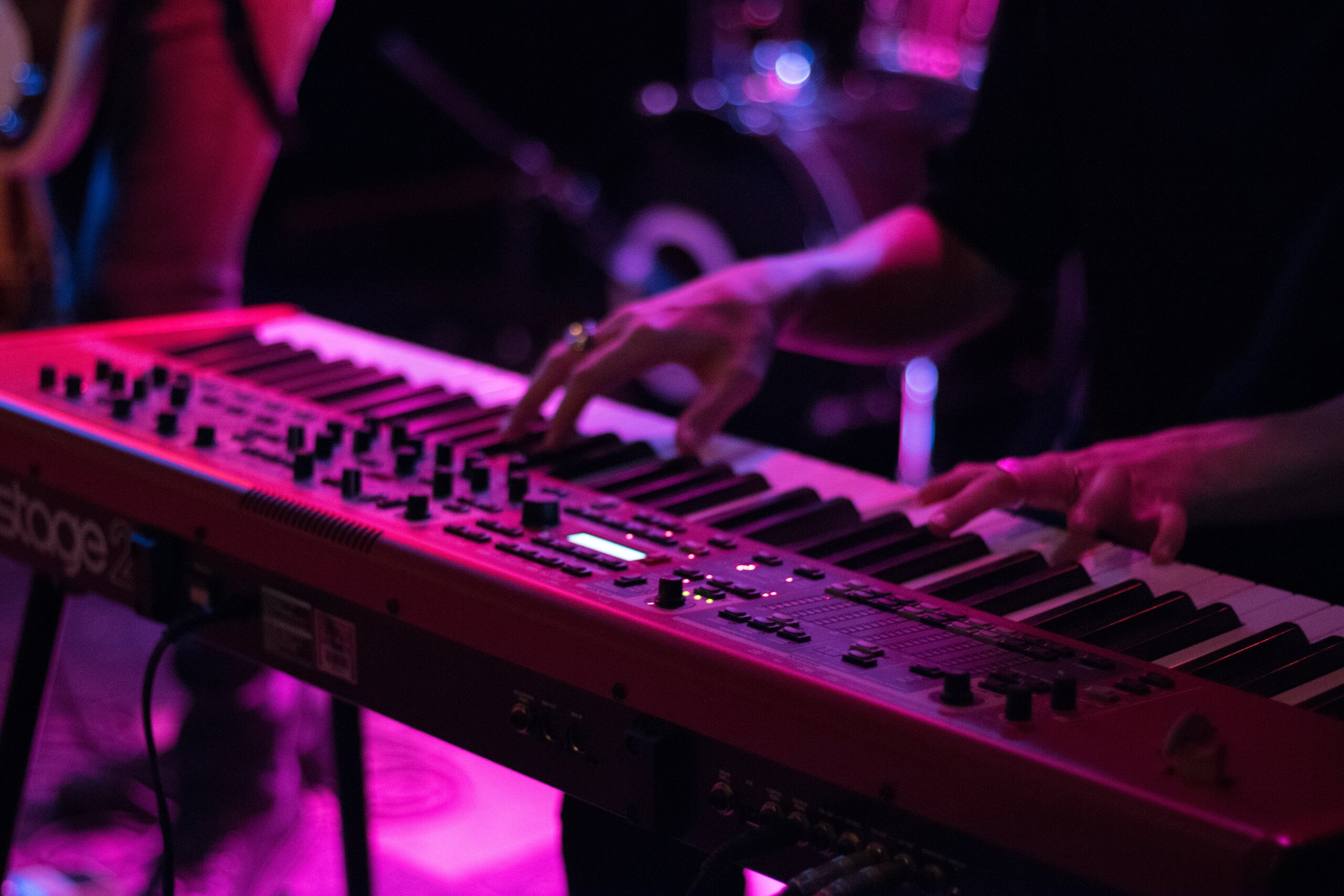
- I know how to play the piano.
- We know that hydrogen is the lightest element.
- Pashmina knows her Dad quite well.
- Łukasz knows how to solve quadratic equations.
- We know that the universe began with the big bang 13.7 billion years ago.
- By using a map we know how to get to the beach from the centre of Urla.
- When invited to someone's house in Sweden I know I should bring a present and take my shoes off at the door.
These examples suggest that knowledge is diverse and that there are many kinds. Playing the piano is knowing 'how' to do something. This is sometimes known as procedural knowledge. Knowing that hydrogen is the lightest element is 'knowing that' something is the case. We could call this ‘propositional knowledge’ because it expresses a fact or proposition. Already there are two kinds of knowledge in play. Knowing how to play the piano does not, at its core, involve language. Knowing chemistry involves (at least some of the time) making statements using language (and of course making statements with chemical symbols). Truth is not involved in playing the piano, rather one can be successful in this task or perhaps not. Truth is involved in doing chemistry. We hope that when we make a statement like 'water is H2O' that this statement is true.
Note also that the verb 'to know' has a subject and an object. There is someone (or some group) that knows, and there is something that they know. In ToK you will need to think carefully about both subject and object. In a given concrete situation you will need to establish what kind of knowledge is involved - is it knowing how to do something or is it, say, historical knowledge, and you will need to establish who is the knower - is the sportsperson, or the historian, or in some cases, just the general public.
Knowledge, at least as far as the ToK course is concerned, is something that is made by human beings, either singly or in groups. What knowledge is depends a bit on what kind of knowledge we are talking about. Knowing how to play the piano seems to be a skill that enables us to something. But this is also true for chemistry. Knowing that 'water is H2O' does help us to do useful things as well. So we could think of knowledge as something we need to do useful things in the world. This could be a rough definition to get us started.

Knowledge is produced by human beings to do things in the world
It is important in ToK to separate knowledge about the world from the world itself. A portrait is not the same as the subject of the portrait. A formula in physics about the physical world is not the same as the physical world itself. Knowledge in many cases is a representation of the world. In this sense it is a man-made 'picture' or 'map' of the world. And a map is not the same as the territory it depicts even if it allows us to navigate this territory.
Truth is the degree to which the representation fits the world. We want that knowledge is true - it is a representation that, in the right way, fits the world we are trying to describe. A map is true in that it corresponds in the right way to the world that is its target. So the X-files gets things radically wrong in saying that 'the truth is out there'. Truth is not out there. It is how well the map fits the territory.
This is a very important point to make in ToK and we shall return to it often. Knowledge is not the same as the world that the knowledge is about. Students sometimes end up confusing the two in their ToK essays.

The world is different from knowledge about the world
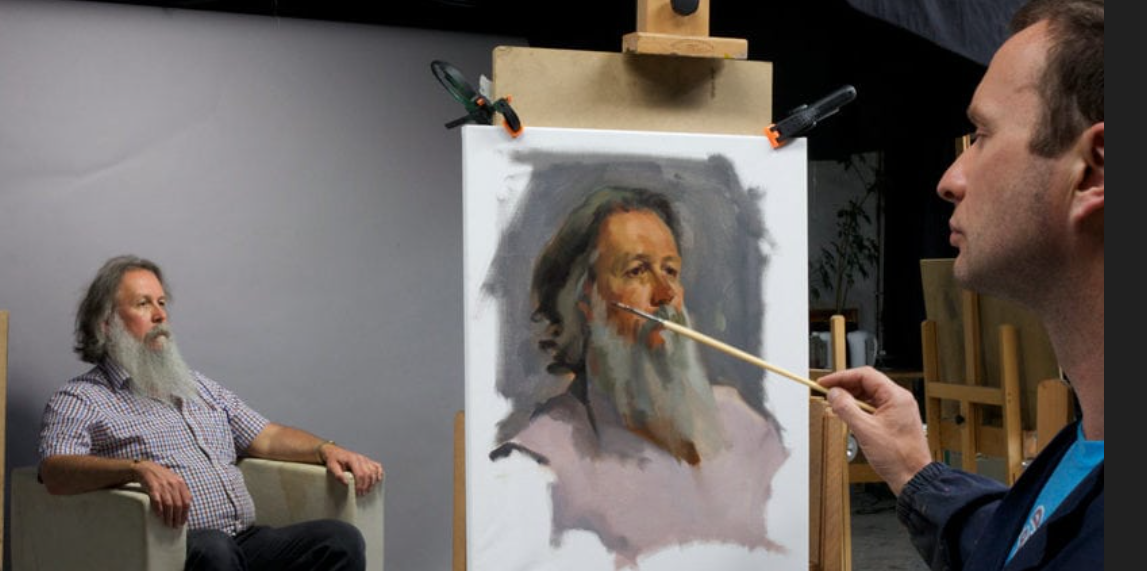
Let us develop this image of knowledge being like a picture of the world. Imagine watching an artist painting a portrait. The portrait will possess some features in common with the person that is being painted presumably, but there is an important sense in which they are different. The portrait is two dimensional, it is painted in oil paint on canvas, it is stationary (if it is not in Hogwarts!), and is therefore a rather simplified version of its subject. But this is just like knowledge. Knowledge has some things in common with its subject but is a simplified version of it which allows us to do things. This is what we mean when we say that some knowledge is a representation of reality.
Knowledge such as 'water is H2O' uses language to make a statement about the world. Language is a classical kind of representation that uses symbols to describe the world. Chemistry uses symbols in a special way to refer to the world at a very small scale. H2O is a symbol that represents the chemical structure of water as being two hydrogen atoms bound up with a single oxygen atom. H2O is a kind of portrait, in chemistry terms, of the water molecule. Much of the knowledge that we deal with in school is representational in this sense.
Not all knowledge is representational in the same way as the portrait is. For example being able to play the piano does not obviously involve symbols. Sure we often need to be able to read music but reading music is not necessary for playing. There are well known jazz pianists for example who cannot, or do not want to, read music.
Not every representation is knowledge of course. Some portraits may be of imaginary people, for example, or they maybe of creatures that do not exist like unicorns, or cannot exist, like dragons. Similarly not every sentence of English is knowledge. "We know that dragons exist" sounds grammatically similar to "We know that galaxies exist" but the second expresses knowledge while the first does not, even though they both use the verb to know. It is not true that dragons exist, so this representation does not correspond to the world. It is not knowledge.

In this case it is quite an easy task to establish that 'dragons exist' is false. There are no dragons to be found on our planet, no reported sightings, and no fossil bones to suggest they ever existed. Moreover, their supposed capability for breathing fire seems incompatible with modern thinking about the biological structure of living cells. Not only do they not exist but, according to current knowledge, at least, they could not exist.
But there are cases when a statement is not so obvious though. Do we know that the earth will be hit by a large asteroid impact in the next fifty years? Most scientists who have access to the data and the models made from the data will say that it is unlikely but they will not rule it out. Why not? Firstly because scientists are reluctant to be categorical because science has a habit of changing its mind rather quickly in the light of new data. Secondly, because we can never know whether we have all the relevant data - as we shall see in the sections on the natural sciences, this is completely normal in science. Therefore 'the earth will not be hit by a large asteroid within the next 50 years' is not knowledge. Someone might believe that this is true but it is just that a belief.
At least the belief about the asteroid has some justification. But there are cases when people do not have any justification at all for what they say except possibly for a vague feeling. My wife believes that stacking the forks and knives together in the dishwasher is better than separating them. As far as I can tell she believes this without a scrap of evidence! This is just an opinion that has very little support.
It is important to separate knowledge from beliefs and opinions.
Key Concepts
Knowledge - knowledge is produced by human beings to allow them to do things
Procedural knowledge - knowing how to do something.
Representation - a representation is like a picture of the world in symbols, words or diagrams.
Representational knowledge - some kinds of knowledge use representations to picture the world
Truth - how well a representation matches reality.
Belief - a representation of the world that may or may not be true. Not all beliefs are knowledge.
Opinion - a set of beliefs which lack sufficient justification to be knowledge.