Knowledge Framework

The Knowledge Framework (KF) is designed to help you organise your thinking in ToK. It is a way of linking and comparing different parts of the ToK course, themes and areas of knowledge. It is also a way of organising knowledge questions. You will see that there is a set of general questions in the subject guide listed under each KF element (pp.12 - 13). There are also knowledge questions organised by the KF under each area of knowledge and core/optional theme. The KF is a required element of the course and is actually very useful.
The knowledge framework comprises four elements scope, perspectives, methods and tools, and ethics. Each element suggests a different set of questions to analyse concrete examples of knowledge. For example, in the scope element, there are questions about what is this knowledge about, and why should we pursue it in the first place. So we could ask these questions about, say, History: What questions do historians ask, and why should we bother studying History in the first place? But we could ask the same questions about Mathematics, or about the knowledge involved in language. The beauty of the KF is that it allows us to make comparisons between different kinds of knowledge, which is exactly what is required in ToK (and in the ToK essay). The subject guide states that the knowledge framework is a required part of the course and you can expect that the Prescribed Titles, the questions, for the essay explicitly or implicitly expect you to organise your thinking using it.

The "Scope" element of the knowledge framework concerns what the area of knowledge or the theme is about. What is it trying to do? What is the raw material or the area of knowledge or theme? For example the natural sciences are concerned primarily with explaining natural phenomena, while the human sciences are concerned with human behaviour and society. Scope also asks why we want to study this area of knowledge or theme. What are our motivations for doing so? It also seeks to identify current unanswered questions, and explores the significance of each theme or area of knowledge in the broader sweep of human knowledge as a whole.

The "Perspectives" aspect emphasizes the significance of viewpoints and different ways of interpreting established ideas. Are there different perspectives taken in a particular area of knowledge? For example there are different perspectives on how large scale economic systems work, depending on whether economists believe markets to be efficient or not. Our job as ToK students is to figure out how you can have different perspectives in an area of knowledge. How can it be that two economists in the same corridor in a university can believe that government should leave markets to do their thing and that they should intervene actively in economic life? Moreover they both have evidence for their views. What does that tell us about the nature of the human sciences. Similarly, historians can analyse the same primary source material from different perspectives and with different purposes in mind. One historian might be interested in examining the role played by class and ownership of capital (a Marxist perspective) while another might be interested in the situation of women in a patriarchy (feminist historian). The knowledge that results from these perspectives may be different but adds to our overall, pluralistic, view of the world
These perspectives are often the result of a long process of evolution within an area of knowledge or a theme. In ToK we note that knowledge is not static but is changing and developing. The evolution of perspectives within a discipline is part of this change. It is important to take a longer historical view in ToK.
Thinking about these perspectives in the world of knowledge leads naturally to considering our own perspectives. What perspectives do we have regarding the kind of knowledge that we acquire? What shapes these perspectives? Is it important for us to try to understand those that have a different perspective? Awareness of your own perspective on a knowledge situation may ultimately help you see things from other perspectives. This will empower you to be able to deal with difference and will give you a way to resolve conflicts - a skill that is super important in today's divided world.
.jpg)
The "Methods and Tools" element explores the methodologies, tools, and practices involved in knowledge production. In a sense this is the core of the ToK investigation - what are the myriad ways in which human beings make knowledge in all its huge diversity? For areas of knowledge methods and tools does not only apply to the technology of knowledge production but also the specialised language disciplines and areas of knowledge employ to make sense of their patch of the world, as well as the concepts that underlie this language. Tools are therefore both material and conceptual. Methods, on the other hand, are the practices and procedures that are used to produce knowledge. Examples here are the experimental methods of the psychologist, the modelling practices of economists, and the proof methods of mathematicians. Local knowledges also have their methods. How the Inca civilisation produced and transmitted knowledge about agricultural practices high up in the hostile environment of the Andes is a case in point. We have our methods for navigating new geographical or cultural environments too.
Methods and tools refers directly to a key ToK question: ‘How do we know this?’ It is also a space where we can ask about the assumptions that we need to make to get the whole knowledge-making process started. Examining and being aware of these assumptions is an important strand in ToK thinking. What happens if these assumptions turn out to be false?
In this part of the knowledge framework we discover that not all areas of knowledge (and themes) are about making knowledge claims - much (if not most) knowledge is about being able to do things in the world. In these areas, methods and tools produce action rather than words. Even within those areas that are concerned with justifying claims made in language, we shall find that what counts as evidence to support these claims varies considerably. We may also observe that, in some cases, methods and tools vary across cultures and geographical and political regions. You will need to think about what makes an area of inquiry sensitive to these variations.
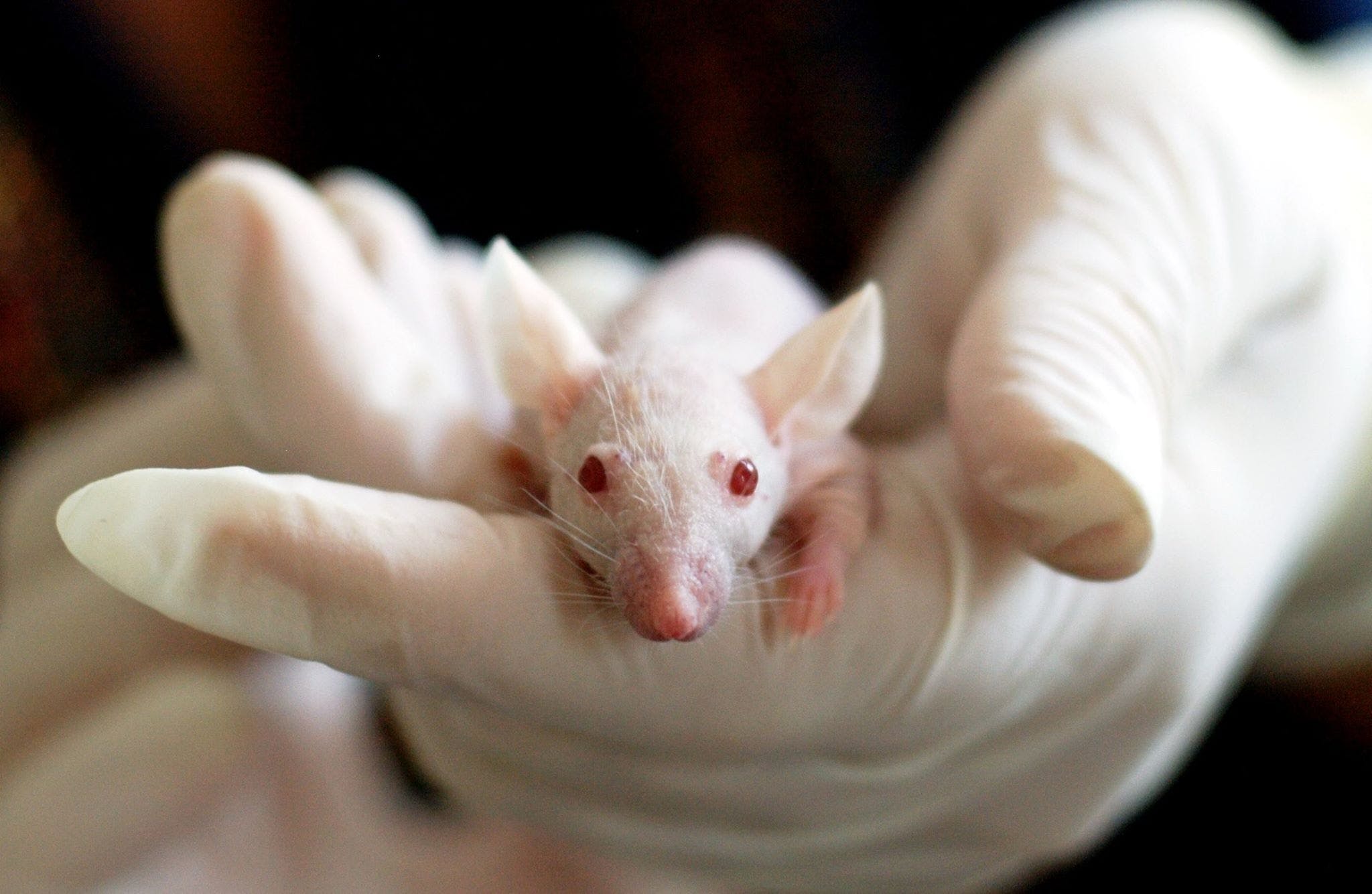
Last but not least, "Ethics" centres on exploring the impact of knowledge and knowledge-making on human well-being. Ethics is often taken to be the study of ‘how should we live life?' perhaps one of the most important questions we can ask. It is often narrowed to the question ‘What is the right thing to do? How can I avoid (or minimise) harm done to my fellow human beings (or other animals)? These questions are somewhat broad and in ToK they must be narrowed by linking them specifically to knowledge. ‘Given the involvement of my fellow human beings, what knowledge should I seek and how should I seek it?’ are ethical knowledge questions. Additionally, what responsibilities do I have as a knower? Do I have a responsibility to seek certain kinds of knowledge and not others? If I possess knowledge do I have a responsibility to use it in a certain way? Ethics may also require us to address questions regarding knowledge, inequality, and injustice. At a deeper level we can ask challenging questions about the relationship between facts and ethical values. For example, somewhat controversially, how does what we find out about the psychology of human beings affect what we regard as ethically acceptable behaviour, or ethically required duties or rights? For example, if psychologists tell us that the well-being of human beings depends crucially on close personal relationships with others, do people have a right to these relationships, and do we have a duty to provide them? If science gives us new insights about human beings could that result in a change in our ethical values? These are exciting and challenging questions and I hope you'll agree that they are important.