What is mathematics about?

In mathematics, the first problem to face as ToK students is what it is actually about. One might answer glibly that it is about numbers, but as we know, this is not true. In maths class, we spend time working with geometrical figures, doing algebra and puzzling over functions with not a number in sight. Students who go on to study mathematics at university are often bewildered by how few numbers are actually involved. So what is maths about? Read on...
Essential understandings
- Mathematics probably started because of the need to solve practical problems using symbols.
- It is not easy to define mathematics - a good definition needs quite a lot of advanced mathematics!
- A good working definition is that mathematics is about structures and mappings.
- There are at least two different views on the nature of mathematics: Platonism and constructivism.
- Platonists think that there is a kind of mathematical world out there which relates to our imperfect world.
- Constructivists think that mathematics is just a kind of game played by human beings.
- Mathematicians like to do mathematics for its own sake but it is very useful in science, engineering, the human sciences and the arts.
- Mathematics may be one area where it makes sense to think of knowledge as consisting in justified true statements.
Mathematics probably started with a mark on a flat stone in a farming community many thousands of years ago. How many cows are in the field? It is a deeply practical question. How do we know whether the neighbour has stolen anything? A simple mark such as 'I' for a single cow and then copying that mark for each cow in the field, being careful to include all of them and, at the same time, not counting any twice. Yesterday there were IIIIIIII cows in the field. Today there are IIIIII. Manipulating these marks is much easier than manipulating actual cows. Lining up the symbols shows that there is a missing cow. Better check that neighbour!
Arguably, the move from cows to symbols is a huge intellectual achievement - and perhaps one of the greatest achievements of humankind. What is achieved is being able to remove all the properties of those cows, their individual cow faces, their colour, and their size, except for one property - their number. That requires a massive amount of abstraction and is something that, probably, to this day, only humans can do. Sure, octopuses and pigeons can recognise the difference between different numbers of dots in an experiment, but only humans can use symbols in this way.
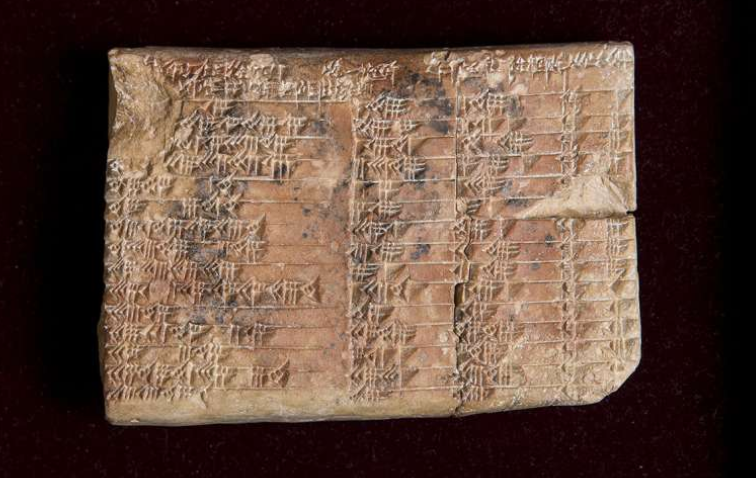
Of course, mathematics is not the only subject that is based on symbols. Language is symbolic, so all propositional knowledge is made by human beings.But mathematics is perhaps alone in creating a whole virtual reality with symbols - a kind of world of mathematics which is really quite different from, but relates to, our everyday world. In the world of mathematics, there are perfect circles, points with no area, parallel lines that remain the same distance apart to infinity, numbers, imaginary numbers, 5-dimensional space, well, actually infinite dimensional space. Well, you get the picture - the world of mathematics is rather special and is, in many ways, a perfect world.
Some mathematicians really do think that this perfect world exists in a kind of metaphorical parallel universe. Only the human world is imperfect, and we can never draw the perfect circle or the infinitely thin line. In the mathematical world, these things exist and we can contemplate them in our minds. Greek thinkers around the time of Plato approached mathematics in this way and for this reason, the idea that mathematical things exist in some kind of perfect universe is called the Platonist view. Other mathematicians regard mathematics to be just a kind of elaborate game played by human beings, just like chess. According to these thinkers, mathematics is a construction of human beings and it is, perhaps, unoriginally known as the constructivist view. Later on in this page, we shall see whether these two perspectives really make any difference to how we do mathematics. For now, we shall put them to one side.
In most areas of knowledge, deciding what the area is about seems, on the surface, to be a relatively simple job. Physics has to do with the physical world, of course. Anthropology studies human beings - it is already in the name. Psychology studies the mind for the same reason. And Biology studies life. It is usually the next question that gets difficult. OK, but doesn't physics also study forces and energy and things that you can't actually see, like quarks and so on? What aspects of human beings then belong to anthropology? What is the mind that psychology is supposed to be about? And what on earth is life?
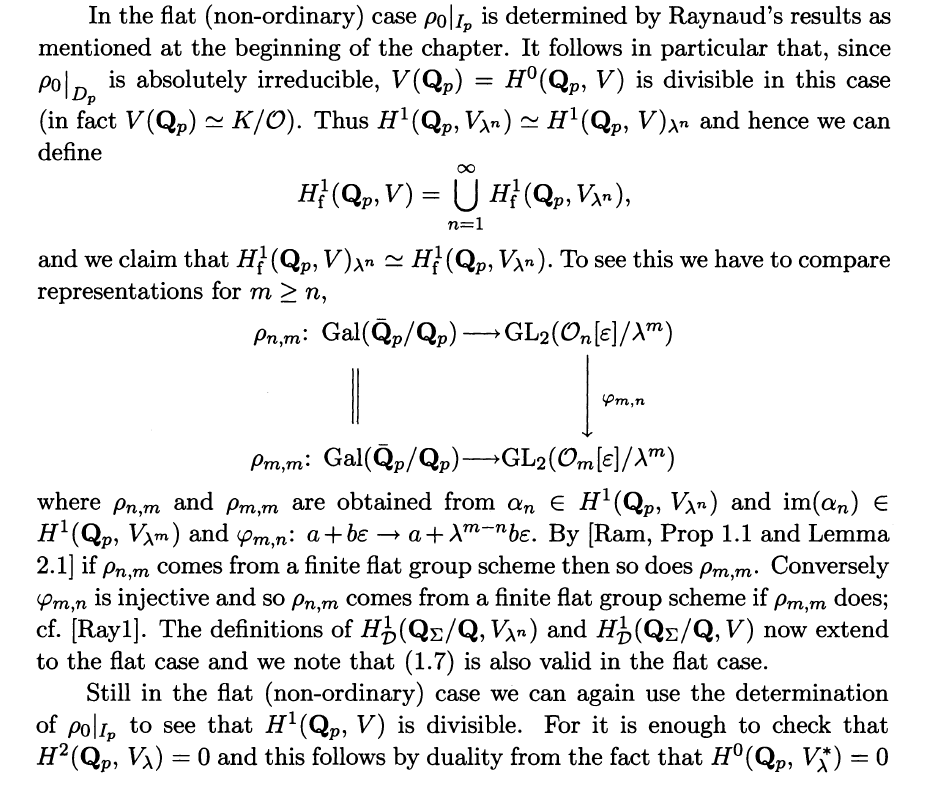
Mathematics is like Economics in that the first question is already difficult, let alone the second. You need to know quite a lot about economics to be able to answer that economics is about the allocation of scarce resources. You need to be quite an advanced mathematician to realise that mathematics has to do with sets, structures and mappings. Let us rewind a bit here. Perhaps we should start with the obvious question: isn't mathematics about numbers? Well, yes and no, but mostly no. It is true that numbers play a role in mathematics and that the maths we do at school features numbers as a central idea. But have you noticed that as you move up through the school, numbers seem to play less of a role and things like algebra involving letters and other mathematical symbols seem to take up more of your time? Moreover we spend some of our time in maths lessons drawing diagrams and shapes and graphs and so on. As indicated in the introduction, this move away from numbers continues into university studies. Even when you are studying number theory at university, you will encounter very few actual numbers except as part of algebraic expressions (see the picture below):
Numbers turn out not to be the most basic things that mathematicians study - they are examples of a more fundamental idea called sets. A general strategy in maths is to start with a basic, simple thing and then keep adding structure to it to make it more specific. A set is a very basic thing and it just means a collection of things. The things in the collection can also be sets. Just to freak you out, I shall start with an interesting example. Take the set of all positive whole numbers A = {1, 2, 3, ...}. The ellipsis sign (...) indicates that the set is infinite or goes on forever. There is no largest whole number (if you think you have found the largest, then just add 1, and you will get a larger whole number). We could also make a set of positive even numbers B = {2, 4, 6, ...} which is also an infinite set. We can now make a mapping from A to B by simply multiplying each number in A by 2. This is a very special mapping because it is what we call a one-one correspondence. Each number in A corresponds to one and only one number in B and every number in B is linked to a corresponding number in A. The one-one correspondence means that A and B both contain the same number of members. This is kind of weird because they are both infinite sets - but that is what mathematicians mean by two sets having the same number of members - that you can find a one-on-one correspondence between them. But there is another weirdness here, and that is you get set B by taking an infinite number of numbers away from A, namely the positive odd numbers {1, 3, 5, ...}. We say that B is a proper subset of A. So we get the situation where we start with a set, we take away an infinite number of things and we are left with the same number of things that we started with. Go figure!
I included the example above not just to freak you out but to show what mathematicians typically do. They deal with basic structures like sets and then look at mappings between them. This is a mathematician's answer to the question: what is mathematics about? In the most complicated mathematics, such as the picture above, there are structures (collections of letters and symbols) and mappings between them (arrows). But these structures are also found in the simple case of counting cows in the field. Counting the cows is just setting up a correspondence between the set containing the symbols I, II, III, IIII and so on and the set containing the cows. The condition that we count all the cows and don't count any twice is the same as making sure that the mapping between {I, II, III, ...} and the cows is a one-on-one correspondence. So simple counting is also about creating a special mapping between two sets. That is why I suggested that the discovery of using symbols to stand for cows in a one-on-one manner was actually an amazing achievement.
But is there a less technical answer to what mathematics is about? Perhaps we should frame the question more in terms of what it is that mathematicians do and why they do it. As we saw above, one answer could be that mathematicians explore this special mathematical world where there really are perfect circles, perfectly straight lines and points without any area. Mathematicians often have a very special kind of intuition about this mathematical reality and they literally live in it. Of course, they do ordinary things like drink coffee and so on, but when they talk about mathematics, they go back to this reality.
The next question, of course, is why they do it. One answer is that it is fun. The puzzles that mathematical reality throws up are fun to solve, and if they are difficult, so much the better. It is almost as if mathematics is a kind of video game on steroids and each new level introduces one to ever more weird objects. This is true, but there is also the inescapable fact that mathematics has turned out to be exceedingly useful for solving problems in the everyday world. Another answer to the question of why mathematicians do what they do is that maths lies behind pretty much every piece of scientific knowledge and every new piece of technology. Maths is increasingly becoming involved in the human sciences and the arts. These two answers distinguish two kinds of mathematics: pure mathematics and applied mathematics. Pure math is done for its own sake, and applied math is motivated by problems in the real world. This is not to say that pure mathematics is not useful. Often, the most pure mathematics turns out to have an important application. Moreover, mathematics designed to solve problems may also be of interest because of its purely mathematical features, which are quite different from the application. In this sense, the distinction between pure and applied is perhaps a bit too clear-cut and there is a lot of traffic between them.
Example of Pure Maths
This is an example that will be familiar to students studying the Higher Level Analysis course. Solve the differential equation dy/dx -ay = b
If we try the solution y = Cekx + B, then by differentiating, we get that k = a and B = -b/a. C is an arbitrary constant that needs to be determined by the boundary conditions of the problem.
This is interesting simply because of the mathematics of finding the most general function that fits the differential equation.
Example of Applied Maths
But why are pure mathematicians interested in trying to solve differential equations in the first place? In the early 17th Century, work by Newton and others showed that many of the natural laws that governed motion or temperature were expressible as differential equations - indeed, this was the motivation for the development of calculus by Newton and Leibniz.
Here is an example of a problem that gives rise to the same general equation solved in the 'pure' example.
If y is the temperature of a body at time t and a is the ambient temperature (the temperature of the surrounding air), then by Newton's law of cooling, the rate of change of temperature is negatively proportional to the difference between y and the ambient temperature a. If a body cools from 100C to 60C in 20 minutes how long it will take to cool to 30C?
The equation is dy/dt = -k(y - a), where k is a positive constant (the coefficient of cooling).
From the pure example above, we know that the general solution of the equation is y = Ce-kt + a
We just need to substitute the boundary conditions in to get C and k.
100 = C + 20 at time t = 0 so C = 80.
when t = 20 we know that y = 60, so 60 = 80e-20k + 20 which gives e-20k = 1/2 so that 20k = ln (2) so k = ln(2)/20
Substituting into the equation when temperature is 30 we have 30 = 80e-kt + 20 giving 1 = 8e-kt so -kt = -ln8
but this means that t = 20ln(8)/ln(2) = 60 minutes.
So, the temperature of the body will be 30C after an hour.
We shall not worry about the details of the mathematics here, although Higher Level Analysis and Approaches students will know this stuff. The important point is that the two examples involve the same general kind of equation. The pure mathematician cares about the general form of the solution and does not worry about the values of the constants C, k and a and b. The applied mathematician constructs a model of a real-world situation by applying a universal law of nature (see Methods and Tools: theories - laws, models and assumptions in the Natural Sciences). This gives an equation of the same form, but now the numbers C, k, a and b are important because they have physical significance in the problem. Pure mathematics is motivated by interest in the equation, and applied mathematics is motivated by the use to which the mathematical model can be put.
Mathematics is important in ToK because it is the one area where knowledge can said to be certain. 1 + 1 = 2 is certain, given the usual interpretation of these symbols. It is certain because, within the rules of mathematics, to say that 1 + 1 is not 2 is to contradict yourself. It is like saying that someone can be a married bachelor (in English, 'bachelor' refers to a man who is not married). That is a very high bar for truth. Even in the natural sciences, we accept that what is taken to be true today may well turn out to be false in 100 years' time. As we have hinted earlier in this handbook, mathematics may be the one area where taking knowledge to be justified true statements actually makes some sense. However, the 'belief' part may still be a problem. (see Core Theme: Scope 2 - Knowledge, belief, and other philosophical stuff).
As we saw with the examples above, mathematics plays a big role in the natural sciences because laws of nature translate rather nicely into mathematical language. Increasingly, the human sciences rely on mathematical models and inevitably use statistical methods. But there are increasing applications of mathematics in the arts not only through computer-generated graphics methods but also the realisation that the visual representations of some pure mathematics are just profoundly beautiful.
These examples also show how mathematics can describe concrete real-world situations and, therefore, give us knowledge about the real world, not just the mathematical world. These ideas are developed in the Perspectives section.
Key Concepts
Structure - a kind of mathematical object. The basic mathematical structures are sets. Almost all other structures are made up of sets. But there are more structured objects such as groups, rings, fields and so on.
Mapping - mappings are a basic mathematical operation that connects objects in one structure to objects in another.
Mathematics - mathematics is about structures and mappings.
Platonic conception of maths - Platonists think that mathematical objects such as perfect circles and so on really exist, possibly in a kind of virtual mathematical reality.
Constructivism - Constructivists think that mathematical objects are made up by human beings and that maths itself is an elaborate game.
Pure mathematics - maths is done for its own sake because it is fun (it really is!).
Applied mathematics - maths done because of its practical benefits. Maths is very useful in almost all areas of knowledge.
Mathematical model - usually an equation that describes the relationship between variables (quantities that can be measured) that occur in a real life situation.