What is a ToK Exhibition?

The ToK exhibition is the component of the ToK assessment designed primarily (but not exclusively) to test ToK thinking about the Core Theme and the two optional themes in the ToK course. It is an individual task in which students are to present an exhibition of three objects and accompanying commentary. Ideally, the exhibition is to be mounted and viewed in a physical space, but if this is not possible, then virtual exhibitions are also possible. The exhibition component accounts for 1/3 of the marks in the assessment of ToK.
What is the ToK Exhibition?
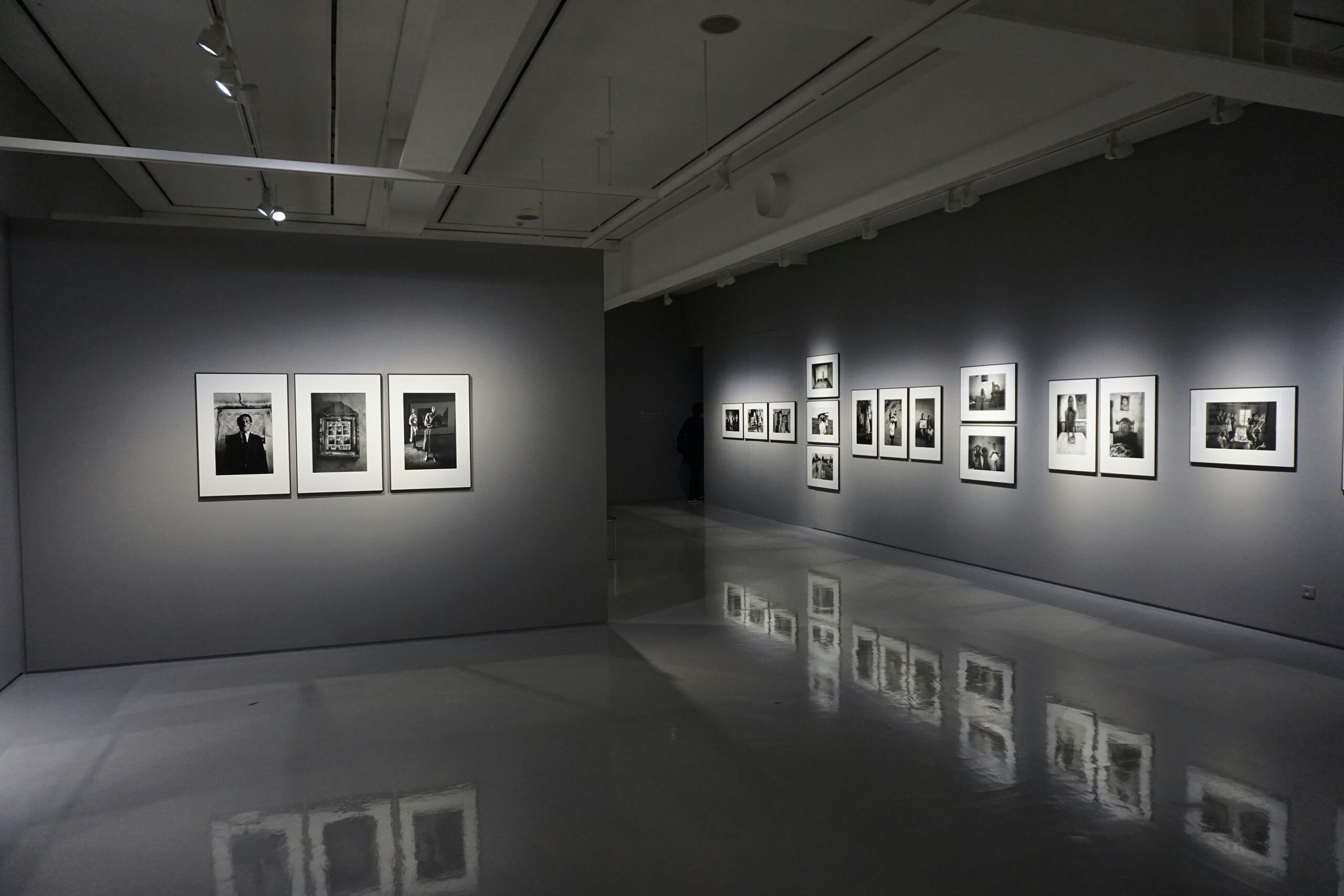
As explained in the page TOK assessment at a glance, the ToK exhibition is an individual assessment task that consists, rather unusually, of each student mounting a physical exhibition of three objects, ideally to be viewed by classmates, other students and teachers, and if possible parents, governors and other stakeholders in the school. As stated in the ToK Subject Guide "teachers are required to provide all students with an opportunity for their completed exhibitions to be showcased and exhibited to an audience" (p.40) The objects are to be accompanied by a commentary that explains how each object is connected to a prompt taken from a list of 35 in the subject guide (pp.30 - 41). The same prompt must be used for all three objects.
In contrast with the essay task, the commentary accompanying the objects is not a set of reasoned arguments, nor an exhaustive or complete treatment of the prompt, but a short description of each object and the knowledge situation it represents and a link to the prompt. Students will also need to include a sentence or two explaining the contribution of the object to the exhibition and how this is unique - how this object presents a perspective on the prompt that is not presented by the other two objects. The aim of the exhibition is not to answer the prompt necessarily, but to cast light on it or exemplify it. The commentary and photographs of the objects are compiled into a PDF file and assessed by the teacher. These PDFs are uploaded to the IB to be sampled for moderation purposes. On the basis of the moderation sample, the IB may change the scores of all exhibitions.
The TOK exhibition focuses on how TOK manifests in the world around us. This means that it shows how concrete objects from different areas illustrate our answer to TOK (2nd order) questions. For example, to answer the question, "What constitutes good evidence?" I need to find an object that serves as evidence and analyse its properties. I can use, for example, a beaker with the solution of salt and water that I used in a chemistry experiment to illustrate the idea that this experiment and our sensory perception might be good evidence for a scientific claim. This way, I would link the real world (Chemistry experiment) to the TOK world (evidence).
The PDF document that accompanies the exhibition should contain the following:
- a title clearly indicating the selected IA prompt (from the list of 35 prompts in the TOK guide).
- images of the three objects
- a typed commentary on each object, in which students identify each object and its specific real-world context, what knowledge the object exemplifies, link this to the prompt and justify each object’s inclusion in the exhibition (maximum 950 words).
- appropriate citations and references (not included in the word count)
Possible TOK exhibition formats
1. A class of TOK students hold an exhibition within one of their regular TOK classes.
2. The school hosts a TOK exhibition evening for parents and other members of the school community.
3. The school hosts a TOK exhibition event where students present to a panel of visitors from the local community.
4. A class of TOK students hosts an exhibition for younger students, for example, prospective DP students in the school.
5. The school hosts a combined event celebrating the Primary Years Programme (PYP) exhibition, the Middle Years Programme (MYP) personal project, Visual Arts Exhibition and the TOK exhibition.
6. The school hosts a combined “DP core” event where students discuss their TOK exhibition, CAS experiences and extended essay research question.
7. Two classes of TOK students in the same school, or different nearby schools, host exhibitions for each other to visit.
8. Students display their TOK exhibitions in a “virtual exhibition” by using an online gallery space.
9. Students display their TOK exhibitions in a central public place within the school, such as the library or entrance foyer, to help raise the profile of TOK within the school.
10. Students hold a TOK exhibition where teachers of other DP subjects are the audience and discuss the exhibitions with the students.
(Theory of Knowledge - Teacher Support Materials, 2020)
The exhibition as the exemplification of the prompt
In a sense, the exhibition mirrors the first part of the essay process - the choice of examples. The idea in the exhibition is that the three objects are chosen to give insights into how the prompt can be understood. They are intended to show how 'ToK manifests in the world'. What this means is how real-world objects get us thinking about real-world knowledge situations that allow us to understand how the prompt can be interpreted in a specific way. This may mean that the objects each represent a specific answer to the knowledge question in the prompt, but the objects could also represent different perspectives on the prompt. The exhibition is, therefore, a less involved assessment task than the essay and can be tackled earlier on in the course. In fact, the exhibition can be mounted at any point after the core theme and the two optional themes are completed. The ideal time is in the stretch of time at the end of the first year of the IBDP when things tend to wind down.

Run the exhibition at the end of year 1 to get it out of the way.
Students tend to enjoy it - so it can be a fun end to the year.
Having said this, teachers and students should not underestimate the exhibition. It may seem to be a simpler task, but that is not to say that it is without its own nuances and hidden difficulties. For example, although the task of the student is to link each object separately to the prompt, the whole exhibition should be balanced in the sense that each object should contribute its own understanding of the prompt. Objects should be chosen to complement each other and should not make the same point. Therefore there are skills to be developed in choosing objects - what we might loosely call basic curatorial skills. Perhaps it is a good example to take ToK students to the local museum or art gallery to see how the professionals curate their exhibitions. Indeed, the museum is a useful point of reference when thinking about the ToK exhibition. A useful test for a good object is whether it could reasonably be shown in a museum.
Objects
There is much written about what counts as an object, and ToK teachers tend to worry about this unduly. As I write later in this chapter, the better question is what counts as a good object (see What counts as an object?). Ideally, objects should be physical and capable of being displayed in the exhibition. However, digital objects are also allowed - there can be prints of screenshots of digital items such as Twitter posts and so on. Perhaps students should be steered towards physical objects - after all, they are surrounded by many of them in their daily lives - and they are usually more interesting to look at in an exhibition. Digital objects can be seen in museums but they tend to be in a minority and not the centre of attention. Moreover, students gravitate naturally to digital objects - they are the easy option - and there is something to be said for educators pushing students into those less comfortable spaces where they are confronted with new ways of thinking.
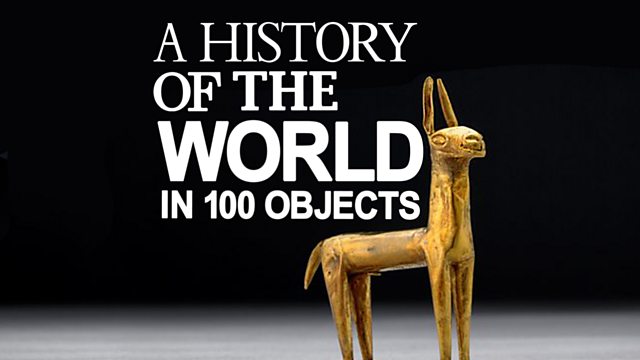
Indeed, the exhibition task was inspired by a series of 100 15-minute radio programmes, a book and an exhibition of physical objects in the BBC/British Museum collaboration A History of the World in 100 Objects (2010). It is envisaged that the student will not get the object choice right the first time and will need time and feedback to refine the choice. Students can use objects they have made themselves, although they are not allowed to make objects specially for the ToK exhibition.
Mounting a physical exhibition of physical objects is a wonderful way of raising the profile of ToK within the school. Invite parents, other students, the school board and SLT to your exhibition to reward the hard work of your students.
The commentary
The objects should be chosen to tell their own story. However, in order for them to do this, they will need to be identified and their (knowledge) context explained. This is where the commentary comes in; it performs a function analogous to the information cards accompanying a museum exhibition. The student has just over 300 words to give this background information and then show how a given object links to the highly abstract knowledge question in the prompt. The shortness of the text means that objects that are close to their intended target need to be chosen - they need to be directly involved in knowledge in some sense. There are not enough words for highly symbolic objects, which will need a passage explaining their symbolism and which do not tell enough of the knowledge story. In such cases, there are usually more direct objects available.
A good object has a knowledge context that links directly to the prompt - so that it 'tells the story itself'. There are not enough words in the commentary for long explanations or highly symbolic objects.
How is TOK exhibition assessed?
TOK exhibition is an internal assessment. That means that it is assessed internally by the teachers at school. When the marks are entered into IBIS, the sample is selected, and the moderation process begins. Based on the sample they mark, the moderators will decide about the marks for the whole cohort of students at your school.
Moderation
Moderation is a process of verifying the marks given by teachers to ensure a common standard of assessment around the world. Before you put the marks into IBIS, if more than one teacher is teaching TOK at your school, you should standardise the marks - agree on a common understanding of criteria based on a selected number of student's exhibitions. If you standardise before, there is less chance that your work will be unjustly re-moderated because of your colleagues' different understanding of criteria.
In moderation, depending on the size of the cohort, 5, 8 or 10 samples are drawn. Some top ones, some middle and some bottom ones. IB uses dynamic sampling in the moderation. That means the examiner first gets three samples from the chosen batch - mixed with samples from other schools, so the moderation is blind. If he agrees with the marks given, the moderation ends, and the marks are sustained. If there is some discrepancy between your marks and the marks of the moderator, the examiner receives the other samples to mark. Based on the moderator's marks, the number of points is adjusted for the whole cohort. The final marks are assigned based on the algorithm IB has created for this task.
The marks can drop, go up or stay the same. For example, I remember one year when our top marks dropped by 1 point, the middle stayed the same, and the lower marks went up by 1 point. If your marks change - do not stress too much; it happens to everyone! That means you must adjust how you mark your students because you may be too harsh or too benign. It took me a while and a lot of stress to finally understand the assessment criteria, but you will also feel comfortable using them after a while. It comes with experience.
The assessment criteria for the exhibition can be found in the Theory of Knowledge guide on page 47 (a simplified version can be found in Understanding the Exhibition Assessment Instrument). The TOK exhibition is 1/3 of the overall TOK score. Reaching a satisfactory level on the exhibition ensures a passing TOK grade independent of the essay score - this gives a good baseline for a good overall grade in ToK.
If all three objects are identified, a maximum of 10 points can be awarded. When only two objects are identified - up to 6 points can be awarded if only one - up to 3 points. The exhibition is marked using Global Impression Marking. That means that teachers and examiners look to pre-marked exemplars to ascertain what the words in the assessment instrument mean. (see Understanding the Exhibition Assessment Instrument)
The top five problems in student exhibitions
- The top problem is that students do not explain what knowledge is involved with the object. Students are often too interested in the objects and not interested enough in the knowledge that they objectify. This makes it very difficult to link the object to a prompt which is a question about knowledge. The student should ask herself the key question 'what knowledge is at stake with this object?' If she cannot answer the question easily then she should choose a different object.
- The objects are too far away from the prompt. This means that the student needs to use too many words making the link and the object does not cast much light on the prompt.
- The three objects overlap in their contributions to the exhibition. This is where the justification of the inclusion of the object is an important part of the commentary. The student needs to show how each object contributes uniquely to our understanding of the prompt.
- The object is not well linked to the prompt because the student does not tell us what it is in the knowledge situation that corresponds to the key words in the prompt. As in the essay, the links in the text between the knowledge situation and the keyword should be explicit. The reader is left to fill too many gaps.
- Students use generic objects to which they have little connection. These objects are unlikely to tell us much about a prompt that should be linked to a specific knowledge situation.
- (bonus) The student spends too much of the text describing the object and not enough of it linking to the prompt.