What is History?

In the Theory of Knowledge course, History holds a special place. Its methods are quite different from those of the natural sciences, and although it is a Humanities subject, it is somewhat different from the Human Sciences. These differences can be mapped using the knowledge framework, particularly Scope and Methods and Tools. Rather than doing experiments, it analyses documents, and rather than statistical tables, diagrams and mathematical formulae, it employs a kind of storytelling. In this page, we explore the special qualities of knowledge in History and the ways in which this knowledge is produced.
Essential understandings
- History investigates past events by analysing existing evidence.
- Past events serve as historical facts, and when organised into causal relationships, they form a historical narrative.
- History is similar to the natural and human sciences in that it aims to understand and explain phenomena.
- The main difference is that these phenomena are events in the past and that it is the business of History to provide a unique narrative, not a general law.
History is an academic discipline that investigates past events by analysing existing evidence and creating a coherent narrative to help us understand the past. Let's get a big misunderstanding out of the way first. History, as an area of knowledge, is not the same as 'the past'. It is the study of the past through documents that are very much present. These documents are evidence that allows us to infer historical facts about past events (The components of knowledge ). These historical facts make claims about what happened, when it happened, and who was involved based on historical sources, mostly documents. But this is not history yet, even if we put these facts in chronological order. Just as a collection of scientific results is not scientific knowledge, facts are only the building blocks for creating historical knowledge. To produce knowledge in history, historians analyse the facts and make claims about the cause-and-effect relationships between them to create a historical narrative - a story describing what happened and, importantly, why it happened. So, let's get this clear: History (as an area of knowledge) is a collection of historical narratives created by professional historians - it is what historians do. These narratives help us understand the motives and decisions that were made by historical figures but also predict the future course of events (if we learn from past events).
When investigating a question about a past event, historians take into consideration a variety of factors. This includes the historical documents and historical facts, but also existing historical narratives that describe the relevant political, military, social, religious, scientific, cultural and economic contexts existing at the time. History is, therefore, a complex web of narratives.
Historical fact is an accepted statement about the events that happened in the past that corresponds with the historical evidence gathered by historians.
Historical evidence - documents, witness statements and artefacts gathered by historians to support the historical facts.
Historical narrative is an account of the past, including interpretations of reasons and consequences of different historical events.
Historical truth - an agreed-upon interpretation and understanding of the past based on historical evidence.
History can be written about any aspect of human activity. For example, there are histories of art, science, music, and other knowledge disciplines, as well as industrial history, history of sports, economic history, and history of religion. Therefore, we can come across History often when we are least expecting it. However, this does not mean that just thinking about the past of a discipline is doing History. As we shall see in the following pages, doing History means following a specific set of methods. When writing about History in your ToK essay, you are on safe ground if you actually name historians who have used the historical method to write about the past.

History is not the same as the past.
History (as AoK) is what historians do.
"History’s primary purpose is to stand at the centre of a diverse, tolerant, intellectually rigorous debate about our existence: our political systems, leadership, society, economy and culture." (History Today)
Knowledge of the past is fundamental to society. Everything that happens in the present and what will happen in the future is rooted in the past, and the knowledge about these events allows us to better understand what is happening and what might be the possible consequences of current trends. For example, knowledge about radicalisation that happened before World War II might give us an insight into the possible consequences of radical movements in the present. History informs us about the historical tensions between nations which are the sources of today's conflicts (like the Israeli-Palentine conflict or Russia-Ukraine war), helps us understand migration patterns or teach us how different decisions affect impoverished communities.
"Histories are useful for telling us how we got “here” " (Faridah Zaman, Associate Professor of History, University of Oxford) - is it possible to understand who we are without knowing our history?
However, this does not end the list of benefits of knowing history. Historical knowledge is also important for us personally. It gives us a sense of identity and belonging and allows us to create shared memory. Being Polish, my identity is shaped by the wars, partitions and occupation, as well as the great political changes that happened since 1989. Knowing the history of our nations allows us to create our local identities so important in the times of global citizenship. Retaining that piece of our identity makes us appreciate our motherland and shapes who we are. But history is not only of a nation. Our local histories and ancestry research can also provide us with information crucial in shaping our identities and acknowledging our roots.
Traditionally considered a humanities subject, history also teaches us about human nature. It allows us to analyse and understand the consequences of power abuse, greed or a sense of superiority, but also the incredible resilience and pride of certain historical figures or communities. As we shall see in later pages, how it differs from human sciences like psychology or sociology is that it deals with unique narratives rather than general principles. We learn from History through particular stories rather than patterns of general behaviour.
Knowledge of history is also the greatest protection against misinformation and propaganda so common today. Learning history requires critical thinking and analysing multiple perspectives - the skills necessary to distinguish truth from lies. It also teaches us how to verify sources of information and evaluate different interpretations. It also provides us with examples of how propaganda was used to spread false information and gain power, resulting in manipulation and the promotion of certain perspectives.
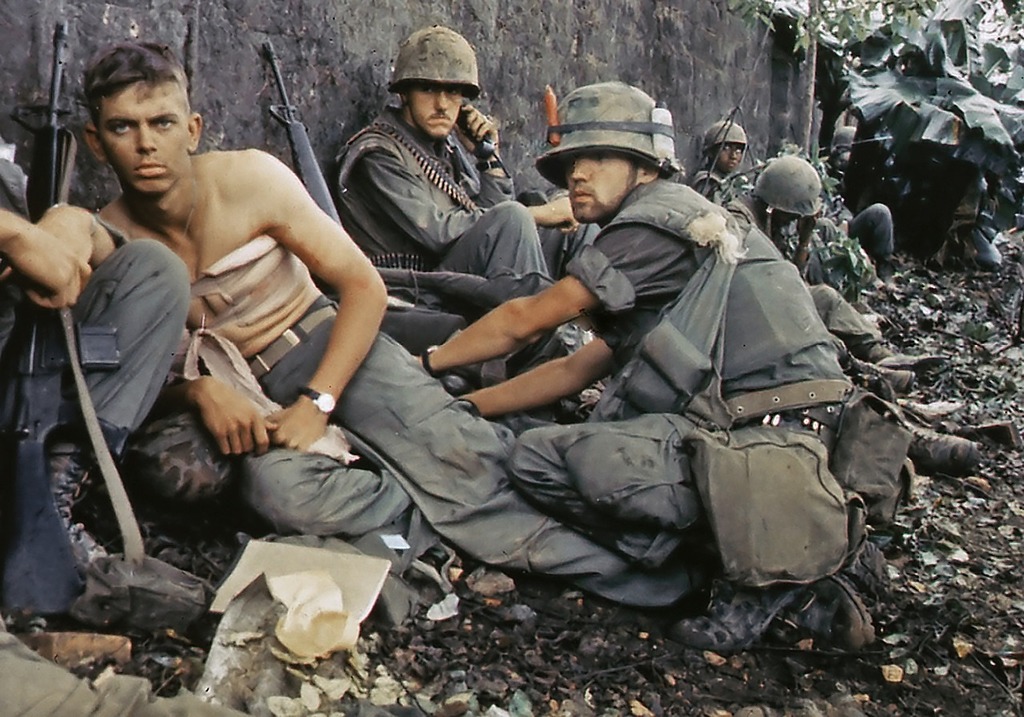
The Vietnam War (1955-1975) was a complex conflict involving the communist government of North Vietnam and its allies in South Vietnam against the non-communist government of South Vietnam and its principal ally, the United States. The war became highly controversial, leading to protests and debates globally.
During the Vietnam War, the media played a crucial role in shaping public opinion. The U.S. government sought to control the narrative by emphasizing successes and downplaying challenges. Concurrently, North Vietnam employed its own propaganda to present a narrative of a victorious struggle against imperialism. Journalists, such as those associated with the "New Journalism" movement, provided vivid and often critical accounts of the war. Iconic images, such as Nic Ut's photograph of a young girl Phan Thị Kim Phúc OOnt running naked after a napalm attack, contributed to anti-war sentiments. Some used manipulative techniques through media coverage to present their stance on the war. Being familiar with the historical narrative and aware of manipulation helps us understand the media's role in today's conflicts, such as the Israeli-Palentinian or the Ukraine-Russian War.
Source: Wikipedia
When we talked about Natural Sciences, we understood science to be a systematic approach to investigating and explaining phenomena in the natural world. Human Sciences differ from Natural Sciences because human beings, their society, and behaviour, are the object of study. But in both cases, the aim is to find patterns and produce general principles and laws - science, in general, is nomothetic. Does History fit into either of these categories? In History. and we mean human history here not natural history, we do study human beings, their societies and institutions, their actions, and the reasons they give for their actions, not in the present but rather in the past. Historians are concerned with establishing what happened in the past and why it happened, and how it fits into a larger story about the time when it happened. Evidence for historians are traces of the past in the form of primary sources: documents or artefacts - sources that are from the time of the event under investigation and linked to it.
Although historical narratives do provide some understanding of the present, it is not the aim of history to find some universal patterns that can be applied today. In this sense too, History differs from both the Natural and Human Sciences, History is idiographic - it aims to understand particular events rather than more general patterns. Wesseling suggests that it is also difficult to talk about the progress of knowledge in history. Although with the amount of evidence we may now know more about some historical events, we cannot really claim that what was known before was not true - it was just based on incomplete evidence (Wesseling).
While the historical method superficially resembles the analysis of qualitative studies in Human Sciences, there are substantial differences. Perhaps it is an obvious point, but no historical evidence is actually produced for the purpose of writing history - unlike evidence in the Natural Sciences and in the Human Sciences, which is often produced specifically to make knowledge in those areas. Historical evidence is the remnants of documents used in everyday life for many different purposes: notes of meetings, agendas of leaders, diaries, letters, legal documents such as treaties, transcriptions of phone calls, and even receipts and bank statements. These documents, therefore, retain a trace of their original purpose. They are written from a particular perspective, and certainly, they are written by a particular person with a given aim in view. Moreover, there may be gaps in the record and the documents themselves may be lost or incomplete. It is the job of the historian to take all these perspectives, purposes, and gaps into account and produce a historical narrative that makes sense of them in an even-handed manner. This is what the historical method is designed to do (see What do historians actually do?).
Nomothetic - aimed to create laws, general ideas or principles.
Idiographic - focused on individual people or cases, helping understand their uniqueness.
History | Human Sciences |
|---|---|
Similarities | |
Supported by Natural Sciences and technology in their investigations | |
Motivated by the need to understand | |
Problems with the objectivity of knowledge | |
Employ inductive and deductive reasoning | |
Conclusions are not absolute and are open to changes | |
Use systematic and rigorous methods | |
Differences | |
Studies human behaviour in the past | Studies human behaviour in the present |
Analyses primary and secondary sources to draw conclusions about the past | Uses empirical evidence from quantitative and qualitative methods to draw conclusions about the present |
Creates narratives that explain the past | Creates theories that explain the behaviour |
Not able to test its hypothesis as the past does not exist any more and we cannot recreate the conditions | Able to test its hypothesis through experimentation |
Idiographic | Both nomothetic and idiographic |
The data is incomplete and needs to be selected to answer the research question | The data is gathered to answer the research question and conclusions represent the whole set of data |
| Causes refer to motives, purposes, intentions, aims and policies, and can be established based on reasoning | Causes are established through the manipulation of the independent variable in the experiment |
Source: Courtney and Courtney, Ajaegbo