What makes a natural science?
.jpg)
When you think about science what is the first thing that comes to your mind? Do you think of a slightly crazy 'mad professor' working alone in his lab surrounded by banks of sophisticated equipment plotting mankind's destruction? Why is it a man? Why is he working alone? Why is this person thought to be insane in a way? Obviously this strange image is just a media cliche, nonetheless we need to ask why this image is so deeply embedded in the public consciousness and we need to disentangle the truth about the natural sciences from the stereotype.
Essential understandings
- A key question is whether the natural sciences are somehow special as an area of knowledge
- The natural sciences study the natural world independent of human beings
- In this sense the hope is that natural scientific knowledge is objective
- Science uses methods that hopefully cancel out the human factor inherent in human investigators
- Science is both a body of knowledge and a set of methods.
- The natural sciences seek natural explanations for phenomena.
- Some natural sciences aim to predict future phenomena
So what is a natural science? As is often the case in ToK it may be easier to give examples than actually come up with an abstract definition. We know that Physics, Chemistry, and Biology are natural sciences studied in the IB. In the text box below we shall look at other examples of natural sciences. In that sense then it is relatively easy to pick out the natural sciences in university catalogues. But of course what we want to do in ToK is to work out what features they have in common. Is there some common subject matter or some method that holds the area of knowledge together? The reason we want to do this is to be able to talk generally about the area of knowledge and how it operates and produces its knowledge.

In ToK it is useful to find a defining feature that picks out all and only those disciplines that belong to an area of knowledge (a so-called necessary and sufficient condition). But we must always be prepared to find that there is no such feature.
We might also want to go further and say things about the degree of confidence we have in scientific claims, the ability of science to predict future events, and the wonderful capacity science has for furnishing our world with amazing gadgets. Underlying this line of speculation is the thought that somehow there is something very special about the Natural Sciences. By this I mean that there is some feature that all the natural sciences possess that is not possessed of other areas of knowledge - a defining feature. It is the job of ToK to try to find out what it is. Of course, there is always the possibility in ToK that we are wrong, and there is nothing special that marks out the natural sciences from other areas of knowledge. (In fact this is the view held by some thinkers such as the philosopher of biology John Dupre in his 2001 book Human Nature and the Limits of Science) If that is what we find then so be it. We must follow the investigation wherever it takes us - even if this is inconvenient from a ToK point of view.
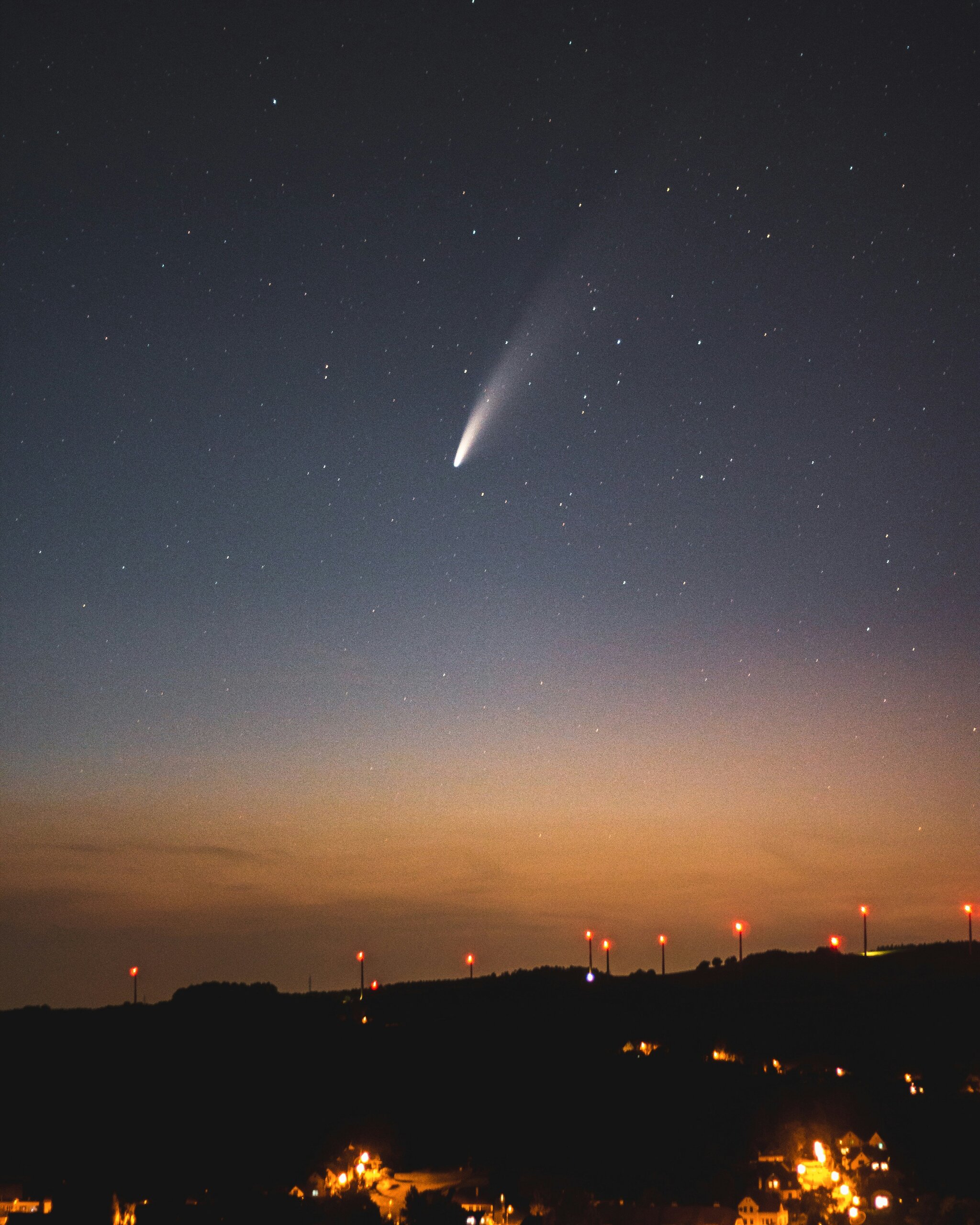
Let us start with this question then. Is there something special that marks out the Natural Sciences from other areas of knowledge? What could it be? Certainly the natural sciences involve special methods. They involve observation and measurement, the construction of experiments, the analysis of results, often using mathematical procedures, the construction of models, the further construction of theories, the creation of new experiments to test these theories, the issuing of predictions about future events and so on. We shall examine all these methods in the pages under Methods and Tools. The problem is, of course, that other areas of knowledge do these things too. We find experiments and measurement in psychology and models and mathematical methods in economics, neither of which is normally considered a natural science. The difference is that the although these subjects do use similar methods, the target they study is rather different from the Natural Sciences, Both economics and psychology study the behaviour of human beings in their societies. We could suggest that the Natural Sciences study the natural world bereft of human interference. The kinds of thing of interest to the Natural Sciences would be around even if humans did not exist. The same cannot be said for psychology or economics.
This last thought takes us further. Perhaps natural scientists have a particular attitude to their subject matter. They see the natural world as being like it is independent of how we observe it or whether there are any human beings around to observe it at all. The sun would still shine even if we weren't around to observe it according to physics and will probably shine long after humankind has ceased to exist. These features of the world exist independent of human will or intentions. If there were no human beings, Hydrogen would still be the lightest element. This is not the case with 'human-made' areas of knowledge such as the human sciences, history or the arts, where the subject disappears if you remove human beings from the picture. This quality of being independent of human will or intentions, or indeed human observations is one sense of the word objective. The idea that the features of the natural world are independent of human will, intentions and observations is an important one in ToK and is a good first attempt at capturing the essence of the natural sciences.
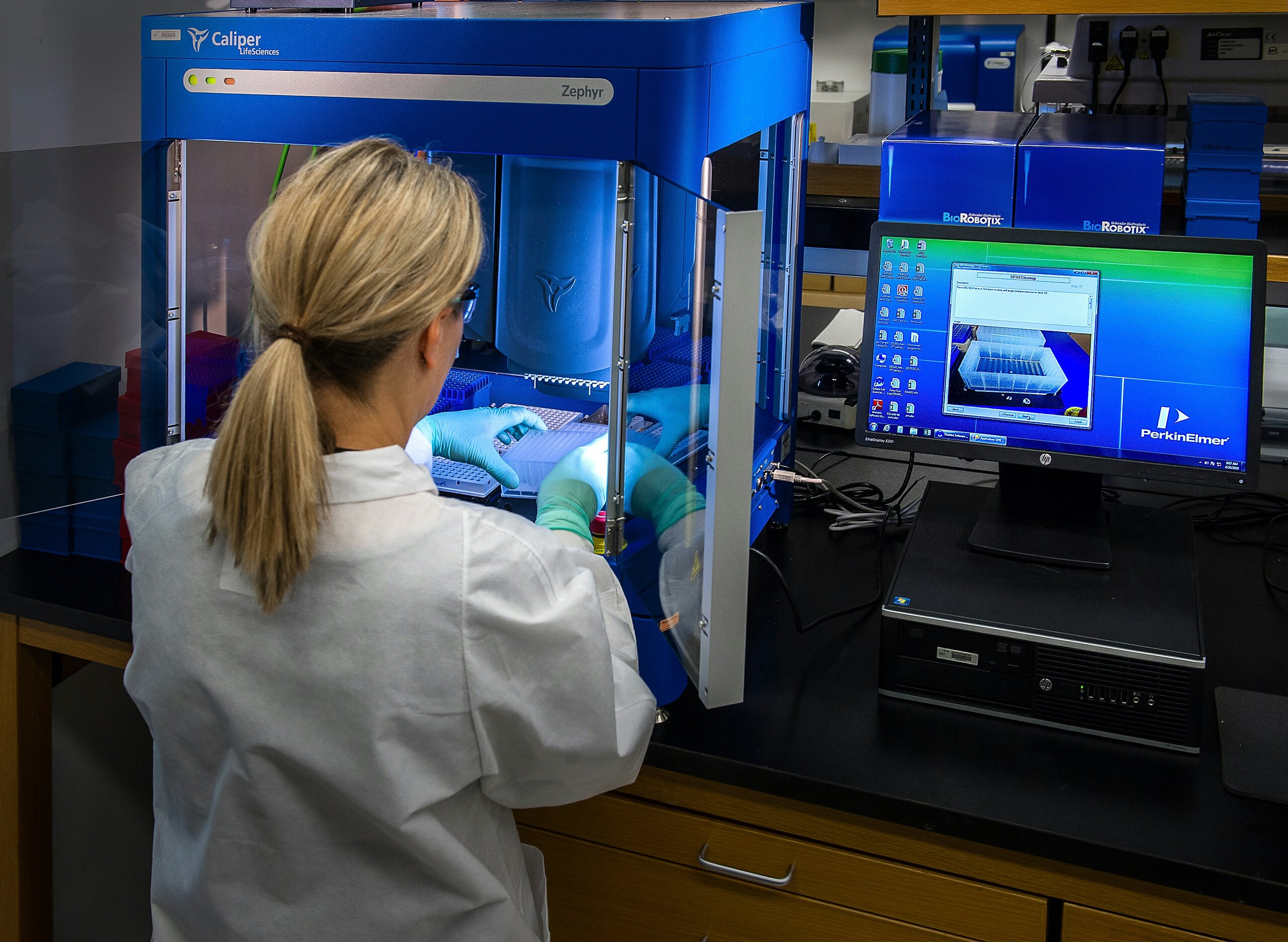
But let us back up here. Aren't scientists human and do they not have wills and intentions and so on, and do they not make human observations of the natural world? Well yes. So how can science tell a story about the world that is independent of these things? This is another key idea. Science needs to use methods that are able to deliver this objectivity - there must be something about the methods of science that somehow cancel out the human component. This is where the scientific method comes in. This is why we want scientific results to be replicable, why it does not matter where in the world you do an experiment and it does not matter who does the experiment and what socks they are wearing. The method is designed to make the results immune from these human factors.
Science deals in brute facts, facts that are independent of human desires, cultures, histories, and perspectives. That water is H2O is a brute fact. It is true independent of the observer's religion, political affiliation, gender, ethnicity and age. It seems to be a classic example of knowledge according to the notebook metaphor - 'water is H2O' is a sentence written down in our inner notebook. It is true, and there are other sentences that justify it. Perspectives don't come into it at all (see Kinds of knowledge). As we shall see in the following pages, complete objectivity may be more of an ideal than a reality, as it is in many other areas of knowledge. We may find that the gap between the Natural Sciences and these other areas is smaller than we first thought. We may also find that there is even a tiny bit of room for perspectives in science! More on this later.
If we accept then that we can characterise the Natural Sciences both by their subject matter - the world independent of human beings, and their methods - designed to cancel our the human factor, the next question is what is the purpose of the Natural Sciences? Why do we do science? What do we want to achieve? As the science writer Michael Shermer puts it: science is “a way of looking for natural explanations for all phenomena”.

"Science is a way of looking for natural explanations for all phenomena" Michael Shermer
Of course, this answer raises the question what is a phenomenon, what counts as an explanation and what do we mean by 'natural'. These questions are more challenging than they first seem, and we shall deal with them in more detail later. For now, let us say that a phenomenon is something in the natural world that puzzles us. For example, the phenomenon of lightning, that bright flash between a cloud and ground during a thunderstorm, was a puzzle for much of human existence. An explanation is a piece of text or a diagram that gives us an understanding of a phenomenon, either saying what it is, how it is caused, or both. In the case of lightning, an explanation is that it is a rapid discharge of a difference in electrostatic potential between a cloud and the ground. It is caused by the building up of a charge in the cloud through the movement of air particles against each other. A natural explanation, broadly speaking, is one that only involves material items such as matter and forces and does not involve 'spooky' immaterial things such as supernatural beings. The aim of science then is to produce theories and models that can be used to explain many phenomena. There is a kind of efficiency here. By using a few scientific tools we can explain many things.
We shall come back to explanations later in this module. Let us move on to examples of Natural Sciences.
The sciences are about producing theories and models that can explain many phenomena
As an AoK, the natural sciences is a body of knowledge consisting of organised disciplines. It can be divided into four main disciplines: Physics, Biology, Earth Sciences, and Chemistry. Each of these disciplines divides further into sub-disciplines or fields; so, for example, Chemistry divides into five major sub-disciplines: organic chemistry, biochemistry, inorganic chemistry, analytical chemistry, and physical chemistry; physics includes areas such as astronomy and cosmology, as well as fields like elementary particle physics or condensed matter physics.
Each scientific discipline looks at a different aspect of the natural world. Each discipline is set up to explain a particular set of phenomena, for example, cosmology is interested in the physics of things like galaxies, quasars and black holes and how the universe evolved. A particle physicist, on the other hand, is interested in a different set of phenomena such as what particles constitute atoms and what happens when you smash protons together at high speed. Of course, some patch of the world can be viewed from two or more different disciplinary perspectives. For example, the chemical composition of water H2O may be investigated by chemistry, the role of water in the functioning of a cell may be studied in biology, physics may study how water flows down a pipe, while the earth sciences may study water as part of the hydrological cycle. The 'thing' may be the same - water - but the phenomena involving water are different and are studied differently in the different disciplines.

In this sense, each discipline of the natural sciences gives us the tools to investigate one aspect of the world (or universe) around us. They seek explanations for the phenomena of the natural world around us using scientific methods (like systematic observation and experimentation, modelling, and theory-making), and provide us with quantitative results of these investigations (Ledoux, 2002, p. 34). On the whole, the natural sciences are geared towards explaining what phenomena are and how they come to be by appealing to a larger understanding of the material world. In some disciplines, such as biology, there may be explanations concerning 'why?'. For example, to understand why we sweat and shiver, biologists will appeal to the function of these phenomena in maintaining the body at approximately 37°C. Some scientists are suspicious of 'why?' questions because they imply a purpose that seems extra to the project of giving a purely natural explanation. In all cases, though, the sciences are about explaining particular processes, things or events using more general principles with greater explanatory power. Each principle can be used to explain many events. There is a process here of going from the particular to the general. We shall see later that this is a basic feature of many areas of knowledge - the explaining of many individual events or things by appealing to a few general principles.
Key Concepts
Natural sciences offer a systematic approach to investigating the natural world and provide explanations of how and why certain phenomena occur by interpreting empirical evidence in search of an existing pattern.
Phenomenon - a puzzling event or situation to be explained.
Explanation - a solution to the puzzle posed by a phenomenon - usually a piece of text or a diagram.
Natural explanation - an explanation that only draws upon material items such as matter and forces (and not human or supernatural desires).
Objectivity, in this context, means that knowledge and its production should be independent of human values or desires. Whether this is attainable is another question.
Brute fact is a fact that does not depend on any perspective. Objective knowledge depends on brute facts.