Recent posts View all
Home of real teaching & learning
  • Full support for teachers
  • Focus on critical thinking
  • Engaging classroom activities
  • Integrated student eBook
  • Assessed tasks / qBank
  • Practice exam questions

The InThinking Guarantee: Our sites are written by expert practitioners and not by AI

See our AI policy

Disclaimer: InThinking subject sites are neither endorsed by nor connected with the International Baccalaureate Organisation.

Don't miss out, find out!

Find all InThinking events at
inthinking.net

Nobel Prize Activity
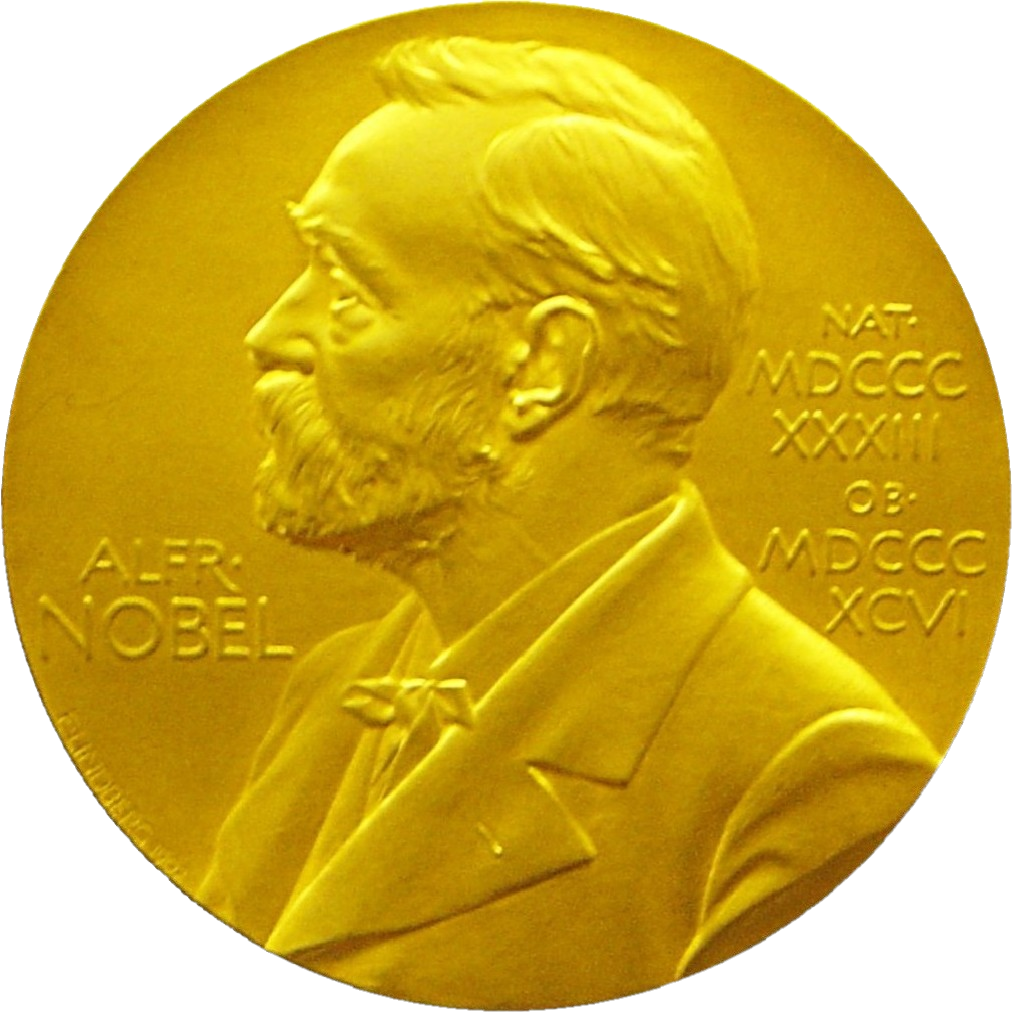
The best TOK lessons use real-world materials and recent examples. And in Nobel season, what better way to celebrate than by showing students how relevant TOK is in the Nobel Prize world? I hope this small activity will inspire you to develop it into a valuable lesson for your students. 

Today I want to share a small TOK activity linked to the Nobel Prize season. 

It is called: Beyond the Headline

Ask students to form 6 small groups. Give each group one prize announcement, press release, or official description of the discovery, and a news report. Suggestions for materials are listed below. In 20–30 minutes, ask them to:
1.    Identify the contribution: What is the achievement awarded? What is its value? Why is it valuable and for whom?
2.    Explore the accompanying knowledge questions listed below.

Nobel Prize

Possible Materials

Knowledge Questions

Physics

Ice at the South Pole reveals cosmic particle accelerators

Francis Halzen wins Nobel physics prize for Antarctic 'ghost particle' hunt

  • How can indirect evidence justify claims about phenomena we cannot directly observe? Can we use uncertain observations to justify scientific knowledge?
  • How do new instruments expand the scope of scientific knowledge? How do the limitations of scientific instruments influence what we can know?
  • What role do theoretical assumptions play in interpreting observations? When observations conflict with predictions, how should scientists decide whether to revise their theories or their methods of observation?
Chemistry

They solved chemistry’s asymmetric mystery

Chemistry Nobel awarded for solving mystery of how ‘handed’ organic molecules can emerge

  • What role do theoretical assumptions play in interpreting observations?
  • What is the value of a theoretical explanation before it can be demonstrated experimentally?
  • To what extent can an artificial laboratory process explain a natural phenomenon?
Physiology or Medicine

A light-sensitive algal protein energised neuroscience

Nobel medicine prize goes to 3 scientists for shining light on brain activity

  • What makes evidence sufficient to support an explanation?
  • How do technological tools shape the questions researchers can ask?
  • To what extent does scientific progress depend on sharing knowledge across different fields?
  • How do researchers’ motivations influence the questions they choose to investigate?
Economics

Microfoundations deliver macro insights

Hall, Woodford win Nobel prize for work on how to stabilise economies

  • When does a model simplifying a phenomenon help us understand it, and when does it undermine the reliability of our knowledge? When a new model needs to be established?
  • How can we test claims about factors that cannot be directly observed?
  • To what extent is the reliability of knowledge dependent on the context in which it is applied?
Literature

The Nobel Prize in Literature 2026
Anne Carson

Genre-defying Canadian poet Anne Carson wins 2026 Nobel Prize in Literature

  • To what extent does producing something new depend on engaging with existing knowledge?
  • What counts as an outstanding contribution in the arts? Does it differ from the sciences?
  • What criteria do we use to judge the value of a piece of art: originality, language, emotional insight, cultural influence, or the ability to help us understand unfamiliar experiences?
  • Would different criteria produce different judgements? 
Peace

Announcement, Nobel Peace Prize 2026

South African-born jurist Navi Pillay wins Nobel Peace Prize for her work in international justice

  • To what extent can universal principles guide judgements when their application is influenced by power?
  • How do changes in classification affect what societies recognise as knowledge about injustice?
  • How can we distinguish claims supported by evidence from judgements grounded in values?

Other materials can be found at nobelprize.org


3.    Evaluate the reporting: Compare the Nobel text with the news report. How does each present the achievement, its value, and its limitations? Identify one difference in emphasis or language, and discuss how it might shape the reader’s understanding.
4.    Finish the sentence: “This example shows that … However, …”
 

I hope, you will find it useful!

Help