When words compete with evidence
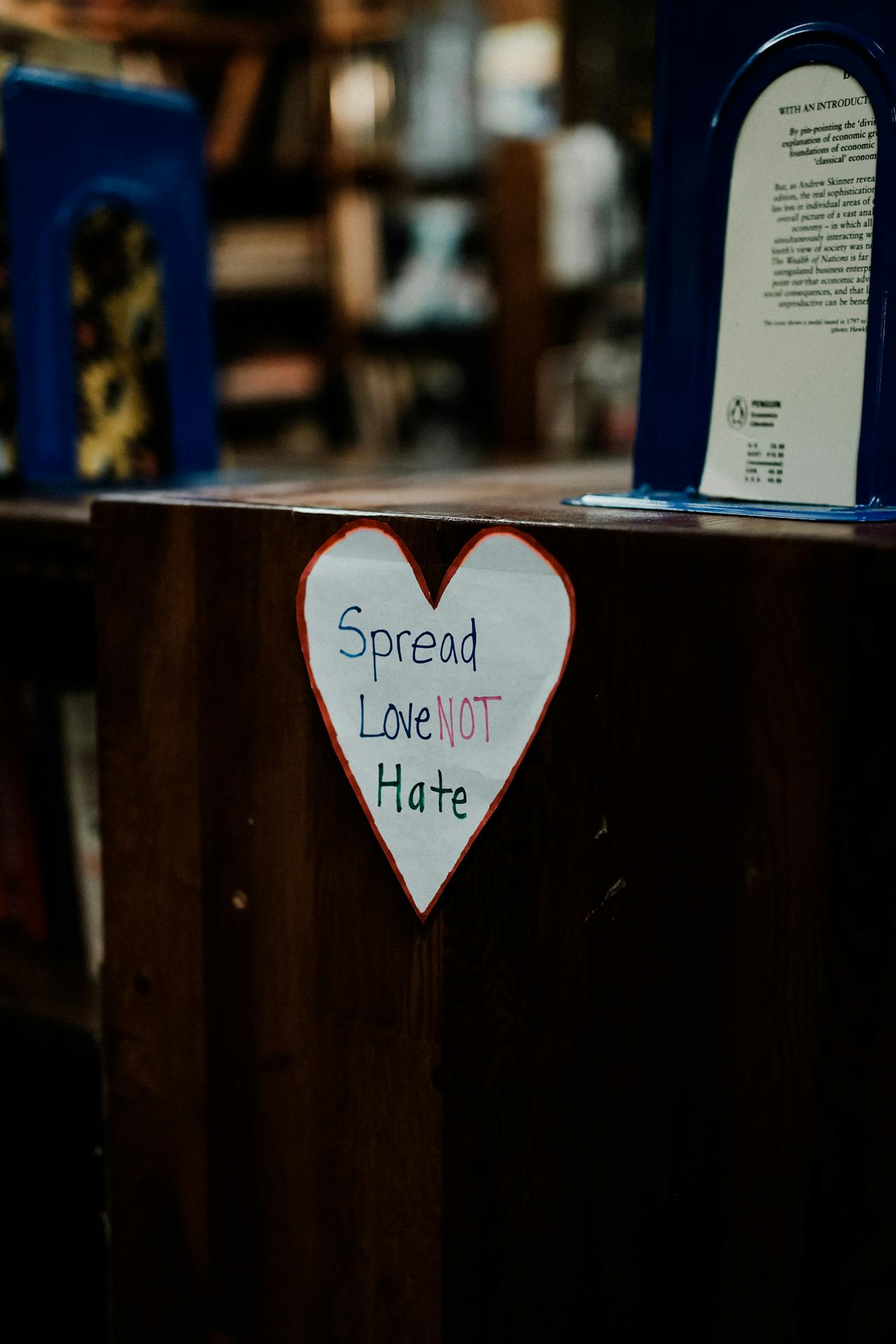
Scientific knowledge is often considered to speak for itself, as it is grounded in evidence and verified by peer review. Yet, online hate speech targeting scientists suggests that it can be undermined by non-experts positioning themsleves as knowers. In an era of social media where emotional language and conspiracy theories are present on a daily basis, scientific explanations compete with these narratives and often loose. Today, we will explore the role of language in determining what knowledge is accepted, rejected, or silenced.
On the 14th January, 2026, 3rd Deputy Prime Minister of Spain and Minister for the Ecological Transition and the Demographic Challenge, informed the hate crimes prosecutors of the increase in intensity and violence of hate speech against climate experts, researchers and meteorologists in social media platforms. One of the studies entitled: “Unveiling Hate Speech Dynamics: An Examination of Discourse Targeting the Spanish Meteorological Agency (AEMET)” found that, between December, 31st, 2021 and April, 19th, 2023, 25 % of messages on the platform X contained hostile and aggressive language towards AEMET. This could be taken to signal a basic distrust in science and heralds a growing number of climate-related conspiracy theories pedalled on social media. There seems to be a significant proportion of the users of platforms that would gladly undermine the credibility of science communicators and the general trust in scientific institutions. This could impact the practice of science itself, perhaps limiting its rate of progress and its dissemination of high-quality, evidence-based scientific knowledge. A study by Observatorio de la Comunicación del Cambio Climático (2025) found that almost 50% of climate-related posts on X denied the climate emergency.
Discussion questions:
- How could ‘hate speech’, or other forms of negative social media commentary by non-scientists, affect the production and dissemination of knowledge in the natural sciences?
- How does language influence whether people accept or reject scientific explanations?
- (How) does the role of scientific authorities (responsible for the production and dissemination of scientific knowledge) change in the social media era?
- Why might climate science be more vulnerable to attack on social media than other kinds of science?
- How might trust in science by the general public depend on the language that is used in social media communications about science, rather than actual scientific explanations based on evidence?
- How could this unsatisfactory knowledge situation be improved?
- How are conspiracy theories created and why are they believable?
Commentary:
The pervasive presence of hate speech and personal attacks on social media could be an influence on anyone who speaks publicly about a topic considered controversial by those who are vocal in social media – whether it is vaccinations, climate change, gender issues, or human rights. Being a target of internet trolls and hate speech may discourage some scientists from communicating publicly and disseminating scientific knowledge, limiting the access of a wider public to high quality evidence-based information. During the COVID-19 pandemic, some experts reported that they received threats online and some were even physically attacked by their opponents (McKie, 2021). One scientist, Dr. Lisa-Maria Kellermayr, a physician from Austria, even took her own life after receiving repeated threats from anti-vaccine and anti-COVID-restriction groups (Connolly, 2022). The fear of public harassment and humiliation, and the risk of provoking violent reactions, may make scientists reluctant to collaborate on projects targeted by these groups, or to communicate the results publicly. This shows that knowledge is not created and disseminated in a vacuum but influenced by a variety of social factors.
Violent comments also shift attention from evidence to emotion-driven personal attacks, reducing the impact of the science-based message, slowing the knowledge exchange, and eroding trust in scientific knowledge and institutions. Additionally, presence of alternative narratives may indirectly influence funding decisions made by politicians seeking popular approval. This gives credence to disinformation and conspiracy narratives in public discourse.
Take climate science as an example. There are several characteristics of this work that make it vulnerable to these kinds of attacks:
- It concerns policy making that has a huge impact on people’s everyday lives – leading perhaps to increased costs for using fossil fuels, and large investments in alternative energy provision. People really care about matters that affect their economic situation.
- The field is highly complex: it involves the interaction of a large number of variables interacting in highly non-linear ways.
- The field relies heavily on mathematical models which can be portrayed as speculative by those who oppose them.
- The field makes predictions about phenomena that are highly variable and unstable, and generally not amenable to prediction over the medium- to long-term. Prediction failures are of course seized upon by those out to undermine climate science.
- The field makes statements about long-term trends which require climate data from historical periods before modern measuring devices and methods were available. To provide this ‘missing data’ climatologists use indirect methods, inferring ambient temperatures from biological clues such as the kinds of plants or animals to be found in a certain region, or geological features such as chemical compositions of rocks. The reliability of these methods can be called into question by conspiracists, as well as by legitimate science.
- The big vulnerability of all science is that when asked: “Can you be wrong?” the scientist must reply “Yes”. This can be exploited in the rhetoric of the conspiracist.
Given these features, low trust in scientific institutions surrounding climate science can lead popularist political forces to limit funding for climate research. For example, President Trump’s administration in the US withdrew about 4 million dollars for climate research at Princeton University, stating that climate research promotes “exaggerated and implausible climate threats” and contributes to “climate anxiety” in youth (Luscombe, 2025). This could be seen as a politicisation of scientific research.
So what difference does social media make? It could be argued that before the social-media era, scientists and scientific institutions were primary gatekeepers of this kind of knowledge. Despite there being other forms of mass media, such as Newspapers, TV, and radio, scientists were generally looked up to as experts in their fields; they had high credibility, high social status, and lay people deferred to their knowledge. In the social media era, anyone who presents themselves as an authority may be considered one by those without the means to check, especially if their claims seem plausible and convincing. Algorithms can strengthen their influence based on the number of ‘clicks’ they receive or the language that is used, not necessarily based on the truth of the content they promote. In this case, the authority of climate scientists may be challenged by influencers promoting conspiracy theories using persuasive language and non-scientific explanations that fit some of the tropes being peddled on social media. As most people do not have the means to evaluate the claims being made, there is a danger that they accept them on very thin grounds. Moreover, scientific language can be technical and beyond the reach of non-experts who will then fail to understand the complexities of the arguments being made. The overall effect of these factors is that people mistake influencers’ speculations or opinions as established truth.
There are two ways in which this unsatisfactory knowledge situation can be improved. On the side of the scientist, greater efforts should be made to communicate both their results and the reasons that support their results in simplified language that the public can understand. On the side of the public, there is a responsibility for achieving a basic competence in science as a defence against the false claims of influencers and conspiracy theorists.
Conspiracy theories and alternative narratives are often false or simplified explanations for complex phenomena, usually created in connection with a political cause or to earn social acceptance or admiration. The claims made by conspiracy theories usually employ emotional language and are often couched in such a way that they are not immediately verifiable. When contradictory evidence is presented, conspiracy theorists often find ways of explaining it leaving their basic theory intact – what we call ad hoc explanation in Explanation in the Natural Sciences. They sometimes leverage public misunderstanding or wrong intuitions, for example, how can we have global warming if we have the coldest winter since years here in Poland? Often, they offer certainty rather than probability, using the human need for meaning and control. And as they are repeated in public discussions and on social media, they increase their credibility. Even though hate speech does not directly change scientific facts or theories, it influences their dissemination and creates an environment where scientific evidence is not considered a priority.
Martínez-Rolán, X., López-García, X., & Silva-Rodríguez, A. (2025). Unveiling hate speech dynamics: An examination of discourse targeting the Spanish Meteorological Agency (AEMET). Social Inclusion, 13(2). https://doi.org/10.17645/si.v13i2.9291
Observatorio de la Comunicación del Cambio Climático. (2025). La comunicación de la crisis climática en 2024 y la IA (VI Informe). ECODES & Universidad Complutense de Madrid. https://observatoriocomunicacc.es/wp-content/uploads/2025/07/VI-Informe_Observatorio_CCC.pdf
Jones, S. (2026, January 15). Spain’s meteorologists subjected to ‘alarming’ rise in hate speech, minister warns. The Guardian. https://www.theguardian.com/world/2026/jan/15/spain-climate-scientists-subjected-alarming-rise-hate-speech-minister-warns
Connolly, K. (2022). Austrian doctors speak out after suicide of GP following Covid threats. The Guardian. https://www.theguardian.com/world/2022/aug/02/austria-doctors-demand-more-protection-lisa-maria-kellermayr-death
McKie, A. (2021, October 13). Covid experts get violent threats after speaking out on pandemic: Nature survey sparks fears that scientists will be deterred from sharing their expertise. Times Higher Education. https://www.timeshighereducation.com/news/covid-experts-get-violent-threats-after-speaking-out-pandemic
Luscombe, R. (2025). Trump administration cuts Princeton climate research funding. The Guardian. https://www.theguardian.com/us-news/2025/apr/10/trump-administration-cuts-princeton-climate-research-funding