Power posing - Fake it till you make it?
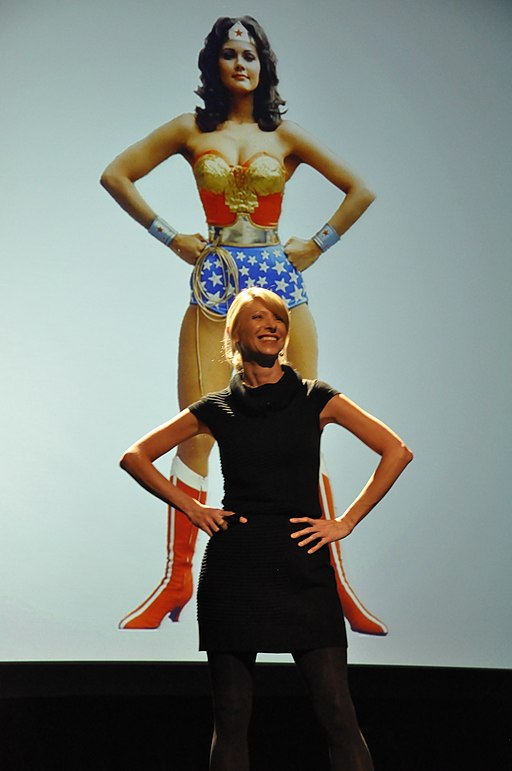
What if simply changing the way you stand could change the way you feel? That is the idea behind ‘power posing’, the claim that adopting confident body language can boost your sense of control, reduce stress and even affect your hormones. The concept has sparked excitement, debate, and plenty of research. Is it a breakthrough in psychological research, though? Or is it just another psycho-babble?
In 2010, Columbia and Harvard university researchers Dana R. Carney, Amy J.C. Cuddy and Andy J. Yap published a study examining whether so-called ‘power posing’ can cause changes in hormone levels as well as increase confidence. Power posing is the idea that adopting certain kinds of body posture increases assertiveness and confidence and lowers stress. According to their research, there was a link between posing in a high-power way and physiological variables such as higher levels of the dominance hormone testosterone and lower levels of the stress hormone cortisol. There were also correlations with psychological and behavioural variables such as greater risk-tolerance and a feeling of power. The inference of this research was that intentionally changing non-verbal communication can help a person overcome difficult situations and increase confidence leading to better performance (Carney et al., 2010). Amy Cuddy’s 2012 TED talk on this topic entitled “Your Body Language May Shape Who You Are” was viewed almost 75 million times (Ted.com). As a result, power posing started to gain momentum in business and politics. Workshops were set up to train “power poses” as a quick confidence boost, and it was claimed that merely holding the right stance for a couple of minutes resulted in improved decision-making, increased composure under pressure, and a more authoritative public presence. However, other researchers were not able to replicate the findings. A study by Eva Ranehill et al. (2015) from the University of Zurich and Kai J. Jonas et al. (2017) confirmed psychological changes (so-called felt power) but reported zero effect of power poses on any of the behavioural or hormonal measures.
Discussion questions:
- What is the role of replicability in scientific research?
- Is replicability a requirement for all sciences?
- To what extent should we take more notice of measurements by experimenters of behavioural or hormonal variables over variables that are self-reported by the experimental subject, such as ‘felt power’?
- What role does publicity (TED Talks, media coverage) play in shaping the perceived authority of scientific findings?
- How does the language used to discuss the study, such as phrases like “strike a pose, boost your hormones”, promote specific knowledge claims?
- Does publication bias influence which psychological studies gain recognition?
Commentary:
Replicability plays a crucial role in some scientific processes for a number of reasons. When different teams can reproduce an experiment’s results using the same methods, it confirms that the findings are real and not just a product of the local experimental set up. If a study cannot be replicated there is a suspicion that the phenomenon it describes is a coincidence or a freak rather than being a regularity of nature. Of course, not all sciences do experimental studies. Geology does not experiment with the materials of the earth’s surface and astronomy cannot run experiments on stars and galaxies. These sciences perform observations and tie them to a theoretical understanding. Still, there is an expectation that the results will conform to some kind of pattern – even if the pattern is complex. This is a kind of replicability perhaps – replicability of pattern. Scientists in these disciplines are interested in observations that do not fit the pattern. The question is whether these observations should be rejected as outliers, or whether they should be counted as key evidence that they theory (that predicts the pattern) is wrong.
One of the issues in the human sciences is that some data is produced by the experimental subject herself, from a first-person standpoint: self-reported experiences like ‘felt power’, and some data is produced by a third party, the experimenter: such as behavioural or hormonal data. There is often a worry that the subjectivity of first-person reported data interferes with the reliability of the experimental method. Nonetheless, many important studies in psychology and sociology depend on self-reported data.
High-visibility platforms, like TED make research seem legitimate and the results true, especially when one of the authors of a study is presenting it. A TED Talk viewed by tens of millions seems to present what is perceived as "expert consensus”, although it may be based on a single, non-representative study. Once research is publicly shared on a platform like this, it is rarely re-evaluated. What makes it stand out even more is the language it uses. Catchy slogans distil complex science into simple cause-and-effect statements. For example, phrases like “Strike a pose, boost your hormones” reduce the diversity of data into an easy-fix promise, suggesting causal changes. This kind of language is used to manipulate the message so that it becomes “viral”.
Furthermore, academic journals tend to publish only positive and novel findings – these are “clickable”, whereas studies that reach negative conclusions, such as those that find no effect beyond chance, struggle to be published. This emphasises only “success stories”, which can inflate our perception of how effective interventions are in human sciences. Whereas verified facts or contrary evidence often go unnoticed.