Benin Bronzes returned
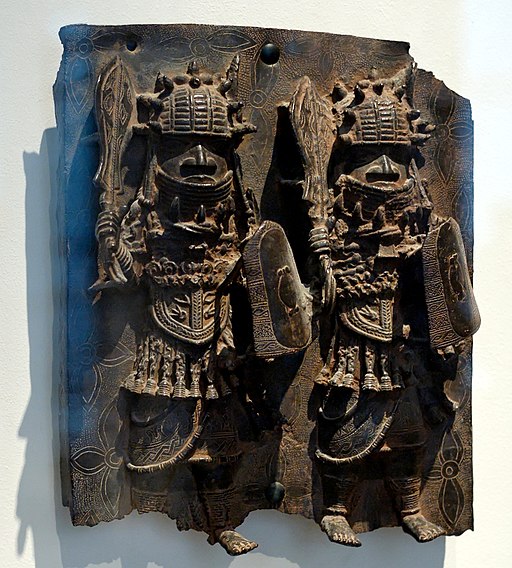
During colonial times, many cultural artefacts were looted from their rightful owners, some with good intentions of saving them from war destructions, some simply to get rich or have something exotic in your collection. Did it destroy the cultural knowledge linked to the artefacts? Should it be restored?
On June 21, 2025, the government of the Netherlands returned 119 artefacts to their country of origin, Nigeria (Government of the Netherlands). The artefacts were removed by British soldiers in 1897 during the Benin Expedition, when the British Empire took control of Southern Nigeria. The Benin Bronzes are metal plaques, cast-relief plaques, commemorative heads, animal and human figures, items of royal regalia, and personal ornaments that decorated the Royal Palace of the Kingdom of Benin, now located in Edo State, Nigeria. They are considered outstanding examples of Benin art by the Edo people, created from the 14th century onwards (British Museum). Since 2022, 72 objects have been returned from the London Horniman Museum, and 31 have been returned from a museum in Rhode Island (AP News). The Dutch action was in line with advice from the Colonial Collections Committee and accorded with Nigeria's policy on the return of objects acquired during the colonial period. However, many more Benin Bronzes are scattered around 160 world museums and private collections (The Economist).
Discussion questions:
- How is cultural knowledge linked to cultural artefacts?
- Who are the owners of this cultural knowledge?
- Should the owners of this knowledge have some say about what happens to the artefacts?
- Do current owners of the objects have any responsibility for returning artefacts to their original owners?
- Can the current owners play any positive part in the documentation and preservation of such artefacts? How could this happen?
- Can you think of any everyday knowledge that you use today that originated outside your culture?
- Is the use of this knowledge cultural appropriation? (If not, be specific about what makes it different from the Benin bronzes case.)
- Is it possible to be internationally minded without access to cultural artefacts from other cultures? Explain why there might be some tension between international mindedness and the avoidance of cultural appropriation.
- What is the role of custodians of such knowledge?
Commentary:
One argument is that knowledge related to the meaning of cultural artefacts belongs to the community which created the artefacts. Perhaps only those who belong to the community that produced the objects really understand their value and significance. Objects such as the Benin bronzes, for example, often possess deep spiritual, cultural, and intellectual connections to the community from which they were taken. People outside the culture are, the argument goes, unable to understand these meanings and should not be custodians of these objects.
This seems to be a good argument in clear-cut cases such as the Benin bronzes. They belonged to the Edo and were forcibly removed by an aggressive coloniser. But knowledge has a tendency to spread; the culture of one human group inevitably learns from that of others. What do we do about cases where knowledge has spread beyond its original borders? If knowledge is sold or exchanged, then it seems fair to accept these cases as being legitimate. However, we know that this is rarely the case. Quite often, knowledge spreads through political domination - think of how the Roman Empire acquired Greek ideas and how many fledgling states in Western Europe stole ideas from the Romans and later on, Arab civilisations. Students may agree that the Benin bronzes should be returned, but should we hesitate before building an arch because that belongs to Roman culture, should we hesitate before using aspirin because it is Sumerian or hesitate wearing pyjamas because they are Indian? An argument here could be that this ‘appropriation’ happened long in the past, so it is legitimate for modern societies to use it. This may be a practical solution, but the problem still remains. Should we seek to stop other cultures appropriating the methods of Western Music, for example? One way of avoiding this contradiction is to argue, perhaps rightly, that in comparison with the Edo, Western culture is dominant, and that cultural appropriation only applies to disenfranchised groups.
There is also a possible collision between the gatekeeping of cultural knowledge of these disenfranchised groups and the goal of international mindedness. How are we supposed to learn about the culture of the Edo if we do not have access to their cultural artefacts? This is a tougher question and it is really difficult to see how to resolve the tension. Perhaps we just have to admit that there is a limit to international mindedness when it borders on cultural tourism or neo-colonialism.
There is a growing awareness of the ethical responsibility related to returning the artefacts acquired during colonial repression. Governments are more open to acknowledging the ethical responsibility for returning such objects because they play a continuing role in sustaining the cultural heritage or even identity of an indigenous community. Governments may also admit liability and that the original acquisition of the objects amounted to clear theft or exploitation of power imbalances. Legal frameworks are evolving, and thanks to organisations like the Colonial Collections Committee, some governments have introduced legislation requiring due diligence in both the acquisition of artefacts and the return of artefacts acquired in the past under dubious circumstances. Many institutions also acknowledge ethical obligations beyond the legal requirements and positively collaborate with indigenous communities. The trend is clearly towards taking greater responsibility in addressing historical injustices. But shifting from passive custody to active reconciliation requires custodians to engage with indigenous communities and develop deeper cultural sensitivity. Museums and other experts can use their expertise to help preserve artefacts and document their provenance; they can help to interpret them and act as translators or teachers. They should make sure the voices of indigenous communities are heard in exhibitions and that their narratives reflect experiences and traditions of the creator rather than experts’ assumptions. There is also ethical accountability, which involves questioning how collections were gathered, acknowledging historical injustices, and working to address power imbalances in displaying cultural heritage.
Want to know more about the role of cultural artefacts? Visit Knowledge and Indigenous Societies: Methods and tools and What is ethical art?