Inquiry Project - Was industrialisation in… worth the cost?
This page explores a summative assessment inquiry project that you can undertake to showcase your understanding of this theme's statement of inquiry. This project has been designed as an open inquiry that enables you to decide how you will investigate and show your learning. This gives you choice over the historical examples you choose to illustrate your ideas.
What is the purpose of this inquiry project?
This inquiry project forms the optional culminating activity for the theme Industrialisation, Industry and Labour and assesses your understanding of the following statement of inquiry:
Inquiry Statement - Industrialisation can change societies through innovation, creating economic opportunities alongside social and political challenges.
In your case study you've explored how industrialisation transformed British society. Your challenge now is to choose a society, community, industry or period from anywhere in the world and investigate what industrialisation has meant for the people who experienced it. Use these instructions to help you get underway:
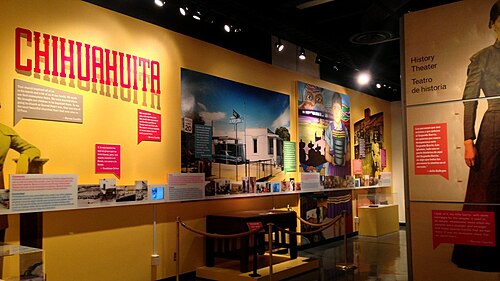
The goal of this project is to create a museum exhibition titled ‘Was industrialisation in… worth the cost?’ that helps visitors understand how industrialisation has transformed a society and evaluate the opportunities and challenges that resulted from this. First, choose a historical focus for your case study. It could be a:
Country
City
Community
Industry
or a group of people that experienced industrialisation.
Role - What role do I play?
You are a historical exhibition curator. You are responsible for researching and interpreting your chosen case study. Your job is to research and arrange physical objects, documents, and historical artefacts that tell the story of your inquiry. As a curator, you might find the following types of exhibits useful:
Photographs - These can reveal the visual changes taking place in people's lives
Objects and Artefacts - These could be symbolic of the changes unleashed or important in people's lives
Maps - Historical maps could reveal the pace and scale of change over time in an area
Statistics and graphs - These could show the wider patterns and trends in a society
Newspapers and Magazines - Could reveal contemporary attitudes and debates over industrialisation
Personal Accounts - Might reveal witting and unwitting testimony about life at the time
Posters and advertisements - These could reveal attitudes of businesses and industry
Historians' interpretations - These could give your wider context and discuss the significance of changes
Audience - What is the audience for this project?
The audience are visitors to an international museum exhibition about the global history of scientific and technical innovation with a focus on industrialisation. You can assume the visitors know very little about the impact of industrialisation.
Situation - What is the situation of the project?
The museum wants to challenge the idea that industrialisation was just a British, European or 19th century experience. It is commissioning exhibitions that explore new historical and cultural contexts. This is a chance to examine how industrialisation affected a time, place or space of your own choosing.
Product - What do I need to create?
You must produce an exhibition that contains a clear historical argument and a carefully selected collection of historical sources, objects, images, statistics or other evidence. It should include:
Introduction - A short opening panel explaining where and when the exhibition is set and the central argument about how industrialisation transformed this society.
5-7 Exhibits - Research and select 5-7 exhibits that you think best illustrate your case study. They should each explore the opportunities and challenges of the changes that came from industrialisation. Each exhibit needs a short caption explaining what it reveals and why it matters to your argument.
Multiple Perspectives - At least two exhibits should allow visitors to encounter different experiences or perspectives on industrialisation. Was industrialisation worth the cost for them?
Conclusion - Finish with a conclusion that considers what your instigation has revealed about the statement of inquiry. To what extent does your case support, challenge or complicate the Statement of Inquiry?
The PDF below is an action plan research template which can be used for this assignment to record notes and ideas to help with the development of the exhibition:
Standards - How will this project be assessed?
Success in this inquiry will be judged against the following MYP assessment objectives and strands:
Level
A. Knowledge & Und.
(Strand ii)
B. Investigating
(Strand iii)
C. Communicating
(Strands i, ii, iii)
D. Thinking Critically
(Strands i, ii, iv)
1-2
Demonstrates basic knowledge and understanding of the chosen example of industrialisation, using limited descriptions, explanations and examples.
Collects and records limited information, which is not always relevant to the exhibition inquiry.
Communicates ideas in a limited way for a museum audience. The exhibition has limited structure and sources are documented in a limited way.
Analyses the concepts and issues of industrialisation to a limited extent. Uses information to make simple arguments and identifies limited perspectives with minimal consideration of their implications.
3-4
Demonstrates adequate knowledge and understanding of the chosen example of industrialisation through satisfactory descriptions, explanations and examples.
Uses research methods to collect and record mostly relevant information for the exhibition inquiry.
Communicates ideas satisfactorily using a style somewhat appropriate for a museum audience. The exhibition has some clear structure and sources are sometimes documented using a recognised convention.
Analyses concepts and issues relating to industrialisation and uses information to make appropriate arguments. Interprets different perspectives and considers some of their implications.
5-6
Demonstrates substantial knowledge and understanding of the chosen example of industrialisation through accurate descriptions, explanations and well-chosen examples.
Uses research methods to collect and record appropriate and relevant information from suitable historical evidence.
Communicates ideas accurately using a style mostly appropriate for a museum audience. The exhibits are organised into a clear sequence and sources are often documented using a recognised convention.
Discusses concepts and issues such as change, innovation, opportunities and challenges. Synthesises information to make valid arguments and interprets different perspectives and their implications.
7-8
Demonstrates excellent knowledge and understanding of the chosen example of industrialisation through thorough, accurate explanations and well-selected examples.
Uses research methods to collect and record appropriate, varied and relevant information, selecting evidence effectively for the exhibition.
Communicates ideas effectively and accurately in a style completely appropriate for a museum audience. The exhibition is deliberately structured to communicate and develop its historical interpretation. Sources are consistently documented using a recognised convention.
Provides a detailed discussion of concepts and issues surrounding industrialisation. Synthesises evidence to construct valid, well-supported arguments and thoroughly interprets a range of perspectives and their implications.
All materials on this website are for the exclusive use of teachers and students at subscribing schools for the period of their subscription. Any unauthorised copying or posting of materials on other platforms is an infringement of our copyright and could result in your account being blocked and legal action being taken against you.