This section of the site provides you with eAssessment style exam questions, revision tips and advice for assessing students in any MYP History course or similar. Based on the MYP History themes, you can find exam papers designed to prepare students for the eAssessment exam but equally, these materials can be adapted to any context.
How does this section of the site work?
This section of the site is organised thematically. You can access eAssessment style exams for each history topic:
You can work through the activities and resources to help support your preparations for the e-assessment task.
What is MYP eAssessment?
eAssessment is an optional externally marked assessment exam that schools can offer in MYP Year 5. It is designed as a culminating exam for the MYP programme. History can be taken as a discrete exam in multiple languages. It is an on-screen examination and you have 2 hours to finish.
Compared to other international qualifications, the MYP eAssessment is a more authentic and balanced examination. It doesn't just rely on knowledge recall but assesses a range of skills. For History, the examination is built around the four MYP Individuals & Societies criteria, which are equally weighted in the examination blueprint:
Knowledge and Understanding
Investigating
Communicating
Thinking Critically
One major difference compared to other History exams is that the eAssessment is not content-specific. Each exam is based on one of the MYP Global Contexts and you are made aware of it by your teacher six months before the exam. The questions in the exam are based on one or more of the History Topics that we have used on this website to structure the MYP4-5 course. The questions are designed in a way to enable you to draw upon your own historical case studies that you have studied in class that could illustrate that Global Context.
As such, the best way to prepare for the eAssessment in History is to practice the skills that are needed in the exam rather than rote-learning content. These skills may include analysing and synthesising evidence, constructing coherent arguments, comparing and contrasting, and evaluating interpretations and conflicting evidence.
What does the eAssessment in History look like?
The History eAssessment exam is worth 80 marks. There are usually between 7-10 questions on the exam and these are organised into three main tasks or sections that each focus on either investigating, communicating and thinking critically. Although these tasks assess different skills, knowledge and understanding is assessed throughout all the sections of the examination.
Task/Section
Marks
Criteria Assessed
Investigating
26
A + B
Communicating
18
A + C
Thinking Critically
36
A + C + D
What happens in the Investigating task?
The investigating task is the first part of the exam and it assesses the skills you need to carry out historical research. Over a range of questions, you will be asked to demonstrate parts of the investigative process. You will have carried out many investigations of your own throughout the MYP course so these questions should be familiar to you.
You might be asked to:
Formulate a research question
Justify why a question is worth investigating
Evaluate a research process
Select appropriate historical sources
Explain the usefulness of different research methods
What happens in the Communicating task?
This task will ask you to creatively communicate your historical knowledge to a particular audience, often in a unique and authentic format. So instead of writing an academic essay, these questions might ask you to write a script, blog, article, letter, or speech. It might even ask you to create a mixed-media outcome like an infographic, poster or presentation. This will always involve some form of writing.
This task will still involve your historical knowledge. So you will need to refer to historical events, perspectives, and arguments. But you will need to think carefully about who you are writing for, why you are writing and what the format should look like.
You might be asked to:
Write a range of social media posts
Write a script for aPodcast or Radio show
Create a presentation for your history class
Write a persuasive speech set in history
Write a journal entry as a historical figure
Write a biography about the life of an individual from history
What happens in the Thinking Critically task?
This last section of the exam is the largest in terms of marks and therefore the time you should spend on it. You will be presented with a series of questions that ask you to analyse historical evidence and perspectives. This will often take the form of source-based questions with a final extended writing essay.
Source-based questions will often revolve around deploying your source analysis skills. This involves exploring the origin, purpose, values and limitations of historical sources. Practising these skills in class is good revision for this.
You might be asked to:
identify the purpose of a source
compare or contrast historical perspectives
evaluate the value and limitations of evidence
interpret different perspectives
use evidence to support an argument
synthesise information to reach a judgement
What content might appear in the exam?
There are no specific historical events that you need to have studied to complete the exam. Your teacher would have designed your MYP History course around the twelve history topics/themes listed above. The exam questions will be based on a range of these themes - but it is up to you to select relevant examples flexibly when answering questions.
The history topics which exam questions might be based on are:
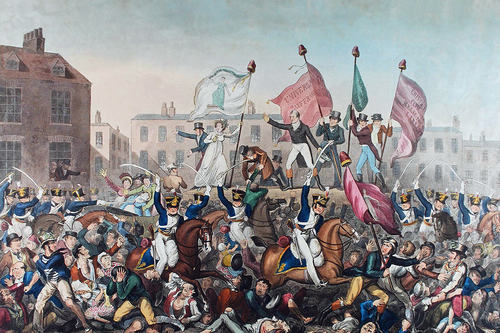
Industrialisation, Industry and Labour
Globalisation: Trade, Aid, Exchange and Flow
Empire and Colonialism (note - this topic is officially part of the superpowers topic for exam purposes)
Intellectual and Ideological Movements
Medicine and health
Pioneers, Innovators and Developers
Warfare and Peacekeeping
Superpowers, Supranational Alliances and Organisations
Independence and National Identity
Artistic and Cultural Development
Rights and Social Protest
Individual, Household and Daily Life
Significant Individuals
For revision purposes, focus on revising historical examples and events that you have been taught for each theme.
How important is the global context?
Six months before the exam, the IB will release to schools the specific MYP Global Context for that exam session. For History, one of the three tasks will be “connected with, inspired by or derived from the selected global context.” It doesn't tell you what historical events to discuss, but it does give you some hints to what historical examples might be relevant to this section of the exam. The six MYP Global Contexts are:
Identities and relationships - Who am I? Who are we?
Orientation in space and time - What is the meaning of “where” and “when”?
Personal and cultural expression - What is the nature and purpose of creative expression?
Scientific and technical innovation - How do we understand the world in which we live?
Globalisation and sustainability - How is everything connected?
Fairness and development - What are the consequences of our common humanity?
The pre-release statement will look similar to this:
For the May 202? eAssessment session the global context will be:
Scientific and technical innovation
The focus question and description of this global context are: How do we understand the world in which we live?
Students will explore the natural world and its laws; the interaction between people and the natural world; how humans use their understanding of scientific principles; the impact of scientific and technological advances on communities and environments; the impact of environments on human activity; how humans adapt environments to their needs.
One of the sections of the exam will focus on this global context and the questions are likely to feature the wording of the global context in some form. An example of this could be as follows:
Question 8 (24 marks)
“Scientific and technological innovation has been the most important cause of major changes in human societies.”
To what extent do you agree with this statement?
To answer this essay question well, you would need to recall accurate and effective historical examples of scientific and technical innovations that have caused major changes in human societies. Examples could include:
Meiji Japan - Telegraphs, steam-power, military advances, warships
The World Wars - Machine guns, artillery, railways, submarines, air-power, poison gas, nuclear bombs, radar
Digital Revolution - Computers, internet, world wide web, smartphones, AI
What types of sources will you encounter?
The exam will feature a range of primary and secondary historical sources. You will need to be familiar with a range of different types of sources so they don't surprise you in the exam. They will include:
Texts, Newspapers, Articles, Letters, Reports, Speeches and Biographies
Diaries, Memoirs, Journals and Blogs
Maps and Images
Data tables, charts, and graphs
Videos, Interviews, Documentaries and animation
You will also need to be confident in analysing and evaluating historical sources. Questions may ask you to discuss:
Origin - What type of source is it and where does the source come from? Who wrote it? When? Where were they?
Purpose - Why was the source created and what was it intended to achieve? inform? persuade? entertain? justify?
Values - How can this source be useful to a historian studying a particular topic or question?
Limitations - How might this source be limiting or restricting to a historian studying a particular topic or question?
Why are command words so important?
Each question in the exam will be focused on one of the IB command words. These tell you what type of response is required for the question. It is important that you understand what each of the command words means and what type of response is required. Your teacher will probably have introduced these to you throughout your MYP course.
Remember to read the command word before you start writing! You will lose marks if you waste time explaining something that the question doesn't require. For example, if the question says contrast, don't spend time discussing similarities!
Command Word
What you need to do
List
Give a sequence of brief answers with no explanation
State
Give a brief, specific answer
Outline
Give a brief account or summary
Formulate
Express an idea or question precisely and systematically
Describe
Give a detailed account
Explain
Give reasons or causes as well as detail
Analyse
Break something down and identify relationships or meaning
Contrast
Explain the differences, referring to both throughout
Summarise
Identify the main theme or key points
Justify
Give valid reasons or evidence to support your answer
Evaluate
Weigh strengths and limitations and reach an appraisal
Discuss
Give a balanced consideration of different arguments or factors
Synthesise
Combine different ideas or evidence to create a new understanding
To what extent
Weigh the merits of an argument and reach a supported judgement
How can you prepare for the exam?
Traditional rote learning will not help you entirely for the MYP History eAssessment. You need to combine a range of approaches from revising the historical examples you have been taught in class to practising the skills needed for each type of question. The following revision tips might help you prepare for the exam:
Build a bank of flexible historical examples - Identify, summarise and revise details from historical events from different periods and places that can be applied to the broad history themes and Global Context. Note and discuss how each event could serve as an example of each theme, context and other relevant concepts.
Practise Command Terms - Revise the definitions of the command terms so you can confidently understand what is expected for each type of question. Aim to complete past paper questions for each type at least once.
Practise Source Analysis - Try reading and examining all the different types of sources and practise applying OPVL to different sources. Just asking those questions from different sources can help develop the thinking required.
Practise investigating - Take any history theme and global context. Try forming your own research questions that combine both, then outline a method for investigating it and identifying a range of historical sources you would need to answer. Then evaluate what was good or bad about your investigating process.
Practise Communicating for Different Audiences - Explore different ways in which history is written. Flick through history books for kids, an academic text, a history magazine, listen to a Podcast, watch a history documentary. Take note of the style of writing and think about the intended audience. Try writing a paragraph in a similar way.
Practise Extended Writing - There is no way of avoiding the 24-mark history essay. Your teacher should be helping you to build your essay writing skills throughout the MYP course. Make sure you a comfortable with writing an introduction, main body and conclusion. Review paragraph construction and remember to always link back to the essay question. Try writing essay plans for different essay questions.
Make Connections to the Global Context - Practise taking any of the six global contexts, then mind-mapping historical events that could serve as good examples of that context.
Answer Past Paper eAssessments - Practise makes perfect so try answering a number of real past paper exams in timed conditions. Try peer marking and feedback with a friend once completed.
All materials on this website are for the exclusive use of teachers and students at subscribing schools for the period of their subscription. Any unauthorised copying or posting of materials on other websites is an infringement of our copyright and could result in your account being blocked and legal action being taken against you.

.jpg)