Tokugawa Japan
Tokugawa Japan
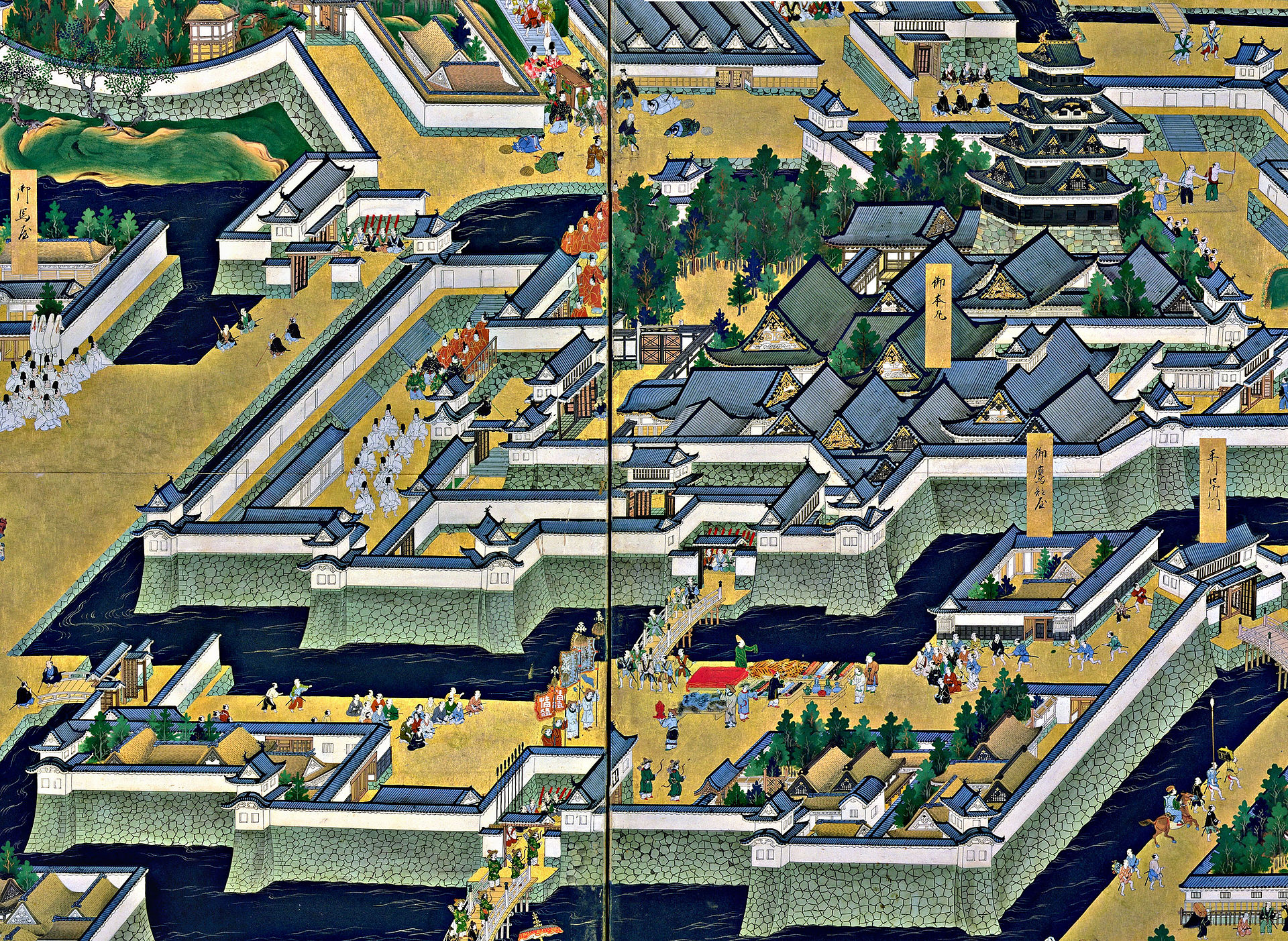
Pictured here is Edo Castle, developed during the Tokugawa era of Japanese history. In this unit, we will examine the period from 1600 to 1868, focusing on Japanese society and culture. The unit will conclude with an examination of the fall of the Tokugawa Shogunate.
- What were the circumstances surrounding the start of the Tokugawa period?
- How was Japanese society structured and controlled?
- Why did the Tokugawa shogunate pursue isolation?
- What role did the samurai play during this time period?
- What forms of art and culture did Japanese people participate in?
- Why did the Tokugawa era come to an end?
The Tokugawa era of Japanese history began in 1600 and lasted until 1868. It was a time of stability, order and isolation. We will begin by examining the circumstances in Japan at the start of this period.
Discuss - What do you know already about Japanese history? Discuss with a partner. Take a look at the words in the table below. How many do you know, which can you define already?
| Samurai | Shōgun | Edo | Daimyō |
| Rōnin | Tokugawa | Kyoto | Bushido |
We will encounter all of these terms (and many more), keep a record of key terminology to help with your understanding as you complete the different sections of the unit. You can also use this page for help - Flash Cards - Tokugawa Japan.
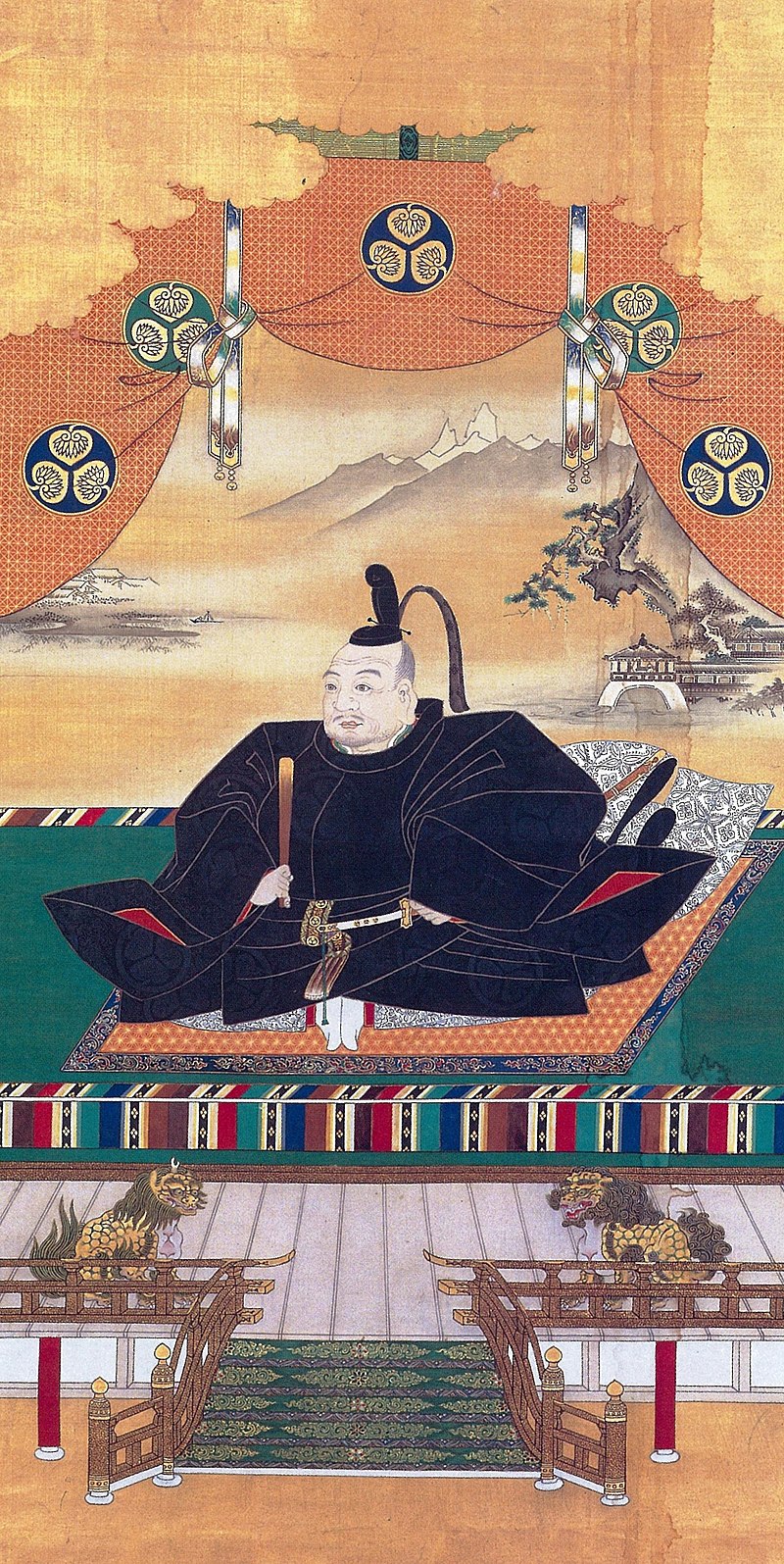 | A good way to understand the beginnings of this period of Japanese history is to examine the life of its first shōgun (military ruler), Tokugawa Ieyasu. Ieyasu lived from 1543 to 1616. Ieyasu's father was a daimyō (a feudal lord) who was in contest with other lords during the early years of Ieyasu's life. At one point, Ieyasu was held hostage as a child at the request of his father. After his father's death, Ieyasu became a daimyō himself and gradually built up his power base. It was in central Japan that he built the Edo (Tokyo today) castle. Ieyasu was able to increase his power through allegiance and challenges to the other daimyō. He served under the rule of a more powerful lord, Toyotomi Hideyoshi, for a time. After Hideyoshi died in 1598, Ieyasu saw an opportunity to increase his power and waged war against Ishida Mitsunari's forces at the Battle of Sekigahara. The battle saw Ieyasu emerge victorious; many people had defected to his side during the battle, and he also defeated Mitsunari's forces on the battlefield. The victory at Sekigahara and the gradual buildup of power before this gave Ieyasu the dominant position in Japan, and he was subsequently given the title of shōgun: the military ruler and the first of the Tokugawa clan to rule Japan. The family line would rule until well into the 19th century. Ieyasu actually relinquished the title of shōgun in 1605 to his son Hidetada, but he effectively ruled until he died in 1616. In many ways, Ieyasu set the tone for how Japan would be ruled for the next two centuries of Tokugawa control. He established a series of laws and controls that would define the social structure, freedom of movement, and Japan's isolation from the world. |
 Reflection Skills - Consider content: What did I learn about today? What don’t I yet understand?
Task - Based on the information above - answer the following questions to check your understanding.
- What do you understand now about the terms - shōgun and daimyō?
- Where did Ieyasu establish his power base? Why might this be important?
- What was important about the Battle of Sekigahara?
- What do you think the line 'isolation of Japan from the world' means? What do you think this would look like?
You can use the PDF below as a printable resource for this activity.
As mentioned in the extract below, the Tokugawa period emerged from a period of Japanese history marked by conflict. The 16th century, sometimes known as the 'Warring States Period', left a profound mark on the ambitions of the Tokugawa shogunate to bring about order and stability.
Critical Thinking Skills - Drawing reasonable conclusions and generalisations
Task - Consider the extract below. According to this extract - what is the significance of Tokugawa Japan?
The Tokugawa period, which in Japan begins in 1600 and ends in 1868, is important for what happens before it and what happens after it. Before the Tokugawa period, Japan was a country of warring states, it was not unified, it was medieval, as we call it, medieval Japan.
So that the first importance of Tokugawa has to do with the creation of a centralized state, a national system.
And the second importance of it has to do with what followed the Tokugawa, and that is the modern period, which began in 1868, and so we need to think about what happened during the Tokugawa period that relates to modern Japan. So, it is between the medieval and the modern, it is early modern Japan. And we think of it in the same terms as we do early modern Europe. Which is to say we think of it from the point of view of the modern.
Professor Carol Gluck a specialist in Japanese history discussing the importance of Tokugawa Japan - accessed at http://afe.easia.columbia.edu/at/tokugawa/tj01.html
I have highlighted two parts of the source to help here. Consider the idea of Japan making a transition from the medieval through to the modern era.
The diagram below illustrates the social structure developed from Tokugawa Ieyasu onwards:
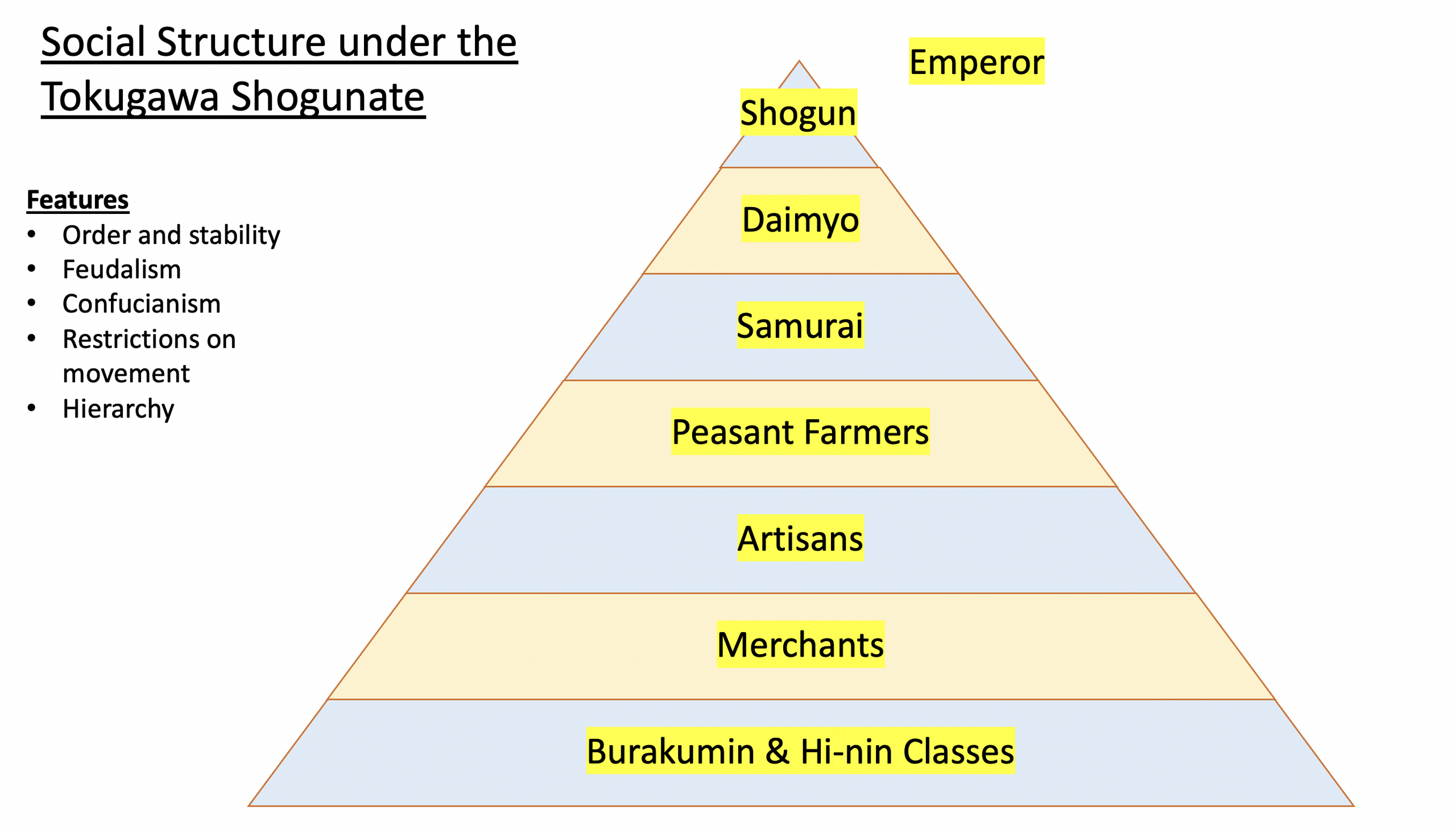
Although the emperor was at the top of the formal hierarchy of Japanese society, he was placed to the side of the pyramid because his power during this period was primarily symbolic. The shōgun was the person who held the greatest political authority. Ieyasu, ruling from behind his son after 1605, introduced a series of laws and policies designed to create the order and stability that many believed Japan needed after decades of conflict. This system of government became known as the bakuhan system. It combined the authority of the Tokugawa shogunate (bakufu) with the rule of the individual domains (han) controlled by the daimyō. The system established strict rules connected to social class, behaviour and the responsibilities of people at different levels of society. These included regulations on clothing, restrictions on castle construction and the reinforcement of existing social hierarchies.
Below the warrior classes of the shōgun, daimyō and samurai, people were ranked according to their perceived contribution to society. Peasant farmers were placed relatively high in the hierarchy because their agricultural production provided the food needed to support society. Artisans were ranked below farmers because they created goods. At the same time, merchants were ranked lower because Tokugawa thinkers viewed them as simply profiting from the exchange of goods rather than producing them. Beneath the merchants were two groups who existed on the margins of society and faced significant discrimination.
During the Sengoku period, samurai were heavily involved in frequent warfare among rival lords. However, under the Tokugawa shogunate, the long period of peace led many samurai to move into administrative roles as government officials. They continued to enjoy privileges and status because traditional ideas about warrior culture remained important throughout the Tokugawa era.
What was the Shimbara Rebellion of 1638?
This rebellion against the Tokugawa Shogunate was the last major challenge to their rule until the arrival of the Americans in the mid-19th century. An uprising took place in the far south, close to Nagasaki; it was supposed to have started due to the poor treatment of peasants and Christians in the province by the local ruling daimyō. Much of the conflict took place around Shimbara Castle. Ultimately, the rebellion was defeated and upwards of 35,000 people were killed. This event is important for several reasons, but a key point is that it led to the end of Christianity's tolerance in Japan and to far more controls on the movement of people to and from Japan.
The Tokugawa shogunate also introduced new expectations for the daimyō. To maintain control and prevent rebellion, each daimyō governed a domain (han) but was required to spend alternate years in Edo (present-day Tokyo) with their families. This system, known as sankin-kōtai (alternate attendance), allowed the shogunate to monitor powerful regional lords and reduce the possibility of opposition.
As a result, Tokugawa Japan became a more strictly controlled society. The Tōkaidō, the main road connecting Kyoto and Edo, became an important route for the movement of people, goods and the daimyō travelling to the capital. Strict regulations included requirements to carry travel documents, restrictions on movement, curfews and harsh punishments for those who broke the rules.
Executions were a common punishment and could be especially severe for people from lower social classes. Members of the samurai class who were judged to have seriously violated expectations of honour could be required to perform seppuku, a ritual form of suicide involving the cutting of the abdomen, intended to restore personal and family honour.
The period of the the Tokugawa Shogunate has been characterised as one of order and stability, a time of peace when compared with medieval Japan. Another characteristic of Japan at this time was that of isolationism.
What is isolationism?
What do you understand by the term 'isolationism'? What reasons would a country have for following this type of approach to international relations? Can you think of any countries in the world which are more 'isolated'. Click on the eye to read about some examples.
There have been several interesting case studies of countries following isolationism in the world, due to choice or historical circumstances. The more obvious example is North Korea, an isolated dictatorship since 1953. However, there are other examples to reflect on.
The Kingdom of Bhutan - It is still a relatively closed-off country - a mountain kingdom in the Himalayas looking to maintain its cultural and environmental identity.
The USA during the 1920s - After the First World War, it sought to be less involved in international relations. Famously, they did not join the League of Nations established after the war. This all changed with the events of the Second World War, which transformed the USA into a global superpower far more involved in a wide range of international relations.
Albania under Communist rule - Although communist governments tended to work together in their own interest groups, Albania makes an interesting exception. Under the leadership of Enver Hoxha, they severed diplomatic ties with the Soviet Union and later on with China. During the 1970s and 1980s, they were one of the most isolated countries in the world.
From the outset of the Tokugawa Shogunate, we can see a suspicion of Europeans, especially those seeking to spread Christianity in Japan. Before 1600, Buddhism had developed in Japan, spreading there from India and China. Another important religion in Japan was Shinto, a native religion of the country. From the viewpoint of the Tokugawa Shogunate, the influence of Christianity, brought by European missionaries, was destabilising and required strict control and repression. Over the years, some Japanese people had converted to Christianity, and they were especially vulnerable to these new controls.
The Tokugawa Shogunate sought to control the movement of people and limit foreigners, especially Europeans, from visiting Japan. In 1635, an edict was proclaimed called Sakoku - the closed country edict.
What was Sakoku (The Closed Country Edict)?
Examples of regulations from the edict can be seen below.
1. Japanese ships are strictly forbidden to leave for foreign countries.
2. No Japanese is permitted to go abroad. If there is anyone who attempts to do so secretly, he must be executed. The ship so involved must be impounded and its owner arrested, and the matter must be reported to the higher authority.
3. If any Japanese returns from overseas after residing there, he must be put to death.
5. Any informer revealing the whereabouts of the followers of the priests must be rewarded accordingly. If anyone reveals the whereabouts of a high ranking priest, he must be given one hundred pieces of-silver. For those of lower ranks, depending on the deed, the reward must be set accordingly.
You can read the full selection of the stipulations of the Close Country Edict here.
Subsequently, the era of the Tokugawa shogunate became the closed-country period; Japan was more isolated than before and after. Trade did continue with other powers in East Asia, namely China and Korea. The only Europeans permitted to conduct trade in Japan were the Dutch, who were restricted to an artificial island called Deshima in Nagasaki. Maps would show Japan at the centre of the world, with travel overseas forbidden; the Tokugawa Shogunate essentially locked itself away for over 200 years.
Reflection Skills - Considering content: what did you learn? what do you not yet understand?
Task - Choose a writing prompt from the list below to consider your current understanding in this unit. Remember to include your own questions to help develop your understanding further.
- How was Japanese society structured during the Tokugawa era?
- Why was Japan isolated during the Tokugawa era?
This could work as an exit ticket task using sticky notes.
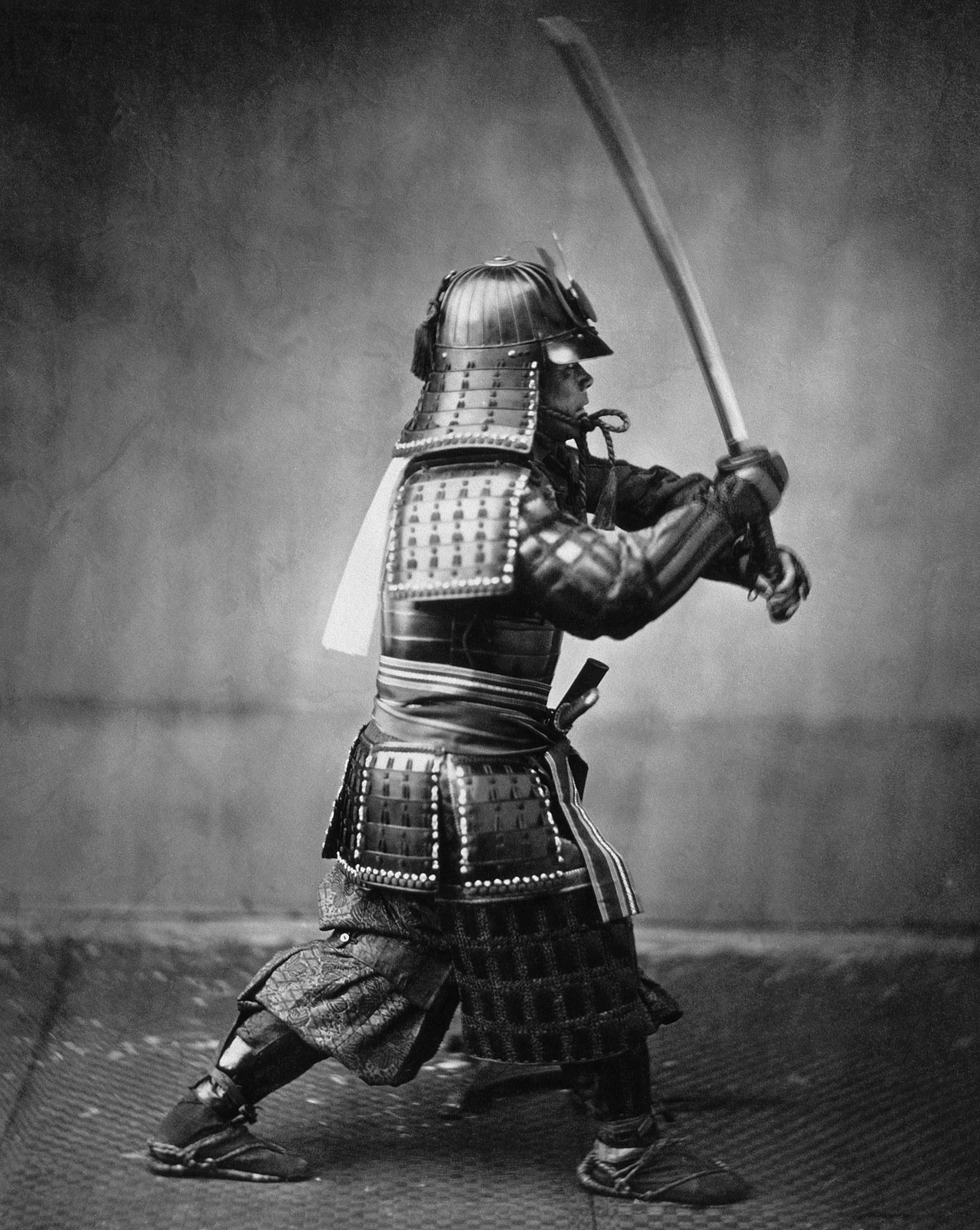
During the Tokugawa period the samurai remained an important social class but their role began to change significantly. As Japan became more peaceful many samurai moved away from being warriors and instead served the daimyō and shōgun as officials and administrators. Yet their image as warriors has persisted throughout history.
Communication Skills - Taking effective summary notes for studying
Task - Find out more about the story of the 47 Ronin by watching the video below. For guidance you could answer the following questions as you watch:
- Edo is which city in Japan now?
- What was the name of the time period before the Tokugawa?
- How did the Tokugawa government aim to 'secure their rule'?
- How did the duties of the samurai change under the Tokugawa?
- What did Asano get asked to do by the Tokugawa government in 1701?
- What are rōnin?
- What were the tensions running through the Tokugawa period concerning the samurai?
- Why could the rōnin not restore their status?
- What actions did the 47 rōnin subsequently take?
- What did the the Tokugawa government decide was the consequence for their actions?
- Over time, what happened to the story of the 47 rōnin?
- Why does debate continue about their actions?
Discuss - What does this video tell you about the changing social expectations of the samurai in Japan during the Tokugawa period? Why do you think the story has endured so long and been retold many times both within Japan and internationally?
The story of the 47 rōnin is a good introduction to thinking about the samurai during the Tokugawa period. As mentioned, their role was comparatively more administrative and bureaucratic than during the Warring States era. Many samurai, though occupying a high status in society, were experiencing a cultural shift in their positions and role.
Despite taking part in fewer conflicts, the samurai code of conduct was more clearly organised under the Tokugawa. They followed an ethical code known as Bushido. This stressed certain values to be upheld, including loyalty, honour and bravery. It is sometimes compared with the code of chivalry followed by knights in Europe.
'The business of the samurai is to reflect on his own station in life, to give loyal service to his master if he has one, to strengthen his fidelity in associations with friends, and, with due consideration of his own position, to devote himself to duty above all.'
Extract from The Way of the Samurai by Yamaga Sokō[1]
“Respect, Honesty, Courage, Rectitude, Loyalty, Honour, Benevolence”
Extract from The Way of the Samurai by Yamaga Sokō
Bushido, from the samurai, had an impact on Japanese culture. Already mentioned is how the story of the 47 rōnin influenced storytelling and theatre. The lives of the samurai, Bushido and the many battles of the Warring States period had an important cultural influence. During the Tokugawa period, there were many forms of cultural life, some older and more traditional and others new and developing forms of performance.
Critical Thinking Skills - Analysing complex concepts and projects into their constituent parts
Task - Using the information, images and videos below, complete the research planner for Noh, Kabuki, Bunraku, Haiku, Ukiyo-e and the Tea Ceremony:
Discuss - Looking across your completed planner, what conclusions can you draw about art and culture in Tokugawa Japan? Identify two patterns or characteristics that appear across several of the examples.
Noh Theatre
Although predating the Tokugawa era, Noh theatre developed and flourished during this time. A form of theatre that focuses on the dramatic performance of traditional stories from Japanese literature, often with supernatural elements. The form of theatre integrates spoken performances with music and dance and is noted for its use of different types of masks worn by the actors. The masks were used as representations of characters in the plays, including ghosts and witches. Noh theatre was popular with the daimyō during the Tokugawa era given its more traditional style and focus.
Kabuki Theatre
While Noh theatre was an older form, Kabuki developed during the Tokugawa period. Originally, women performers were involved in Kabuki performances, but it became male only performers after 1629. This was due to restrictions on the lives of women, which were increasingly controlled at this time. Kabuki theatre featured elaborate costumes and makeup, and its performances included a wide range of stories, from tragedies to comedies. Watch the videos below to find out more about the Kabuki theatre. Consider how Kabuki has changed over time, the differences between Kabuki and Noh theatre, and the different roles within theatrical performances.
Bunraku Puppets
The second half of the video above provides a range of details about Bunraku theatre (from 7 mins 30 onwards). This form of theatre involved the use of life-like puppets controlled by multiple puppeteers. The performances had a narrator to explain the story, and the puppets acted out the main scenes. Bunraku has been considered to be of high cultural value and is on the list of the UNESCO Intangible Cultural Heritage list - you can read more about Bunraku here.
Haiku
Another important cultural development from the Tokugawa era was the development of Haiku poetry. It takes the form of 5 - 7 - 5 syllables - so the poems are very short and often impactful. The poetry developed as different meditations on tradition, nature and values in Japan during this time. They often take the perspective of the observer and provide an insight into some aspect of the world. The two examples below are famous and connected to themes from the natural world.
'The Old Pond' by Matsuo Bashō An old silent pond A frog jumps into the pond— Splash! Silence again. | 'After Killing a Spider' by Masaoka Shiki After killing a spider, how lonely I feel in the cold of night! |
Ukiyo-e
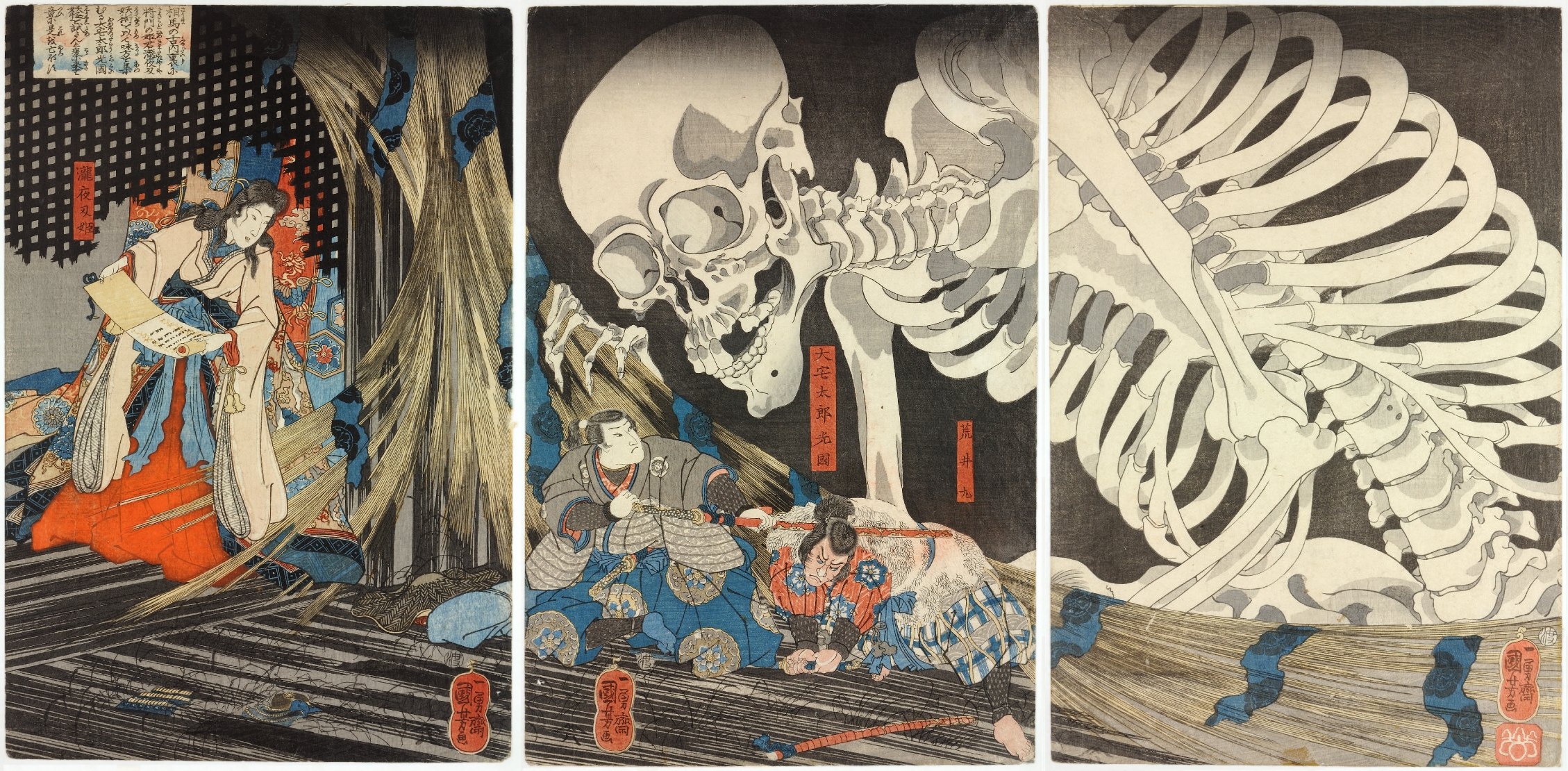
An art form that developed during the Edo period in Japan, spanning the 17th, 18th, and 19th centuries, is known as Ukiyo-e. The term ukiyo is translated as 'floating world'. The pictures feature various themes and subjects, including scenes from folklore, urban scenes, kabuki actors, countryside landscapes, depictions of women, and more. The example below is a scene from a traditional Japanese folktale in which a giant skeleton is summoned by the witch Takiyasha. These artworks were created on wooden blocks.
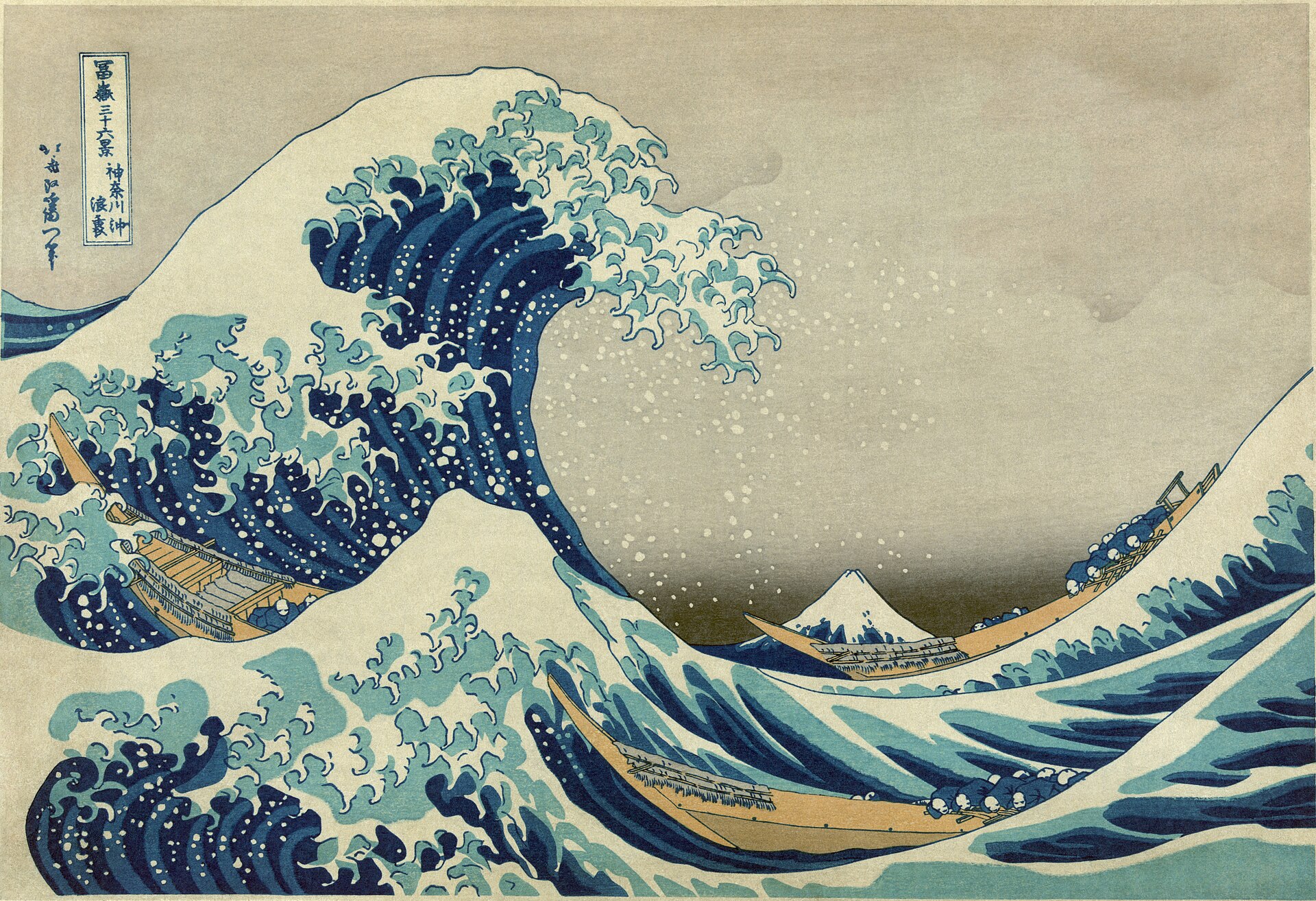
The famous painter, Hokusai was also a Japanese artist who created works within the genre of ukiyo-e. His most well known work is 'The Great Wave off Kanagawa' - pictured below.
Tea Ceremony
The Japanese tea ceremony existed before the Tokugawa era but continued to flourish and develop during this time. Based on traditional values such as simplicity and harmony, the tea ceremony exemplifies important rituals and traditions. The video below from National Geographic includes a description of the ceremony in its current form today, making connections to these long-lasting traditions.
After over two centuries of stability, the Tokugawa era came to an end under unusual circumstances, which will be examined in this section.
Ending Isolation
As mentioned earlier on this page, Japan was largely isolated following the closed-country edict, Sakoku, of 1635. Trade occurred within East Asia, and the Dutch had access to a small island near Nagasaki. Other than this, though, Japan was more inward-looking and isolated. In the early 19th century, various powers attempted to establish trading connections with Japan, including several failed attempts by Russia, Britain, and the USA.
By the 1840s, the impact of the Opium War (the conflict between Britain and China from 1839 - 1842) was seen by the Tokugawa Shogunate as a sign of the dangers posed by the European Powers. China had been defeated by Britain and forced to sign the Treaty of Nanjing - an unequal treaty.
Fear of foreign interference in Japan led to movements which were concerned about these developments. Sonnō jōi (revere the emperor, expel the barbarians) was an example of a slogan used around this time. People wanted a return to imperial power and a challenge to the shogun's dominant role in Japanese society.
The turning point occurred in July 1853 when American steamships crossed the Pacific and arrived off the coast of Japan at Edo Bay. Led by Commodore Matthew Perry, the Americans presented a letter to the Japanese with a list of demands from President Millard Fillmore - you can read the letter at this link. An extract from the letter is below.
Extract from the 1853 letter to the Emperor of Japan from the President of the USA
'I have directed Commodore Perry to mention another thing to your imperial majesty. Many of our ships pass every year from California to China; and great numbers of our people pursue the whale fishery near the shores of Japan. It sometimes happens, in stormy weather, that one of our ships is wrecked on your imperial majesty's shores. In all such cases we ask, and expect, that our unfortunate people should be treated with kindness, and that their property should be protected, till we can send a vessel and bring them away. We are very much in earnest in this.'
https://visualizingcultures.mit.edu/black_ships_and_samurai/presletter.html
Discuss - According to this extract, what is one of the demands of the Americans from Japan?
Eventually, the USA succeeded in negotiating a treaty with Japan, which marked the end of Japan's isolation. The first, the Treaty of Kanagawa, was signed in March 1854. Known as an unfair or unequal treaty, it favoured the USA. They gained access to Japanese ports, were promised protection for shipwrecked sailors in the waters around Japan and Americans in Japan were given extraterritorial rights. This final part meant that Americans living in Japan were not subject to Japanese law while they were there. Following on from this, other treaties were signed between Japan and the USA, as well as with European powers including France and Russia.
A System under Strain
We have also discussed the social structure of the Tokugawa era. A traditional hierarchy that placed power in the hands of the noble lords and guided societal positions by the jobs people did. This system was coming under increasing strain in the final decades of the era. One of the important changes was the increased prominence of the merchant class, who were of lower status in Japan, and many saw the need for reform and restructuring to meet the demands of modernisation. From 1853 through 1868, the final years of the Tokugawa Shogunate, there were uprisings against the Shogun's rule. This included uprisings in the Southwestern Part of Japan, in the domains of Satsuma and Chōshū.
The Meiji Restoration
This culminated in the Meiji Restoration in 1868, when the shogunate was removed from power, and the emperor's political authority was restored. Japan would subsequently undergo a series of significant political, cultural and economic changes during this era. At the start of the Meiji era, a Charter Oath was proclaimed, which outlined the era's new priorities. Read the box below to consider the reformers' new aims.
Information Literacy Skills - Identifying primary and secondary sources
Task - Read the Charter Oath below with a partner. What do you think the priorities for Japan would be under the Meiji era? You can find some hints to help you in the hidden box below:
'By this oath, we set up as our aim the establishment of the national wealth on a broad basis and the framing of a constitution and laws.
Deliberative assemblies shall be widely established and all matters decided by open discussion.
All classes, high and low, shall be united in vigorously carrying out the administration of affairs of state.
The common people, no less than the civil and military officials, shall all be allowed to pursue their own calling so that there may be no discontent.
Evil customs of the past shall be broken off and everything based upon the just laws of Nature.
Knowledge shall be sought throughout the world so as to strengthen the foundation of imperial rule' [3]
a) Deliberative assemblies - would this mean there would be more political discussions and opportunities for people to have more involvement in local government?
b) Would the feudal structure of Tokugawa Japan change?
c) What might 'evil customs of the past' refer to?
d) Would there be a move away from isolation during this new era?
Footnotes
1. Accessed at http://afe.easia.columbia.edu/ps/japan/soko_samurai.pdf
2. Accessed at https://en.wikipedia.org/wiki/Takiyasha_the_Witch_and_the_Skeleton_Spectre#/media/File:Takiyasha_the_Witch_and_the_Skeleton_Spectre.jpg