b) The Independence of Ghana
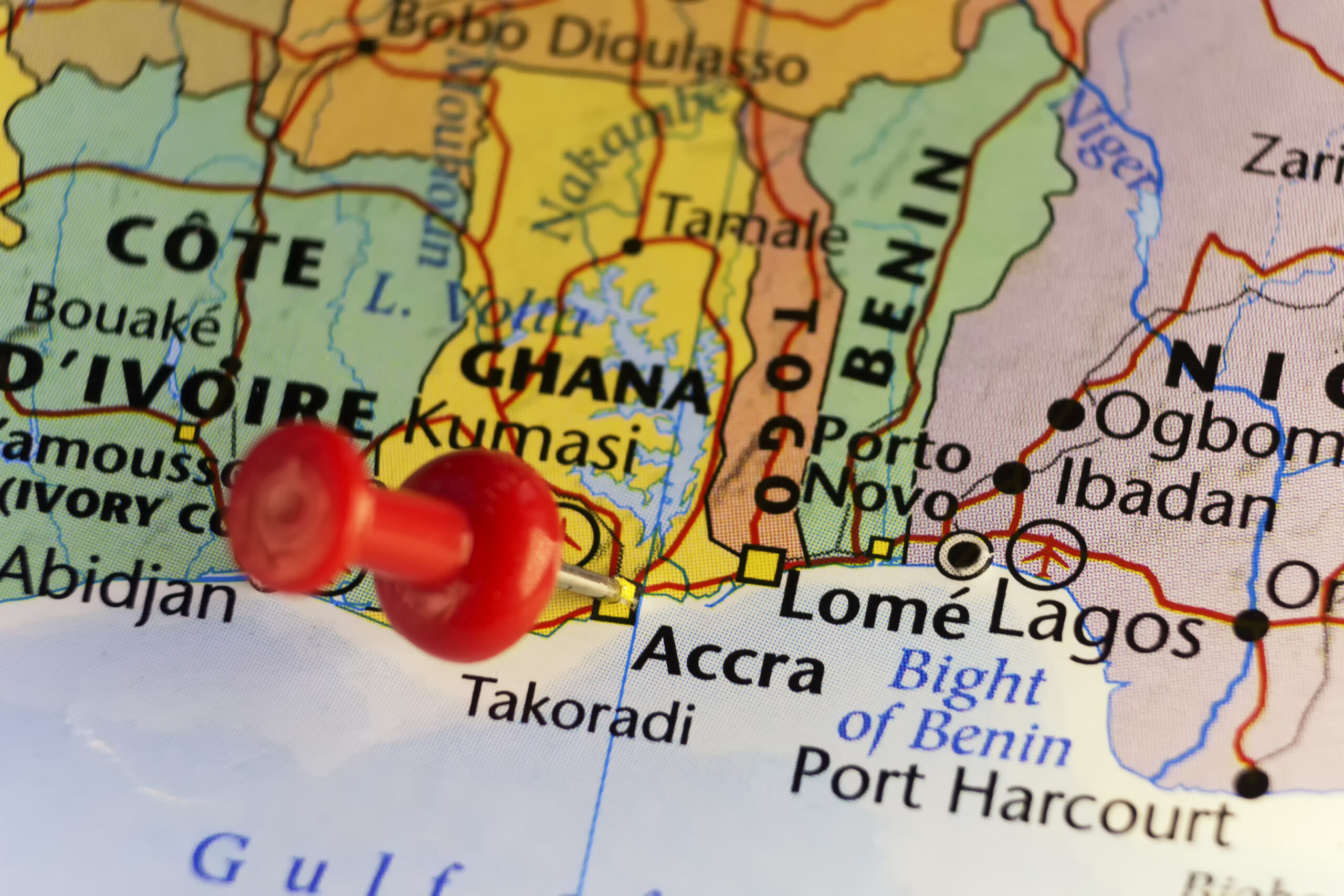
The Independence of Ghana
This case study examines how Ghana was able to achieve independence from the British in 1957. It examines the long term colonial legacy, situation after the Second World War and the actions of Kwame Nkrumah and the Convention People's Party in the path to independence.
- How did Britain establish colonial rule in Ghana?
- How did the Second World War change the campaign for independence in Ghana?
- What role did Kwame Nkrumah play in Ghana's independence?
- How did Ghana's path to independence compare with other African countries?
- To what extent did independence solve the challenges facing Ghana?
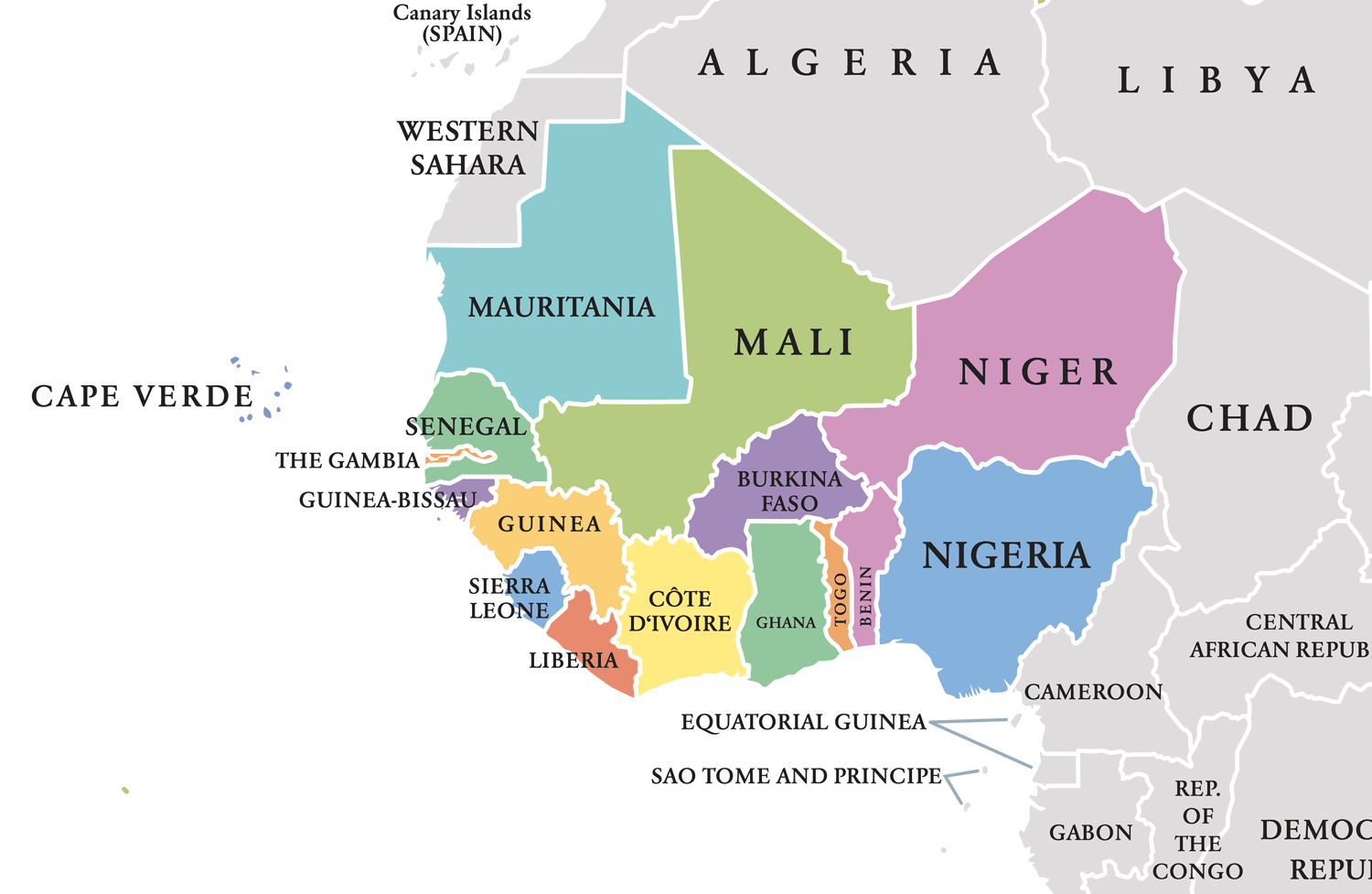
Before it became known as Ghana, this area of West Africa was called the Gold Coast by Europeans because of its rich gold deposits. Starting in the fifteenth century, Portuguese, Dutch and later British traders established forts and trading posts all along the coastline. The Europeans traded gold and ivory but later they settled on a more lucrative export - human slaves.
Interesting Fact - What was the Scramble for Africa?
Liberia was one of the first West African states to achieve independence in 1847. Technically it was never colonised. However, the story is more complex than this. Watch the video below to find out about the history of Liberia and how it was affected by the Transatlantic Slave Trade. The video also explains the process known as the ‘Scramble for Africa’, also examined on this page: Imperialism in Africa.
As the transatlantic slave trade progressed, Europeans made huge profits from the Gold Coast. After the slave trade was outlawed, Europeans continued to develop colonial systems of trade in products such as sugar and cocoa. In 1874, Britain formally established the Gold Coast Colony. The economy of this system was based on exporting raw materials from the interior to Europe. This brought the British into conflict with the Asante Kingdom.
The Asanta was one of the most powerful kingdoms in West Africa in the late nineteenth century. They had a wealthy trading empire based on gold which helped them to dominate trade routes between the interior and the coast. Yet as British power expanded from the coast, a series of conflicts known as the Anglo-Asante Wars broke out. In 1900, a final conflict known as the War of the Golden Stool broke out which became one of the most famous examples of resistance to colonial rule.
Interesting Fact - What was the War of the Golden Stool?
The Gold Stool was sacred to the Asante people. In 1900, a rebellion against increasing British control, including the assertion by the British governor that he should be able to sit on the throne. This was seen as unacceptable to the customs and traditions of the Asante and it sparked the rebellion, led by Queen Mother Yaa Asantewaa. During the war, the Asante attempted a siege of the British fort at Kumasi but after the supply of British reinforcement troops they were able to push back against this attack and defeat the Asante. The war lasted for a few months and ultimately resulted in Britain annexing the Asante territory and formerly expanded the Gold Coast colony. They were never able to capture the Golden Stool though.
A recent documentary series called ‘The History of Africa with Zeinab Badawi’ provides further information - to find out more about the Asante Kingdom, its history and cultural identity you can watch this documentary here
UNESCO has given world heritage status to a collection of Asante buildings and artefacts in Ghana - you can view information and images about these buildings here.
Following the war in 1901, the Asante kingdom was fully annexed into the British Gold Coast colony. It was governed by the British using a process known as indirect rule. Rather than replacing every native leader, the British allowed local leaders to continue in their role. Traditional elites still held onto some influence, but ultimate power rested with the British though. This system enabled the British to rule over its colony with only a small number of administrators.
'Colonialism hardly ever exploits the whole of a country. It contents itself with bringing to light the natural resources, which it extracts, and exports to meet the needs of the mother country's industries, thereby allowing certain sectors of the colony to become relatively rich. But the rest of the colony follows its path of under-development and poverty, or at all events sinks into it more deeply.'
Frantz Fanon, (1961), The Wretched of the Earth
Economically the British profited from the natural resources available in the area and they oversaw the exporting of cocoa, a particularly profitable cash crop. Other areas of economic interest from the British included gold mining and the export of timber. Forced labour was often used to maximise profits and a number of unfair tax laws were placed on the people to fund the building of infrastructure projects. The influence of colonial control came through the establishment of British style education systems, Christian values and legal systems.
By the twentieth century, the Gold Coast had become one of the wealthiest African colonies, but social and political tensions remained. Despite the fact that many local elites benefited, the whole economic system was based on exploitation. Over time, an educated African middle class emerged that sought to challenge this by demanding greater political representation. Ordinary people served in British forces during the First and Second World Wars and came home with the expectation that they too deserved the same freedoms as the British. After 1945, these tensions laid the foundation for a growing independence movement within the Gold Coast.
 Collaboration Skills - Encouraging Others to Contribute
Historical events can often be better understood by approaching the same question from different angles and perspectives. This task will ask you to investigate the past as a group and to listen to each others' views.
Task 1 - Form a small group. Each person should investigate one of the following questions:
- Why was Britain interested in the Gold Coast?
- How did Britain gain control of the Gold Coast?
- How did Britain maintain colonial rule?
- What were the consequences of British colonial rule?
Using this table, become an expert by reviewing the information above and making notes on your question:
| Key Evidence | What does this tell us about colonial rule? |
Task 2 - Now take it in turns to explain your findings to the group. Listen actively to each other's findings. Then as a group, write a paragraph together that summarises your findings and completes this statement:
“Britain established and maintained colonial rule in Ghana by...”
Indicative answers for Task 1 includes the following:
Why was Britain interested in the Gold Coast?
| Key Evidence | What does this tell us about colonial rule? |
| Had rich deposits of Gold, timber and other resources | Tells us that Europeans were encouraged by economic opportunities |
| Britain built coastal forts and trading posts from the fifteenth century + | Shows trade was a primary motivate for ongoing European colonialism |
| The transatlantic slave trade generated significant profits | Shows that the exploitation of African people and resources was a key part of the economic system of colonialism |
| Cocoa, gold and timber became big exports | Showed that Britain benefitted from controlling the explorts of Ghanian products |
How did Britain gain control of the Gold Coast?
| Key Evidence | What does this tell us about colonial rule? |
| Britain expanded from coastal to interior settlements over time | Showed colonialism developed over time rather than all at once |
| Britain formally established the Gold Coast Colony in 1874 | Britain saw Ghana as important enough to want to ensure political control to secure economic interests |
| Britain fought a series of Anglo-Asante Wars against the powerful Asante Kingdom | Colonial rule was not welcomed and Britain had to use military force to ensure rule |
| The War of the Golden Stool (1900) was led by Yaa Asantewaa | Showed that African communities actively resisted British colonialism inlcuding attempts to undermine parts of their cultural traditions |
| Asante territory was annexed in 1901 | Military victory allowed Britain to extend its territorial authority |
How did Britain maintain colonial rule?
| Key Evidence | What does this tell us about colonial rule? |
| Britain introduced a system known as indirect rule | British administrators used existing African political structures. Gave some legitimacy to their system |
| Traditional chiefs and elites retained some local authority | Britain maintained political control while relying on local leaders to administer the colony |
| British authorities introduced taxation and controlled economic activities | Showed that Britain was keen to fund its colonial activities sustainably but was keen to keep control over economic activity |
| British-style education and cultural influences promoted like Christianity and Law | Shows that the British attempted to reshape the culture and identity of Ghanian people |
What were the consequences of British colonial rule?
| Key Evidence | What does this tell us about colonial rule? |
| The Gold Coast became a wealthy colonial due to exports | Shows that it generated considerable economic activity but benefits were distributed unequally |
| Economic policies prioritised raw material exports to Europe | Shows that colonial rule was an extractive system designed primarily for the benefit of Europeans |
| Forced labour and taxation placed burdens on African communities | Shows that exploitation and hardship were a key part of the system |
| British education contributed to the emergence of an educated African middle class | SHows that the colonial system helped to create new groups of people who were later able to challenge the system |
| Africans who served in the world wars returned with increased expectations | Shows that wartime experiences contributed to growing demands for self-government and nationalism |
Task 2 - Advice for the written paragraph is as follows:
- Try to emphasise to students that British colonialism was a gradual process with multiple factors, not just a result of a single military conquest.
- Another thing to highlight is the importance of African agency. The Asante Kingdom was an established power and Yaa Asantewaa's resistance demonstrates that colonial expansion was actively challenged.
- Remind students that the question asks for how the British ‘established’ then ‘maintained’ control. These are two different questions with their own causation so students should be mindful of this.
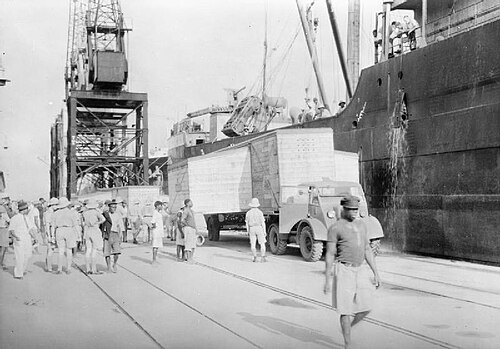
The Second World War (1939-1945) was a turning point in world history. Historians often use the word ‘watershed' because it transformed international politics so dramatically. European empires were weakened economically as well as ideologically. The initial successes of Imperial Japan showed that Europeans were in no way superior. This encouraged people across the world to demand freedom from colonisation. Nationalist movements in places like Ghana became stronger as a result.
Despite the damage inflicted by the war, both Britain and France had hoped that the resources and prestige of their global empires would help them recover. Yet the debt both nations had accumulated during the war meant they had little money left to spend on maintaining these huge empires. Having witnessed the horrors of the Nazi regime, many people questioned whether European nations could continue denying democratic rights to others in colonial states.
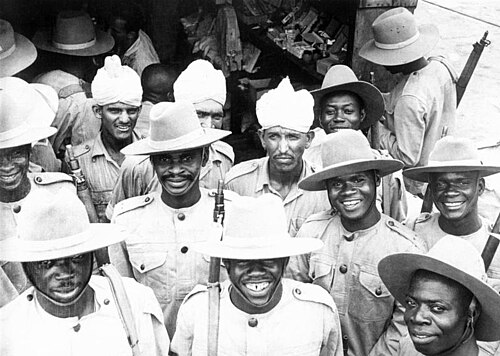
African attitudes also changed as a result of war. Thousands of young men from the Gold Coast and West Africa served the British and Allied forces in all theatres of war throughout the world. Many of these men lost their lives and the survivors returned home expecting greater political rights after fighting for freedom and democracy abroad. In the years after the war, protests and riots broke out in Accra in 1948 due to the lack of jobs and price rises. People had had enough.
In this heated situation, international events also helped to spark the desire for independence in Ghana. The creation of the United Nations in 1945 declared to the world that self-determination was a guiding principle. Pan-Africanism also emerged as a movement by leaders across Africa. It encouraged Africans to work together to help solve their problems. A new generation of leaders emerged, like Kwame Nkrumah in Ghana. He founded the Convention People's Party (CPP) to help kickstart the movement independence.
Critical Thinking Skills - Gathering and Organising Relevant Information to Form an Argument
The Second World War had a clear effect on many countries, but historians continue to debate the extent to which it affected countries like Ghana. This task will help you to understand this debate.
Task 1 - Study the six cards below. Each card identifies one reason why the Second World War contributed to African independence movements:
The Experiences of West Africans fighting in the war. Service during the war brought people and ideas together which would shape the post-war political climate in West Africa. Frustrations with the conditions after the war encouraged more direct action to campaign for independence. | Economic problems as a result of the war The war contributed to economic problems, including lower wages and shortages. This fueled protests and campaigns for independence. For example in Accra in 1948 there were protests concerning the economic conditions for people in the city. | Changing role of European Powers The war had a monumental effect on the European powers who held colonies in Africa. Britain and France were both badly affected by the war and there moves towards prioritising domestic concerns after the war to support economic and social recovery. |
New attitudes after the war Following the severity of the Second World War, the creation of the United Nations brought about an international organisation that held values which saw independence movements as an important future development in Africa. There was increasing international support for independence and the end of empire. | Organised nationalism African intellectuals and political leaders built more momentum towards independence following the war. Ideas such as Pan-Africanism were growing in influence. Communist ideas which were ideologically opposed to imperialism were also influential. In Ghana, organised nationalism can be seen in the work of Kwame Nkrumah and the Convention People's Party (CPP) in 1949. | Weakened forms of colonial rule Added to the changing priorities of the European powers, colonial administrators were increasing providing more delegated political power to local leaders in colonies which contributed to a gradual shift from direct colonial control to independence. |
Task 2 - Using the cards above, discuss each card and decide which category it belongs to. Some cards could go in multiple categories so be prepared to justify your position!
- People - Changes in experiences or actions of ordinary people
- European Powers - Changes with Britain and other colonial powers
- Ideas - New beliefs, values or changes in international politics
- Political Leadership - Role of nationalist leaders and movements
Task 3 - Finally, rank the factor cards from most important to least important in explaining why independence movements became stronger after the Second World War. Share and justify your ranking to the class.
Task 4 - Could African independence have happened without the Second World War? Discuss as a class.
Extension - Try reading more about this inquiry on these websites:
- https://www.nam.ac.uk/explore/royal-west-african-frontier-force-burma-1944
- https://www.bbc.co.uk/bitesize/guides/zyh9ycw/revision/4
- https://sahistory.org.za/article/effects-ww2-africa
For Task 1 and 2, there is no correct answer. Instead, students should be encouraged to justify their decisions and judgements. Many cards overlap so it's important they talk through their thinking processes. Task 3 is a similar task so try to encourage students to share their ranks and to explain their reasoning with historical evidence. A strong response should distinguish between underlying conditions that encouraged independence movements and the leadership needed to achieve independence.
For Task 4, the following discussion points could help you to guide and prompt students in the debate:
Arguments that independence could have happened without the war:
- African resistance began long before 1939, with the Asante resistance as just one example
- Political organisations and educated African elites were already demanding greater rights pre-war
- Pan-Africanism and anti-colonial ideas were developing independently of WW2
- Colonial economic exploitation and political inequality created long-term grievances before the war
Arguments that the war was particularly important:
- The war weakened Britain and other European powers, increasing their economic problems
- Military service and wartime experiences contributed to changing expectations amongst Ghanians
- Post-war hardship intensified peopel's dissatisfaction and encouraged political mobilisation
- The changing international environment such as the UN, Indian independence, encouraged challenges
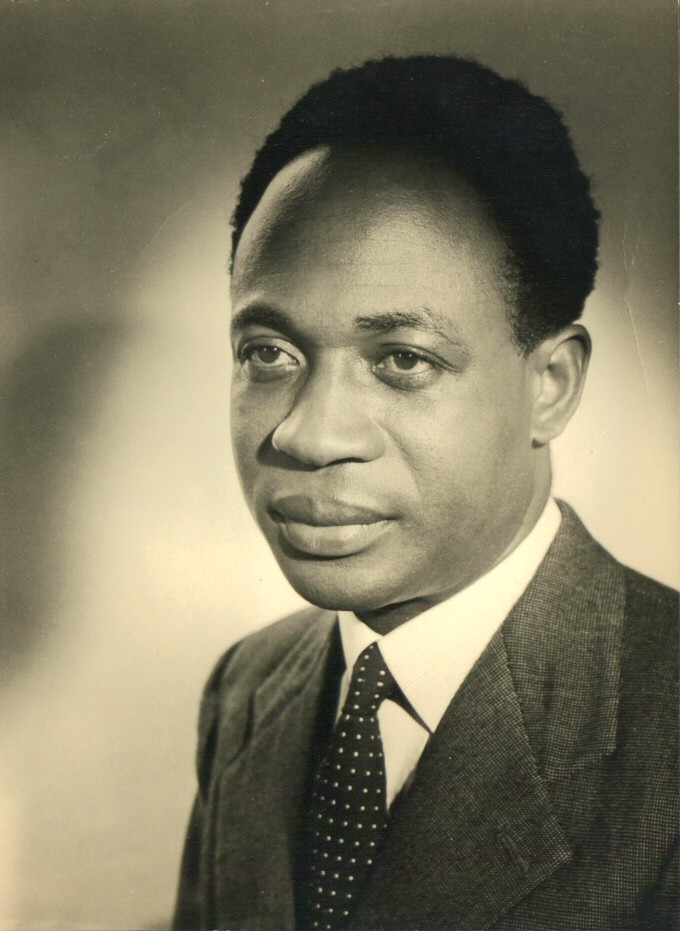
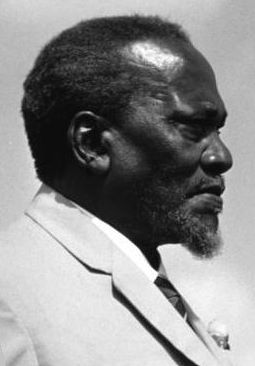
Kwame Nkrumah, pictured here, led Ghana into independence in 1957. This was achieved due to a number of factors.
Political Developments following the Second World War
Following the war, the political organisation of the Gold Coast was changing which was suggestive of a gradual move towards independence supervised by the British. Indicative of this change was the creation of a new constitution in March 1946 which allowed for the representation of the Asante on the Legislative Council for the first time. Compared with other colonies in Africa, the Gold Coat had higher levels of local government, representation and education. Therefore an argument can be made that the colony was moving in the direction of independence through the foundations of the political structure and systems.
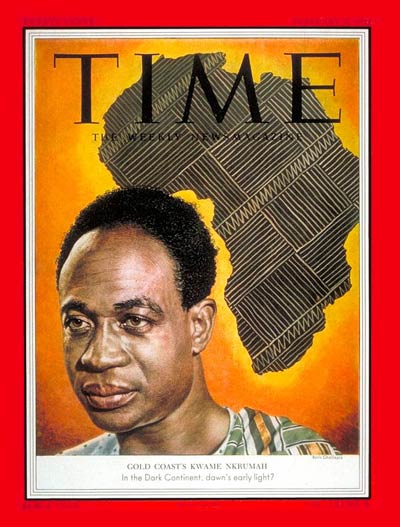
However, this does not explain fully the move to independence. There was frustration with the pace of change and the working and living conditions following the war. For instance in Accra, riots occurred in February 1948. Nationalist movements had been growing, the United Gold Coast Convention (UGCC) was founded in August 1947. Leaders of this movement sought independence over time. The UGCC was criticised though by those who felt that the pace of change was too slow and that independence needed to be brought about immediately.
Kwame Nkrumah and the Convention People's Party (CPP)
Nkrumah created the CPP in June 1949 under the banner of “self government now” - it stood as a group who sought more radical approaches to bringing about the outcome of complete independence. Nkrumah was born in the Gold Coast in 1909 but had travelled for university education in both the United States and Britain. Ideologically Nkrumah had encountered a number of important ideas and intellectuals which would shape his political identity as an independence leader in Africa. Exploring these can help us understand why he was so historically significant.
Communication Skills - Sharing Ideas with Multiple Audiences
As young historians its important not to assume that famous people are automatically historically significant. You need to be able to consider how a person's ideas and actions had a long-term impact on the world.
Task 1 - Form into four groups. You will each investigate one of the following influences on Nkrumah's thinking. Read the assigned box and conduct some research to answer these questions:
- What is this idea?
- How did it influence Nkrumah?
- Why did it help Ghana achieve independence?
Task 2 - Take it in turns to teach the rest of your class your influence. Which influence do you think shaped Nkrumah's leadership the most?
Pan-Africanism
Nkrumah while studying in the USA had encountered the works of Marcus Garvey and W.E.B DuBois. Both of these thinkers would later influence the American Civil Rights movement during the 1950s and 1960s as well contributing to the ideas of Pan-Africanism. Nkrumah took on these ideas and advocated for a form of nationalism across the continent of Africa that could lead to a federation of independent states working together. Subsequently Nkrumah became an important advocate of Pan-Africanism although he was not able to realise his ambitions.
Socialism
The mid-20th century saw a dramatic increase in states following socialist and communist ideologies, contributing to the broader Cold War that was taking shape after the Second World War. Nkrumah observed the inequalities of colonial rule from his upbringing in the Gold Coast as well as studying the ideas of Karl Marx and Vladimir Lenin. He saw that socialism was a pathway for the decolonisation and independence movement which he wanted to achieve. Nkrumah connected Pan-Africanism with Socialism which guided his ideological position.
Positive Action
Following the creation of the United Gold Coast Convention (UGCC), Nkrumah felt frustrated with the pace of change and articulate the position of “self-government now” - this was to achieve the complete independence from the British. In order to do this, the form of protest and campaigning became known as Positive Action - this included strikes, boycotts, protests and educational campaigns. In 1950, Nkrumah was arrested for his role in leading the Positive Action campaigns. Following his release in 1951 he was able to build more momentum towards independence.
Political Developments after WW2
A pivotal meeting of future political leaders of Africa took place in October 1945 in Manchester, UK. This was the fifth Pan Africanist Congress, previous conferences had occurred during the first half of the twentieth century. A number of future African leaders were present at the time including Kwame Nkrumah and Jomo Kenyatta. The Congress was strongly focused on the need for independence movements and taking Africa away from colonial rule.
The influence boxes have been written in a targeted to way so the answers to the research questions should be fairly apparent. But for Task 1, the following summaries can help you quickly understand what students should be recording:
- Pan Africanism - Marcus Garvey and W. E. B. Du Bois were key influences on Nkrumah. They advocated greater unity and political freedom for people of African descent. Nkrumah believed that Ghanaian independence should be part of this wider movement to end European colonial rule across Africa. Pan-Africanism shaped his long-term vision of a united Africa and helped connect Ghana's independence campaign to a broader international movement. Helped gain international support.
- Socialism - The ideas of Karl Marx and Vladimir Lenin challenged economic inequality and exploitation. Nkrumah was interested and it helped him view colonialism as a system that benefited European powers at the expense of African populations. It influenced his belief that political independence should also lead to greater African control over economic resources. In turn, these ideas helped shape his vision for Ghana's development.
- Positive Action - Perhaps inspired by other protest movements like in India, Nkrumah believed that independence required more immediate political action. His Convention People's Party (CPP) begun to use methods like boycotts, demonstrations and strikes after 1949. His subsequent arrest further led to rise in popularity and transformed nationalist ideas into organised political pressure against British rule.
- Political Developments after WW2 - The 5th Pan-African Congress in Manchester in 1945 was influential to him as he met other future African leaders such as Jomo Kenyatta. It strengthened his commitment to African independence and demonstrated the importance of international cooperation between nationalist movements. This helped him movement. Weakened European powers after the war also gave nationalist movements a better chance at demanding change.
For Task 2, there's no single correct answer here and judgements should be supported by evidence. Try to get students to think about the difference between the ideas that shaped Nkrumah's beliefs and the actions that helped Ghana achieve independence.
Achieving Independence
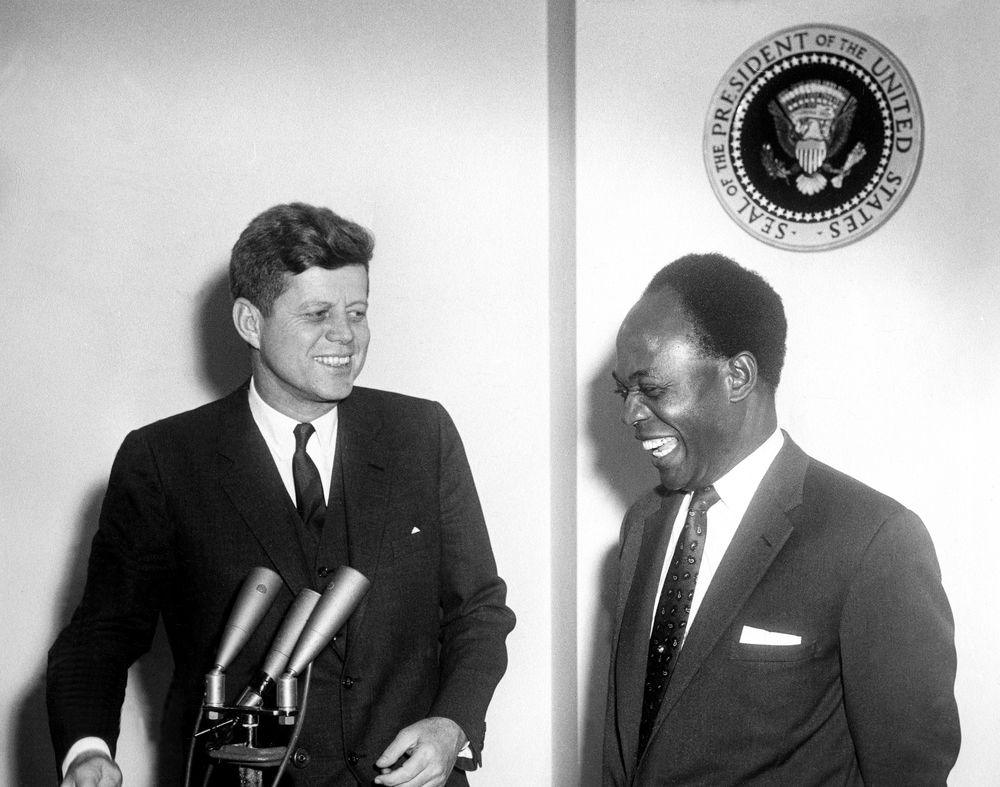
During elections in 1951, the CPP were able to gain a majority vote for representation in the Legislative Assembly - this led to the appointment of Nkrumah as Prime Minister in March 1952. The CPP continued to make electoral gains subsequently which gradually increased the pressure on the British to accept the demands for independence. By 1956, the British had accepted this and on the 6th May 1957, Ghana became an independent country. Nkrumah continued to hold the position of Prime Minister with Queen Elizabeth II as the sovereign head of state. However by 1960, Ghana went on to become a republic and Nkrume was appointed President. This significantly increased his political power and control over the country.
Interdisciplinary Connections to Literature
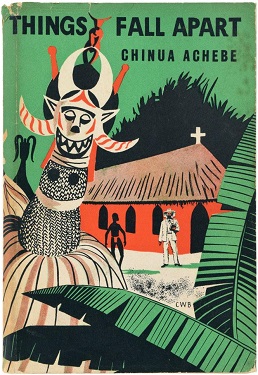
Postcolonial literature is a major source of inspiration and deepen your understanding of the topics, concepts and ideas discussed on this page. You may be studying ‘Things Fall Apart’ by Chinua Achebe and this is often considered to be a seminal work in the genre. In the early 21st century Chimamanda Ngozi Adichie wrote Half of a Yellow Sun (2006) which focuses on the Biafran War during the late 1960s. Seeing the connections between historical topics and literature will deepen your appreciation of the themes discussed here.
When Ghana gained independence on 6th March 1957, it was the first country in sub-Saharan Africa to gain independence from British colonial rule. It was celebrated throughout the world as it showed the colonial rule could be challenged through reform and political campaigning. Nkrumah had shown that a strategy of position action could work. Considering the possibility of violence, Ghana was an inspiration for later movements elsewhere.
Other countries in Africa soon followed Ghana. Nigeria and Senegal followed Ghana's example in using negotiation and constitutional reform to affect change. Others like Kenya and the Congo saw outbreaks of violence. In Kenya, the Mau Mau Uprising in 1952-1960 developed into an armed struggle against British colonial forces. In the Democratic Republic of the Congo, independence was followed by Cold War instability and civil war. All these examples show that there was no single model of African decolonisation.
Historians debate why these experiences varied in different countries. Some point to the fact that some colonies had experienced greater investment and development, resulting in more experienced political leaders and developed nationalist movements. Others point to the fact that European powers had created colonial territories by joining together many different ethnic and cultural groups. This created many unresolved tensions that would emerge during decolonisation. Comparing the experiences of these countries can help you to explore this historical diversity.
Transfer Skills - Changing the Context of an Inquiry to Gain Different Perspectives
Although many African countries gained independence during the 1950s and 1960s, their experiences were quite different. Comparing Ghana to others can help you to understand similarities and differences in the process of decolonisation.
Task 1 - In pairs or small groups, choose one of the following countries to investigate:
- Nigeria
- Tanzania
- Congo
- Kenya
- Senegal
Task 2 - Now consider using some of the following questions to help to guide your research:
- Colonial Rule - What were conditions like in the country before independence?
- Leadership - What was the role of individual leaders and political parties?
- Methods - How did the country gain independence? Was it gradual or a sudden shift?
- Violence - Was independence peaceful or violent?
- Cold War - What role did the Cold War play?
- Consequences - Did independence lead to lasting stability?
Task 3 - Finally, compare your case study to Ghana. You can deepen your thinking further by constructing a comparative diagram. A Venn diagram or a simple comparison table could be used. As shown below:
| Points of Comparison | Points of Contrast |
A PDF of this activity is attached below:
Extension - The following podcast from the rest is history is a very engaging and thought provoking discussion on the process of decolonisation in Africa following the Second World War. It includes discussion on Ghana as well as the circumstances surrounding the formation of the Democratic Republic of Congo (formerly Zaire).
https://podcasts.apple.com/gb/podcast/decolonising-africa/id1537788786?i=1000536339571
After 1960, Nkrumah's style of ruling became increasingly dictatorial. Ghana was a one party state, influenced by Soviet style state planning and the command economy. Nkrumah made decisions that he felt were in the best interests of the country but he was increasingly seen as a dictator. In 1964 he was declared as ‘President for Life’. Legal methods including the Preventive Detention Act of 1958 was used to suppress opposition and criticism.

Censorship was used and propaganda was used to support the policies that Nkrumah wanted to be followed. Young people had to join the Young Pioneer Movement, a Soviet style youth organisation that included ideological teachings. During his rule Nkrumah oversaw a widespread expansion of education provision in Ghana as well as a number of major infrastructure projects. Most famously this included the building of the Akosombo Dam during the early 1960s. As mentioned, Nkrumah was strongly influenced by Pan-Africanism. He stated:
“The independence of Ghana would be meaningless unless it was tied to the total liberation of Africa.”[1]
Ideologically, Nkrumah's rule over Ghana was influenced by Cold War ideological tensions and developments. Although Non-Aligned he did accept economic aid from both the Soviet Union under Nikita Khrushchev and the People's Republic of China under Mao Zedong. Western powers were increasingly sceptical of Nkrumah ideological links with communism and saw his rule as a potential problem for the region.
Nkrumah was overthrown on 24th February 1966 by means of a military coup, he spent rest of his life in exile. Nkrumah's increasingly dictatorial approach and economic problems in the country had sparked opposition which eventually led to his downfall. Despite the authoritarian nature of his rule, Nkrumah is clearly a significant historical figure to both Ghana and the process of decolonisation during this time. His commitment to Pan-Africanism, as seen in his major writings and speeches, makes him an important figure to historians and political thinkers to this day.
Critical Thinking Skills - Evaluating Evidence and Arguments
To make a considered judgement on leaders, we often need to consider their successes and limitations. This task will ask you to use all the evidence from this inquiry to decide whether independence achieved its aims in Ghana.
Task 1 - Using all the evidence from this case study and your own research, complete this table to organise your notes:
| Evidence that independence was successful | Evidence that challenges remained |
Task 2 - Now complete your inquiry by writing an essay response to this question:
“To what extent did independence solve the challenges facing Ghana?”
Your answer must:
- Refer to evidence from the case study (i.e. political developments, economic change, leadership etc.)
- Include evidence of both successes and challenges
- Consider at least one other perspective and explain why you disagree
- Reach a clear and justified judgement.
You have options over how you assess and mark this task. You could set this as a research essay and design a rubric using the I&S assessment objectives and strands. Alternatively, you could set this as an in-class essay and mark this using the MYP History eAssessment criteria. For essays, they are marked as follows:
Criterion A - Knowledge and Understanding (8 marks)
| Marks | Descriptor |
| 1-2 | Limited contextual and conceptual understanding of Ghana's independence and its consequences in an outline, using limited examples of political, economic or social developments and limited historical terminology. |
| 3-4 | Adequate contextual and conceptual understanding of Ghana's independence and its successes and challenges in a description, using satisfactory examples and mostly appropriate historical terminology. |
| 5-6 | Substantial contextual and conceptual understanding of the extent to which independence addressed Ghana's political, economic and social challenges in an explanation, using accurate historical examples and appropriate terminology. |
| 7-8 | Detailed contextual and conceptual understanding of the extent to which independence addressed Ghana's political, economic and social challenges in a thorough explanation, using accurate and effective historical examples and appropriate terminology. |
Criteria C - Communication 1 - Format (2 marks)
| Marks | Descriptor |
| 1 | Two of the following elements are included: an introduction addressing the essay question, a main body examining Ghana's successes and challenges, and a conclusion. |
| 2 | All three elements are included: an introduction addressing the essay question, a main body examining Ghana's successes and challenges, and a conclusion presenting an overall judgement. |
Criteria C - Communication 2 - Style and Language (3 marks)
| Marks | Descriptor |
| 1 | Style and language are rarely appropriate for a formal historical essay evaluating Ghana's independence. |
| 2 | Style and language are mainly appropriate for a formal historical essay, but inconsistent in clarity, formality or use of historical language. |
| 3 | Style and language are consistently appropriate, clear and formal, communicating historical explanations and judgements about Ghana's independence effectively. |
Criteria C - Communication 3 - Organisational Structure (3 marks)
| Marks | Descriptor |
| 1 | Organisation is occasionally effective; ideas about the successes and challenges of Ghanaian independence do not always build logically. |
| 2 | Organisation is mainly effective; ideas about the successes and challenges of Ghanaian independence generally build in a logical manner towards a judgement. |
| 3 | Organisation is consistently appropriate and effective; ideas about the successes and challenges of Ghanaian independence build clearly and logically throughout, leading to a justified overall judgement. |
Criteria D - Thinking Critically (8 marks)
| Marks | Descriptor |
| 1-2 | Gives one perspective on whether independence solved Ghana's challenges in a basic analysis and summarises information to a limited extent, making a limited argument in response to the question. |
| 3-4 | Gives different perspectives on the successes and limitations of Ghanaian independence in an analysis and summarises information to make clear arguments about the extent to which independence solved Ghana's challenges. |
| 5-6 | Gives different perspectives on the successes and limitations of Ghanaian independence in an analysis and synthesises information to make clear arguments, supported by relevant historical evidence, about the extent to which independence solved Ghana's challenges. |
| 7-8 | Gives different perspectives on the successes and limitations of Ghanaian independence in a detailed discussion and synthesises information to make clear, coherent and convincing arguments, supported by well-selected historical evidence, leading to a justified judgement in response to the question. |
Footnotes
1. https://theconversation.com/how-kwame-nkrumahs-midnight-speech-set-a-tradition-for-marking-the-moment-of-liberation-178609