The Roman World - Part One
The Roman World - Part One
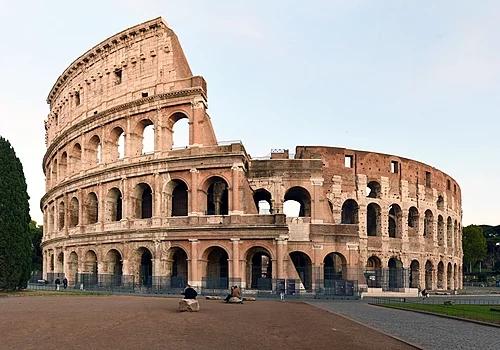
In this unit, we will explore the origins of the Roman Republic, the system of government used, and how Rome expanded into such a powerful empire. The unit will also focus on Roman law, wars, government, and social life, as well as catching up with some more well-known individuals. Picture - The Coliseum in Rome
The video below provides a clear and informative introduction to Ancient Rome.
 Organisation Skills - Use appropriate strategies for organising complex information
The video below provides a clear and informative introduction to Ancient Rome. As you watch the video create a mind map or spider diagram to deepen your understanding of this civilisation. Look to include the following key words in your notes:
| Tiber River | Regal | Republican | Imperial |
| Romulus and Remus | The Consul | Julius Caesar | Octavian |
| Nero | Military Conquest | Engineering | Aqueducts, baths & roads |
| Latin | Christianity | Gladiators | Decline |
Reflection Skills - Considering content: What did I learn about today? What don’t I yet understand?
From watching the video you should have picked up some new understandings about the nature of Ancient Rome. Complete the routine I used to think, now I think to reflect upon this.
- I used to think this about Ancient Rome.....
- Now I think this about Ancient Rome....
Deepen your thinking further by considering what additional questions you have about Ancient Rome. Write them down and be sure to share these thoughts and ideas with your teacher.
The story of Rome dates back to the Neolithic era. In the Prehistoric Pathways unit, we examined the features of the Palaeolithic and Neolithic eras of human history. Italy, given its favourable climate and physical geography, was an area of the world where early human settlements were established. Therefore, before the founding of Rome, the region had been shaped by different Neolithic communities. These early societies had an important cultural impact on Rome; for instance, the use of the Latin language originated from central Italy.
Rome was a good location for a powerful civilisation; it was relatively close to the sea and had a river flowing through it, making the city ideally situated for strategic and trading reasons. The river Tiber cuts through the city, and the geography of the city is defined by the seven hills in and around the city. Of note is the Palatine Hill, which was the location of the founding of Rome in 753 BCE according to the myth of Romulus and Remus.
Different groups of people influenced the early development of Rome. This included the Etruscans from the north, the Latins from central Italy, and the Greeks. The Greeks influenced the Romans in the use of the alphabet, the different pantheon of gods, and different styles of art. From the outset, Rome was influenced by a variety of different groups.
Click the eye below to complete the multiple choice questions on the origins of Rome.
What river flows through Rome?
The Tiber river was very important to the Romans due to its prominence in the city and its connection to the sea. The god Tiberinus was exalted as a representation of the river in their mythology.
Which of the following groups did not have an early influence on Rome?
Roman culture and identity was shaped by many different groups which had an impact on areas of life such as language, religion, art and architecture.
What is the name of the legend which was important to the founding of Rome in 753 BCE?
War
The story of the Romulus and Remus can be read in the green box below. All of the options for this questions will be explored at different stages of the unit.
Transfer Skills - Changing the context of an inquiry to gain different perspectives
We are all familiar with the idea of the origin story. It is often used as a storytelling device in both television and film. Rome's origin is connected to the famous story about twin brothers Romulus and Remus, a legend you may already be familiar with. Read this extract to get an idea of the story.
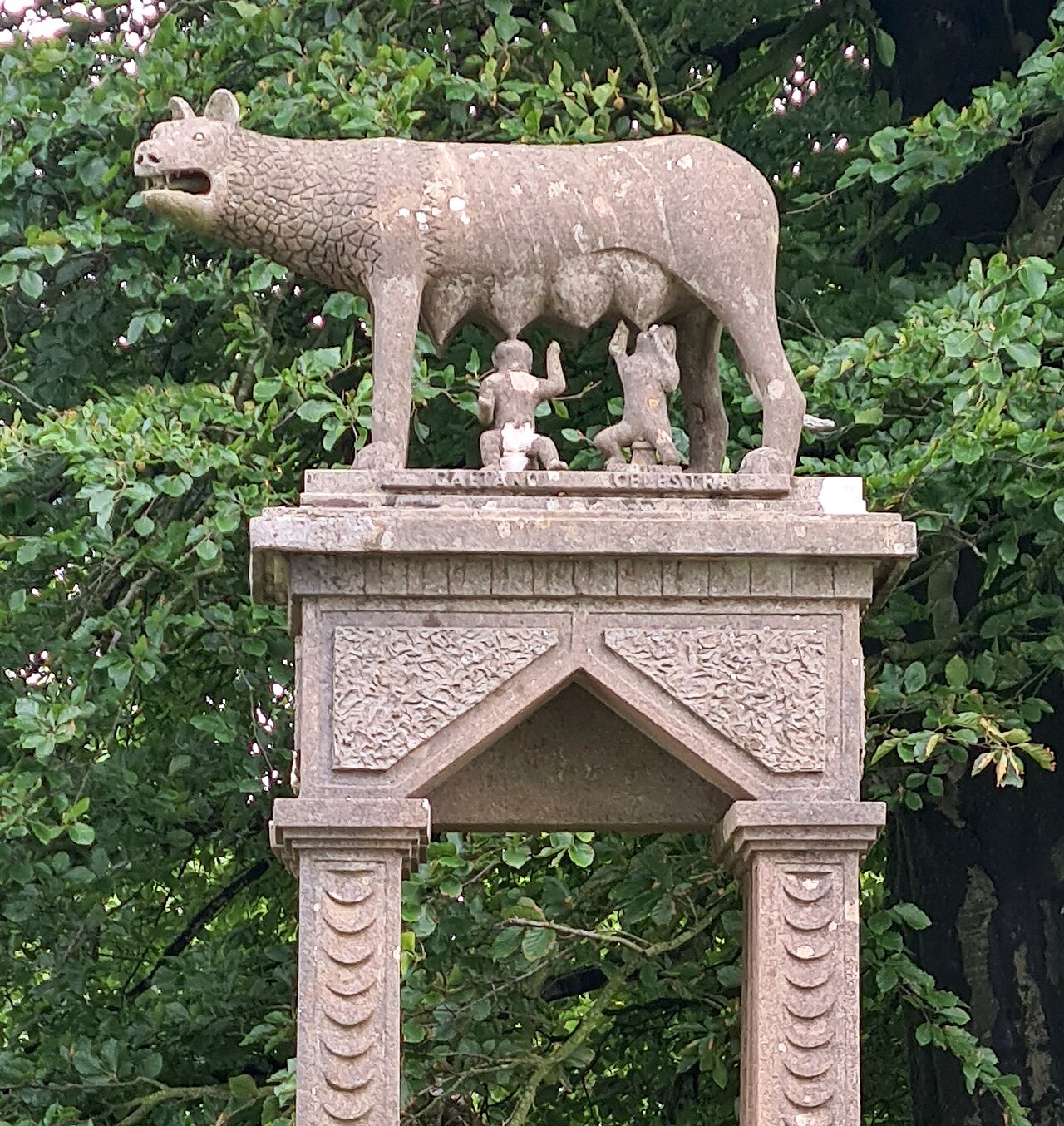
'According to tradition, Rome was founded by Romulus and Remus in 753 BC. They were twin brothers, sons of a human mother and the god of war, Mars. After their birth, the king ordered them killed. They were placed in a basket and put into the Tiber River - left to die from exposure in the outdoors. But their basket washed up on the river bank where they were found by a female wolf. The wolf nursed the hungry babies and cared for them until they were found by a shepherd.
The shepherd and his wife raised the babies as their own. Romulus and Remus grew up and helped overthrow the king who had ordered their death. They wanted to build their own city along the Tiber River where their basket had washed ashore. They disagreed about where it should be, and Romulus killed Remus during their quarrels. Romulus built the city of Rome on one of the seven hills along the Tiber - the Palatine hill - and lived a long life as king of Rome.
'Carlos, M. C. (n.d.). The Legend of Romulus and Remus. Odyssey/Rome. https://carlos.emory.edu/htdocs/ODYSSEY/ROME/romulus.html
There are different versions of this story, but it clearly captured the imagination of Romans through the centuries. A famous statue of the she-wolf nursing Romulus and Remus can be seen in downtown Rome to this day. Many famous cities in the world have fascinating stories which provide a mythical explanation of their origin.
Task - Research one of the following examples to find out about the origin story in different cities of the world. Share your findings in either a written piece of work or in a discussion task.
- Prague, Czechia - The prophecy of Libuše.
- Athens, Greece - The competition between Athena and Poseidon
- Tenochtitlan, Mexico - How the Aztecs founded the city
- Cusco, Peru - The story of the children of the Sun God
- Fez, Morocco - How Idris I founded the city with the help of a pair of Golden Deer
Monarchy defined the first few centuries of the Roman Republic. Several kings ruled Rome since its founding in 753 BCE. At the time, the early city was heavily influenced by Etruscan culture. This period ended with the founding of the Roman Republic in 509 BCE after the overthrow of the final king.
Roman society was divided into two major groups, the patricians and the plebeians. The patricians were powerful and wealthy landowners who enjoyed more privileges in the Roman Republic. The plebeians, a larger group, were made up of a variety of people holding diverse jobs such as merchants, craftspeople, and small-scale landowners. Over time, the plebeians were able to secure more political rights, but this took many years.
The Republic was governed with several branches of government.
The Senate, which initially contained around 300 patricians who ruled for life, was important and responsible for passing many laws, making financial decisions, and deciding on foreign policy.
The Consuls were two individuals who were appointed every year and effectively led the Roman Republic. They commanded the military and led the actions of the Senate and other assemblies. As there were two consuls, they had the power to veto each other to protect against any abuses of power that could take place.
There were other, more participatory branches of government, including different assemblies such as the Council of the Plebs, which represented the interests of the Plebeians. Other officials included the Quaestors, who were financial officials, and the powerful Praetors, who led civil law.
An important development in the acquisition of more rights for the plebeians was the Law of the Twelve Tables in 450 BCE, a series of laws that provided clearer and more visible guidance on the rights and responsibilities of Roman society. This was an important milestone for further developments in Roman law.
Interdisciplinary Connections to Humanities - The Development of Legal Systems
In the Mesopotamia unit, we came across the Code of Hammurabi, an early version of a written legal system that provided a series of laws that people were expected to follow. Throughout the site, we will encounter other important artefacts, events and written documents that have had an influence on the history of legal systems. The Law of the Twelve Tables is another example of this.
Examples of Laws from the Twelve Tables
TABLE VII - 9. Should a tree on a neighbour's farm be bend crooked by the wind and lean over your farm, you may take legal action for removal of that tree.
TABLE VIII - 23. A person who had been found guilty of giving false witness shall be hurled down from the Tarpeian Rock.
26.No person shall hold meetings by night in the city.
TABLE X - 3. The women shall not tear their faces nor wail on account of the funeral.
TABLE XI - 1. Marriages should not take place between plebeians and patricians.
You can see more examples of laws from the Twelve Tables at this link:
Collaboration Skills - Listening actively to other perspectives and ideas
What is the purpose of the law and how do you think it changes over time?
Task - Research one of the areas below and discuss your findings with a partner:
- What are the different approaches to punishment across past societies? - What are the different arguments for and against retribution, rehabilitation and vindication
- How is law communicated? What is a constitution? Do all countries have constitutions? Do they change?
- How has the law become more representative and inclusive over time? What challenges remain?
Learning Trouble Spot
This unit has a wide range of terminology - to assist with your studies, consider going to Flash Cards - The Roman World to revise some of the key words and build your understanding.
As mentioned earlier, Rome began as a settlement that gradually became more powerful. From 509 BCE, when the Roman Republic was founded, it was not the large empire that we often think of when looking back to this time period. However, it was during the centuries of the Republic, until 27 BCE, that the territory under the control of Rome expanded significantly. To understand this expansion, we should consider the Punic Wars, which saw the Roman armies fight the Carthaginians over many years.
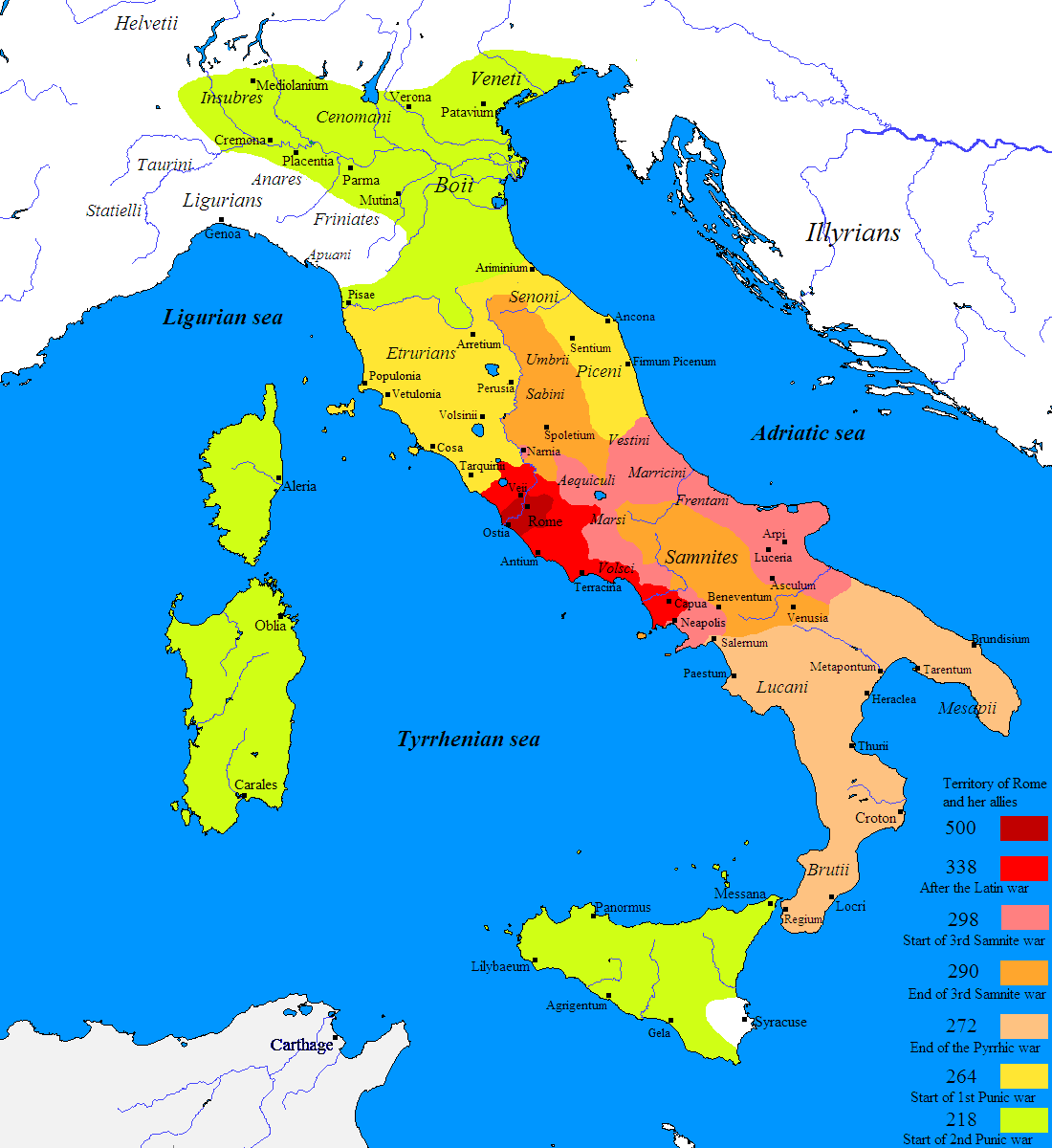
The First Punic War 264 - 241 BCE
As can be seen in the map above, Rome gradually took over the whole of the Italian peninsula after it became a republic. This was achieved through a combination of force, diplomacy, and coalitions; many people who came under its control could be granted citizenship, which would give them a stake in the Roman Republic. The Punic Wars differed from these earlier wars in that they were now fighting against the Carthaginians, a powerful seafaring people who controlled a large area of the Eastern Mediterranean and North Africa. Originally known as the Phoenicians, they founded the city of Carthage, which became their capital and hence the more commonly used name - Carthaginians. The First Punic War was mostly based around the island of Sicily. Rome and Carthage were natural rivals given their proximity to each other and strategic interests. The Carthaginians were excellent seafarers and proved difficult opposition due to the Romans' lack of experience in this type of warfare. Despite this, the Romans were able to develop their own ships, learning from the Carthaginians, and eventually defeat them, essentially extending their territorial control to include most of Sicily.
The Second Punic War 218 - 201 BCE
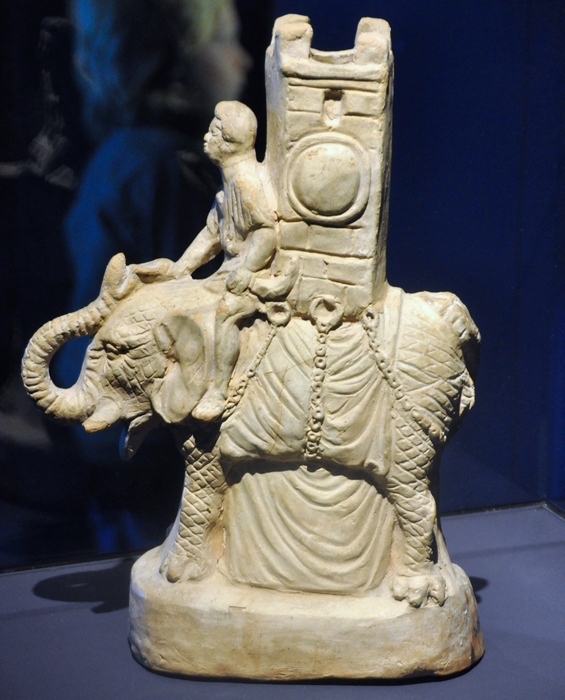
After the loss to the Romans in the First Punic War, the Carthaginians made somewhat better progress against them in the Second Punic War. The conflict began after the Roman seizure of the island of Sardinia, as well as Roman territorial interests in Spain, which the Carthaginians did not recognise. These wars famously saw Carthaginian General Hannibal cross into northern Italy through the Alps. An expert military leader who commanded thousands of troops and famously brought elephants with him, Hannibal secured several victories against the Romans, including the Battle of Cannae in 216 BC, which was a severe loss for the Romans. Hannibal's successes meant that the Carthaginians weakened Roman control of Italy for several years. The Romans held out against him by using the strategy of attrition; this is trying to weaken your opponent by holding out against them and essentially wearing them down over time. After returning to North Africa, Hannibal was eventually defeated by the Romans at the Battle of Zama, which effectively ended the Second Punic War. As a result of the war, the Romans gained control of Sardinia and Spain, and the Carthaginians lost much of their status as a world power.
The Third Punic War 149 - 146 BCE
'Carthago delenda est' Cato the Elder
The quote above - 'Carthage must be destroyed' - was said by Cato the Elder, a member of the Senate who always ended his speeches with this line. This desire for complete destruction of the city of Carthage was realised during the third and final Punic War. After the Second Punic War, the city was no longer a threat, but the sense of revenge from some members of the Senate was strong; however, others disagreed and saw the maintenance of Carthage as important. For example, Cornelius Scipio Corculum, another leading politician, always ended his speeches with the line: 'Carthage must be saved'.
The view that Carthage must be destroyed won out, though, and between 149 and 146 BCE the city was under siege, which led to its eventual destruction and near obliteration from history. Led by Scipio Amilianus, the Romans laid siege to Carthage for two years, eventually razing it to the ground. From there, the Romans extended their territory into North Africa, and surviving Carthaginians found themselves now working as enslaved people.
Communication Skills - Organising and depicting information logically
Task - Write a summary of the Punic Wars using the information above - you could do this in the form of a comic strip or a short piece of writing. Consider using the 5Ws to help with your focus here:
- Who? Who was involved?
- Where? Where did the wars take place?
- When? When did the wars occur?
- Why? Why did the Romans eventually win these wars?
- What? What were the results?
A PDF of this section can be downloaded below:
As a result of the Punic Wars, Rome became very successful and powerful. Alongside Spain and North Africa, it had also taken control of Greece and Macedonia, so that by the end of the 2nd century BCE it was the strongest power in the Mediterranean.
Challenges started to test the Roman Republic. The dominant rule of the patrician class within the Senate caused unrest amongst the lower classes of plebeians. Farmers in particular found life difficult, and there were conflicts over land ownership. A small elite of landowners governed the republic; there was also an increased use of slavery as people captured in wars were forced to work the land of the wealthy. There were attempts at reform. Most famously, brothers Tiberius and Gaius Gracchus tried to bring more equity to land ownership through proposals for land reform. Both, though, were murdered, being seen as threatening to the interests of the Roman elite.
Rome entered a period marked by civil wars. Different individuals challenged for more power, and in particular, army generals began to take on more political power. In 60 BCE, three powerful individuals formed the First Triumvirate. This was a power-sharing agreement between them over the territory of Rome - the idea was that each would hold equal power. They were Crassus, Pompey, and Julius Caesar. Each of them would control a different area of Rome's territory. Crassus in Syria in the East, Pompey in Spain to the West, and Caesar in Gaul further North.
Language Skills - Taking effective summary notes for studying
One of the reasons for why the leaders of the first Triumvirate were so powerful was because they had defeated the famous slave revolt led by Spartacus. Find out more about this important story by watching the video below.
Task - There are questions that can be used with the video. Try taking notes and discussing them afterwards:
- What happened in 73 BCE?
- Why were the Senate not concerned to begin with?
- How did Spartacus continue to attract followers for the revolt?
- What role did Crassus play? Where did he trap Spartacus and the rebels?
- What happened to the captives after the final defeat?
- What is the importance of the legacy of Spartacus?
The power balance of the First Triumvirate changed when Crassus was killed in 53 BCE. Members of the Senate wanted to resolve the issue by supporting Pompey alone as ruler, but Caesar refused the calls to stand down from his position. In a move that has gone down as a significant moment in history, Julius Caesar, with his loyal troops, crossed the Rubicon, a river marking the southern boundary of Gaul where he had jurisdiction. Caesar then marched on Rome, and civil war broke out between his and Pompey's forces. Caesar won this war and was made dictator in 45 BCE.
Julius Caesar did not rule for long, however. During his rule, his impact was far-reaching. He introduced:
- Land reforms to improve the conditions of the poor
- Political reforms including increasing the size of the Senate and granting citizenship to conquered peoples
- Introduced the Julian Calendar, which is similar to the modern calendar used today (this is the Gregorian calendar)
- He also proposed debt relief and infrastructure projects.
Discuss Why might some people in Rome be opposed to these reforms brought in by Julius Caesar?
He was assassinated in 44 BCE by a group of senators. The Roman historian Plutarch recorded an account of his death. This assassination occurred on the Ides of March, a term used at the time for the midpoint of March.
How did Julius Caesar die?
'When Caesar entered, the whole senate rose up to him. As soon as he was sat down, the men all crowded round about him, and set Tillius Cimber, one of their own number, to intercede in behalf of his brother that was banished; they all joined their prayers with his, and took Caesar by the hand, and kissed his head and his breast. But he putting aside at first their supplications, and afterwards, when he saw they would not desist, violently rising up, Tillius with both hands caught hold of his robe and pulled it off from his shoulders, and Casca, that stood behind him, drawing his dagger, gave him the first, but a slight wound, about the shoulder. Caesar snatching hold of the handle of the dagger, and crying out aloud in Latin, "Villain Casca, what do you?" he, calling in Greek to his brother, bade him come and help. And by this time, finding himself struck by a great many hands, and looking around about him to see if he could force his way out, when he saw Brutus with his dagger drawn against him, he let go Cascas hand, that he had hold of and covering his head with his robe, gave up his body to their blows. And they so eagerly pressed towards the body, and so many daggers were hacking together, that they cut one another; Brutus, particularly, received a wound in his hand, and all of them were besmeared with the blood.'
Source - Plutarch. Lives. translated by John Dryden. You can access the full version here
All of these events, from the increased power of the army, the civil wars, and the death of Caesar, suggest that the Roman Republic was in trouble. It was increasingly becoming subject to the rise of dictators. The final stage of this came with a conflict that occurred amongst the Second Triumvirate, which comprised Octavian, Antony, and Lepidus.
Similar to the First Triumvirate, these individuals controlled different areas of Roman territory. Antony, who was in power in the East, allied with Ptolemaic Egypt under the rule of Cleopatra VII. Their story is told in the play 'Antony and Cleopatra' by William Shakespeare. However, they were both defeated by Octavian during the Battle of Actium in 31 BCE, and this date marks the end of the Republic. Rome had gone from Republic to Empire, and a new age of Roman Emperors began from this time forward.