a) Communism
Communism
On this page you will find resources to study the intellectual roots of communism, with a focus on the development of Marxism. We explore its origins and specific teachings as well as charting its development as a global ideology. The resources here can be used as a case study for the topic 'Intellectual and Ideological Movements'.
Karl Marx developed the ideas of communism during a period of rapid change known as the industrial revolution. You can study the case study of industrialisation in Britain here. This revolution transformed how products were made and how people lived. New sources of power led to new production methods, which required people to work in factories, usually in cities, rather than making products at home and by hand.
This process gave rise to new working and living conditions for people which were hard and at times oppressive. This included long working hours, low pay and living conditions with poor sanitation. The development of the factories and pace of technological change also created huge inequalities as factory owners made fortunes whilst factory workers had little bargaining power.
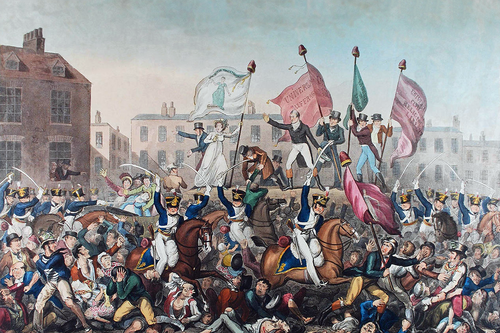
The conditions influenced many people to speak out for the need for reform. Trade unions emerged as ways for workers to protest together for more rights. Political movements such as Chartism demanded greater political rights for workers. A famous example is the Peterloo Massacre in Manchester during 1819. The government used the army to stop a legitimate workers rights protest. Many were killed. Scenes like this were repeated all across Europe and they brought about new questions for reforming intellectuals in the 19th century.
Karl Marx was one of these intellectuals. He believed the problem was the capitalist economic system that encouraged individual factory owners to exploit people. In capitalism, factories and businesses are privately owned. Most economic decisions are made to maximise profit. Marx and his friend Friedrich Engels argued that a society based on greater economic equality and collective ownership would solve this issue. For Marx, only by understanding and addressing the underlying conditions created by industrialisation could society be made fairer.
 Critical Thinking Skills - Gathering and Organising Relevant Information to Formulate an Argument
The Industrial Revolution transformed how people lived and worked during the nineteenth century. As societies changed, many people began to question whether existing political and economic systems were fair. These questions will help you consider how these issues led to new political movements and ideologies.
| Chartism in the United Kingdom | The Populist Party in the United States | The Social Democratic Party in Germany |
| The early Labour movement in the United Kingdom | The emancipation of the serfs in Russia | The First International (International Workingmen's Association) |
1. Why do you think industrialisation and urbanisation has impacted the development of political ideas and movements?
2. How is a trade union different to a political party?
3. Investigate one of the nineteenth-century political movements above. Create a short summary explaining:
- What the movement wanted to achieve.
- Who supported the movement.
- What problems it was attempting to solve.
- How it reflected the changing conditions of the nineteenth century.
4. Based on your research, explain why new political ideas became increasingly popular during the 19th century.
Suggested Answers
Answers and advice for the questions could include:
- Why did industrialisation and urbanisation encourage new political ideas and movements? - The industrial revolution created new social and economic conditions for people. Cities grew rapidly as workers left the countryside (sometimes forced) to work in factories in cities. This led to the rapid development of cities. The urban working class often experienced low wages, poor housing, insecure employment and limited political representation. Workers were now living together so could organise politically more easily. These conditions encouraged new political ideas like socialism and trade unionism.
- How is a trade union different from a political party? - A trade union represents workers in labour disputes and seeks improvements to pay, conditions and employment rights for its workers. A political party has a more expansion role and aims to gain political power in order to change government policy or laws in ways consistent with their values and beliefs. The two are closely connected but have different aims.
- Why did new political ideas become increasingly popular during the nineteenth century? - Many reasons were responsible and the examples given by students may emphasise some over others. They could include industrialisation and urbanisation which we have already discussed but also new social classes, living conditions, greater awareness of inequality, workers organisations, expansion in literacy, newspaper circulation and new media, expansion of voting rights, globalisation of ideas.
Marx believed that history was shaped by conflict between different social classes. In capitalist societies, he said there was a constant conflict between the rich factor and business owners (bourgeoisie) and the workers (proletariat) who survived on wages from the owners. As the workers were the ones that produced the wealth, he felt that in not getting fair wages, they were the ones being exploited. This idea became known as class struggle.
Interesting Fact - What did Karl Marx believe?
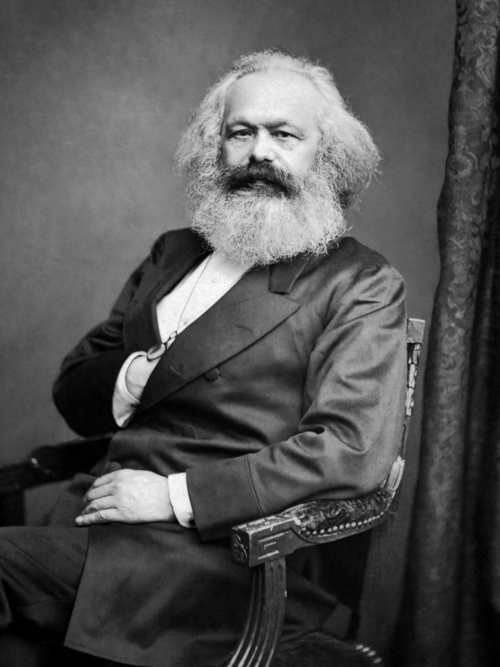
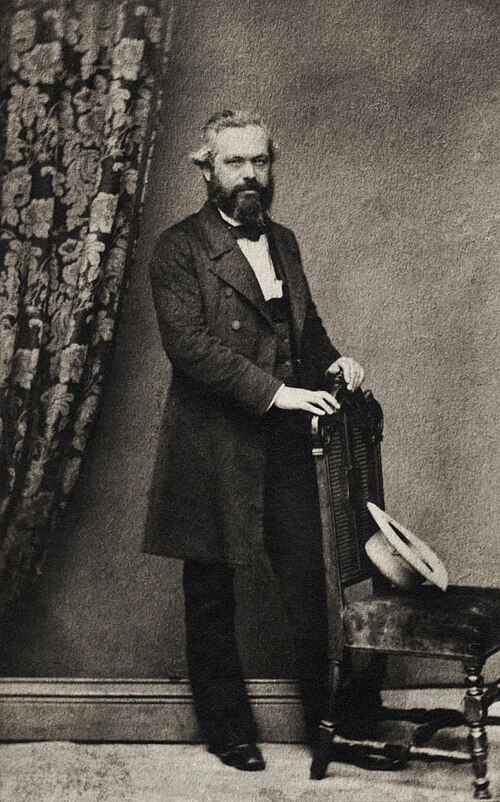
Karl Marx (1818-1883) has been one of the most influential and controversial political philosophers of modern times. He was born in Trier in Prussia (now Germany) in 1818 but developed many of his ideas whilst residing in France, Belgium and Britain during the Industrial Revolution. This gave him first hand experience of the living conditions of many workers. He is regarded as a seminal philosopher, economist and political theorist. Working with his friend Friedrich Engels, Marx argued that these problems were caused by the capitalist system which they outlined in their works 'The Communist Manifesto' and 'Das Kapital'. Both of these texts provided the basis for communist ideology to develop.
In later life, he was involved in the International Workingmen's Association (also called the First International) which was an attempt to create an international socialist movement. He is buried in London at Highgate Cemetery and his reputation continues to be a divisive one. Some people see him as a visionary who sought to bring about a better world through justice and equality while others see his ideas as creating the conditions for tyranny and repression.
Critical Thinking Skills - Considering Ideas from Multiple Perspectives
Karl Marx expressed many of his ideas through memorable phrases and statements. By examining some of these, you can begin to get a flavour for how Marx viewed history and the role of communism within it.
Task 1 - Read the quotations below and consider what they reveal about Karl Marx's beliefs:
- 'Communism is the riddle of history solved, and it knows itself to be this solution.'
- 'The philosophers have only interpreted the world, in various ways; the point is to change it.'
- “The oppressed are allowed once every few years to decide which particular representatives of the oppressing class are to represent and repress them.”
- 'Revolutions are the locomotives of history.'
- 'Workers of the world unite.'
- “The history of all hitherto existing society is the history of class struggles."
- “Let the ruling classes tremble at a Communistic revolution. The proletarians have nothing to lose but their chains. They have a world to win. Workingmen of all countries unite!”
Task 2 - What do the quotes suggest about the political philosophy and approach of Karl Marx?
Suggested Answers
Task 1 interpretations can obviously be contested but a basic summary of each one could be:
- 'Communism is the riddle of history solved, and it knows itself to be this solution.' - Marx believed communism could resolve the inequalities and conflicts created by class divisions.
- 'The philosophers have only interpreted the world, in various ways; the point is to change it.' - Ideas should lead to action and social change, rather than simply explaining society.
- 'The oppressed are allowed once every few years to decide which particular representatives of the oppressing class are to represent and repress them.' - Marx was highly critical of representative democracy as he believed that political institutions largely protected the interests of the ruling class.
- 'Revolutions are the locomotives of history.' - Revolution was a powerful force for historical change.
- 'Workers of the world unite.' - Workers shared common interests across national borders and should cooperate.
- 'The history of all hitherto existing society is the history of class struggles.' - Conflict between social classes was central to Marx's idea of historical change.
- ‘Let the ruling classes tremble at a Communistic revolution. The proletarians have nothing to lose but their chains. They have a world to win. Workingmen of all countries unite!’ - Marx believed that only collective revolutionary action could free workers exploited under capitalism.
For Task 2, you could summarise Karl Marx's political ideas to these essential elements:
- Class conflict was the natural way of the world
- Capitalism was a system of exploitation
- Political systems are a reflection and tool of elites
- Revolutionary change is necessary
- Internationalism as a means for victory
- Communism as the end goal
Whilst others had already pointed this out, Marx went one step further by proposing a solution to this diagnosis. He argued that all private businesses (means of production) should be collectively owned by everyone. In this way, the wealth would be shared out amongst all workers and managers according to their needs. He hoped that this would remove class divisions and create a fairer society.
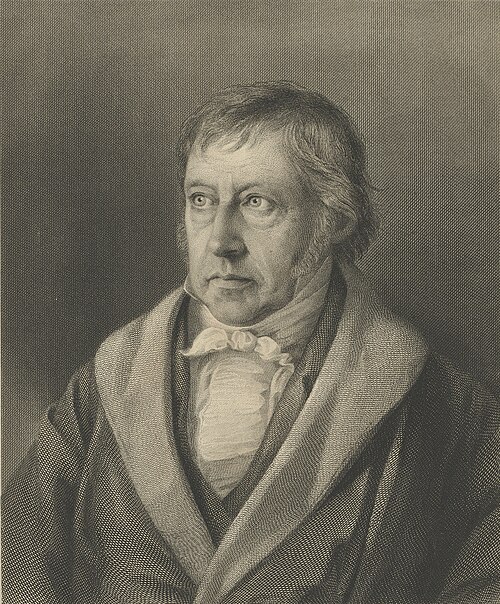
Many of Marx's ideas were influenced by the German philosopher Hegel, who believed that history developed through conflict and change. Marx applied these abstract ideas to history, stating that all societies develop in stages from feudalism to capitalism to socialism and finally communism. By the opposed class rising up against the ruling class, history could move forward. It would end with the victory of communism which represented an ideal future society without class divisions or any inequality.

The diagram represents the 'Six Stages' model which represents the path that societies take towards an ideal - communism. These stages are as follows:
Primitive Communism - the form of early social connection and communities, associated with prehistory before the development of civilisations. Life was nomadic, there was sharing of resources and limited private ownership.
Slave Society - As seen in the ancient civilisations section of this site, many of the early civilisations made extensive use of slavery. Certain people in these societies had no rights and lived to serve the powerful. These societies were rigidly hierarchical. Varieties across civilisations occurred but almost all involved very little redistribution of political power or social privilege. Over time, a more organised form of social structure developed known as feudalism.
Feudalism - We commonly associate this political system with the middle ages - typically this involves a monarch as the head of state, a powerful religious class, landowning nobility and a warrior / knight class. Large numbers of people are tied to the land in service to others, workers as farmers. The increasing influence of trade and merchants gives gradual rise to capitalism.
Capitalism - As trade and the exchange of goods develop the rigid systems of feudalism become outdated. This system reflects more opportunity for social mobility / movement due to the ability to earn money. This system is criticised as it makes a smaller number of people very wealthy (e.g. factory owners during the industrial revolution) and is usually based on the exploitation of others. Subsequently, this leads to class division between the interests of the people who benefit from capitalism and those who do not.
Socialism - As mentioned in the first section, movements were developing to represent the interests of people whose working, living and political rights were limited. Many of the groups followed the ideology of socialism. According to Marx and Engels, this needs to come after capitalism. A system where there is a greater redistribution of wealth and more measures to support the needs of all people in a society. This would include greater use of taxes and more government laws to protect people. This still operates within a capitalist system though.
Communism - Finally, the ideal is to progress towards a society based on mutual sharing, without the need for private ownership and subsequently removing class division. This vision is utopian in description but provided a goal for the direction of people who follow this ideology.
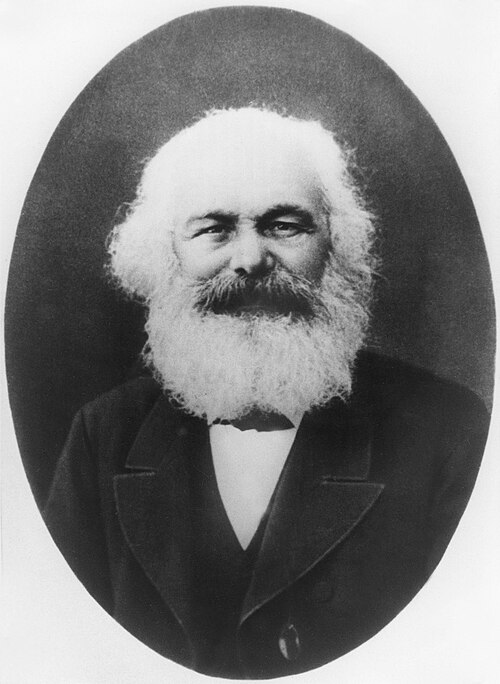
At the time and since, the idea has been very controversial. On the one hand it seemed a well meaning attempt to create a fairer and more justice society. Workers could be liberated and class conflicts ended. Yet this posed a direct challenge to the existing capitalist system where private individuals could own as much wealth and property as they liked. For communism to work, it requires power to be taken from individuals. This can lead to conflict.
In reality when communism has been attempted, it has led to systems of repression and restricted freedoms as a central government often has to force individuals to give up their wealth. This occurred in the Soviet Union after 1917 and in Communist China from 1949. As a result, some historians argue that communism doesn't work in practice. Yet others disagree, arguing that these bad examples don't mean the original idea was wrong.
Interdisciplinary Connections - Literature and the Arts
Utopia refers to an ideal society. In many ways, Marx and Engels were hypothesising about an ideal society where there would be no class division, no private property and no need for war. This would create the conditions for more harmonious forms of living. But they were not the first to discuss utopia as a concept.
- What role do you think the concept of utopia plays in both political thinking but also in literature/arts?
- How might the development of intellectual concepts influence writers at different stages of history?
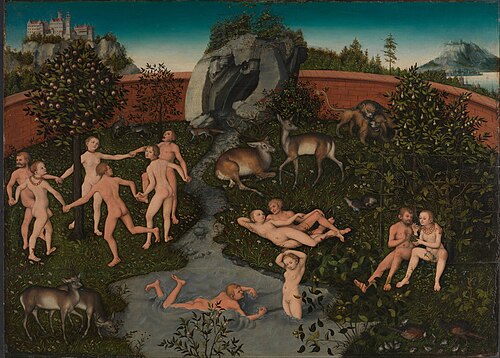
Task - Do some research into how these visions have been articulated by different writers and thinkers over time by examining some of these case studies:
- 'The Republic' by Plato
- 'Utopia' by Thomas Moore
- The concept of utopia in science fiction e.g. 'The Dispossessed' by Ursula Le Guin
What do you think are the dangers of a highly idealised form of society?
From the very beginning, the ideas of communism were debated and generated strong disagreement. Supporters saw it as a solution to poverty, whilst critics argued it threatened individual freedom and private property. Even within the movement for workers rights, the idea was seen as radical as it seemed like it could never be enacted without taking on the many vested interests in society.
Critical Thinking Skills - Gathering and Organising Relevant Information to Formulate an Argument
The ideas of communism still polarise people today. On the one hand its an inspiring utopian vision for how to make the world a better place. For others, it goes against human nature and individual choice. What do you think? This task will help you explore this debate further by examining the ideas more closely.
Task 1 - Watch the CrashCourse Political Theory video above. As you watch, take notes about communism using this table to sort the evidence. Look for arguments that view communism positively, and arguments which criticise communism. Discuss the logic of Marx's ideas as a class and add your ideas to this table:
| Arguments Supporting Marx's Ideas | Arguments Criticising Marx's Ideas |
Task 2 - From what you've learnt so far, why were communist ideas so controversial?
Suggested Answers
Task 1 - The video gives more specific details about Marx's ideas but you can add the following points which you might like to use to prompt discussions with students:
| Arguments Supporting Marx's Ideas | Arguments Criticising Marx's Ideas |
| Capitalism can create large inequalities in wealth and power. | People desire individual freedom and private property. |
| Workers can be exploited when owners control production and profits. | Competition and private ownership can encourage innovation and economic growth. |
| Greater economic equality could create a fairer society. | Removing market competition can reduce incentives and economic efficiency. |
| Economic circumstances and class can shape people's lives. | Creating equality may require significant state control over the economy. |
| Collective ownership could distribute resources according to need rather than wealth. | Marx's prediction that capitalism would inevitably collapse has not occurred as he expected. |
| Workers organising collectively could increase their power and rights. | Governments claiming to implement communism have sometimes become authoritarian and repressive. |
Task 2 - Students may give a range of responses to this question but likely responses could include the fact that his ideas were controversial because they challenged capitalism, private property, social hierarchy and existing political institutions. Subsequent events in history could be used by students to discuss whether this was a correct assumption or not.
The first specific way in which communism was controversial was in the way it criticised capitalism. He pointed out that in a capitalist system, wealth and power was concentrated in the hands of a small group factory and business owners. Workers only received a fraction of this wealth. Owning resources and industries collectively would address this. Yet this idea generalised all factory owners as exploitative and argued they should have their authority removed. It's little wonder that those in power reacted against this idea.
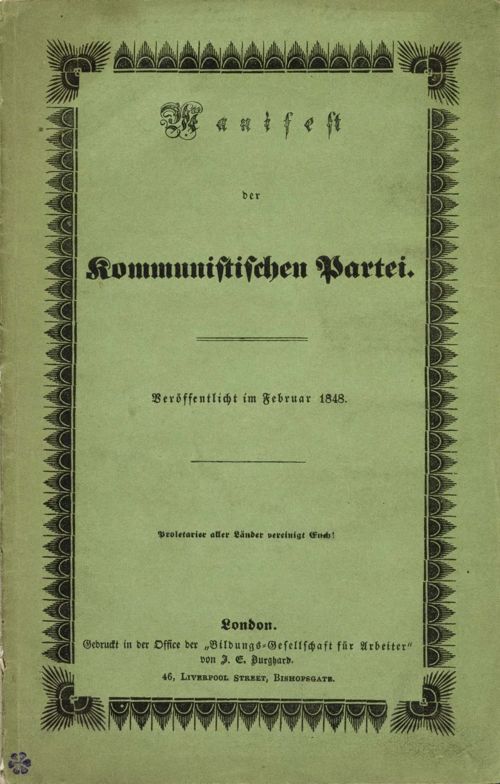
Another reason why communism was so controversial as it seemed clear to everyone that it could never be built without a forced upheaval of society. Wealth and power would never be given away freely. Revolution and violence (or at least the threat of it) would be required. In 'The Communist Manifesto', Marx and Engels argued as early as 1848 that workers should unite and challenge existing systems of power. This is exactly what happened during the Russian, Chinese and other communist revolutions in the 20th century. Many baulked at this violence and repression.
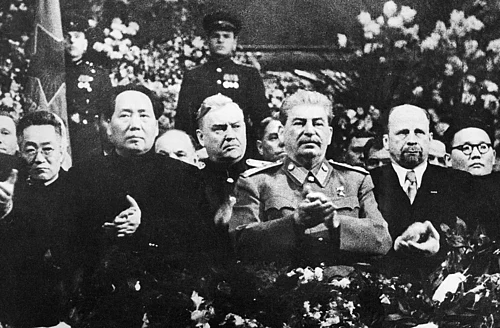
Whilst some continued to justify this use of violence as necessary, many communist systems also ended up creating new hierarchies of power that went against the original ideas of equality and fairness. In the Soviet Union, the rise of Joseph Stalin as authoritarian leader led to the concentration of power in the hands of one individual. The atrocities and repression he unleashed on society killed millions. The same is true of Mao Zedong in China or Pol Pot in Cambodia. So for many at the time and today, communism is feared as a system that can be easily corrupted.
Critical Thinking Skills - Evaluating Evidence and Arguments in History
Communist thinkers such as Karl Marx argued that society could become fairer and more just by removing class divisions. However this has led to revolutions in which millions have died and freedoms limited. Historians have always debated whether these methods can be justified if they intend to create a ‘utopian’ society in the end.
“In history, the ends always justify the means”. To what extent do you agree?
Task 1 - Discuss the statement above with a partner in relation to communism. Consider the following:
- Is it acceptable to limit some freedoms if it creates a more equal society?
- Should governments prioritise equality or individual liberty?
- Should communism be judged by Marx's vision or by how communist governments operated in practice?
Suggested Answers
- Is it acceptable to limit some freedoms if it creates a more equal society? - Yes - some might argue that most societies restrict freedoms in some form in order to protect others or reduce inequality. Communists might argue that this is positive as economic equality and ending exploitation relies upon limiting the power of private businesses or extreme wealth. No - Even if well intended, by restricting freedoms you give the government power to censor and repress, possibly leading to authoritarianism.
- Should governments prioritise equality or individual liberty? - Equality - extreme inequality and poverty can restrict freedoms of the individual as they prevent that individual from being able to exercise genuine choice in society. You can argue that governments should redistribute resources to this end. Liberty - Enforcing complete equality is not natural and would require excessive government intervention. Individuals should be free to make choices about their lives, property etc as this can bring the biggest benefit to society.
- Should communism be judged by Marx's vision or by how communist governments operated in practice? - Vision - it is unfair to judge Marx on what later societies enacted, rather he should be evaluated according to what he actually advocated. History - of course you need to consider the consequences of any political ideas. The experiences of communist states provide evidence about potential problems with applying communist ideas.
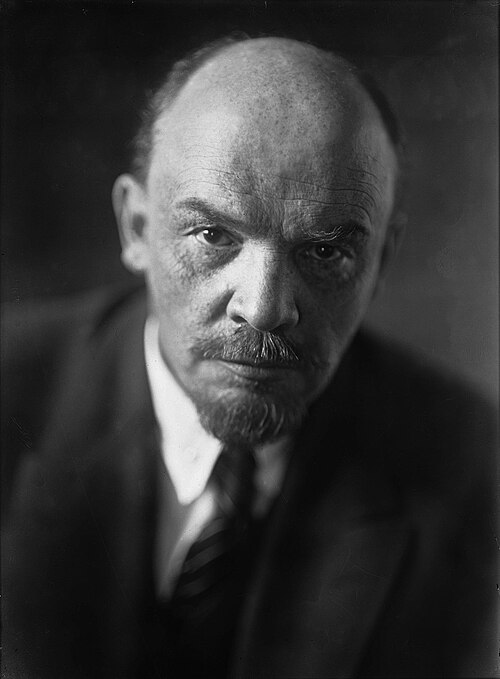
During Karl Marx's lifetime, communism remained a set of political ideas rather than a political reality. He believed that workers would over time, form trade unions and political associations, eventually becoming powerful enough to challenge governments. Whilst this did happen, most notably during the short-lived Paris Commune of 1871, no country had officially adopted communism whilst he still lived.
This all changed during the 1917 Bolshevik Revolution in Russia. Under the leadership Vladimir Lenin, the Bolsheviks seized power from the Provisional Government who had been weakened by continued fighting in the First World War. Lenin established the world's first communist government. By 1922 it had won a civil war against opponents and created the Union of Soviet Socialist Republics (USSR) or Soviet Union. This transformed communism from a set of political ideas into a system of government. Their leaders had to interpret Marx's ideas into practice.
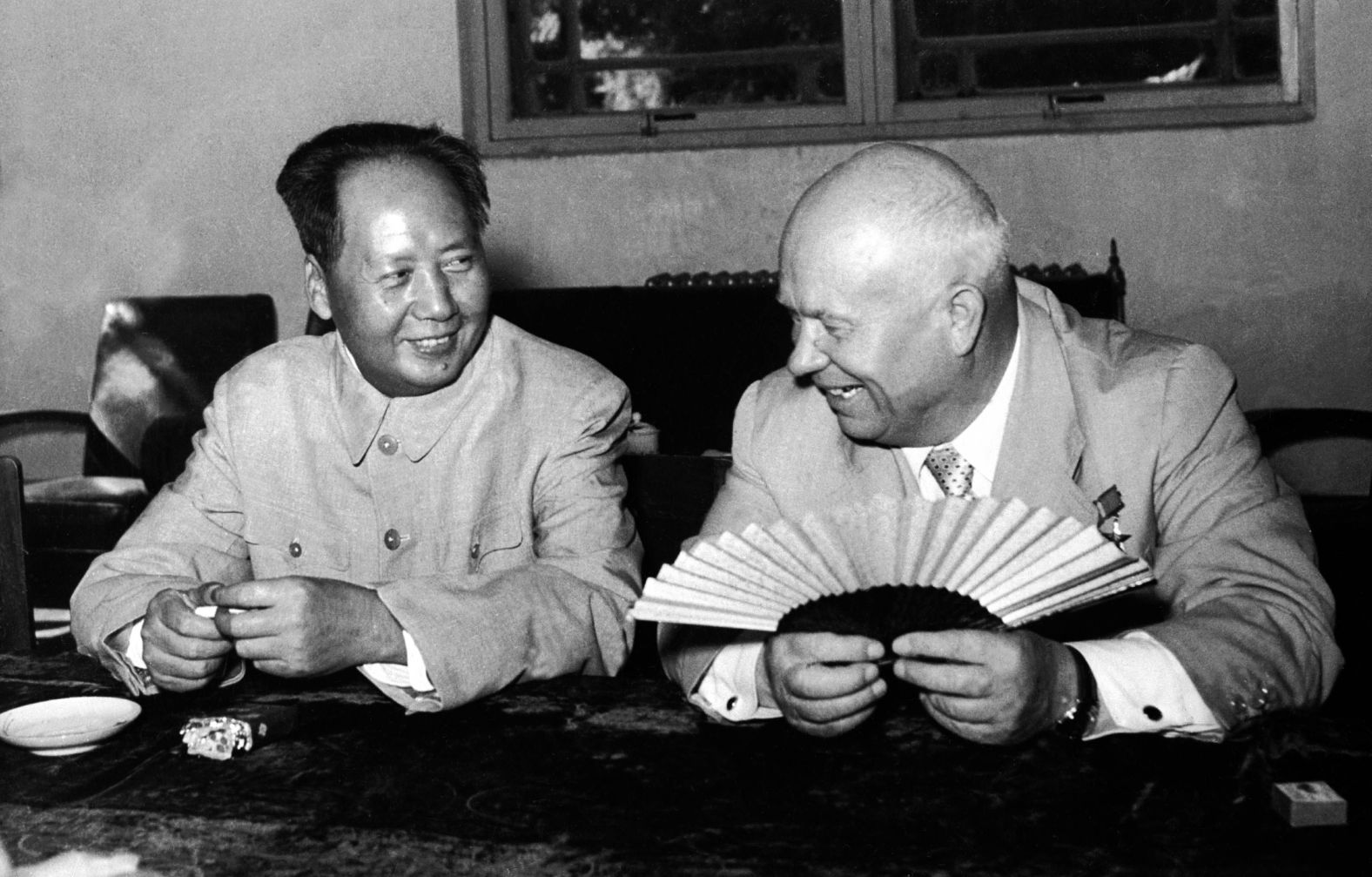
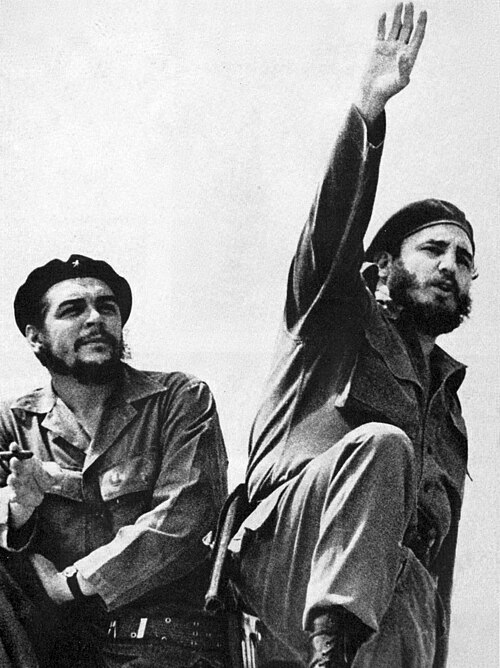
After the Second World War, the USSR and its Red Army had expanded into Eastern Europe. It installed Soviet governments in Poland, Hungary, Czechoslovakia and East Germany. In many cases, ‘Sovietisation’ happened against the will of the people and using violence. Communist revolutions soon occurred elsewhere. In 1949, China became communist with the victory of Mao Zedong in the Chinese Civil War. In Cuba in 1959, Fidel Castro won the Cuban Revolution. By this point, communism had become a global ideology and system of government that influences the lives of millions.
Interesting Fact - Was all communism the same?
Although Karl Marx developed the original ideas of communism, he was vague on the specifics about how a communist government would run. This left leaders in each country to adapt these ideas in different ways.

Marxism-Leninism - Developed by Vladimir Lenin during the Russian Revolution, he argued that whilst Marx was correct to say that the working class would lead a revolution, he believed that a small group of committed revolutionaries like the Bolsheviks needed to lead them. Only this ‘vanguard’ group could help society towards the classless society in future.
Maoism - Developed by Mao Zedong in China during the 1930s and 1940s, he adapted Marxism-Leninism to conditions in China. As a mostly agricultural society, China lacked an industrial working class who could lead a successful revolution. Mao was one of the first communist leaders to realise the revolutionary potential of the peasant class. His ideas were more radical than the USSR, seeking ‘continuous revolution’ to ensure that the ruling elite avoided the corruption that plagued other communist movements.
Why do you think communist ideas developed differently in each country?
Marx's ideas were broad in their outline and he didn't describe specific policies for each different country or cultural context. Communism has therefore taken on different aspects where it has been attempted as a ruling ideology. Students maybe prompted to consider the role of various factors in shaping this diversity:
- Social Structures - Russia and China had different social structures, with a large urban proletariat in Russia but this was absent in China, instead elites ruled over a large rural peasantry.
- Political Conditions - The struggle for power in both societies was slightly different. Both saw civil war and foreign intervention as early threats to their power, this shaped their initial policies.
- Economic Conditions - Levels of industrialisation and land ownership varied which changed the priorities of the state. Both nations faced debates over whether some form of elite or technocrat control was acceptable if this enabled rapid industrialisation.
- Leaders - All leaders interpreted Marx according to their own views and tastes. Well versed in the Chinese classics, Mao attempted to fuse communism with Chinese principles.
- Historical Circumstances - China faced the problem of European colonisation which shaped the initial foreign policy of the Chinese Communist State. Russia had to deal with the European balance of power.
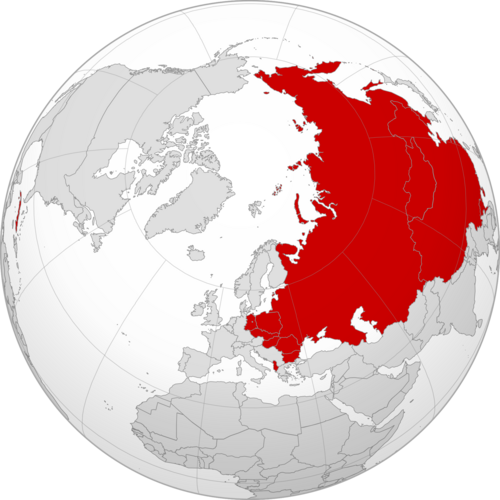
For the United States, Western Europe and other Capitalist societies, communism was seen as something that had to be contained, or even rolled-back. This conflict soon became known as the Cold War as both systems sought to establish spheres of influence throughout the world. Communist groups attempted revolutions in every continent, with varying degrees of success.
Yet by the 1980s, communism was facing growing opposition from many, especially in Eastern Europe. People continued to oppose its repression of individual rights and the lack of economic freedoms. These tensions grew, culminating in the fall of the Berlin Wall in 1989 and the sudden collapse of the USSR in 1991. This marked the end of communist rule in many countries. Yet despite this, communism still continues to thrive in states like India, China, North Korea and Vietnam. This proves how communism has grown beyond its roots to become a global ideology.
Information Literacy Skills - Making Connections Between Various Sources of Information
Communism was able to spread to all parts of the world during the twentieth century. Yet not all emerged for the same reasons. Some came about through Russian-style revolutions, whilst others occurred due to war or even decolonisation. This task will help you explore the diversity in the global communist movement.
| Europe | Asia & Pacific | Africa & Middle East | The Americas |
| East Germany | China | Angola | Cuba |
| Poland | Vietnam | Ethiopia | Grenada |
| Hungary | Laos | South Yemen | Nicaragua |
| Czechoslovakia | Cambodia | Somalia | Chile |
| Romania | North Korea | Benin | Peru |
| Albania | Afghanistan | Congo | Guatemala |
| Yugoslavia | Mongolia | Mozambique | El Salvador |
Task 1 - Each person in your class should choose one state from the list above. You will investigate how communism became (or attempted to be) established there. Research the following information for your country:
- When did communism come to power (or try to) and when did it end?
- How did communism become (or try to become) established?
- Who were the key leaders?
- In what ways did communism change that state?
- Did the USSR or other communist states help?
Task 2 - Now create a class map of communism. This could be done on paper, on the board, or using software such as Padlet or MapChart. Each person should add:
- Their country
- The date communism was established
- One sentence explaining why it spread there
Task 3 - Study your completed map. What patterns can you identify in how communism spread?
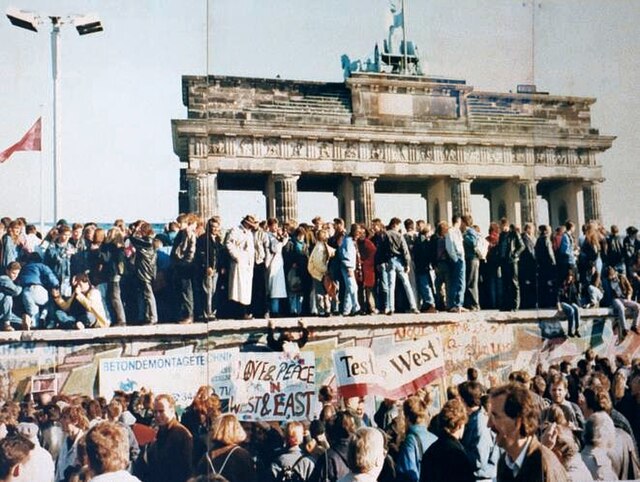
As the picture above shows, the fall of the Berlin Wall in 1989 symbolised the decline of communism as a major ideology. Since then, communist governments fell across the world including the USSR itself which formally dissolved in 1991. Observers at the time believed that liberal democracy and capitalism had won the battle of ideas and that communism would inevitably fade away.
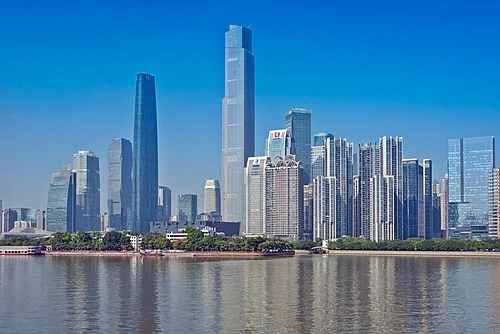
However communism has not disappeared completely. Communist parties still rule in China, Cuba, Vietnam, Laos and North Korea. But they have evolved. China has adopted a capitalist economic model whilst retaining communist political control. They argue that by controlling capitalist forces, they can bring greater prosperity to their nation. On the other hand, North Korea still operates an authoritarian state with a controlled economy. This shows that communism still continues to evolve.
Yet whilst most communist states have collapsed, the ideas of Karl Marx still live on in political debate. Marx's original argument was that capitalism creates huge inequalities by concentrating wealth and power in the hands of a small elite. This is still the case across the world and if anything, has gotten worse. Some people believe that poverty, income inequality, house prices and living costs all show that the ideas of Marxism are still relevant. But others argue that this neglects the role that capitalism has had in lifting millions out of poverty across the twentieth century.
Away from politics, wider intellectual movements have also been influenced by communism. The Marxist approach to social problems has helped feminism, environmentalism, anti-colonialism and other social movements in developing. By examining power relations and the reasons for inequalities, the ideas of Marx still help us today to examine structural problems in societies.
So how should we remember communism? Is it an idealistic movement for social equality and justice? Or is it a way for authoritarian governments to restrict freedoms and hold onto power? The fact that historians still debate this today illustrates why Marx remains one of the most influential and controversial thinkers in modern history.
Critical Thinking Skills - Identifying Trends and Forecasting Problems
Karl Marx believed that capitalism would create inequality and social division. Was he right? Are his ideas still relevant in explaining the inequalities and problems we face across the world? This task will ask you to explore this debate.
Income inequality | Housing affordability | Workers' Rights |
Climate Change | Role of Large Corporations | The Rise of AI |
Task 1 - Choose one of the contemporary global issues above. With a partner, investigate the following:
- What is the issue?
- Why does it affect people today?
- How might Karl Marx explain this problem?
- Do you think Marx's ideas help us understand this issue? Why or why not?
Task 2 - As a class, discuss the following prompt, referring to historical examples from this case study:
“Karl Marx is more relevant today than he was in the nineteenth century.” To what extent do you agree?
Extension Task - Investigate a prominent theorist who makes the case for post-Marxist thinking for the world today. Consider researching the work of David Harvey, Slavoj Žižek, Nancy Fraser, Aijaz Ahmad. Consider how Marxist thought can branch into other areas of intellectual thought including feminism, decolonisation, culture.
For Task 2, encourage a wide ranging discussion with students. These are common areas that could be touched upon:
- Agree - In today's world, global corporations, extreme wealth concentration, insecure employment, housing inequality and AI automation mean Marx's questions about ownership and labour are very relevant still. Global capitalism and its issues are operating at a scale Marx probably could never have envisaged yet his basic criticisms remain applicable and valid.
- Disagree - Marx was writing directly in response to 19th century industrial capitalism, when working conditions and other aspects of society were very different to today. Many capitalist societies, especially since the world wars, have introduced socialist ideas in terms of wealth and public services and nationalisations of core sectors of the economy. So his predictions about inevitable struggle seem inaccurate.