b) Life in the German Democratic Republic (GDR)
Life in the German Democratic Republic (GDR)
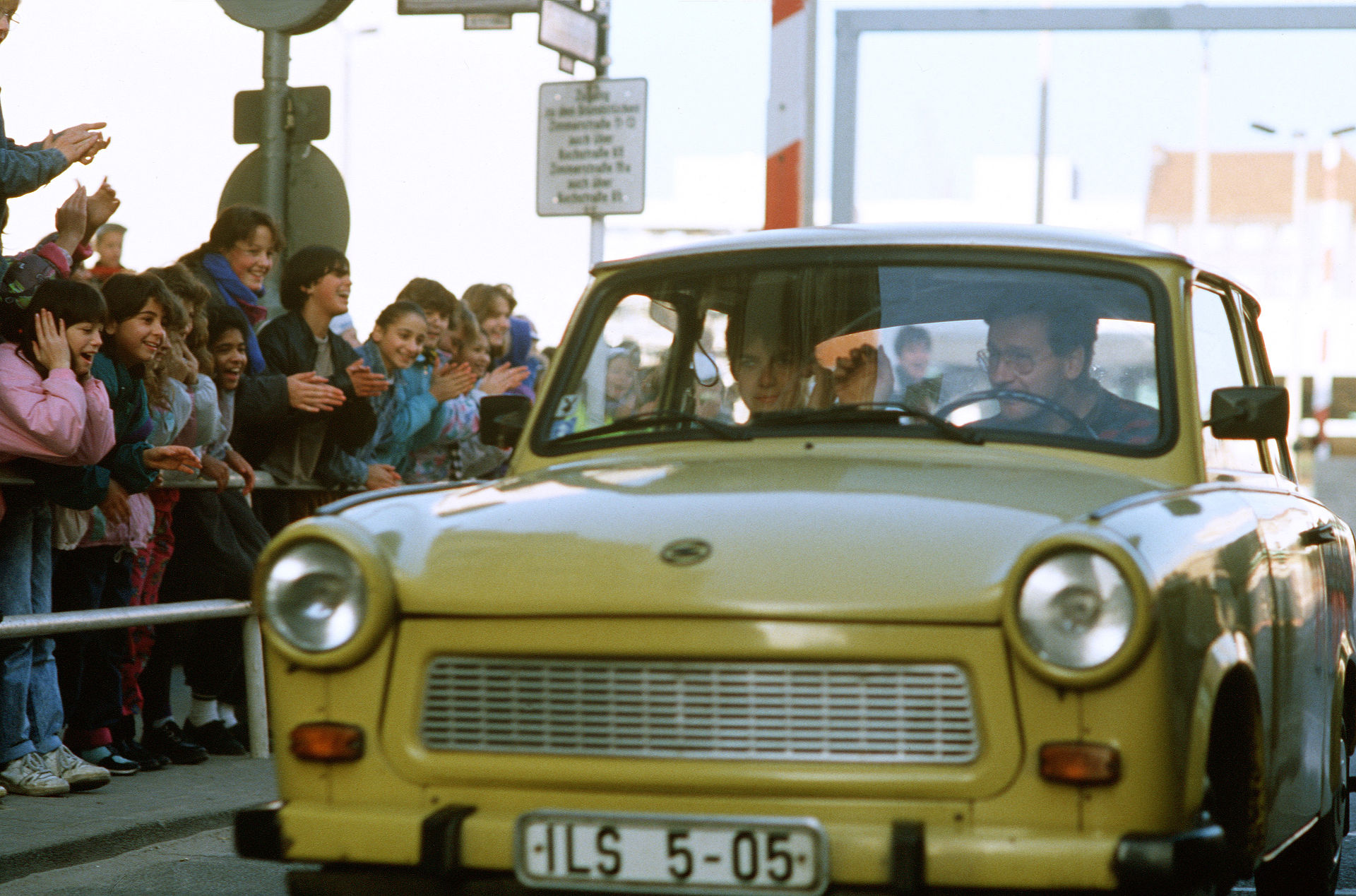
This case study can be used in support of the theme - Individual, household and daily life. The focus is on the experiences of people living under communist rule in East Germany during the Cold War. The investigation examines the impact of the creation of the Berlin Wall and life under the control of the Stasi in Berlin during this era. Picture - A Trabant entering West Berlin in 1989[1]
- What circumstances led to the creation of the GDR?
- How did the division of Germany shape people's everyday lives?
- What was everyday life like for individuals and families?
- How did people respond to the opportunities and restrictions of life in the GDR?
- Was the collapse of the GDR caused by ordinary people?
The German Democratic Republic, sometimes referred to as East Germany came into existence officially on 7th October 1949. The reasons for this stem from the situation in Germany at the end of the Second World War.
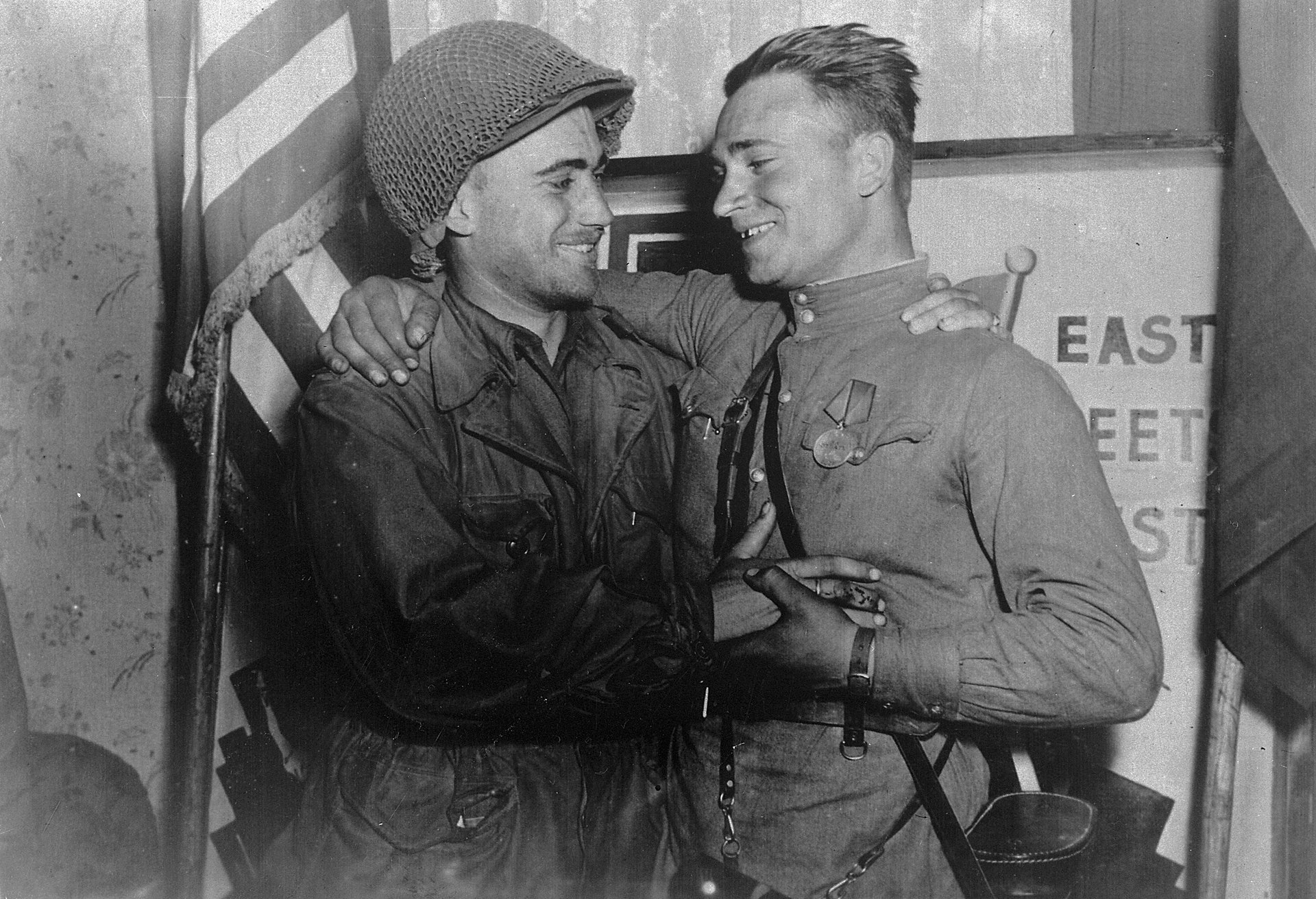
Pictured here[2] is a staged photograph of an American and Soviet soldier embracing each other in Germany to celebrate the meeting of the two armies and the imminent defeat of the Nazis. By May 1945, Hitler had committed suicide and Soviet and American armies had reached Berlin. The country was in ruins and decisions were being formulated for what should happen to Germany after the war.
What do you think was the situation for ordinary Germans during this time? They had been under Nazi rule since 1933 and now the future would seem quite uncertain.
For ordinary Germans the end of the war brought enormous uncertainty. Cities and towns across Germany had been destroyed by aerial bombing and fighting. Millions had lost their homes whilst food and fuel were in short supply. Countless families had been separated by the fighting. Over 12 million Germans had become refugees as they fled former German territories in the East. In this chaos, the occupying powers were faced with the task of rebuilding. Their decisions would affect the everyday lives of millions of people.
 Collaboration Skills - Listening Actively to Other Perspectives and Ideas
Oral history is one method that has been developed by historians to investigate the experiences of ordinary people. These are recorded interviews where people describe the events they experienced or witnessed. These can provide us with valuable insights that don't appear in government records. By analysing their tone, volume, range, rhythm, velocity and more, you can discover new meanings, emotions and perspectives from the past.
Caution - The testimony includes distressing descriptions of sexual violence, death and suffering during the Soviet occupation of Berlin. Ask your teacher about this first before watching
Task - Watch and listen to the audio testimony of Ingrid Radke-Azvedo who describes her experiences as a child living in Berlin following the defeat of Nazi Germany in 1945. As you listen, make notes on what Ingrid's testimony reveals about the following aspects of life in Berlin in 1945:
| Aspect of everyday life | Evidence from Ingrid's testimony |
| Housing and living conditions | |
| Food and access to supplies | |
| Health and illness | |
| Safety and security | |
| Family relationships and survival |
Task 2 - Compare your notes with a partner then discuss the following questions as a class:
- What were the greatest difficulties Ingrid and her mother experienced following the end of the war?
- How did Ingrid and her family attempt to survive these conditions?
- What does Ingrid's testimony reveal about the impact of war on ordinary civilians?
- What surprised you about her testimony?
Task 3 - Oral history is a really useful way of finding out about the past for ordinary people. But it does have its own values and limitations. Consider these questions as a class:
- What makes Ingrid's recollections useful for understanding the experiences of ordinary Germans in 1945?
- What difficulties might historians encounter when relying on memories recorded many years after the events?
- What other types of historical evidence could historians use to investigate or verify her testimony?
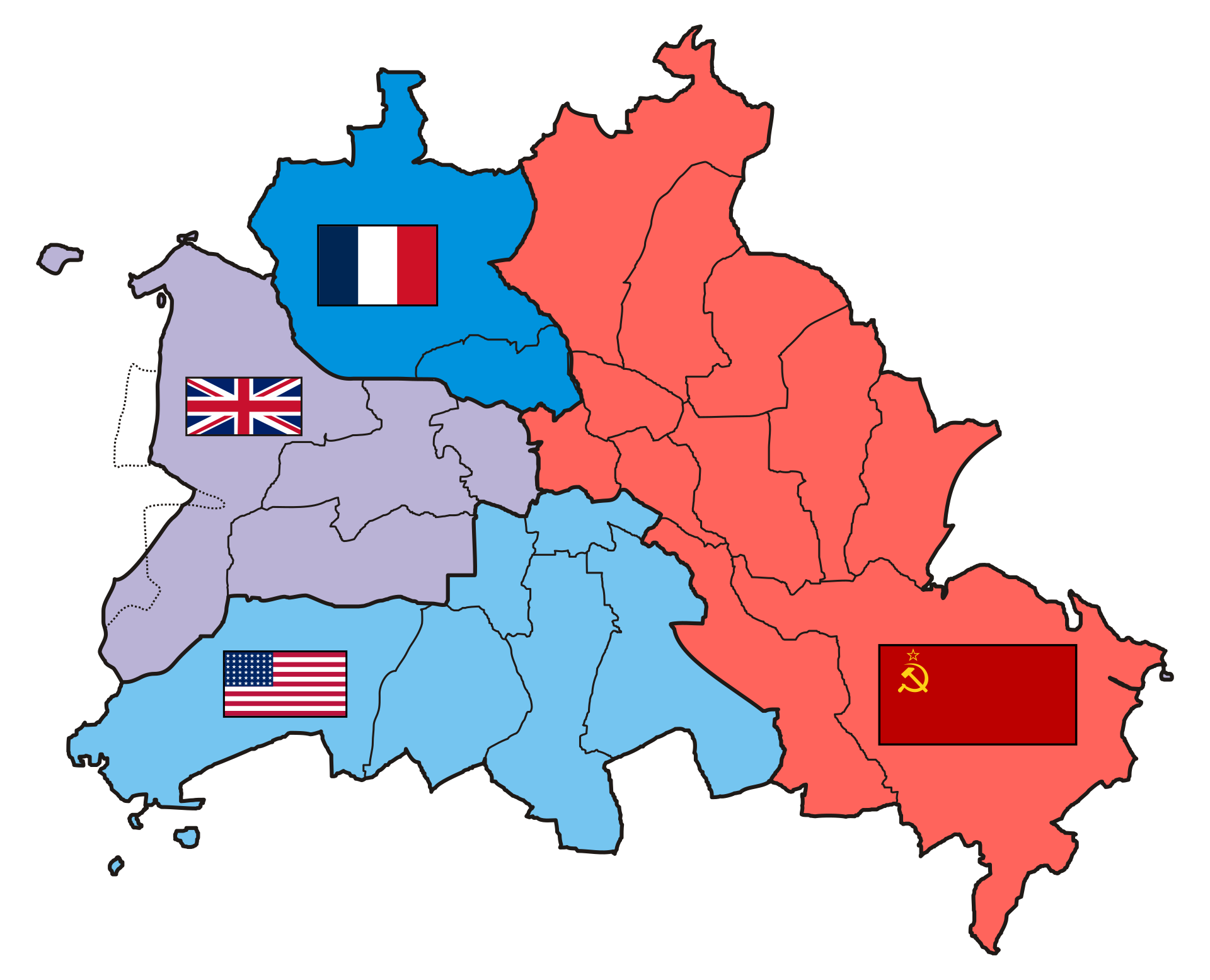
It was agreed at the wartime conferences at Yalta and Potsdam that Germany would be organised into four zones of occupation controlled by the USA, France, Britain and the Soviet Union respectively. This was meant to be a temporary arrangement until the Allied powers were able to make arrangements for unification. However, Cold War tensions worsened the relations between the Soviet Union and the United States. The situation in Berlin was a particular source of tension, the city, although in the Soviet zone of occupation was divided into four zones as well.
The differing aims of the occupying powers made agreement harder. The USSR wanted to prevent Germany from ever becoming a threat again and wanted a government sympathetic to communism. In their zone, they implemented policies such as land reform, the nationalisation of industries and the dominance of just one political party - the Socialist Unity Party (SED). In the West, the USA, Britain and France supported capitalist economic policies to quickly recover Germany as a trading partner. They push for the creation of democratic political systems similar to their own governments.
This created a situation where the living conditions and life expectations of people were very different but in close proximity to each other. The policies of the occupying powers seemed to exacerbate these differences. In June 1948, the Western powers introduced a new currency, the Deutsche Mark, to their zones including West Berlin. Joseph Stalin, the leader of the Soviet Union, became frustrated with what he saw as attempts to create a West German state and decided to blockade West Berlin. All road, rail and canal access to the city from the West was cut off.
The American response to the blockade became known as the Berlin Airlift. For over a year, aeroplanes flew from Western Germany to drop goods and supplies to the people of West Berlin. Eventually, Stalin called off the blockade in May 1949. It was seen as a victory for the West, and the divisions that were meant to be temporary since 1945 became permanent.
Critical Thinking Skills - Practice Observing Carefully in Order to Recognise Problems
Task 1 - Study the following photograph from the time of the Berlin Airlift then complete the questions below:
- What do you see? What is happening in the picture?
- What does this picture make you think about in connection to how people lived during the Berlin Airlift?
- What do you wonder? What questions do you have?
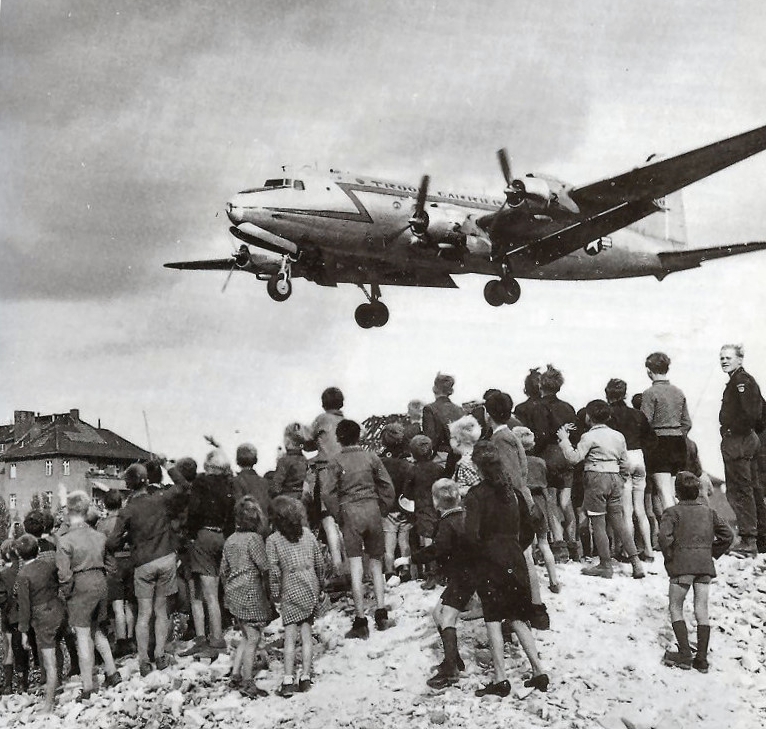
Source A - 'During the Berlin Airlift in 1948, U.S., British, and French planes delivered food and other goods to Berlin, which was blockaded by Soviet forces. In this photo, German children stand on a hillside and watch a U.S. plane fly overhead.'[3]
Task 2 - Watch this video and/or research the role of 'The Candy Bomber' Gail Halvorsen. How do you think his actions changed ordinary people's perceptions the United States?
On 23rd May 1949, the three Western occupation zones became the Federal Republic of Germany (FRG). On 7th October 1949 the Soviet occupation zone became the German Democratic Republic (GDR). Berlin remained a divided city with the Western sector part of the FRG and the Eastern sector being part of the GDR. For the people living in these two countries, their lives became dominated by completely different social, economic and political systems. Some people welcomed these changes whilst others feared what was to come.
Critical Thinking Skills - Gathering and Organising Relevant Information to Formulate an Argument
The division of Germany is still a contested event today. Perspectives on why it occurred vary and it involves making judgements about whether one side or the other was more responsible. This task will help you to explore the key events and to develop your own understanding about the causation.
Task 1 - In pairs or small groups, examine the following twelve event cards. Place them in chronological order to create a timeline showing how Germany became divided between 1945 and 1949:
| June 1948 - Currency Reforms - The Western Allies introduced the Deutsche Mark in their occupation zones. Rival currency measures followed in Berlin and the Soviet zone, deepening the economic separation of Germany. | January 1947 - Creation of Bizonia - The USA and Britain combined their occupation zones economically to improve recovery. This created a separate administrative structure from the Soviet zone. |
| 7th October 1949 - Creation of the GDR - The Soviet occupation zone became the German Democratic Republic, completing the establishment of two German states. | April 1946 - Creation of the SED - Under pressure from Stalin, the Communist Party (KPD) and Social Democratic Party (SPD) merged in the Soviet zone to form the Socialist Unity Party (SED). This increased communist political dominance. |
| February-June 1948 - London Six-Power Conference - The USA, Britain, France and the Benelux countries agreed on steps towards creating a West German state without Soviet participation. | 1945 - Allied Occupation - After Germany's defeat, the USA, USSR, Britain and France divided Germany and Berlin into four occupation zones. They intended to administer Germany jointly while deciding its future. |
| June 1948-May 1949 - Berlin Blockade and Airlift - The USSR blocked land and water access to West Berlin. The Western Allies supplied the city by air. This intensified distrust between the two sides. | December 1947 - Failure of London Talks - The four powers failed to agree on Germany's political and economic future which made joint administration increasingly difficult. |
| 23rd May 1949 - Creation of the FRG - The three Western occupation zones became the Federal Republic of Germany establishing a separate and independent West German state. | June-July 1947 - The Marshall Plan - The USA offered European recovery assistance. The Soviet Union rejected participation and prevented its occupation zone from joining, deepening the economic division. |
| 1945 - Potsdam Conference - Allied leaders agreed on principles for governing and rebuilding Germany, but disagreements over reparations and economic policies revealed growing tensions. | March 1948 - Soviet withdraw from Allied Control Council - Soviet representatives withdrew from the body responsible for coordinating the occupation which further undermined joint action. |
Task 2 - Examine your completed timeline. Classify each event according to whose decisions contributed to Germany's division. Label each event as either:
- Mainly Soviet decision
- Mainly Western decision
- Decision by both sides
Task 3 - Finish by evaluating the responsibility of both sides. Discuss the following questions with a partner:
- Which three events do you think contributed most to Germany becoming divided by 1949?
- Were Soviet decisions or Western decisions more important in causing the division?
- Could Germany have remained united after 1945, or had the Cold War made division unavoidable?
Almost immediately after the Second World War, it seemed as if new tensions were threatening to divide Europe. As early as 1946, Winston Churchill spoke of an 'Iron Curtain' descending across Europe and this seemed to have become a reality by the end of the 1940s with Europe divided between the capitalist West and the communist East.
As you have already learned, these divisions affected Germany in particular. When Germany was formally divided in 1949, the city of Berlin also became divided. This created a unique geographical situation. Although the city was situated entirely in the GDR, its western sectors remained under the authority of the Allied powers - Britain, France and the United States. East Berlin became the capital of the GDR, governed as a one-party state and led by the communist Socialist Unity Party (SED). As the Cold War developed, Berlin became a place where both systems existed side by side.
Collaboration Skills - Practising Empathy
Watch this BBC Panorama report from 1959. Although the reporting was for a strictly British audience, it does offer us an insight into the ordinary lives of Berliners before the physical division of the city.
Task - Just watch the video above from 00.00 - 05.10 (although the whole video is fascinating!). Then complete and discuss these questions:
- How easy was it for people to travel between East and West Berlin in 1959?
- Identify two differences and one similarity between everyday life in East and West Berlin.
- What improvements and benefits of living in East Berlin does the reporter identify?
- Why did one East German family decide to leave the GDR? How did West Berliners feel?
- What does this report suggest about the opportunities and restrictions experienced by ordinary people living in divided Berlin before the Wall was built?
Yet in the early years, Berlin was not physically divided by a wall. Thousands of people could still travel between the zones every day for work, shopping, seeing family or just for entertainment. Some East Berliners were eager to work in West Berlin where wages were often higher. East Berlin also had its attractions. State-supported education and employment meant that even the poorest in society had a safety-net. For ordinary people, Berlin still felt like one connected city, albeit with some political differences.
Critical Thinking Skills - Evaluating Evidence and Arguments
Prior to 1961, Berliners were able to travel relatively freely between East and West Berlin. People were able to experience what life was like in the Capitalist West and the Communist East. Use your source analysis skills to consider how this impacted ordinary people.
Source A - Otto Frei, The People of East Berlin, Atlantic Monthly (December, 1963)[4]
‘Up to August 13, 1961 the East Berliners were half-free. They had of course, to work during the day in state-owned enterprises in an unfree society and were subject to an arbitrary legal system. But in the evening at the close of work, they came over to West Berlin to meet relatives and acquaintances, go to the movies or the theatre, stroll up the Kurfiirstendamm, read Western newspapers. About eight million theater and movie tickets were sold each year in West Berlin to East Berliners. About 60,000 people from the East came daily to West Berlin to work in factories and workshops.... For 13 years people could move fairly freely in both parts of the city and meet whenever they wished. Some 200,000 Germans from East Berlin and the Soviet Zone visited West Berlin every day. Berlin, despite political division, was still a special area.’
Task - Read the extract above and consider the following questions:
- Identify three examples of how East Berliners crossed into West Berlin as part of their everyday lives.
- Explain how these connections might have benefited individuals and families.
- Frei describes East Berliners as being "half-free". What does he mean by this?
- What does Frei's choice of language suggest about his perspective?
- To what extent was Berlin already divided before the construction of the Wall in 1961? Support your answer with evidence from the extract and the narrative.
This situation wasn't to last. As you may have learnt in our case study on Communism, communism was a vastly different system. Although it stressed equality and security, this came at the expense of personal freedoms. Between 1949 and 1961, over 2.7 million people left East Germany for the West, with most people travelling via Berlin. The GDR government soon realised that the emigration of so many skilled workers could threaten the economy and stability of their state. Both Walter Ulbricht (leader of the GDR) and Nikita Khrushchev (the premier of the Soviet Union at the time) declared a state of emergency.
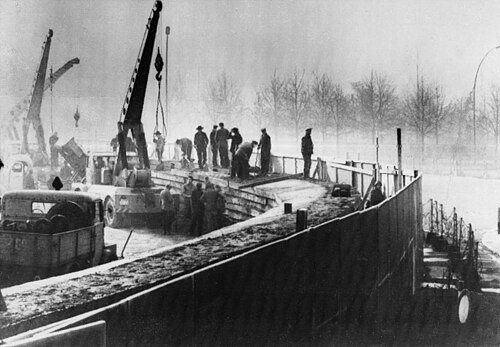
To counter this, on 13th August 1961 the East German authorities began to close the border between East and West Berlin. Barbed wire and armed guards soon patrolled the border which became known as the Berlin Wall. The GDR and USSR justified this as a method of protection from the West. But the visual imagery of a wall appeared to the world as if people were being forced to stay in the GDR. It was seen as a propaganda own-goal by Soviet authorities.
Communication Skills - Making Inferences and Drawing Conclusions
Today, only a few remnants of the physical wall remains (see here). However we can use a range of other secondary sources to find out more about where the wall was and how if affected people.
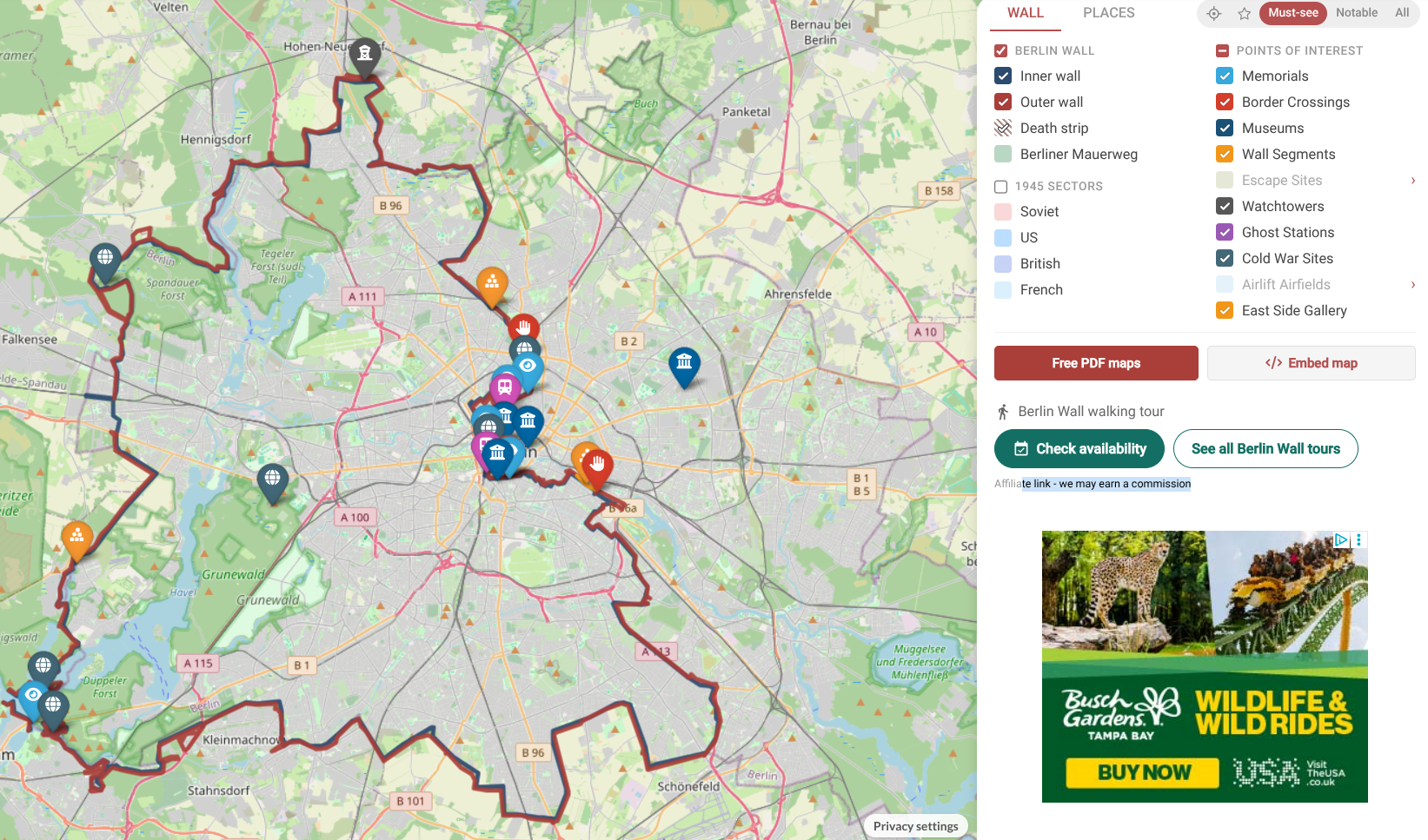
Task 1 - Open this interactive map of the Berlin Wall. Use the map layers to explore the Wall's route and the former occupation sectors. Then consider these questions:
- Identify East Berlin, West Berlin and the surrounding GDR. What was unusual about West Berlin's geographical location?
- Trace the route of the Berlin Wall. Why did it need to surround West Berlin rather than simply divide the city in half?
- Locate two former border crossings or escape sites. What does their location suggest about the difficulties of travelling between East and West Berlin?
- Investigate one place of interest pinpointed on the map. How significant was this location in affecting ordinary people's lives?
Task 2 - Now explore the oral history and documentary films on this website. Scroll down the timeline to the year 1961. Choose one video that interests you about the construction of the Wall or people's experiences of division after the wall was built. Try to explore these questions and report back to the class:
- Record the title of your chosen video. What event or personal experience does it document?
- What does the video reveal about how the construction of the Wall affected ordinary people's lives?
- What does this source help us understand about Berlin's division that a map alone cannot reveal?
Task 3 - How did the construction of the Berlin Wall in 1961 transform everyday life for the people of Berlin? As a class, discuss this prompt using evidence from your investigations of the map and the documentary videos.
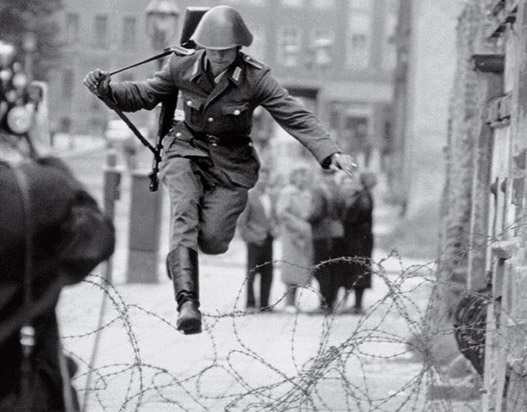
For ordinary people, this had a huge effect on their lives. Friends and families were now physically separated and cross-border workers lost their jobs. Some people accepted the situation and tried to get on with their lives whilst others attempted daring escapes over the Berlin Wall. Some even lost their lives trying. For the GDR, it did have the result of eliminating emigration. But this came at the sacrifice of freedoms for ordinary people.
Critical Thinking Skills - Considering Ideas from Multiple Perspectives
The construction of the Berlin Wall ultimately transformed people's lives in Berlin and the rest of Germany. Examine this source to see what you can infer about the impact it had on ordinary people in the GDR.
Source B - Taylor, F. (2019). The Berlin Wall. Harper Perennial.
‘The day the Berlin Wall became a reality has often been characterised as the ‘second birth’ of the East German state, the moment at which it became truly viable. Ulbricht was right. Without the Wall, the state he and his Russian protectors had created would not have survived. With it, though horribly and permanently compromised in the court of international public opinion, at least the GDR had a chance. After the Wall was built, the haemorrhaging of the GDR’s working population from East to West Germany all but stopped.’
Task - Read the source above carefully and use it to complete the following questions:
- According to Taylor, why was the construction of the Wall important for the survival of the GDR?
- Explain two ways in which the Wall changed everyday life for ordinary Berliners.
- Consider the construction of the Wall from two perspectives:
- The GDR government - Why might its leaders have considered the Wall necessary?
- An East Berlin family with relatives in West Berlin - How might the Wall have affected their lives?
- To what extent was constructing a wall the right strategy for solving the migration crisis? Write a paragraph explaining your perspective on this question. Consider whether other strategies were possible.
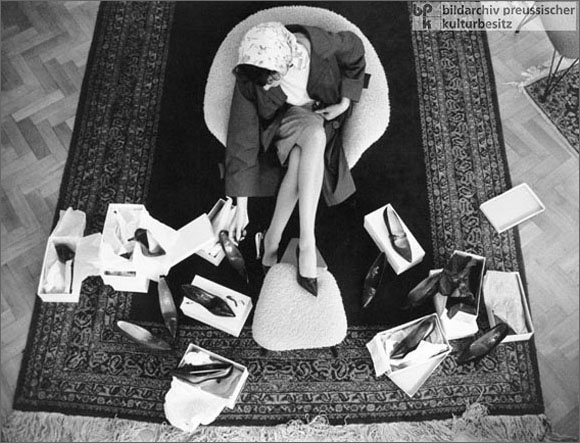
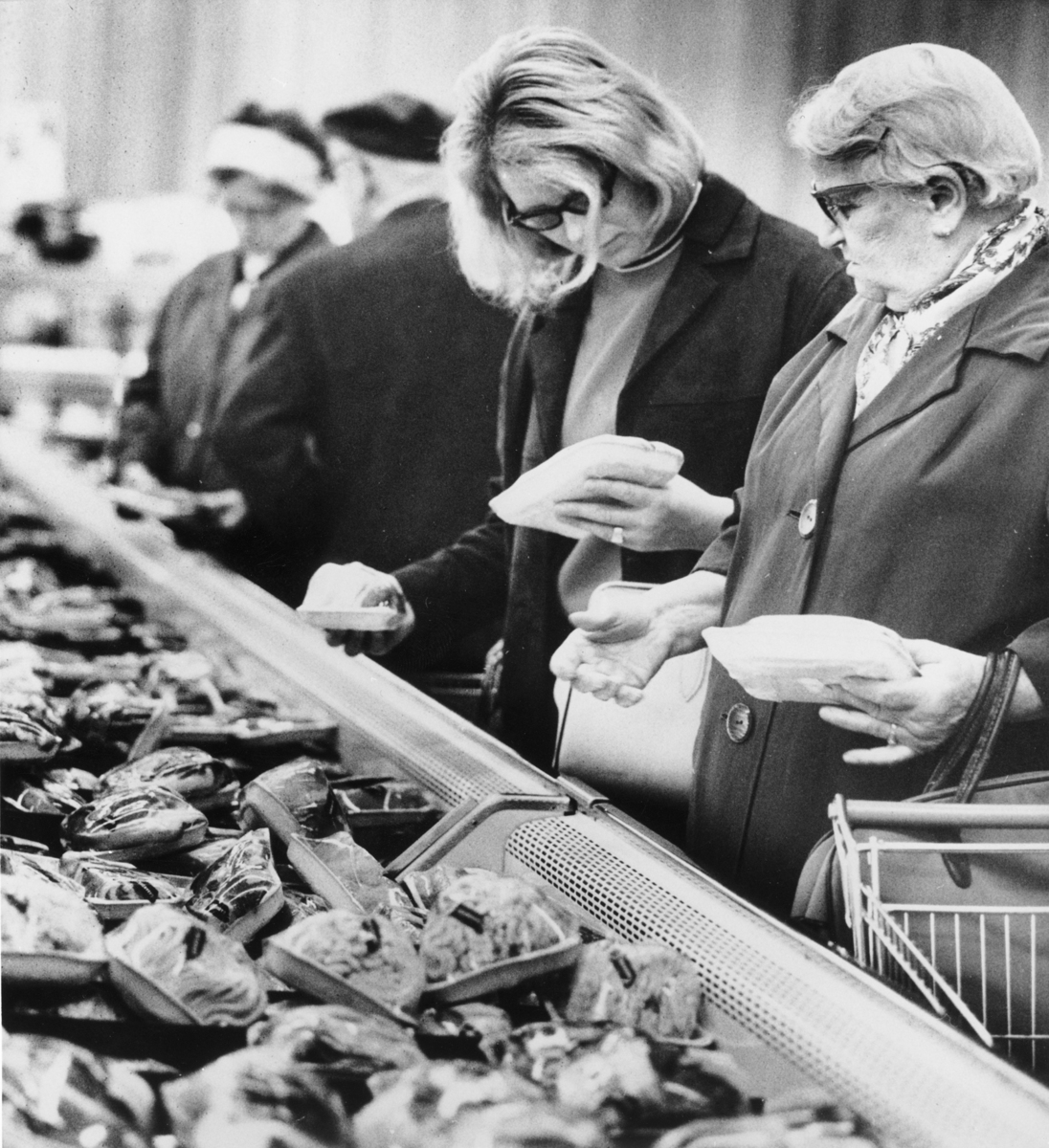
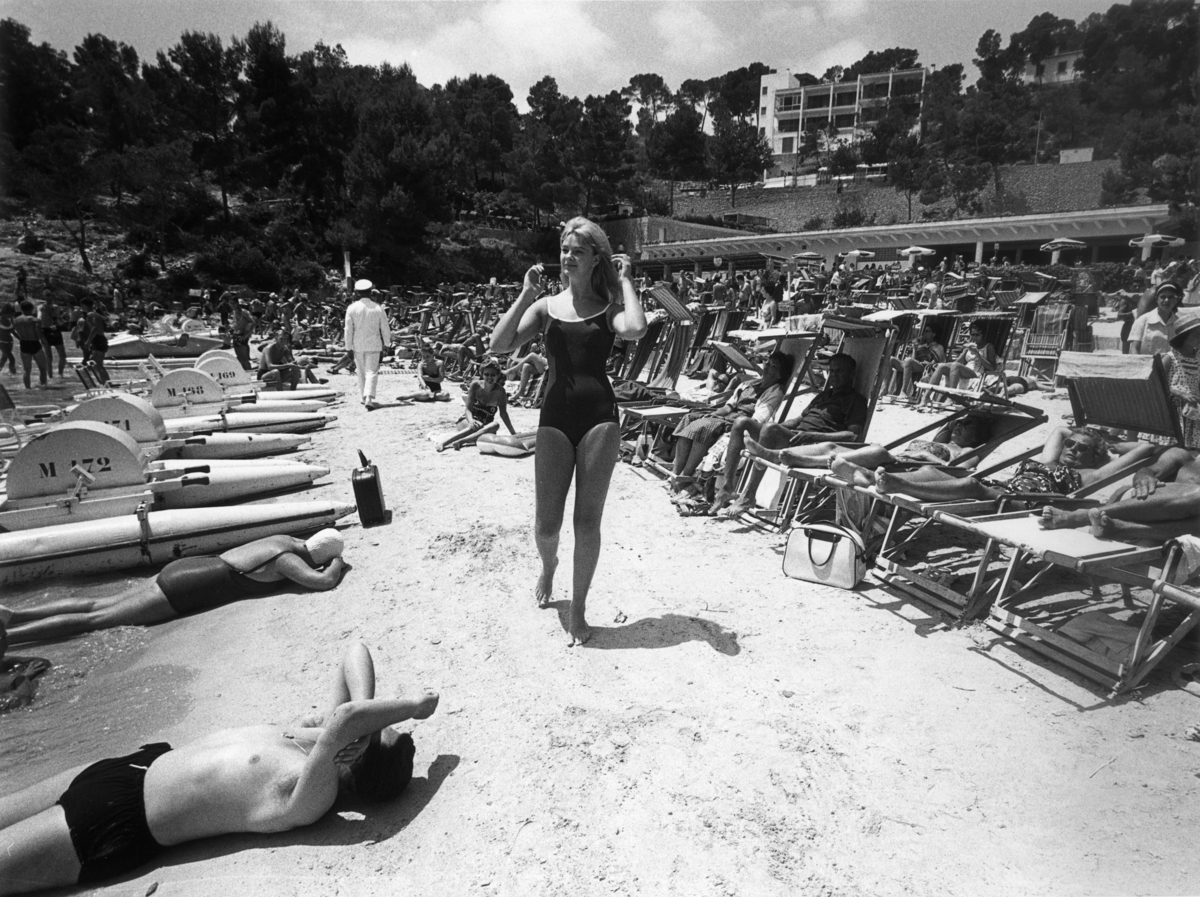
Although East and West Germany shared a common history, their different political and economic systems meant that they developed in vastly different ways after 1949. In West Germany, people lived through a period of rapid economic growth in the 1950s and 1960s which became known as the Wirtschaftswunder (economic miracle). The government focused the economy on the development of high-quality industrial exports. Boosted by foreign investment and European integration, business growth led to more jobs and wages rose quickly for ordinary people. They also had a greater range of consumer goods to spend their money on such as televisions, cars, washing machines and regular holidays. In East Germany, growth was slower. The government rather than private businesses controlled the economy through state planning. This meant that the government subsidised basic commodities such as food, housing, education and healthcare. Yet there was no private enterprise and a lack of consumer goods.
Family life was also different. In the East, ideas of socialist equality meant that women were expected to work as much as men. Yet traditional gender roles still persisted so often, women often took on the burden of domestic chores. In the West, traditional German culture and society was allowed to continue undisturbed by political dogma. Just like in other Western countries such as the USA, traditional gender roles persisted into the 1950s with men considered the main breadwinners and women as homemakers.
Collaboration Skills - Listening Actively to Other Perspectives and Ideas
This next task will ask you to examine sources about everyday life for individuals living in both West and East Germany. It can help you to develop your own interpretations of the past. But remember that the selection of these sources is quite deliberate, so consider whether the views presented here are representative of all society.
| Aspect of everyday life | What do your sources reveal? |
| Housing and family life | |
| Shopping and consumer goods | |
| Employment and opportunities | |
| Entertainment and popular culture | |
| Political restrictions and Personal freedoms |
Task 1 - Working in pairs, each choose whether to investigate life in the FRG or GDR. You will each have five sources. As you investigate, record what the sources reveal about the following aspects of everyday life. Record specific evidence from your sources including dates and examples:
- Student A - What was everyday life in the Federal Republic of Germany like? (Sources A-E)
- Student B - What was everyday life in the German Democratic Republic like? (Sources F-J)
Task 2 - When you have finished, comparing your findings with your partner:
- Identify two significant differences and one similarity between everyday life in East and West Germany.
- Which aspects of life appear to have offered greater advantages in the East? What about the West?
- Why might two families living under the same political system have experienced everyday life differently?
Source A - Shoe Shopping: Customer in an expensive shoe store in Hamburg, 1959[5]
Source B - Meat Products in a Supermarket: Wide range of packaged meat products in the food department of a supermarket, 1963[6]
Source C - Beach Vacation: Beach paradise with Germans in Spain, 1964[7]
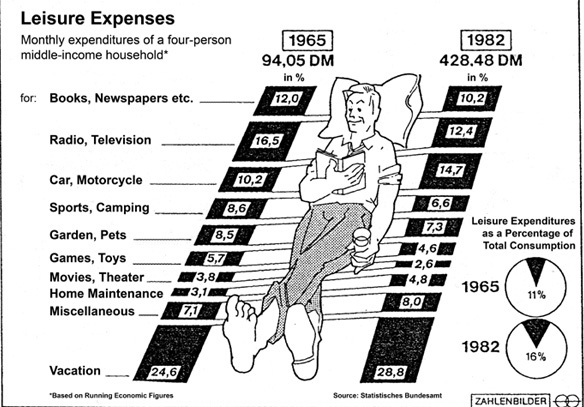
Source D - Newspaper Article, The Shift from Movies to Television in the Federal Republic, 1965[8]
Two handymen are working in a house. One says: “Did you see the TV movie last night?” The other responds: “I watch TV as rarely as possible. But my father, with him it’s like a disease. He turns the thing on when he gets home and stays parked in front of it until the bitter end- every night…”
…So millions of people sit in front of their television screens every evening. When exciting soccer games are broadcast in the afternoon, the streets are deserted…
…In March 1965, 10.5 million television sets were registered in the Federal Republic; in 1959, the number was only 3.4 million…
…Television is much better in that respect: it is the laziest form of leisure-time consumption, and in this regard it is absolutely unbeatable. Many citizens confirm that it is excellent preparation for and a preliminary stage of going to bed. People don’t do anything anymore other than turn on the tube; instead of entertaining themselves, they are entertained…
…In such cases, the television is a comfort: you are in the midst of life and don’t miss the theater, movies, concerts, and socializing with friends as much as you would have otherwise.
Source E - Changes in West German Leisure Habits, 1982[9]
Source F - Summer Vacation: Summer vacationers in a FDGB vacation spot on the Baltic Sea, 1962[10]
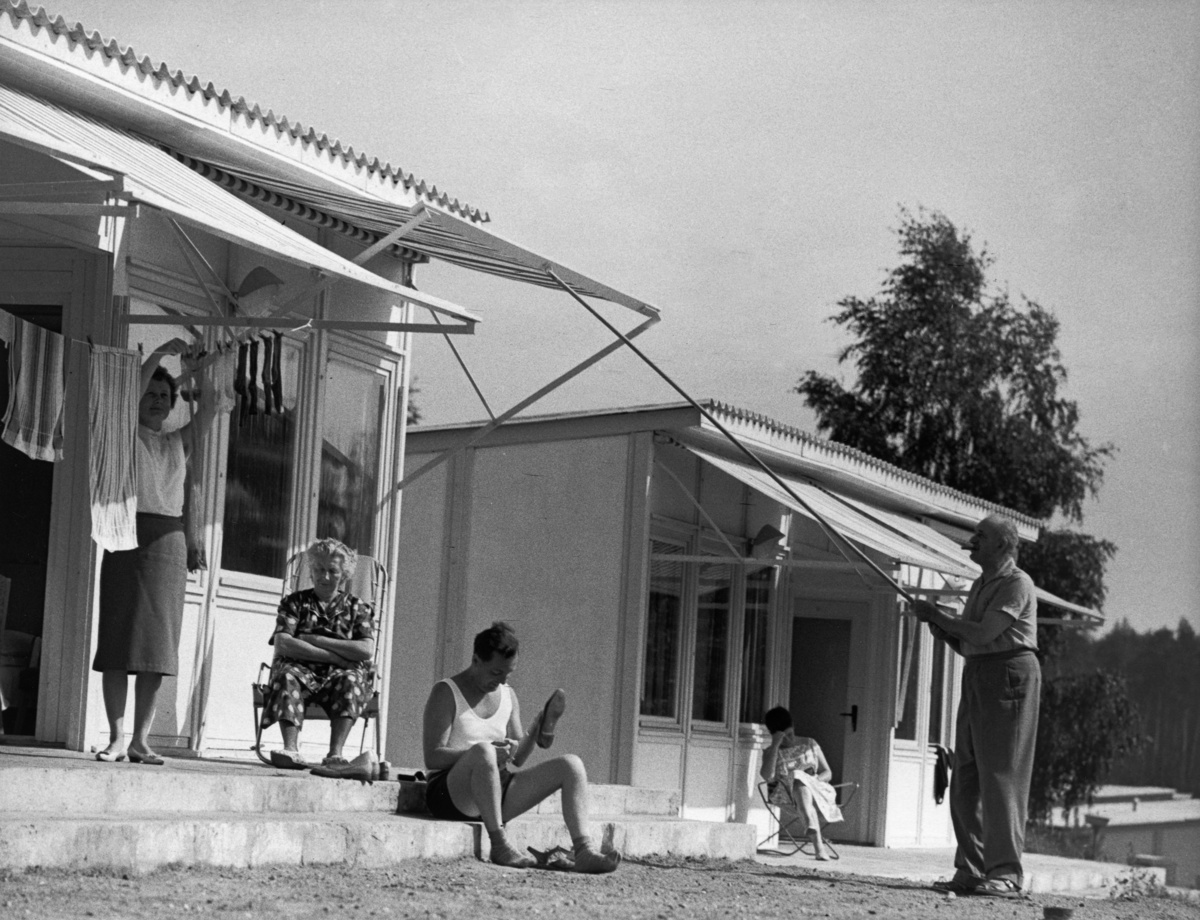
Source G - Newspaper Article: State-Controlled Vacations in East Germany, May 23rd 1963[11]
'Mountains of brochures, travel ads, posters—whereas a West German citizen can select a vacation from countless offers, it is still a great stroke of luck for the Central [i.e., East] German to spend his vacation where he would like. Once again, many residents of the Soviet Zone have had to resign themselves to staying at home during this year’s summer vacation. Others will be going to the mountains instead of the sea, as they had hoped; and still others have been looking for a travel opportunity for months…
…The majority of vacation trips are organized by the communist Free German Trade Union Federation [Freier Deutscher Gewerkschaftsbund or FDGB]. It has only 1.26 million “vacation checks” to distribute for the whole of 1963, even though it has 6.3 million members. This means that only about one in five FDGB members will receive a vacation check…
…In past years, a vacation check for a thirteen-day FDGB trip (not including transportation expenses) cost 30 [East German] Marks…
…That is still relatively inexpensive. But one should not measure a vacation trip on an FDGB check by Western standards. The meals are generally sufficient and good, but vacationers are not spared the effects of general supply problems. And the accommodations leave a lot to be desired…
…Since the erection of the Berlin Wall, the FDGB and DER no longer organize any trips to Western or neutral countries. Only group travel to the Eastern Bloc countries is possible…
…For many of those seeking relaxation there is only one solution: camping. But even here the options are limited. Almost all camping enthusiasts want to pitch their tents along the Baltic Sea coast, where there are [only] 61 campgrounds with 271,000 spots, sixty percent of which are reserved for company retreats and youth groups.'
Source H - On Certain Issues in Youth Work and the Emergence of Rowdy Groups, Resolution of the Office of the SED District Leadership, 1965[12]
With the implementation of both the Youth Communiqué of the Politburo of the Central Committee and the Youth Act, progress has been made in many areas of society in our work with youth. The attitude of a large segment of young people shows that they have a proper and honest stance toward our Workers’ and Peasants’ State, toward socialist work, and toward learning…
We cannot, however, overlook the fact that there is a segment of young people who exhibit the tendencies of American non-culture [Unkultur], of Texas-style ideology, and of cowboyism, and that these tendencies have intensified in recent weeks and months…
The enemy aims to bring about the weakening of our ideology, especially among youth, to foster intemperance and anarchy, in order to pit segments of our youth against their own Workers’ and Peasants’ State and to incite them to disturb the public peace. They are spreading this agitation through their radio and television stations, especially over Deutschlandfunk; by smuggling indecent and inflammatory literature [into the GDR]; but also, quite cunningly, by utilizing the non-culture of Western music and dancing, Beatles ideology and collecting fads, and by encouraging slacking off at work…
We support modern and civilized dance music, and we are also not opposed to infectious rhythms, but we decidedly disapprove of those groups that violate all codes of morality and ethics, that perform barefoot and half naked, that contort their bodies and intoxicate our youth with agitating rhythms in order to lead them to excesses…
Another expression of such excesses is the rowdy behavior of one segment of youth; this behavior is becoming increasingly visible at public events (athletic events, amusement parks, small trade shows, movie theaters, dances, youth clubs, and so forth).
Source I - Members of the GDR National Swim Team, 1971[13]
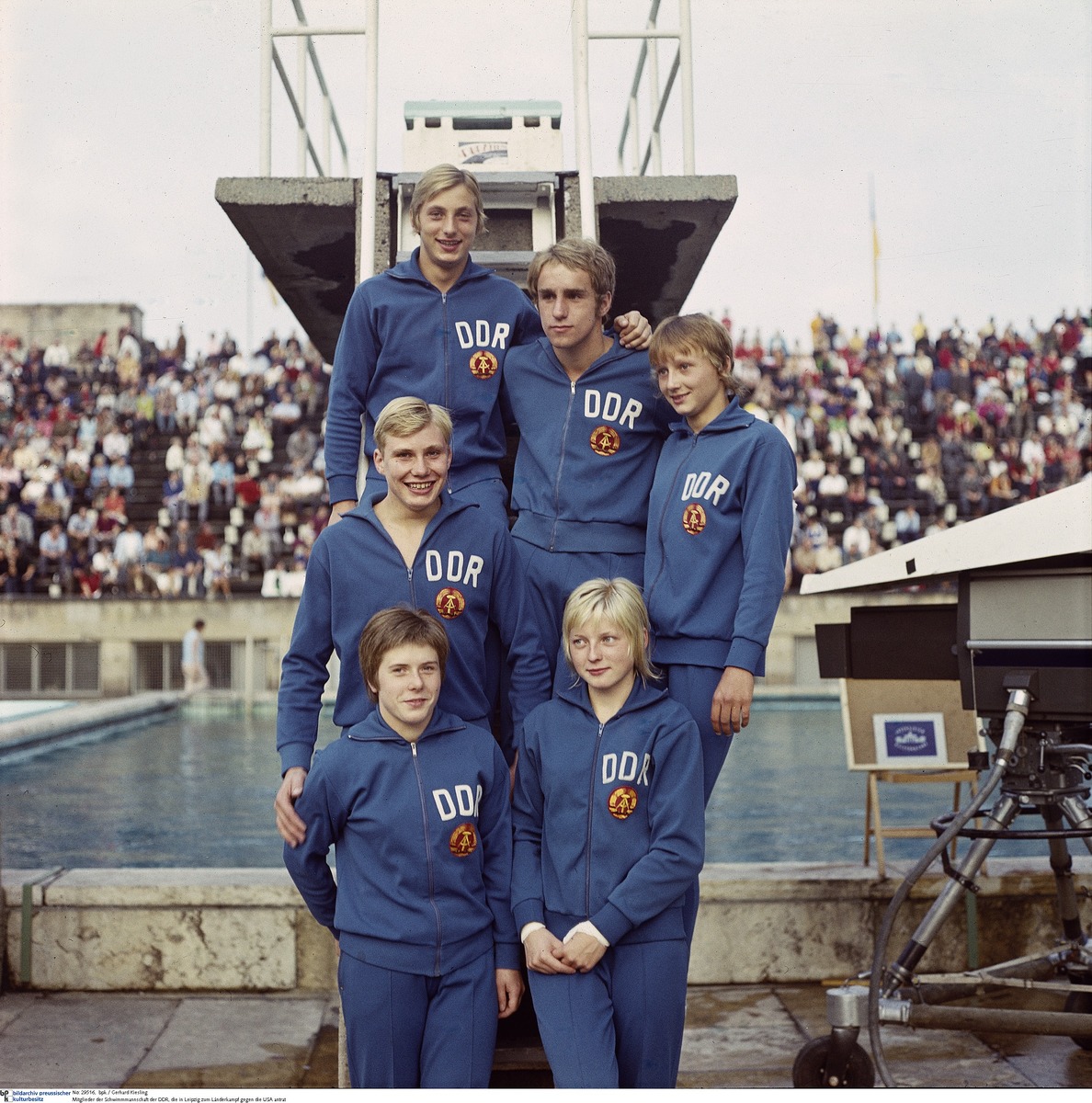
Source J - Letter from Frau W. from East Berlin to Christiane M. in Elmshorn (West Germany) from 1980[14]
Dear Miss M.!
Many thanks for your letter of April 25th. We’re always very happy to hear from you, and when we do, we have the feeling that we’re not completely cut off from the outside world…
Now, you write that our situation here surprises and unsettles you. I believe you, we feel much the same way; even though we’ve been living here for thirty years, we’re still not at the point where we don’t have to stand in line and run around to purchase the most basic things in life, to say nothing of certain luxury items. Here in our country, the situation varies according to where you live, what you earn, and whether you belong to the one party that exists.
Those include, for example, you won’t believe it, powder laundry detergent, toilet paper, toothpaste, tissues, thumbtacks, wallpaper, wall paint, plaster, and many other things…
Berlin still has the best inventory levels, and even if, sometimes, there is no laundry detergent, dish soap, and the like, these things do reappear in the stores more frequently throughout the year, and if you find something, all your relatives have to go out right away and buy it, because each person is limited to two items, no matter what it is…
The finer kinds of fruit, like apricots, peaches, and tart cherries, are virtually nonexistent in regular stores; they are only to be had in the so-called Delikatläden [specialty shops for luxury items], where you can purchase pralines, wine, champagne, liquors, spices, and lots of things at outrageous prices…
Yes, that’s the highly vaunted planned economy, nothing works, nothing is in order. The same applies to so-called durable goods like washing machines, refrigerators, and so on. Here, too, you can run around for months to get something of this sort, but you can also get lucky and get one on the first try – it all depends on the fulfillment of the plan by the manufacturers…
I hope that I’ve been able to give you a little insight into our everyday problems, which are incomprehensible but nevertheless true.
Warm regards,
Fam. W.
Evidence for changes in individuals lives can also be witnessed in the different approaches to housing, education and leisure time. As a socialist government, the GDR was keen to ensure a basic quality of life for everyone. As such, the state invested heavily in social housing. Cheaply made prefabricated apartment buildings known as Plattenbauten became a common site in the urban areas. Schools and youth clubs were free and curriculum strictly controlled. Socialist values were taught in lessons and particular emphasis was placed on sport. Government-subsidised holidays were also developed to ensure that all workers has a good quality of life. In the West, increasing prosperity fuelled a booming property market and popular culture was dominated by all things American. West Germans had more freedom and money to travel as well as greater consumer choice including private education.
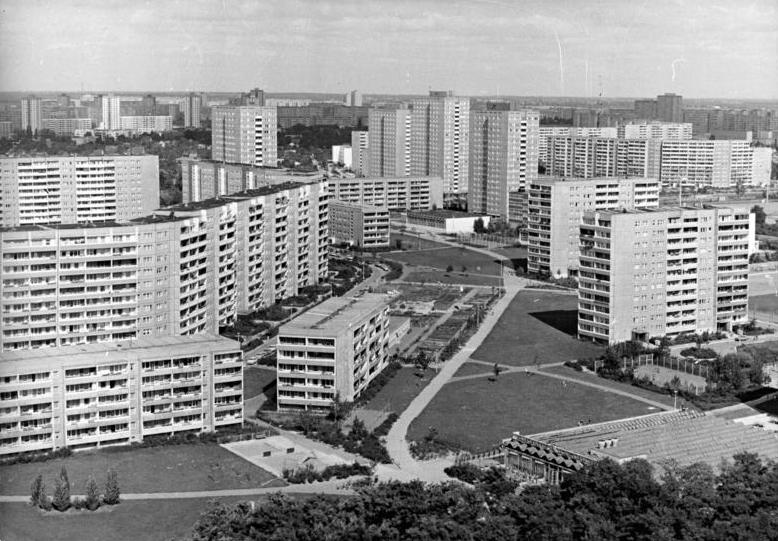
Despite the devastation wrought by the Second World War, people in both countries saw a remarkable rise in living standards throughout the 1950s and 1960s. West Germans generally enjoyed greater political freedom and consumer choice but the downsides were economic inequality and traditional gender expectations. In the East, there was far more equality, secure employment, free childcare and other benefits. However there was also far less political freedom. State surveillance could be oppressive and travel opportunities restricted.
Creative Thinking Skills - Considering Multiple Alternatives
After the excitement of reunification in the 1990s, many East Germans have had to reconcile themselves with life in a society that is no longer socialist in nature or purpose. Whilst many Germans benefited from the rising living standards promised by integration, many miss what life was like in the GDR. In Germany, this phenomenon has been called ‘ostalgie’ and is represented well in the 2003 movie ‘Good bye Lenin’.[15]
Task 1 - Watch the movie Goodbye Lenin! As you watch the film, use the table below to identify evidence about aspects of life in the GDR. Fill it in with details and examples from the film:
| Aspect of everyday life | What does the film suggest about life in the GDR? |
| Housing and family life | |
| Shopping and consumer goods | |
| Employment and opportunities | |
| Entertainment and popular culture | |
| Political restrictions and Personal freedoms |
Task 2 - Compare your notes as a class then write a response to each of these questions:
- What aspects of everyday life in the GDR does the film portray positively?
- What aspects of everyday life in the GDR does it portray negatively?
- How does the arrival of Western products and businesses change people's everyday lives?
- Why does Alex attempt to recreate the GDR for his mum?
- The film was released in 2003. How might this influence its portrayal of East Germany?
- How useful is the film as historical evidence for understanding everyday life in the GDR?
Task 3 - Overall, do you think the film was an accurate portrayal of life in the GDR or is it a simplification or even an exaggeration? (Tip: Consider the sources you examined in the previous activity)
It must be remembered that the GDR was an authoritarian state led by the Socialist Unity Party (SED). This communist party controlled the government and closely monitored many aspects of society. As such, there was no democracy or free speech to the same extent as West Germany. East Germans responded to this situation in different ways. Some genuinely supported socialism's utopian aims of equality and comradeship. Some joined the SED as full members, whilst younger people joined youth organisations such as the Free German Youth. Committing yourself publicly to the socialist cause was also a way to guarantee social or career advancement.
Media Literacy Skills - Demonstrating Awareness of Media Interpretations of Events and Ideas
This superb BBC documentary from 2009[16] explores what life was like for ordinary people in the GDR. It features many interviews and recollections along with archive footage from the time. Please check with your teacher before viewing as there are some scenes of nudity. As you watch, consider the different experiences and perspectives presented and whether they supported, opposed, or accepted communist rule.
Task - As you watch the video, try to take notes on the following questions and discuss as a class afterwards:
- Who was Sandman? What role did this character play?
- Whose portrait had replaced Hitler’s by 1945?
- What hardships were faced by East German women and girls during the Soviet occupation?
- Who were the pioneers?
- Why did some people oppose the creation of the pioneers?
- What propaganda messages were spread to East Germans?
- Why was the film ‘The Destinies of Women’ created?
- Where were East Germans sent to who were accused of espionage?
- What happened in June 1953?
- What challenges faced families during the 1950s?
- How did everything change after 1961?
- What was the Ministry of State Security known as for short?
- What type of controls were put on young people in school?
- How did East Germany provide musical and cultural opportunities for people?
- How did the Warsaw Pact invasion of Czechoslovakia in 1968 impact East Germans?
- Why was the space race important to communist / socialist ideology
- Why could the conditions for women in East Germany be seen as more progressive?
- What does the case study of the punk band suggest about the nature of the Stasi?
- How did the Stasi treat Heidi Krieger as an athlete representing East Germany?
- What are the values and limitations of documentaries such as this for studying life in East Germany?
Many refused to join in official organisations, and tried to carry on their life as normal. Most concentrated on their families and friendships, keeping private interests going rather than public involvements. Just as in the West, people liked to garden, play sports, learn music, go on holidays and socialise. Withdrawing into their private lives was describe by some as living in a ‘niche’ society.[17] This could be seen as a way of quiet resistance to the system.
“For anyone to understand a regime like the GDR, the stories of ordinary people must be told. Not just the activists or the famous writers. You have to look at how normal people manage with such things in their pasts.”
Anna Funder ‘Stasiland: Stories from Behind the Berlin Wall’
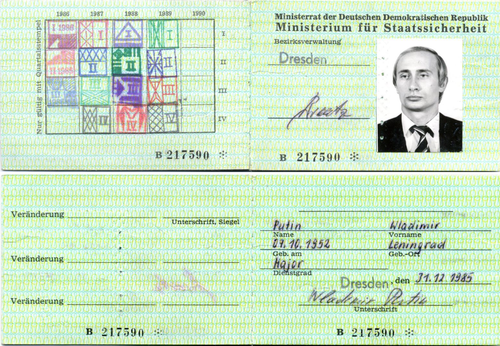
However some people did openly challenged the system. The government was so worried about resistance that they tasked the Ministry for State Security (known as the Stasi), to monitor suspected opponents through surveillance and networks of informants. This was similar to other communist governments across the Soviet-dominated Europe. People who openly criticised the SED could be arrested and interrogated, even ending up in prison. The Stasi also used psychological intimidation and harassment known as Zersetzung, to undermine individuals and scare them. Knowing that you were probably being watched discouraged many, resulting in self censorship and compliance with the government.
Despite this threat, many people resisted by using more public forms of nonconformity. Many young people rejected the government approved fashions of clothing and music instead looking to American rock music for inspiration. Others looked to Christian churches for inspiration. Some even attempted to escape the GDR by fleeing over the heavily guarded border.
Reflection Skills - Developing New Skills; Techniques and Strategies for Effective Learning
When studying history or other subjects, do you actively look for evidence that might challenge or disprove your ideas, or do you tend to seek evidence that supports what you already believe? To avoid selection bias, it is important as a young historian to critically examine your own viewpoints. This task will help you practice this.
How did most people respond to life in the GDR?
Task 1 - Think about this question and develop your own hypothesis based upon what you have read or know already. Did most people support the GDR government? Did they oppose it? Or did they just accept it? Write down your hypothesis clearly. For example:
'It could be argued that most people [supported/opposed/accepted] the GDR government.'
Task 2 - Now you will try to disprove your hypothesis. Examine the four sources listed above. Using examples from each source, decide whether each source provides evidence of:
- Support - Accepting or actively participating in the socialist system.
- Adaptation - Finding ways to live within or work around restrictions.
- Resistance - Challenging government policies or authority.
- Escape - Attempting to leave the GDR.
| Source | How did people respond? | Why might they have responded this way? |
| Source A | ||
| Source B | ||
| Source C | ||
| Source D |
Source A - Theo Sommer, A Liberal Western Journalist Praises the Progress of the GDR (1986).[18]
'GDR, 1986: the country is worlds away from that point. Movement instead of stagnation prevails, timidity has given way to a self-confident equanimity, everywhere gray is yielding to more cheerful colors, the depressing gloom has evaporated…
Above all, the country seems more colorful, its people have become more cheerful… Especially since boys there can hardly be distinguished from their contemporaries in the West…Young people wear Levis, T-shirts with Western logos, lots of white. A lot of these products come from capitalist countries abroad…
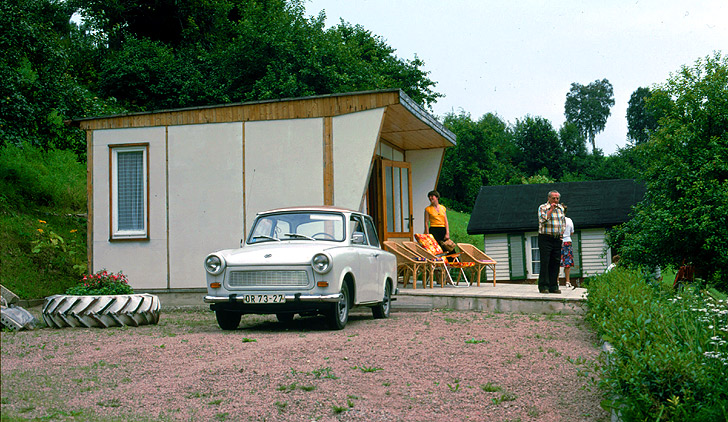
People over there, who don’t have Liberty with a capital L, enjoy the smaller liberties their state guarantees them… with family and among friends, water their potted plants, wash their cars, play cards, talk, celebrate. And where they think about how, and with whose help, they could procure and organize what’s still needed to make the niche even homier…
It’s no different with us; why should it be… Stamp collecting, ornamental fish breeding, hunting, and fishing - everywhere there are groups and circles, clubs and organizations. Sports of every kind are pursued. More than four million GDR citizens (one quarter of the population!) earned a sports badge in 1986…
Life in the GDR - that means life in the crumple zone. It also means: life under Erich Honecker. The citizens of the other German state show him what almost amounts to a quiet admiration; it always comes across in conversations.'
Source B - Günter Gaus, former head of the West German mission in East Berlin in Wo Deutschland liegt (1983), pp. 115–28.[19]
'What the word [niche] conveys - and this is completely applicable to the situation in the GDR, which I thus characterize accordingly - is a withdrawal into the private sphere, the fulfillment of individualistic needs, which are not adequately met by collectivism. The private realms of life, designed as deep niches, are areas free from the prevailing doctrine. In no way does this also make them basic pockets of resistance. On the contrary: they function as pressure valves…
So: what is a niche within GDR society? It is the preferred space of the people over there; the place where they leave behind the politicians, planners, propagandists, the collective, the grand objective, the cultural legacy - the place where they leave it all behind and, with family and among friends, water their potted plants, wash their cars, play cards, talk, celebrate…
For the German Democratic Republic this means, to address the material aspect first, that the private nooks depend strongly on supply shortages as well as restrictive administrative regulations: and the ability, which the East Germans have cultivated for decades now, to manage shortages and skirt regulations.
Source C - Rudolf Bahro, an East German communist intellectual in The Alternative in Eastern Europe. Translated by David Fernbach. London: NLB, 1978, pp. 7–14.[20]
'The communist movement made its appearance with the promise of solving the basic problems of modern humanity and overcoming the antagonisms of human existence. The countries that call themselves socialist still pay official allegiance to this programme. But what perspectives are people offered in the present situation, if they turn their eyes to the practice of our social life? […] What kind of better life was it that we sought to create?
As all those involved are well aware, the rule of man by man has lost only its topmost layer. The alienation and subalternity of the working masses persists in a new phase…
Communists must take their distance from the state machine, and start by putting an end to the dominance of the apparatus in their own organization…
The centre of the crisis is the Soviet Union itself; and although it has not yet reached there the same degree of maturity as for example in the GDR and Czechoslovakia, the ground is already shaking at the edges…
The Soviet Union must reform itself, to keep pace internally with the demands of the masses, and to maintain its international position. The obsolete forces will then be prevented from putting their particular caste interests to the fore. The first requirement is to win the space for public discussion of the “burning questions of our movement."'
Source D - Heide-Marie H., an East German photographer, recalls why she attempted to escape from the GDR in December 1978.[21]
'Wanting to leave the GDR was an internal process that extended over years, until it was completely clear to me: I no longer want to live in a society, in a state that is so vehemently closed off against the “rest of the world” and that, internally, allows no freedom of action, not even freedom of thought. I would not continue to live my life under such societal conditions!
…This West German friend first took my boyfriend successfully across the border by hiding him in the trunk of his car. My turn came the following day, December 3, 1978. At a precisely arranged place along the transit route, I climbed into the trunk of his car. But in my case the escape failed. When the car reached the Drewitz crossing point around midnight, my friend had to open the trunk and I was discovered…
I was sentenced to 22 months in prison for aggravated Republikflucht [flight from the Republic], in accordance with paragraph 213.'
Task 3 - As a class, compare you notes from the sources and discuss the following questions:
- Why did people respond differently to life in the GDR?
- What opportunities and risks influenced their decisions?
- Could a person support some aspects of the GDR while opposing others? Explain using evidence.
- How useful are these sources for understanding the experiences and attitudes of ordinary East Germans?
- Were ordinary East Germans mainly supporters, passive participants or opponents of the socialist system?
- Has the evidence from the sources disproved your initial hypothesis or not?
Task 4 - How could deliberately testing your ideas against contradictory evidence improve your learning and understanding in History in future?
During the 1980s, the economic situation across communist Europe deteriorated. This caused many more people to protest and demand change within the GDR. People started to form opposition groups and secretly made their own publications calling for greater freedoms. In September 1989, demonstrations started to appear across the GDR, having originally started in Leipzig. People called for freedom to travel and democratic government. Pressure soon built across the GDR as tens of thousands of people demanded change. This culminated in the opening of the Berlin Wall on 9th November 1989.
Overall, the history of the GDR shows that ordinary people were not simply controlled by the state at all times. They responded in different ways. Whilst many actively supported the state, some ignored it or adapted to it, and many often challenged their circumstances.
Information Literacy Skills - Evaluate and Select Information Sources Based on Appropriateness
As we have seen, the GDR government used a combination of propaganda, surveillance, restrictions and incentives to influence the everyday lives of ordinary people. This task will ask you to investigate how these methods affected ordinary people and evaluate the extent to which the government was able to shape their experiences and choices.
To what extent was the GDR government able to shape and control people's lives?
Imagine you are a historian preparing an exhibition for a museum exploring everyday life in the German Democratic Republic (1949-1990).
Your task is to create either a museum exhibition or a written report answering the inquiry question above.
Task 1 - Choose at least three of the following areas to investigate:
- Propaganda - How did the government use propaganda and the media to influence people's lives?
- The Stasi - How did surveillance and intimidation restrict people's freedoms?
- Consumer products - How did the government influence what people could purchase and enjoy?
- Life for women - How did government policies shape life for women?
- Life for children - How did schools and youth organisations influence children's experiences?
Task 2 - For each area you investigate, you should try to include the following elements:
- Explain what the GDR government was trying to achieve.
- Describe how its policies affected ordinary people's everyday lives.
- Use relevant historical evidence, including examples from primary and secondary sources.
- Consider whether people supported, opposed or accepted government influence.
- Evaluate how successful the government was in shaping or controlling people's lives.
The following links can be used to help with your research and completing the task.
Task 3 - Finally present your findings. Your exhibition or report should include an introduction, clearly organised sections for your chosen research areas, relevant historical evidence and a concluding judgement. Remember that your conclusion should answer the inquiry question directly, considering both the extent of government control and the limits of its influence.
By the 1980s, the communist system of government in the USSR and across the world was facing growing economic and social difficulties in comparison to capitalist countries. This was also true of the GDR. Although the government was still able to provide employment, education and subsidies housing, many East Germans had become frustrated with the lack of consumer goods, heavy pollution, no freedom to travel and very few political freedoms. The centrally planned economy struggled to out-compete West Germany, falling further into debt. The result was a general decline in living standards for people, who hungered for reform.
Media Literacy Skills - Understanding the Impact of Media Representations and Modes
In 1989 a series of events challenged the authority of the GDR government and eventually led to the opening of the Berlin Wall. But who was responsible for bringing about these changes? Start by considering this video:
| Local elections in the GDR | May 1989 |
| Exit through Hungary | September 1989 |
| Gorbachev at the GDR's 40th anniversary | 7th October 1989 |
| Rally at Alexanderplatz | 4th November 1989 |
| The Berlin Wall Opens | 9th November 1989 |
Task 1 - Visit the Berlin Wall timeline that we used previously here and go to the year 1989. Investigate the five events above by watching the available video clips and reading their information. For each event record:
- What happened, and who was involved?
- What does the video reveal about the actions or experiences of ordinary East Germans?
- How did the event weaken the authority of the GDR government?
- Does this evidence suggest that change was driven by ordinary citizens, political leaders or international developments?
Task 2 - Select the event that you believe provides the strongest evidence that ordinary people contributed to the collapse of the GDR. Explain your choice using specific historical evidence from the timeline.
Task 3 - What do you think are the strengths and limitations of using archival video footage to explain why the GDR collapsed?
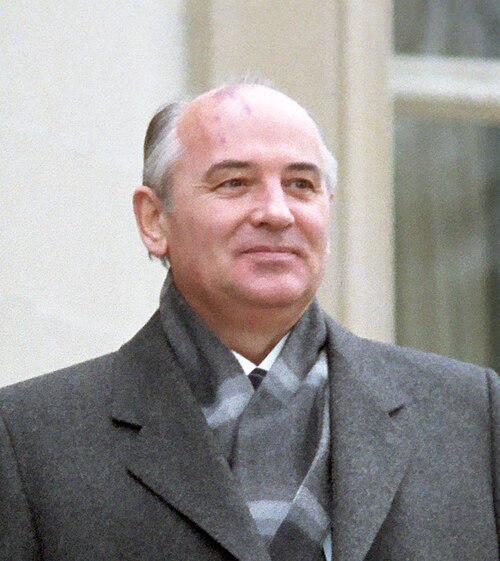
In these conditions, events outside of the GDR had the effect of accelerating the calls for reform. In 1985 Mikhail Gorbachev became leader of the Soviet Union and introduced reforms known as glasnost (openness) and perestroika (restructuring). Gorbachev believed that more political and economic freedom could help to reform the communist system. But the leader of the GDR, Eric Honecker, resisted these changes. To force the issue, Gorbachev let it be known that the USSR wouldn't use force to prevent changes in East Germany. At the same time, neighbouring communist states started to lift restrictions on travel. In 1989, Hungary and Czechoslovakia lifted travel restrictions at their borders. In response, thousands of people fled the GDR to West Germany.
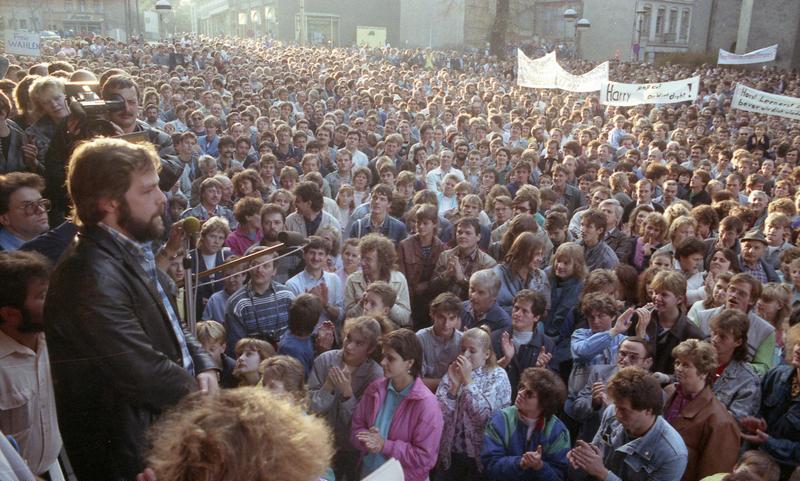
It seemed as if the GDR was unable to control ordinary people and their desire for change. Within the GDR, people began to feel emboldened and public protests multiplied. Church and civil rights groups took the initiative. In Leipzig on 9th October 1989, over 70,000 demonstrators gathered. When security forces failed to use force against them, it became clear that the East German people had more power than the state. The following month, hundreds of thousands gathered in Alexanderplatz in East Berlin, showing that people no longer feared government authority.
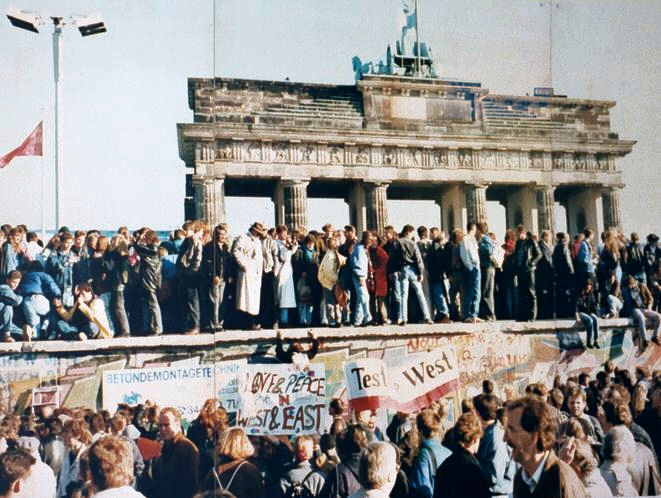
Days later the crisis reached a turning point during a televised press conference on 9th November. GDR official Günter Schabowski announced new travel regulations and mistakenly suggested that they would take effect immediately. Thousands of people immediately rushed to the border crossings on the Berlin Wall. Without clear orders, border guards let the people through. Viewed on live TV across the world, this symbol of state repression collapsed, but the GDR didn't collapse immediately. Without armed support from the USSR, the GDR was forced to accept free elections in March 1990. The SED received only 16.4% of the vote. The winning Christian Democratic Union (CDU) party had campaigned for reunification with West Germany. On 3rd October 1990 this was achieved.
Critical Thinking Skills - Evaluating Evidence and Arguments
Historians today continue to debate whether the GDR's collapse was primarily caused by the actions of ordinary people or by economic weaknesses and international political developments. What do you think?
Source A - Why the Berlin Wall Really Fell by American Historian Mary Elise Sarotte (2014)[22]
'Mikhail Gorbachev, in his four years in power to that point, had reduced the burden of oppression on the residents of the Soviet Bloc. Without his reforms, the Wall would not have fallen. Yet Gorbachev’s reforms alone were not enough to open the Wall, for they were in no way intended to end the occupation of divided Berlin…
Yet suddenly, on the night of November 9-10, 1989, Gorbachev unexpectedly witnessed the unexpected opening of a large hole in the Iron Curtain. What really turned one bad press conference into the fall of the Wall was the momentum of the peaceful revolutionaries in East Germany. They had gained enough adherents and confidence by the night of November 9 that they could capitalize on the sudden opportunity offered by that press conference.
…the overwhelming number of protestors and their nonviolent behavior on that night, however, deterred the security forces from attacking. Some troops joined the ranks of the protestors instead. The demonstrators’ admirable conduct in the face of grave danger allowed them to swell their own ranks in a way that they had never previously been able to accomplish. October 9 in Leipzig paved the way for November 9 in Berlin.
…The ruling regime thereby lost the cornerstone of its power—the ability to control the movement of its people - and swiftly crumbled.
Task 1 - Let's first try to comprehend the source. Read the source above and then answer these questions:
- According to Sarotte, why were Gorbachev's reforms important but insufficient to bring down the Wall?
- What does Sarotte identify as the main reason the Berlin Wall opened on 9 November 1989?
- Why does Sarotte consider the peaceful demonstrations in Leipzig on 9 October 1989 particularly significant?
Task 2 - We now need to test Sarotte's interpretation of events by comparing it to the facts. Using the archive footage you reviewed in the previous activity, consider the following questions:
- Identify two pieces of evidence that support Sarotte's interpretation. Explain how each supports her views.
- Identify one piece of evidence that challenges or complicates Sarotte's interpretation. Does it suggest that other factors were equally or more important?
Task 3 - Finally, write a historical judgement on her perspective. How convincing is her interpretation that ordinary East Germans played the decisive role in bringing down the Berlin Wall? In your written response:
- Explain Sarotte's central argument.
- Use specific historical evidence and facts to support or challenge her interpretation.
- Consider the importance of other factors such as Soviet reforms and decisions made by the GDR.
- Reach a justified judgement - how convincing is her interpretation?
Extension - Sarotte focused on the opening of the Berlin Wall in November 1989. How far can her explanation also account for the wider collapse of the GDR in 1990?
Footnotes
1. accessed at https://en.wikipedia.org/wiki/Trabant#/media/File:DF-ST-91-01399.JPEG
2. accessed at https://en.wikipedia.org/wiki/Elbe_Day#/media/File:ElbeDay1945_(NARA_ww2-121).jpg
3. accessed at https://en.wikipedia.org/wiki/Berlin_Blockade#/media/File:C-54landingattemplehof.jpg
4. Accessed at https://spartacus-educational.com/2WWberlinwall.htm
5. https://germanhistorydocs.org/en/two-germanies-1961-1989/shoe-shopping-1959
6. https://germanhistorydocs.org/en/two-germanies-1961-1989/meat-products-in-a-supermarket-1963
7. https://germanhistorydocs.org/en/two-germanies-1961-1989/beach-vacation-1964
10. https://germanhistorydocs.org/en/two-germanies-1961-1989/summer-vacation-1962
14. https://germanhistorydocs.org/en/two-germanies-1961-1989/a-scarcity-economy-may-10-1980
15. https://lareviewofbooks.org/article/ostalgie-revisiting-east-germany/
17. Fulbrook, Mary, 'The creation of a niche society? Conformity and grumbling', Anatomy Of A Dictatorship: Inside The Gdr 1949-1989 (, 1995; online edn, Oxford Academic, 31 Oct. 2023), https://doi.org/10.1093/oso/9780198203124.003.0005, accessed 18 Nov. 2026.
19. https://germanhistorydocs.org/en/two-germanies-1961-1989/ghdi:document-5058
21. https://germanhistorydocs.org/en/two-germanies-1961-1989/ghdi:document-5057
22. https://www.politico.com/magazine/story/2014/11/berlin-wall-what-led-to-collapse-112722/