This article is part of the Financial Times free schools access programme. Details/registration here.
The theme of this article is Saudi Arabia's decision to relax some regulations on alcohol consumption as it seeks to develop its tourism sector and diversify its economy.
Some facts about the worldwide consumption of alcohol:
In 2024, alcohol consumption is associated with approximately 2.6 million deaths.
Alcohol is thought to be associated with 200 diseases, including cancer, liver cirrhosis, and heart disease.
Alcohol is associated with multiple injuries, such as road traffic accidents and self-harm.
It is estimated that 3-5% of absences from work globally are due to alcohol.
a. Define the term demerit good. [2]
A demerit good is a good that society believes its consumption should be restricted because it is associated with high social costs.
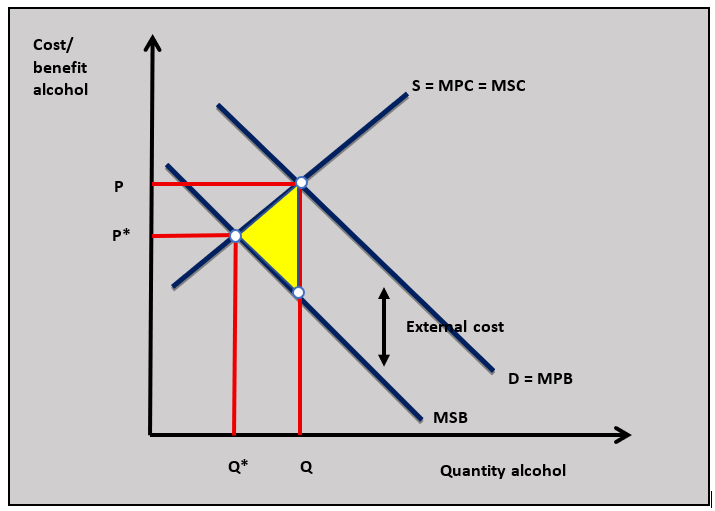
b. Using a cost/benefit diagram, explain the negative externalities of consumption associated with the alcohol market. [4]
The consumption of alcohol has negative externalities because of anti-social behaviour, loss of productivity at work and poor health outcomes from people who drink alcohol excessively. This is shown in the diagram where marginal social benefit(MSB) is below marginal private benefit (MPB), which results in an overallocation of resources and welfare loss.
c. Explain how asymmetric information might lead to the over-consumption of alcohol. [4]
Asymmetric information is an imbalance of information that exists between buyers and sellers in a market that gives one side an unfair advantage in a transaction. Consumers of alcohol might have less knowledge than producers about the health problems caused by the consumption of alcohol, and drink too much as a consequence.
d. Outline Saudi Arabia’s policy approach to managing the market for alcohol. [2]
Saudi Arabia uses a very strict legal and regulatory approach to controlling the market for alcohol. Alcohol can only be purchased through a small number of licensed retailers, and the Muslim population cannot buy it. This severely limits the size of the alcohol market in Saudi Arabia.
e. Explain one benefit to the Saudi economy of reducing the regulations on the market for alcohol. [4]
By reducing regulations on the alcohol market, Saudi Arabia believes it can attract more overseas visitors and grow its tourism economy. Saudi Arabia is trying to diversify its economy away from oil and gas production, and tourism is an alternative market it is developing. Foreign tourists often want to consume alcohol on holiday, so offering alcohol is seen as an attractive complement to the tourism market.