Selected student pages

eBook
A3 Databases
DP Computer Science Topic A3: Databases covers fundamental principles, design (ER, normalisation), and SQL programming for data management. HL extends to NoSQL, data warehouses (characteristics, OLAP,...

eBook
4.3 - Use of programming languages
In programming, variables hold changing data, while constants remain fixed. Operators act on operands (data) to perform calculations or comparisons. Flowcharts visually represent the flow of logic, using...

eBook
A 1.2.1-2 Representing Data
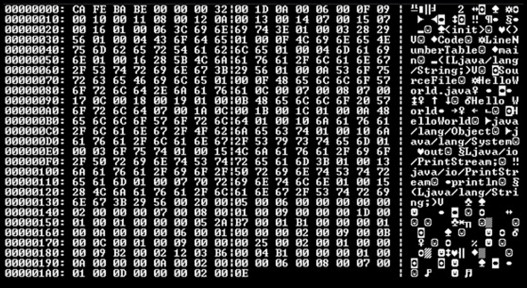
Everything a computer holds, a number, a sentence, a photograph, a song, is stored as a pattern of binary digits. This page covers two linked ideas: how whole numbers are written in binary and hexadecimal...
eBook
A 1.4.1 Interpreters and Compilers (HL Only)
A computer cannot run Python or Java source code directly. The processor understands only machine code, so every program written in a high-level language has to be translated first, and there is more...

eBook
Researching the HL challenges (HL Only)
At HL you prepare two further challenges and face a longer exam question that asks you to weigh things up and reach a judgement. This page sets out those challenges and how to research them. It does not...

eBook
A 1.1.1 The CPU
The central processing unit (CPU) carries out every instruction a computer runs, from a single addition to the millions of operations behind a video call. It contains a small set of components, each with...
eBook
A4.2 Data preprocessing (HL Only) eBook
This subtopic covers the significance of data cleaning, emphasising its impact on model performance through techniques like handling outliers, duplicates, and missing data, plus normalisation and standardisation....

eBook
B1.1 Approaches to computational thinking
B1.1 explores computational thinking: defining problems, key concepts (abstraction, decomposition, pattern recognition, algorithms), and solution representation B 1.1.1 Construct a problem specification.A...

Assessment
Mini JAVA Project
This booklet demonstrates some basic techniques relating to building a simple student database in JAVA. It is a desktop application built in NetBeans. The application is built around a Swing GUI and stores...

Start here
Syllabus Tracker
Having the big-picture perspective can help you prioritise effectively, set better goals and improve time management. This page contains practical syllabus trackers for the old and new courses for students...

eBook
4.1 - Thinking Abstractly
Abstraction is a cornerstone of computing. It involves filtering out the information that is irrelevant thus leaving only the necessary information. This is done to create a representation of the problem...

eBook
A3.1.1 Relational databases
A database is an organised collection of data. In a database the data is organised in tables Relational databases are a cornerstone of modern data management. They structure data into tables with predefined...