Home of real teaching & learning
  • Full support for teachers
  • Focus on critical thinking
  • Engaging classroom activities
  • Integrated student eBook
  • Assessed tasks / qBank
  • Practice exam questions

The InThinking Guarantee: Our sites are written by expert practitioners and not by AI

See our AI policy

Disclaimer: InThinking subject sites are neither endorsed by nor connected with the International Baccalaureate Organisation.

Don't miss out, find out!

Peacemaking: Diplomacy, Sanctions, and Embargoes
Introducing the Topic
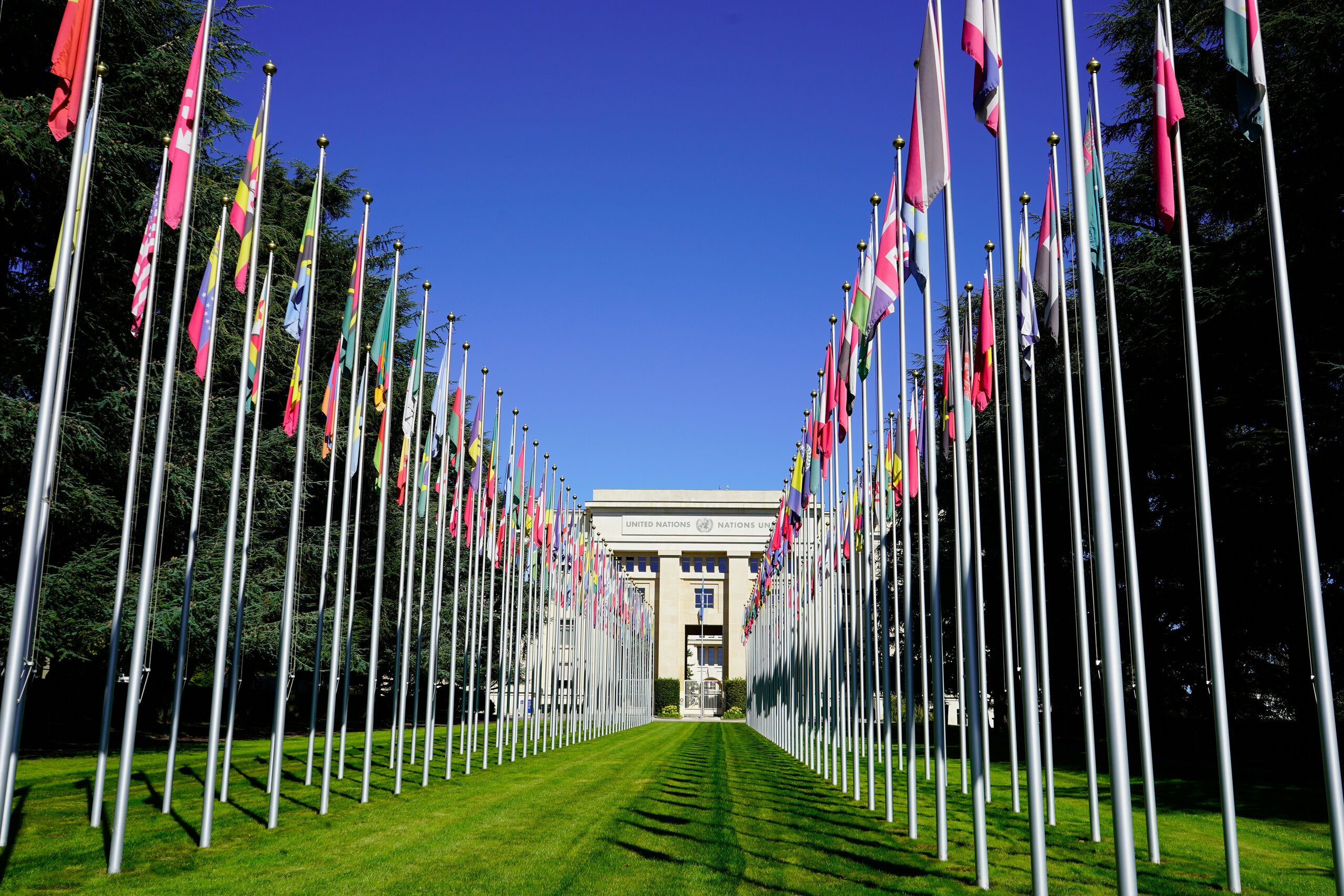
Photo by Meizhi Lang on Unsplash

Introduction to Diplomacy

This topic focuses on how third parties use diplomacy, sanctions, and embargoes to influence conflict. We will examine official and unofficial diplomacy, the use of threats and incentives, and the conditions that affect whether sanctions can achieve their objectives. We will also consider the consequences for people who are not responsible for the policies that are being challenged.

Prescribed TopicPrescribed Content
Interactions of political stakeholders and actorsThird parties, including mediation processes, negotiation processes and interventions
Nature, practice and study of peace and conflictPeacemaking, including negotiations and treaties
Teacher only box

This is the second of three peacemaking lessons. It builds on the negotiation and mediation reading. Weapon embargoes, financial freezes, and trade limitations are supporting examples in the guide. The tracks of diplomacy provide a way of comparing actors and their roles; they are not prescribed content.

INTRODUCING PEACEMAKING

Why Study Diplomacy, Sanctions, and Embargoes?

A state may condemn violence while continuing to trade with the actors responsible for it. It may also impose restrictions that damage an economy without changing the decisions of those in power. These possibilities raise a question about how third parties can turn opposition to a conflict into an effective response.

Studying diplomacy and sanctions requires us to explain how an action is expected to influence another actor. We also need to consider who bears its costs. A policy that weakens an armed group's access to weapons may help reduce violence. A restriction that mainly reduces civilians' access to essential goods may cause harm without bringing a settlement closer.


Activating Activity: Explaining the Expected Effect

A fictional government has closed opposition newspapers and detained people organizing peaceful protests. A regional organization wants the government to release the detainees and allow the newspapers to reopen. It is considering three responses:

  • Send representatives to hold private talks with the government.
  • Freeze the overseas assets of officials responsible for the repression.
  • Stop all trade with the state.

Work with a partner. For each proposal, complete the following statement:

“This action could influence the government because … However, it might fail if …”

Then identify one group, other than the government, that could be affected by each proposal. Compare your answers with another pair. Decide what information you would need before recommending a response.

Teacher only box

Allow approximately eight minutes. The activity introduces the need to explain how a policy could work and who it could affect. It does not require prior knowledge of sanctions or a researched case.

LESSON CONTENT

Instructions

To open a section of the lesson content, click the "+" sign beside its title. Click the "-" sign to close it.

Take notes in your own words on the concepts, arguments, limitations, and links to power, sovereignty, legitimacy, and interdependence. 

When you have finished, review your notes, then put them away and complete the content quiz without looking back at the reading or your notes.

Diplomacy

Diplomacy involves communication and negotiation through which actors manage their relations and pursue their interests. State diplomats represent their governments through embassies, international organizations, conferences, and direct contacts. Their work can include clarifying demands, exchanging information, proposing agreements, and maintaining communication during a conflict.

Diplomacy continues during war as well as before and after it. Parties may negotiate humanitarian access or prisoner exchanges while disagreeing about the wider conflict. An agreement on one issue can reduce suffering even when a comprehensive settlement remains out of reach.

Diplomats represent interests that may include security, economic benefits, or regional influence. We should therefore examine what a third party wants to achieve as well as its stated commitment to peace. A government may support negotiations while also supplying one side with weapons. These actions need to be considered together when assessing its role.

Diplomatic immunity protects diplomats from interference by the receiving state so that they can carry out their functions. However, it does not exempt them from the duty to obey local law. The Vienna Convention on Diplomatic Relations requires respect for the receiving state's laws while providing protections from its jurisdiction. These are distinct: a duty to obey the law is not the same as being subject to every means of enforcing it (United Nations, 1961, arts. 29–32, 41).

Tracks of Diplomacy

The tracks of diplomacy distinguish between official negotiations and other forms of dialogue. The categories overlap in practice, particularly where people maintain contacts across more than one level.

TrackParticipants and purposePotential contributionLimitation
Track IRepresentatives acting with an official mandate, including governments and intergovernmental organizationsCan negotiate formal commitments and connect agreements to state resources and institutionsPublic positions and political pressure can restrict what representatives are willing to discuss
Track IIUnofficial dialogue involving people such as former officials, scholars, or civil society representativesCan explore proposals and develop relationships when official talks are difficultParticipants generally cannot commit governments to an agreement
Track IIIDialogue among communities and grassroots groups affected by conflictCan address local relationships and concerns that national negotiations overlookLocal agreements may have limited influence over national leaders or armed groups

An informal meeting is not necessarily Track II diplomacy. The relevant question is whether participants are acting with an official mandate. A serving UN envoy conducting private talks is still carrying out an official role. A former official participating in a personal capacity may be involved in Track II dialogue.

The tracks can support one another. Unofficial dialogue may generate proposals that official negotiators consider, while community participation may help identify whether an agreement addresses local concerns. However, connections between the tracks need to be developed. Ideas discussed unofficially may never reach decision-makers, and an agreement among leaders may have little support among the people expected to implement it (Search for Common Ground, n.d.).

Coercive Diplomacy

Coercive diplomacy uses threats, pressure, and sometimes limited force to persuade another actor to stop or reverse an action. It may also offer incentives for compliance. Its purpose is to influence the target's decision rather than achieve the entire objective through military defeat.

This differs from deterrence. Deterrence seeks to prevent an action that has not yet occurred. Coercive diplomacy often seeks to change conduct already underway. The same instrument may serve either purpose depending on the demand being made.

For pressure to influence a decision, the target needs to understand what is required. It must also have reason to believe that the threatened costs will be imposed and that compliance will bring the promised benefits or relief. If leaders believe that concessions will only lead to further demands, they may resist even when the costs are substantial.

The balance of power does not determine the outcome by itself. A weaker actor may regard the issue as essential to its survival and be willing to accept costs that a stronger actor is unwilling to impose. Threats may also produce escalation or strengthen leaders' claims that their state faces external aggression. Coercive diplomacy therefore depends on the relationship between demands, costs, incentives, and the importance each actor attaches to the dispute.

Sanctions and Embargoes

Sanctions restrict particular activities or relationships to influence a state, organization, or individual. They can be imposed by individual states, groups of states, or international organizations. Security Council sanctions are adopted within the UN Charter framework; other sanctions operate through the authority of the states or organizations imposing them.

An embargo is a prohibition or restriction on trade in particular goods or with a particular target. It is one type of sanction. An arms embargo is limited to weapons and related assistance, while a broader trade embargo restricts a wider range of exchanges. It is therefore inaccurate to distinguish all embargoes as broad and all sanctions as narrow.

MeasureMain restrictionConnection to conflict
Arms embargoSupply of weapons and specified related equipment or assistanceSeeks to reduce an actor's capacity to use armed force
Asset freezeAccess to designated funds and economic resourcesRestricts resources available to individuals, organizations, or entities
Travel banEntry into or transit through participating statesLimits designated individuals' movement and international contacts
Sectoral restrictionsActivities in a sector such as banking, energy, or defenceSeeks to impose costs or restrict resources associated with particular activities
Broad trade restrictionsA wide range of imports or exportsCan impose substantial economic costs, including on people outside the leadership
Diplomatic restrictionsOfficial contacts or representationCommunicates opposition and may reduce an actor's international standing

Sanctions can pursue different objectives. Coercion seeks a change in behaviour. Constraint seeks to reduce the target's capacity to act, even if its intentions remain unchanged. Signalling communicates opposition and reinforces a standard of acceptable conduct. A measure may serve more than one purpose (UN Department of Political and Peacebuilding Affairs, n.d.).

These distinctions affect how success is assessed. An arms embargo may restrict access to some weapons without persuading a group to negotiate. That would be evidence relevant to constraint, but not proof that the wider objective of ending the conflict had been achieved.

Effectiveness and Consequences

Economic damage does not automatically produce political change. Leaders may protect their own resources, transfer costs to the population, or obtain support from other states. They may also believe that complying would threaten their political survival. Assessing effectiveness therefore requires explaining how the costs imposed reach the people making the decisions.

Several conditions should be considered:

  • The objective: A specific demand gives the target a clearer basis for compliance than an open-ended demand to change its entire political system.
  • Dependence: Restrictions are more likely to affect the target when it depends on the goods, finance, or relationships being restricted.
  • Alternative suppliers and markets: Access to other trading partners may reduce the pressure.
  • Enforcement: Participating states need the capacity and willingness to implement the measures. Smuggling and evasion can weaken their effects.
  • Incentives and relief: The target needs a credible reason to believe that meeting the demand will lead to a change in the restrictions.
  • The wider political process: Sanctions may support negotiation, but pressure alone does not resolve disagreement about the terms of a settlement.

These are conditions to investigate rather than a formula that guarantees success. Evidence of a policy change also needs to be assessed alongside other possible explanations, such as military developments, domestic opposition, or changes in leadership.

Targeted sanctions seek to concentrate pressure on particular individuals or entities. They can reduce some of the harm associated with broad restrictions, but they are not necessarily harmless. Restrictions on banks, for example, may affect legitimate transactions as well as those connected to the target. Businesses may withdraw from permitted activities because they are uncertain about compliance or judge the risk too high.

Humanitarian exemptions aim to preserve access to assistance and essential goods. However, an exemption in the legal rules does not guarantee that an aid organization can obtain transport, insurance, or banking services. Security Council Resolution 2664 (2022) established an exemption for specified humanitarian activities from UN asset-freeze measures. Its scope should not be confused with an exemption from every restriction in every sanctions regime (UN Security Council, 2022).

Applying the Distinctions

ExampleWhat it illustratesWhat further evidence is needed?
The 2015 agreement on Iran's nuclear programmeNegotiation linked nuclear commitments to sanctions reliefHow much did sanctions contribute compared with domestic politics, diplomacy, and other incentives?
An arms embargo on a party to a conflictRestrictions may aim to constrain military capacityDid deliveries fall, were alternative suppliers available, and did the change affect violence?
The humanitarian exemption in Resolution 2664 (2022)Sanctions can be designed to preserve specified humanitarian activitiesDid aid providers experience improved access in practice?

The Iran example refers to the agreement reached in 2015. It is not a statement about the present status of that agreement or the sanctions associated with it.

References

If you would like to explore the ideas, theories, or cases on this page in more depth for your Extended Essay, Engagement Project, or HL Extension, the full references for the sources cited are listed below.

Search for Common Ground. (n.d.). Track II mediation.

United Nations. (1945). Charter of the United Nations, Article 41.

United Nations. (1961). Vienna Convention on Diplomatic Relations.

United Nations Department of Political and Peacebuilding Affairs. (n.d.). The changing face of UN sanctions.

United Nations Security Council. (2022). Resolution 2664.

United States Institute of Peace. (n.d.). The Obama administration. The Iran Primer.

Checking for Understanding: Content Quiz

What distinguishes Track I from Track II diplomacy?

Which are possible contributions of Track II and Track III diplomacy? Select all that apply.

What is the purpose of diplomatic immunity?

What distinguishes deterrence from coercive diplomacy aimed at reversing an action?

Why does a credible offer of relief matter in coercive diplomacy?

Which statement accurately distinguishes sanctions and embargoes?

Which descriptions of sanctions objectives are accurate? Select all that apply.

Why is economic damage insufficient evidence that sanctions have achieved their political objective?

Which conditions may weaken sanctions? Select all that apply.

What distinguishes targeted sanctions from broad restrictions?

Why may humanitarian exemptions fail to secure access in practice?

What is the strongest approach to assessing sanctions?

Total Score:

APPLYING YOUR KNOWLEDGE

Inquiry: Assessing a Sanctions Policy

Choose a sanctions policy connected to a conflict you have studied. Use an official statement of its objectives, information about implementation, and an independent assessment of its effects. Specify the period covered by your inquiry.

Prepare a short assessment addressing the following:

  1. What behaviour or capacity is the policy intended to change? Distinguish coercion, constraint, and signalling where relevant.
  2. Explain how the restrictions are expected to affect the target's decisions or resources.
  3. Assess the evidence of effectiveness, including alternative explanations for any change.
  4. Identify consequences for civilians and the measures intended to limit them.
  5. Recommend retaining, modifying, or ending one part of the policy. Explain one limitation of your recommendation.

Begin with the UN Security Council sanctions pages or the official authority responsible for the measures you select. Check the date of each source; sanctions can change during an inquiry.

Assessment Connections

Paper 1, Question 2

Source B

Extract from Article 41 of the Charter of the United Nations (1945).

The Security Council may decide what measures not involving the use of armed force are to be employed to give effect to its decisions, and it may call upon the Members of the United Nations to apply such measures. These may include complete or partial interruption of economic relations and of rail, sea, air, postal, telegraphic, radio, and other means of communication, and the severance of diplomatic relations.

With explicit reference to Source B and one example you have studied, explain how sanctions can be used to influence actors in a conflict. [4]

Paper 2, Section B

Discuss the view that economic sanctions undermine the rights they are intended to protect. [15]

Paper 3, Question 2

(a) With explicit reference to a political issue in one of your researched case studies, explain how an external actor has attempted to influence the actions of a party to the conflict. [4]

(b) Based on the political issue identified in 2(a), recommend a course of action for an external actor to address this issue. Consider one challenge, implication, or unintended consequence of your recommendation. [6]

Topic Summary

Key Terms

Key termMeaning
DiplomacyCommunication and negotiation through which actors manage relations and pursue interests
Track I, II, and IIIOfficial diplomacy, unofficial dialogue, and community-level engagement respectively
Coercive diplomacyPressure and incentives intended to persuade an actor to stop or reverse an action
DeterrenceAn attempt to prevent an action by influencing its expected costs
SanctionsRestrictions intended to influence behaviour, constrain capacity, or signal opposition
EmbargoA prohibition or restriction on trade in specified goods or with a target
Targeted sanctionsRestrictions focused on designated people, entities, or activities
Humanitarian exemptionA provision permitting specified humanitarian activities despite particular restrictions

Key Ideas

  • Conflicts can end through military victory, imposed settlements, ceasefires, truces, arbitration, mediation, or peace agreements, but many simply die down.
  • Parties are most likely to negotiate when they perceive a mutually hurting stalemate and believe a negotiated solution is possible.
  • Third parties, including the UN, regional organizations, states, and NGOs, can help the parties reach an agreement, but they cannot impose one through mediation.
  • War economies, fear of prosecution, hardliners, and spoilers can prevent or undermine peace agreements.
  • An agreement that ends the fighting brings negative peace, but putting it into practice and dealing with the causes of the conflict is often more difficult.

Connections to the core topics

Power reflects the ability to influence another actor's choices. Interdependence helps explain why restricting trade or finance can create pressure and why costs may also fall on the actors imposing sanctions. Sovereignty and legitimacy arise in debates about who can impose restrictions and whether the methods are justified.

Connections to Case Studies and the HL Extension

Case StudyHL Topic AreasLinks to the Topic
The Colombian peace agreement (2016)Security, Poverty, IdentityA stalemate led to four years of talks. The agreement was rejected in a referendum and then revised and approved by Congress.
The Pretoria agreement in Ethiopia (2022)Security, Health, IdentityAfrican Union mediators ended the war in Tigray. Eritrea was not a party to the agreement.
The Black Sea Grain Initiative (2022 to 2023)Security, Poverty, EnvironmentThe UN and Turkey brokered an agreement on a single issue during the war in Ukraine. It collapsed when Russia withdrew in July 2023.
All materials on this website are for the exclusive use of teachers and students at subscribing schools for the period of their subscription. Any unauthorised copying or posting of materials on other platforms is an infringement of our copyright and could result in your account being blocked and legal action being taken against you.

Help