Translation
Whilst the words translations and translating mean different things in various contexts, here we focus on translation of literature. Translations of books may be relevant for some DP subjects, e.g. Classical languages, Language A courses, Literature and performance. Translated literature can also broaden a library's collection, and help support library contributions towards international-mindedness.
What does IB documentation say
Language A: literature school-supported self-taught student guide (IB, 2025). “Ensuring a booklist meets course requirements … Works in translation: works originally written in a different language than the language A being studied.”
Language A: literature guide (IB, 2025) - the course includes “a minimum of two must be works that have been translated into the language of the course (these need to have been written by authors on the Prescribed reading list in a language different from the one studied).”
Language A: language and literature guide (IB, 2025). The course included the study of non-literary texts “which were originally written or created in a language different from the language studied can be included in the course and used in assessment components provided they are studied in translation. The translation studied must be professional and must be an officially published translation of the text.”
There are numerous references on the PRC (Programme Resource Centre) to translation(s) and translating and the context varies from the subject concerned, which range from visual arts to sciences, with assessment being a common link. A number of references refer to language and literature courses (as can be seen above - as you would expect), and therefore the translation and literature is the focus for this page.
Rationale: given that DP students are expected to engage with texts that have been translated from another language, it might be helpful for students to be familiar with translated works by seeing, looking at and reading translated resources in the school library. Providing and promoting translated items in the school library can also be a contribution to International-mindedness and Resources reflecting international-mindedness through Language, languages and multilingualism
What is a translation?
This is the interesting view from a publisher specialises in translated literature:
“But can’t an adequate replacement for a word be found in --- language?”, people often ask me. Frustrations arise because individual words can be found, actually, and online translation tools do accomplish this simple feat. But unless it’s a word list that is being translated, words are communicated in context with the words around them (sentences, phrases, paragraphs, etc.), and are made up of distinct nuances, norms, and, in the case of foreign languages, etymological divergences (the origins of words and the ways in which their meanings have changed differently in different languages throughout history). … In other words, language is culturally embedded. And cultures, as with the humans who possess it, change and adapt over time. (Zegarra)
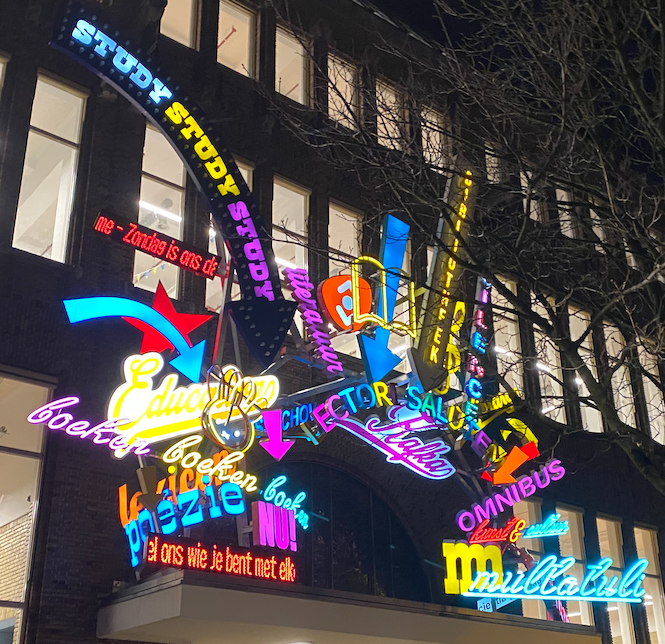
And this view from two translators, in conversation:
Voice … is an unsung aspect of what translators do. We get into character, trying out different ways a speaker would deliver a message, and focusing on how they speak as much as their words.
“The translator never translates words, individual words,” Chris said. “The words make a message. That’s what you have to interpret and communicate to the intended audience.”
The way any two translators imagine a character’s (or narrator’s) voice is personal to them and depends on what they draw from the story and the depths of their wells of English knowledge.
Avery Fischer Udagawa in conversation with Chris Holmes. (Udagawa, 2026)
Translated items in library collections
Whilst translation as a category doesn't really figure in documentation about library selection criteria, IFLA does address the issue of translated material in guidelines for multicultural materials (2009), where it is considered that “books are likely to form the main basis of a library‟s multilingual collection and these should be provided in the languages of the multicultural groups” catering for different age ranges and genres. “New acquisitions should, in the main, be recently published works, with a mixture of local (national, indigenous) authors and translations of internationally popular material. Where books are published in more than one script (such as Serbian), a representative collection in each script should be developed.” (International Federation of Library Associations, 2009)
Global fiction / World literature
Various sources use different terms to promote the concept of translated literature, such as global fiction or world literature. Indeed, the UNESCO's Index Translationum indicates that the most translated author world-wide is Agatha Christie, whilst Antoine de Saint-Exupéry’s Le Petit Prince is one of the most translated books.
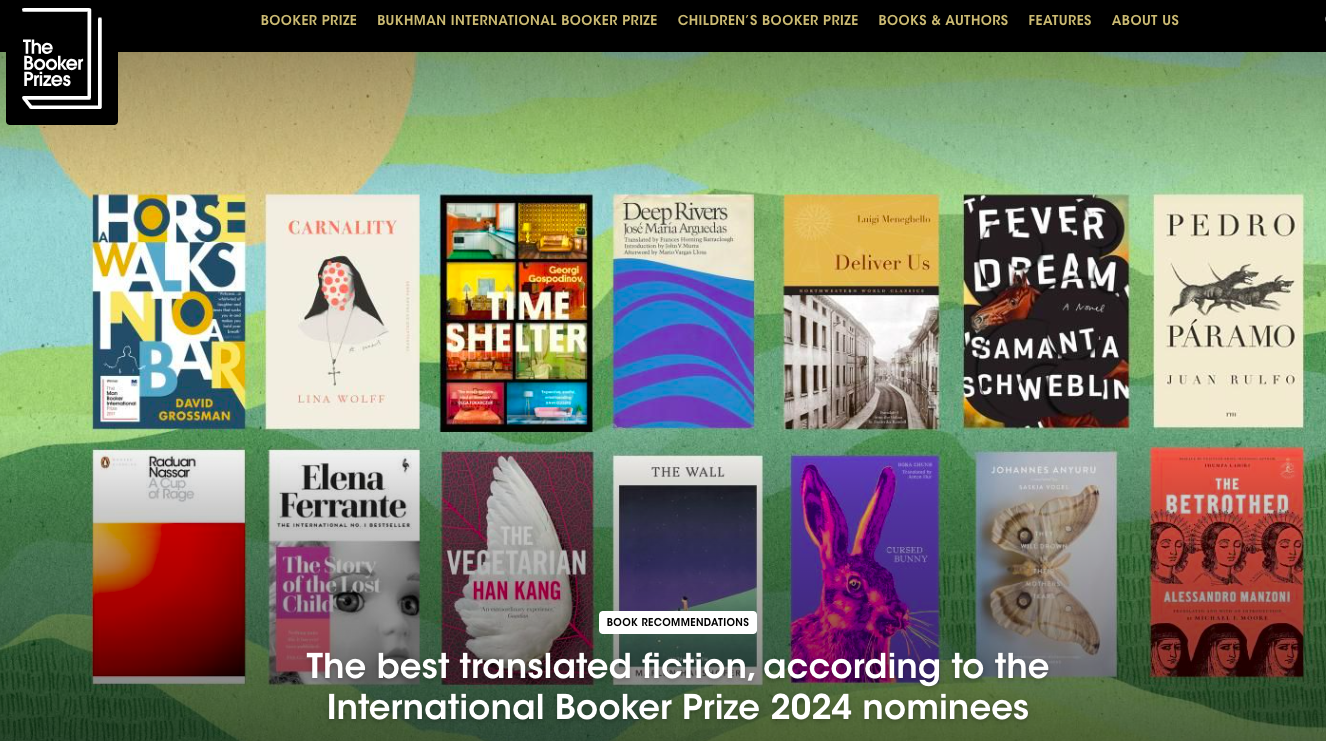
Individual authors, contending for the International Booker Prize in 2024 were asked to recommend favourite works of global fiction that had been translated into English. These are the titles:
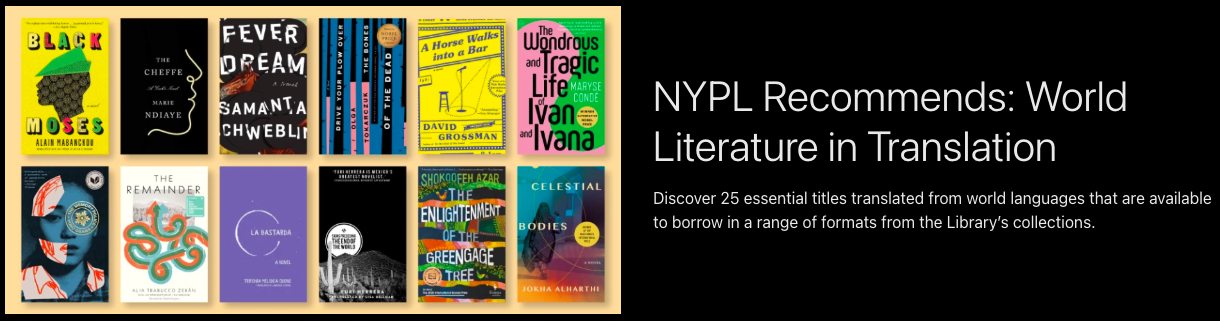
These are recommendations from the New York Public Library:
Bibliodiversity
When bibliodiversity exists, it can be seen in providing translations of works in languages that are not well represented in published literature, or in other ways where the writing, author, genre or form of literature is marginalised in a given publishing environment (such as a country or dominant language).
Geopolitical issues
National organisations probably do this in a very soft way, but an example where geopolitical aspects of literature, including translation, can be seen in relation to Ukraine.
“International initiatives building the infrastructure needed for Ukrainian literature to circulate globally are underway. The government entity, the Ukrainian Book Institute (UBI) has five objectives that seek to: shape state policy in the book publishing sector; promote book reading in Ukraine; support the book industry; provide incentives for translations; and popularise Ukrainian literature abroad.” (Warner-Trelour, 2026)
Literature in translation and AI
Access - online - to books out of copyright is easy so there may be many translated versions of ‘classic’ books available and used for translating, not least assisted or created through AI tools but can invariably be of poor quality. This practical advice about from a published translator and university lecturer in French and translation (Bradford, 2026) about working out whether the translated book being offered for sale has been produced by AI means or a more quality work from a human translator:
- The author will be deceased, but now well-known and the work will be in the public domain. Either the title will be well-known - a ‘classic’ - or the author will be famous.
- Look at the cover. Does the design look amateur or of poor quality. This might be because the cover has been created by AI means.
- Is a publisher mentioned? If the book has been self-published, there will be little/no assistance from a commercial publisher, e.g. a professional editor.
- Is information about the translator available on the internet? If not, the translator, is a “ghost”, so there is no information (such as biographical, information about other publications by the translator or a photo) to indicate the translator exists or has credibility as a translator.
- Have a number of titles by this author been published recently, i.e. since AI use has become more widespread?
- What languages have the books been translated into? Bradford says the most commonly AI-translated languages are French, Russian, German and medieval Italian.
- Look at any sample provided - as Bradford says “one dead giveaway is the absence of indented paragraphs – conventional formatting and presentation are jettisoned.” Also, get a feel of the text - does it read in a modern way or does it feel stilted and use archaic language, and so on.
(Bradford, 2026)
Which books?
Prescribed reading list
The IB prescribed reading list (PRL), which we look at on the Studies in language and literature page, could be a useful starting point for looking at which books to make available to DP students in the school library.
The PRL is a large list of authors from which schools can select works to be studied.
The IB's Prescribed Reading List can be accessed at: https://ibpublishing.ibo.org/prl/?lang=en
In this demonstration search for literature of a particular jurisdiction or country, the result was presented in an alphabetical arrangement of language. There were six pages of results and most were for the national language of the country concerned. The literary form of an author is also identified. (Whilst the list won't necessarily identify translations, it can provide librarians with specific authors or titles to see whether translations exist.)
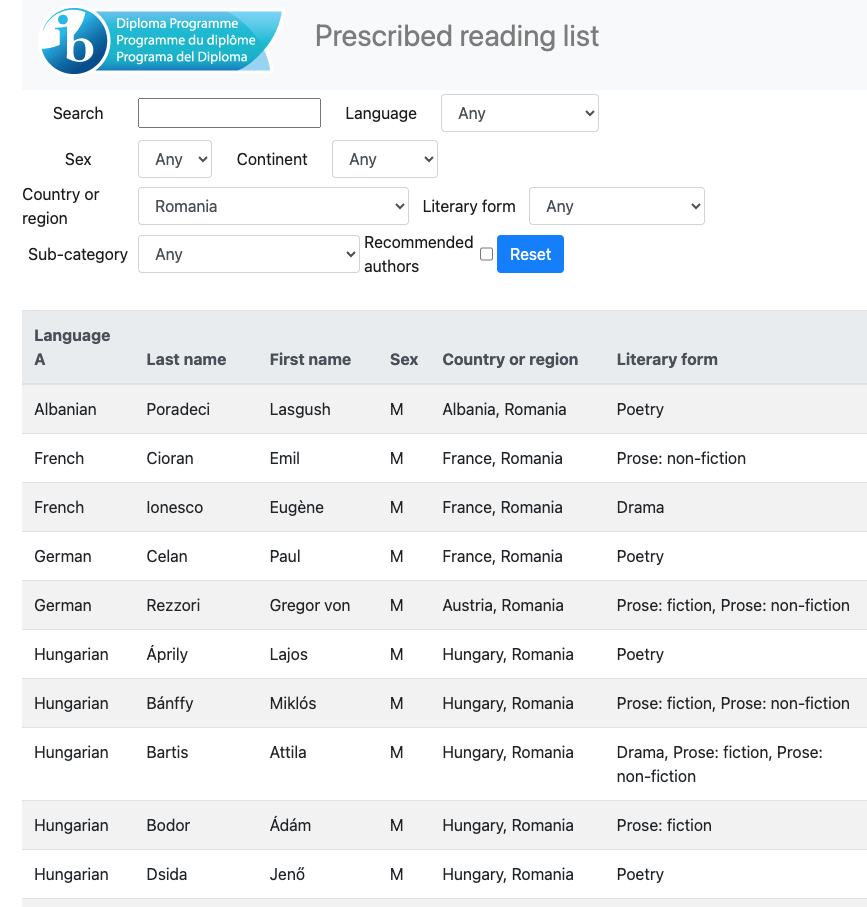
Here is how one school library has curated metadata from the PRL:
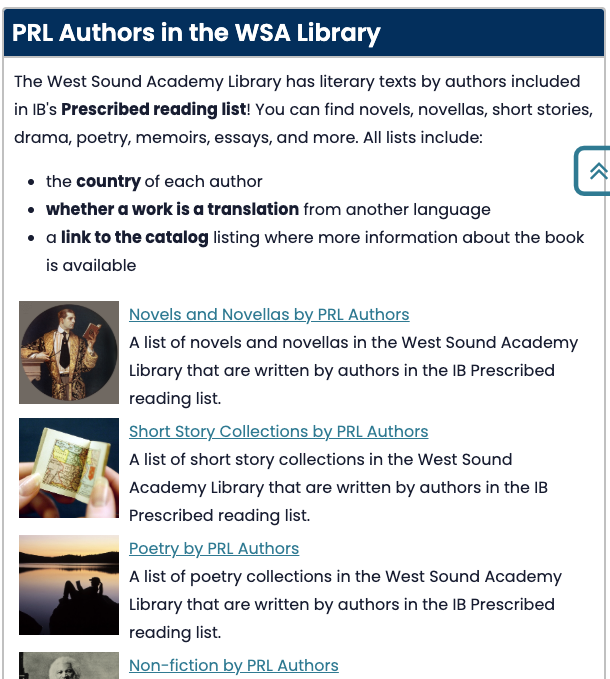
Organisations and prizes
These connections can be useful for starting to curate translated titles in the DP library collection. Whilst IBBY is a very helpful support for school librarians, the focus of that organisation is children's books, so although we acknowledge the valuable work of that organisation, for DP student needs, other sources are pertinent, including:
GLLI (Global Literature in Libraries Initiative)
https://glli-us.org/ Translated book award
Booker International
A well-known prize for adult literature in the English language also administers a prize for translations from various literatures into English.
https://thebookerprizes.com/international-booker-prize
International Federation of Translators / Fédération Internationale des Traducteurs
The acronym is FIT the there are various awards, including for categories of books.
National Book Awards
The NBA in the USA has an award for fiction and non-fiction translated in english
https://www.nationalbook.org/2025-national-book-awards-longlist-for-translated-literature/
Global Literature in Libraries Initiative
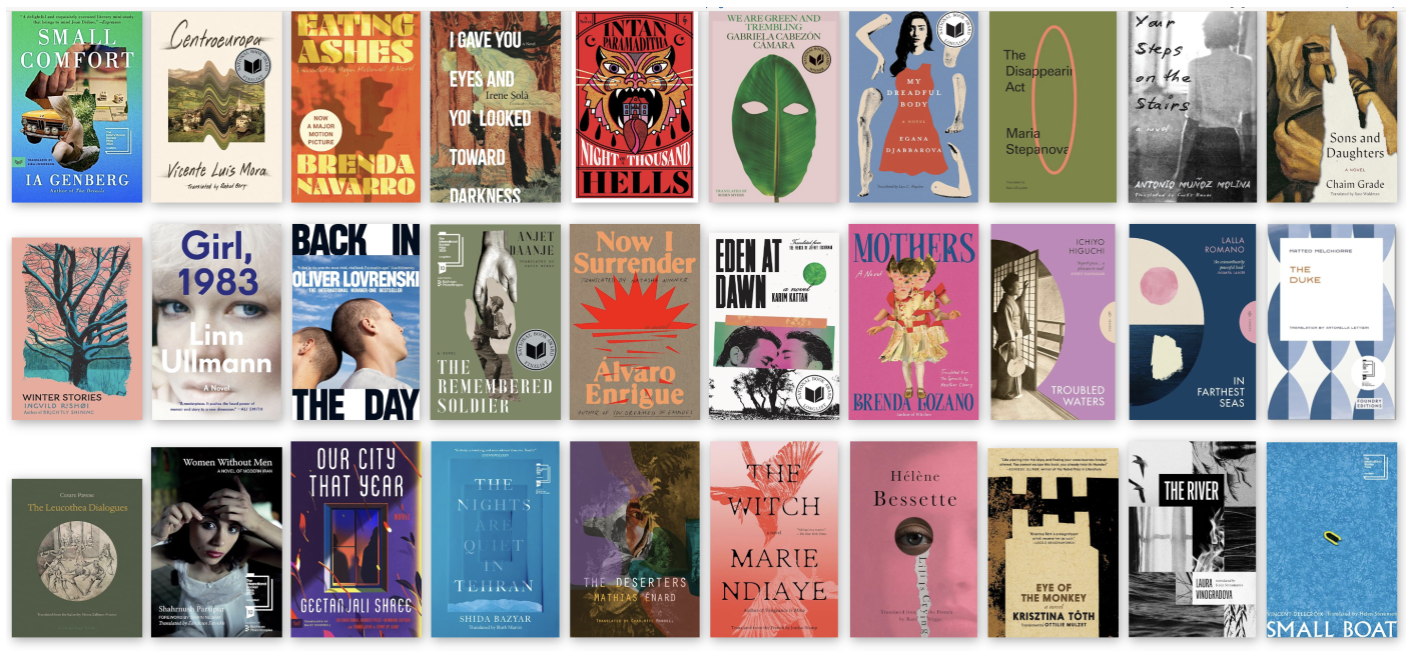
Another initiative from GLLI is a curated list of the Best translated work for academic, public and high school libraries: 2025-2026. This list, which will be developed in collaboration with librarians around the world, includes not only award winners but those long-listed for awards. Titles in the list are available on a spreadsheet and titles are also linked to LibraryThing. (Hsu Feldman, 2026)
The link to the spreadsheet is in the references list below, and here is a selection of listed titles:
National organizations
A national organization supporting a literature may exist in many jurisdictions. The type or extent of support they offer may vary, but encouraging and celebrating translation of works into and from the national language is common.
This is an example of books that have been translated:
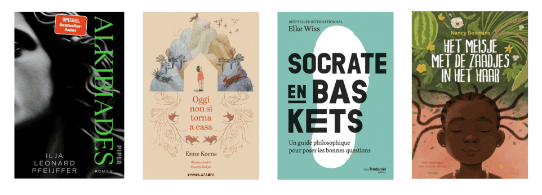
These particular translations were made with support from the Dutch Foundation for Literature, which administers a grant program for foreign publishers who wish to translate a book, originally written in Dutch or Frisian languages, into another language.
Translation tools for online information sources
Some databases may include a tool that will translate content into different languages, whilst others advise users to use a translation tool on the browser they are using. Alternatively, a browser extension might be available. Translation tools might also be specific to file formats, e.g. pdfs. Translation of ebooks can also be a concern.
Issues with machine translation, which may be inadequate, focus on:
- Language and literature: differing language structure; tone and humour; compound words; words with multiple meanings; literary devices
- Subject: lack of knowledge
- Text and format: confusing layout
- Cultural issues, such as idioms and slang
(Naveen and Trojovský, 2024; Schäferhoff, 2024)
Identifying translations
There are some tools which can help librarians identify whether translations exist.
Zenòdot
This tool has been developed by a writer from Valencia. It does not provide translated content itself, but searches for metadata from various sources, so establishes whether a translation in a particular language exists.
UNESCO's Index Translationum
This, historically, attempted to identify translations. Reports indicate that more involvement and cooperation exist so that the metadata will be kept current. (Index Translationum)
https://data.unesco.org/explore/assets/tran001/
Alternatives may also exist. Try the crowd-sourced Alternative To website for suggestions. In this context, Alternative To suggests Open Library and World Cat.
Value and importance of translated literature
Here are views which identify the value of translated literature and the act of identifying translations to help make culture more visible, so international-mindedness and culture can be keywords as:
- “In an increasingly uncertain world and with so many divisions in our global society, literary translation is one way in which different countries and peoples can unite. The pleasure that can be shared through reading good novels is one that spans nationalities, borders, religions, genders and much more. Shared cultural experiences of this nature serve to bring together people who have never met by creating a bond between them.” (Tirosh, 2024)
- “Making translations visible is an act of cultural infrastructure. It determines which literatures count as existing, which readers can find what they need, and which languages register in the global record. In a world that regularly celebrates bibliodiversity, the least we can do is build the tools to measure it. … The question is not whether translations exist. They do. The question is whether anyone can find them.” (Tsel, 2026)
What can we do?
- Highlight or articulate the idea of translated literature as an integral part of the library collection. Include the term in relevant library documents, such as the library policy and the collection development policy. Also, in places where the school community might see or read it naturally, such as a student handbook, school magazine, etc.
- Think about translations from and in the school's language of instruction.
- Translated literature in the school library collection can also be a contribution from the library to a school's growing understanding of international-mindedness - provided the librarian identifies this during the Self-study stage of the IB evaluation.
- Whilst being aware of translated books includes it being a stated factor in documentation (e.g. collection development policy), an initial aspect will be curating and identifying relevant titles for the library collection, though over time it becomes more of a habit of mind.
- Celebrate the UN's International Translation Day (30 September).
- Ask DP students if for book title suggestions from the language/literature from their country, and look for relevant translations.
- Look for an indication that a human translator is responsible for the translation, and not a tech tool, in order to help maintain quality.
Selecting materials in translation
- Be very selective
- Consult with language teachers and the DP coordinator
- Reflect the Host culture (if an international school)
- For DP in particular, a mixture of YA and adult titles - fiction and nonfiction - may be helpful.
References
Bradford, T. (2026, August 07). AI is flooding the online book market with poor translations - here's how to spot them. The Conversation. https://theconversation.com/ai-is-flooding-the-online-book-market-with-poor-translations-heres-how-to-spot-them-288166
Davey, D. (2024, April 23). Finding works in translation. https://gclibrary.commons.gc.cuny.edu/2024/04/23/finding-translations/
Hsu Feldman, R. (2026, October 26). And the winners are … (Best translated global literature for academic, public and high school libraries): 2025-2026. Global Literature in Libraries Initiative GLLI Blog. https://glli-us.org/2026/10/26/best-translated-global-literature-2025-2026/ [With link to spreadsheet: https://docs.google.com/spreadsheets/d/15XdtrVBEcoT2QXkDo6WlTpKj1lNAEQrdfz_z2cwYBtw/edit?gid=0#gid=0]
Index Translationum: UNESCO’s Oldest Database Gains a New Life. (2026, May 05). https://www.unesco.org/en/articles/index-translationum-unescos-oldest-database-gains-new-life
International Federation of Library Associations. (2009). Multicultural communities: guidelines for library services. 3rd ed. https://www.ifla.org/wp-content/uploads/2019/05/assets/library-services-to-multicultural-populations/publications/multicultural-communities-en.pdf
Miller-Lachmann, L. and Shapiro, S. (2016, June 30). Where do you want to go today? Using global literature in translation in libraries. Programming Librarian. https://programminglibrarian.org/articles/where-do-you-want-go-today-using-global-literature-translation-libraries
Naveen, P. and Trojovský, P. (2024). Overview and challenges of machine translation for contextually appropriate translations. iScience, 27 (10). https://www.sciencedirect.com/science/article/pii/S2589004224021035
Nederlands Letterenfonds / Dutch Foundation for Literature. (2026, September). International newsletter, September 2026. https://www.letterenfonds.nl/en
Photos: introduction box photo by Ling App on Unsplash; Photo of entrance - with bilingual signs lit up at night - to Bibliotheek Neude, Utrecht, The Netherlands, by an author of this website.
Schäferhoff, N. (2024, July 16). Common problems with translation. Translate Press blog. https://translatepress.com/problems-with-translation/
Tirosh, O. (2024, February 28). Who is the world's most translated author? Tomedes. https://www.tomedes.com/translator-hub/most-translated-author.php
Tsel, A. (2026, April 13). The missing catalogue – Why finding books in translation is still so hard. LSE Blog. https://blogs.lse.ac.uk/impactofsocialsciences/2026/04/13/the-missing-catalogue-why-finding-books-in-translation-is-still-so-hard/
Udagawa, Avery F. (2026, September 15). WorldKidLit Month Focus on Japan: two translations of Sachiko Kashiwaba's first novel. GLLI. https://glli-us.org/2026/09/15/worldkidlit-month-focus-on-japan-two-translations-of-sachiko-kashiwabas-first-novel/
Warner-Trelour, L. (2026, August 13). Want to support Ukraine? Read its books. The Conversation. https://theconversation.com/want-to-support-ukraine-read-its-books-289529
Zegarra, A. (n.d.). What is literary translation? Westwood Press. https://www.westwoodpress.com/resources/what-is-literary-translation
Bold text in quotes above made by authors of this website