Using IBDP curricular information

Accessing and using IB Diploma Programme curricular information is key to effective detailed collaboration with DP subject teachers and others, such as the DP Coordinator. Here, we look at what that information involves and strategies the DP librarian could adopt to present themselves as informed, interested and looking to help or support DP teachers.
IBDP curricular information
There are several types of curricular information about IBDP subjects:
- Subject guides
- Subject reports
- Teacher support materials (TSM)
- Diploma Programme updates
- Curriculum review
Subject guides
As the term suggests, subject guides will provide most comprehensive information about individual subjects. They tend to follow a similar format, especially in pdf format. Most subjects are now viewed as a text-rich website, with an option to see the document in a linear manner by downloading a pdf. (Some older subject guides are purely available as pdf., but these are getting fewer.)
A review of an IBDP subject's content happens, generally-speaking, in a seven year cycle (though some subject reviews have been affected by the pandemic). When that happens, a new subject guide is issued by the IB and hosted on the PRC. It is clear when the old guide ends as the words 'last assessment' followed by the calendar year is written after the name of the subject; equally, the subject's new guide is clearly identified as the words 'first assessment', followed by the calendar year.
An exception is a group called 'school-based syllabuses'. This is where an IB school recommends and works closely with the IB to develop a school-based syllabus (SBS) in response to an identified, perhaps local/regional, need. Such a course becomes a DP subject.
Subject reports
These tend to be much briefer documents and are written by senior examiners so report on student performance during the previous examination period, hence each report begins with grade boundaries. However, it can be worth skimming the succeeding pages of a subject report, as they can help to identify key concepts in that particular DP subject, as well as the syllabus's terminology. (You'll find two reports per subject per year - one for May and one for November - reflecting the two exam periods, world-wide, of the IBDP year.)
Teacher support materials (TSM)
These are available for subjects and the core of the IBDP. They can be found as part of the subject information on the PRC. They are supplementary to the subject guide but can be quite useful to 'dip into' if you want an impression of the subject and an idea of teaching and learning strategies. Very (very) occasionally, there are references to a library/ian.
Diploma Programme updates
This brief update used to be called 'Coordinator's notes' (and might still be called that in a school). The update is issued several times a year and useful to skim-read for for small changes or updates to DP subjects, as well as other relevant information, e.g. IB approved resources.
Curriculum review
You may also find links to 'Curriculum review' documents on a subject section of the DP tab on the PRC. These (usually) brief documents give an update to subject teachers about the stage of review of their subject and perhaps give an indication of likely changes. However, these relate to a subject guide that is for the future. There is always a cross-over period between new and old guides, with an indication of first or last assessment followed by the date of a particular year. For the purposes of current liaison, these documents are not the most relevant.
School-based IBDP curricular information
Some schools decide to make available to their community - students and parents - curricular and other information issued by the IB.
This may be to make the information more user-friendly and/or to add a school focus - for instance, with regard to internal deadlines or subject options decided by the school.
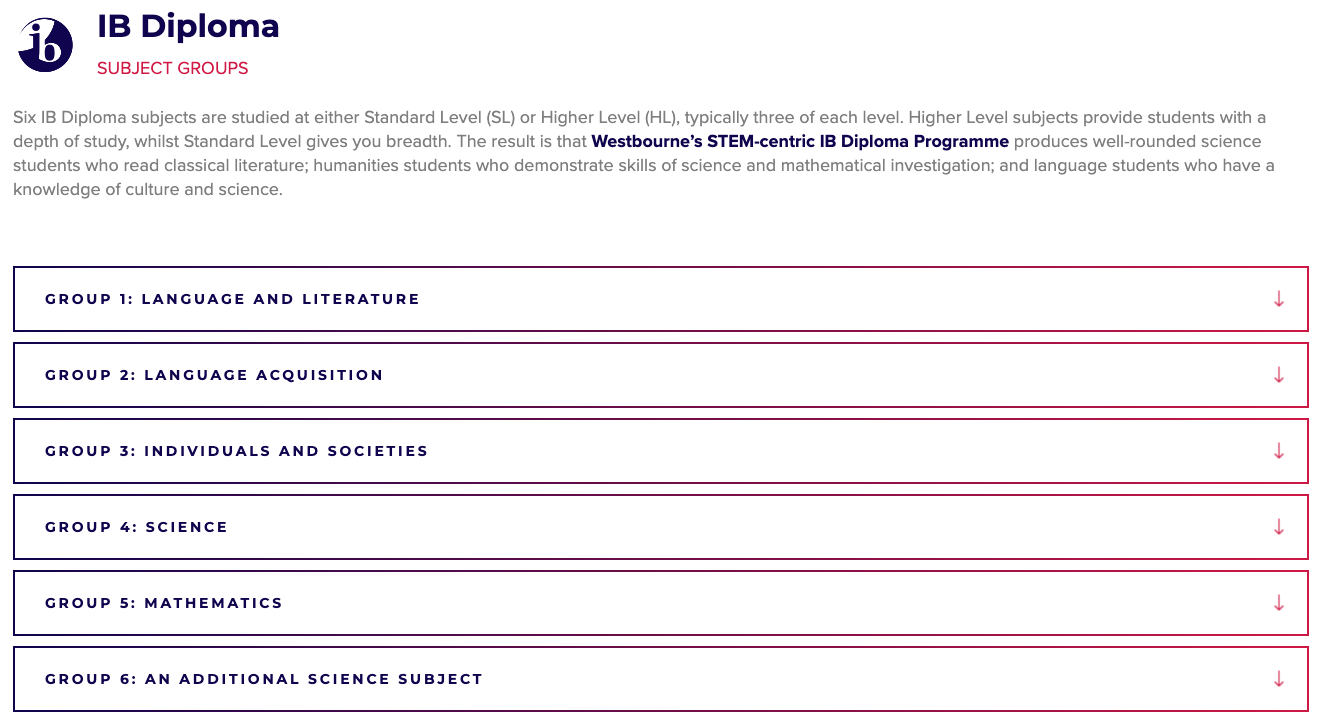
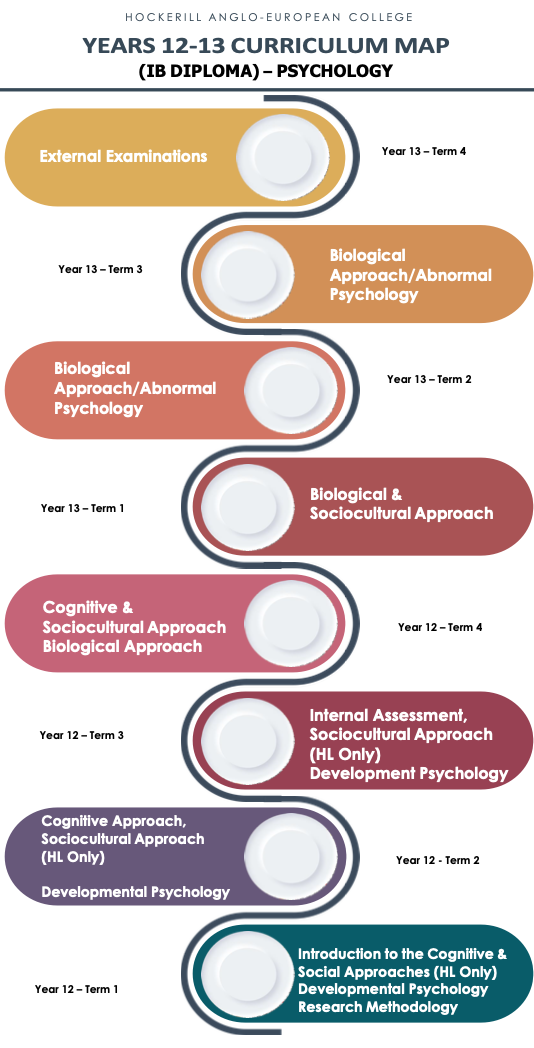
As long as the information re-presented by the school is based on current IB documentation, it can be helpful to the librarian so that they are informed about IBDP curricular information at their school.
Example of IBDP curricular information presented for a school community - web-based
Example of IBDP curricular information presented for a school community - infographic
What can we do?
Strategies, ideas and suggestions for the DP librarian - a checklist
Using IB documentation
- The core information resource is the Programme Resource Centre (PRC) on or through MyIB. If you haven't joined MyIB, then that would be a good first step. It would be best to liaise with the DP Coordinator about this, but you can apply via a direct link - https://ibo.my.site.com/ibportal/IBPortalRegistration - and the Coordinator can approve it. Once you have access to MyIB, a good strategy is to get a feel to how the site is arranged and then, when you're in specific documents, how they tend to be organized online. Many are pdf documents.
- Once you've looked at a few subject guides, you should be able to easily identify main sections or requirements of a DP subject, together with the focus of the assessed work requirements for students.
- If viewing pdf versions, you might like to use the find function to identify use of the words library and librarian in the subject guides and TSMs, which can help to identify what library/ian support could include. However, generally speaking, there are few mentions of the terms ‘library’ and/or ‘librarian’ which indicates the need to make the connection with the library/ian in individual schools.
- Should you be really short of time and/or want to refresh your memory about a DP subject prior to meeting with teachers of that DP subject, then there is an alternative to using the subject guides. These are two-page summaries for each DP subject on the public website of the IB. For updated subject guides, there should also be a one-page overview on the IB public website. (The link is in the References box, below.)
- If you're employed in an IBDP candidate school, you should be able to complete a registration for MyIB and access content.
Preparation
- A key research or reading skill of skimming and scanning is really helpful here, in order to manage the vast amount of potentially useful information.
- Critical thinking will also play a part as you make connections with words and phrases that resonate with you, e.g. resources, skills, ATL, research, inquiry, academic integrity, citing and referencing, etc.
- Your school's student handbook, course outline or similar document can identify which subjects your school is offering DP students and this will thankfully cut down on the amount of subject information you need to access.
- When thinking of time involved in such preparation, prioritise interacting with the subject guides.
- In the following tabs, we give brief information about the subject requirements as identified in subject guides, so if your available time is really limited, then the text will help provide a workable overview, but it might be a good investment in time to look at least at one subject guide. The older guides are pdfs but newer ones are also in a more screen-friendly format, and perhaps more 'skimmable'.
- You'll come across the term 'double-dipping'. This means that students cannot use what they submit for their internal assessment (IA) in the subject for another purpose (for example, an Extended Essay).
- As an alternative to IB-issued documentation, your school may have produced and made available more concise information tailored to the course(s) at your school.
References
See also New & updated IB documents
DP subject summaries. International Baccalaureate Organization. https://www.ibo.org/
Photo by 'Christina @ wocintechchat.com' on Unsplash
Programme Resource Centre (PRC) on MyIB. To set up an MyIB account, complete the form at https://ibo.my.site.com/ibportal/IBPortalRegistration?