Home of real teaching & learning
- Full support for teachers
- Focus on critical thinking
- Engaging classroom activities
- Integrated student eBook
- Assessed tasks / qBank
- Practice exam questions
The InThinking Guarantee: Our sites are written by expert practitioners and not by AI
See our AI policyDisclaimer: InThinking subject sites are neither endorsed by nor connected with the International Baccalaureate Organisation.
Don't miss out, find out!
- Free trials Take out a one month free trial today!
- Newsletters Subscribe to our FREE subject site newsletters.
Recommendations
Read what users are saying about the site.Site authors


IB Approved Workshops
Chemistry
IB DP Category 2
Barcelona, Spain, 12 - 14 February 2027
Find out more
Chemistry: A focus on the experimental programme
IB DP Category 3
Paris, France, 19 - 21 February 2027
Find out more
Virtual Think-Ins
Focus On: IB Teaching – A Practical Guide for Teachers new to the IB
20 November 2026
Find out more
Keys to Success: The IA in Chemistry
30 November 2026
Find out more
Find all InThinking events at
inthinking.net
Quote of the day
The origin of all science is the desire to know causes; and the origin of all false science and imposture is in the desire to accept false causes rather than none; or, which is the same thing, in the unwillingness to acknowledge our own weakness.
InThinking
Supporting international schools with high quality PD & interactive online resources
Dynamic
Creative
Personal
Creative
Personal


Selected student pages
See all

Most popular
See all


Blog
Free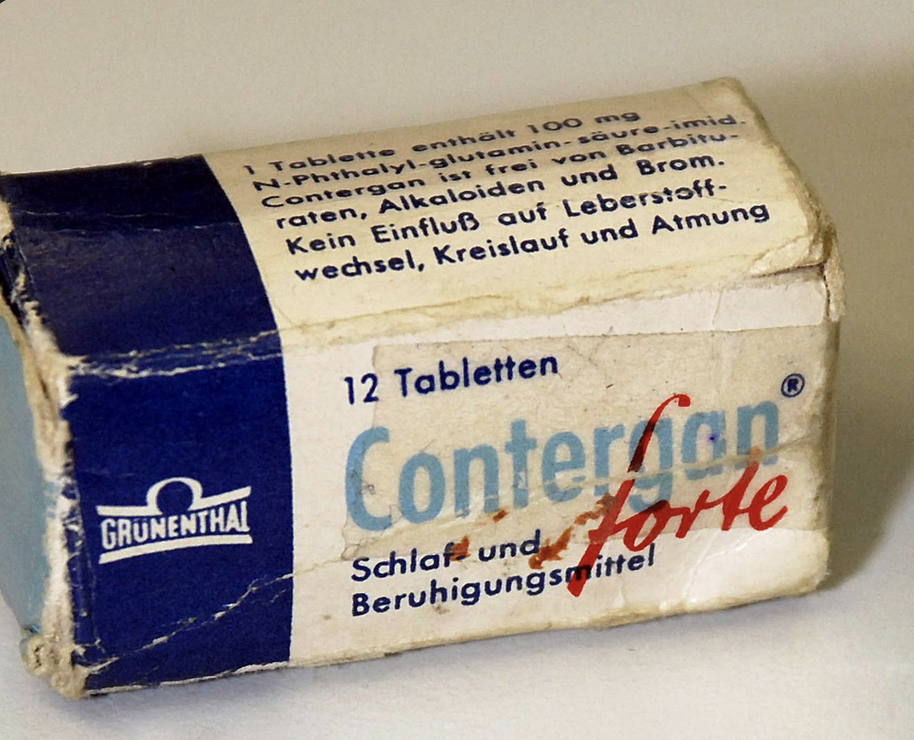
11 Oct 2026
The 2026 Nobel Prize for Chemistry
The Nobel prize for Chemistry this year celebrates the pioneering work of Henri Kagan and Kenso Soai on homochirality - the synthesis of just the required enantiomer of chiral compounds and not the mirror...

11 Sep 2026
The importance of using clear English in IB chemistry
Why using clear English is important when communicating in chemistry. This blog gives examples of two past IB questions where the language used to phrase the questions can lead to different interpretations...
Recommendations
See all"I have been utilizing InThinking since the beginning of my DP journey, and it has consistently offered comprehensive support in helping me navigate the intricacies of my subjects. In my opinion, it is undoubtedly one of the finest IBDP resources available..."
Khalida Qureshi
Edubridge International School
"This website has been a life saver for ideas on practical work, how to cover the course and what to focus on. More importantly it's my go to for administrative information on all the nitty-gritty rules and regulations of the IB. Oh! And we even used..."
Menchu Sol
International School of Manila
Subscriber comments
-
For Q7. Students have challenged the answer and arguing that I is not a "structural" formula. According to the syllabus, it is named a "skeletal formula" separate from the two types of "structural formula". S3.2.1 Organic compounds...
MC test: S3.2 Functional groups - classification of organic compounds -
Thanks Geoff, I agree that the three distractors are typical exothermic processes, and students who know what they are doing should gravitate towards the nitrogen one, particularly if they are familiar with "tricky" IB questions like these.Regarding...
R1.3 Energy from fuels -
Hello Rafael, I don't think the question is unreasonable. An energy profile is given which shows the reaction is endothermic. The three 'wrong' responses are the formation of the H-H(g) bond from H(g) atoms, the neutralization of NaOH(aq)...
R1.3 Energy from fuels
Geoffrey
Site authorHi Lauren, Your students do have a valid point when considering what is written in S3.2.1. The problem is that skeletal structures (whether full or condensed) are also ways of representing the structural formula as the definition of a structural...
MC test: S3.2 Functional groups - classification of organic compounds