Teaching, learning & resources
- How chemistry fits into the overall IB Diploma programme
- The common aims of all the Group 4 (Sciences) subjects
- How teaching IB chemistry differs to teaching chemistry within your own national system
- How the syllabus is set out
- Planning your own teaching schedule for delivering the syllabus
- Advice on teaching SL and HL students together in the same class
- Prompts to consider what sort of teacher you are
- Advice and examples of different styles of teaching
- The skills needed to become a successful lifetime learner
- Developments in the use of AI in education
- How to train your students to think critically in chemistry
- Details of all the IB deadlines
- How to make your own unit plans
- How to write recommendations for your students when they apply to university
- Details of a wide range of different resources
- Understanding the abbreviations and acronyms used by the IB
- Information about IB chemistry workshops
Introduction
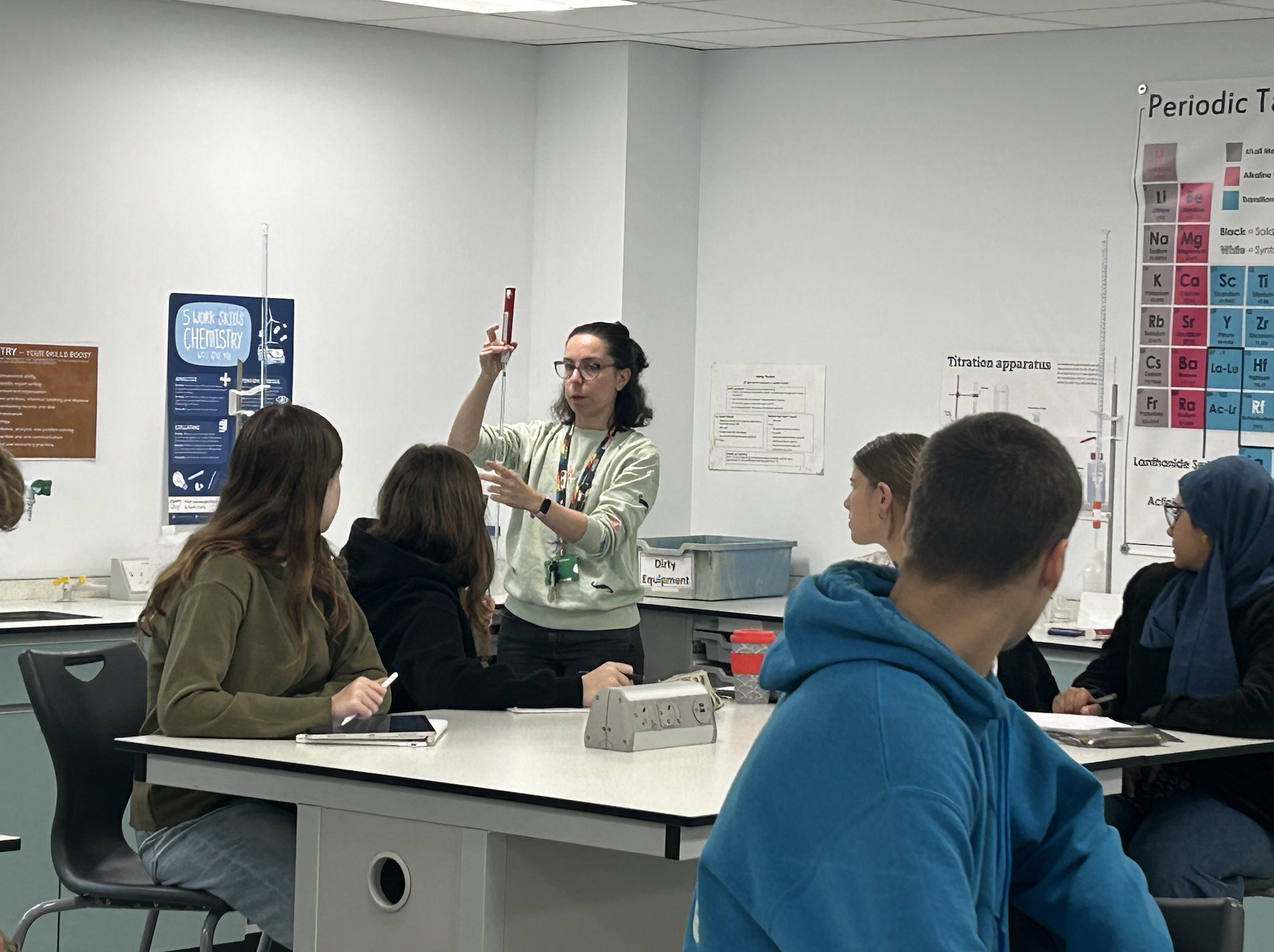 We obviously have a duty to make sure our students are conversant with the factual chemistry information set out in the syllabus as that is what the final assessment is based on. This section is concerned with the methods we use to achieve this - i.e. it considers teaching and learning. A good teacher does not drill their students to simply pass exams but enthuses and encourages them to think critically about our subject and take responsibility for their own learning. This will not only increase their understanding of the underlying concepts and give them the confidence to tackle problems in unfamiliar areas, but it will also set them up to be lifelong learners.
A list of essential resources has already been given in the 'Start here" section for teachers new to the IB. These include time, equipment, materials, class size, classroom (and/or laboratory facilities) as well as the more obvious ones such as the subject guide and signing up to My IB etc. This section includes different specific sources and examples for chemistry information and ideas to support your teaching. This is because however good a teacher you are you will need to relate the chemistry you teach to global, environmental and current issues. Your students also need resources to research secondary data and factual information for themselves.
Chemistry - part of the IB Diploma
How chemistry fits into the IB Diploma programme. This section puts chemistry into the context of the whole IB Diploma programme, showing how chemistry relates to all the other elements of the programme...
Syllabus
The syllabus, which lists what can be assessed, is laid out in the 2023 IB Chemistry guide. It is not intended to be a teaching order. This section explains the aims of the chemistry programme...
Approaches to teaching
This section looks at ways of teaching IB Diploma chemistry. It covers the skills and different teaching styles that IB teachers use and stresses the importance of imparting a love for lifelong learning...
Approaches to learning
As well as reflecting on how you teach it is equally important to consider how your students learn. This section provides information on how to build up your students' learning skills to encourage them...
Resources
Information and details of a wide spectrum of useful resources arranged under different headings are provided here to help you teach the two year IB chemistry course.
AI & Education
Artificial intelligence, in the form of large language models (LLMs), is with us, for good or ill, and like many technological changes in the past, it's here to stay, and we...
Teaching students to think critically
The ability to think critically is a key part of the IB Learner profile. This page defines critical thinking and provides examples of critical thinking in chemistry from a variety of different types of...
Unit plans
This page discusses what a unit plan is, why there is a need for unit plans, how they can be formulated and why each teacher should come up with their own.
Do you speak IB?
A guide to help you decipher IB jargon.