How to review/revise

Suggestions are given to help you devise and carry out your review/revise programme to prepare you for the final written assessment.
To clear the air
Just before you start it might be helpful to explain why the top heading is review/revise. It is all a problem of English!
If you speak US English then the suggestions below apply to review. When used in education the meaning of revise in US English is to rewrite, correct, change the text etc. of a piece of written work. In UK English revise means to go over what you are supposed to know to make sure you have covered and understand everything, (i.e. review in US English). Review in UK English means to criticise (either positively or negatively) a piece of work and give your own opinion of it. Hence the use of review/revise to cover this topic for international students.
Because I am British I will use revise for the rest of this page to save having to always write review/revise.
Suggestions for how to revise
There is no one correct way. What works well for some does not work well for others, so essentially you need to develop your own strategies. However the following suggestions may help.
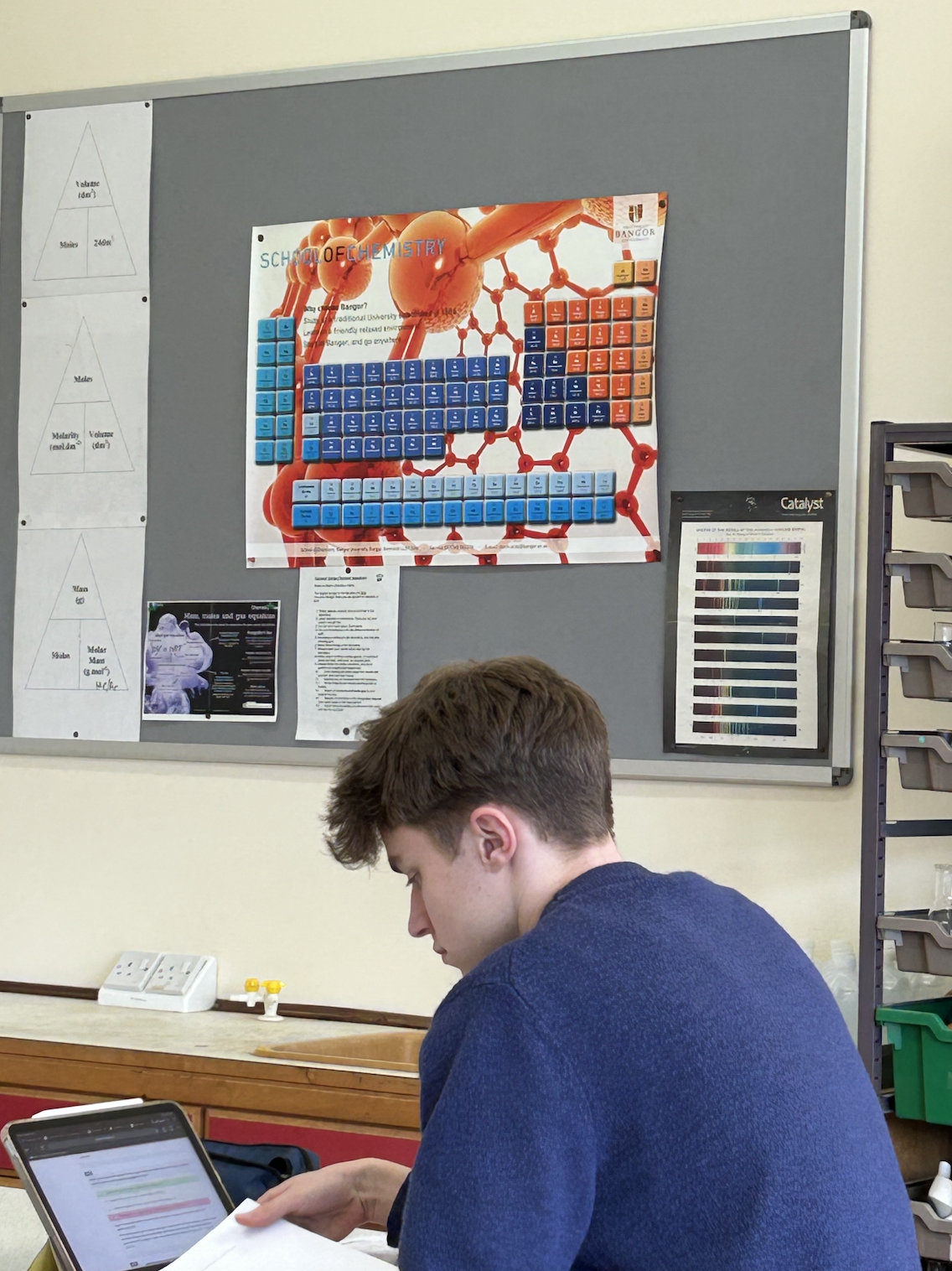
1. During your two year course try to ensure you understand what is being covered at the time rather than saying to yourself that you will learn that later when it is time to revise. Even if it has become part of your distant memory by the end of the course you will then find that it is much easier to re-learn when you come to revise.
2. Find a location which is quiet and where you can focus on revising without being disturbed or distracted by others.
3. Plan your revision by making a timetable and try to stick to it as best as you can. Divide your revision time up in to small packets and try not to spend more than about one hour on each of your IB subjects at a time. Factor in regular breaks and also factor in some sort of physical exercise and relaxation time.
4. Know what you need to know. Make sure you have a copy of the IB chemistry syllabus and check that you have covered (i.e. been taught and learned) all of its contents during the course. Don't forget to include the skills (Tools and Inquiry process) as well as the Structure and Reactivity parts of the course.
5. Summarise your notes on each topic in writing. This is important as writing summaries has been shown to help you retain knowledge better than just reading information or watching videos passively on a screen. You can also go back to these summaries which will help you recall the bigger picture.
6. If you find them helpful, use the flashcards to check your understanding and knowledge of important words, phrases and concepts.
7. Partner up with another student for some of your revision time. Explain areas they are having difficulty with to them and get them to help you with areas you find problematic. Having to explain a concept or answer to others is a sure way to expand your own understanding.
8. Make sure your teacher has given you access to all the pages on the site (i.e. including all the tests and short-answer questions). After each chemistry revision session test yourself with the quiz questions and use the explanations given as to why the answer is A, B, C or D and learn from any mistakes you make. Go over the short-answer questions and again learn from the model answers.
9. Familiarise yourself with the layout of Paper 1 (both Section A and Section B) and Paper 2 and practice doing some past papers in the allotted time. Use the mark schemes and model answers to understand what is needed to score all the allocated marks and learn from your mistakes.
10. Eat sensibly and try to ensure sure you get good undisturbed sleep each night.
Other sources
To supplement the above I've referenced below four of the many good articles you can find by searching online on how to go about revising before you take your exams.
(Image from the Morrisby website below)
Revision techniques from Birmingham City University
How to revise effectively from Nottingham Trent University
Techniques for exam revision by Morrisby