AI and Non-Original Materials
.gif)
Generative AI is Here for Film
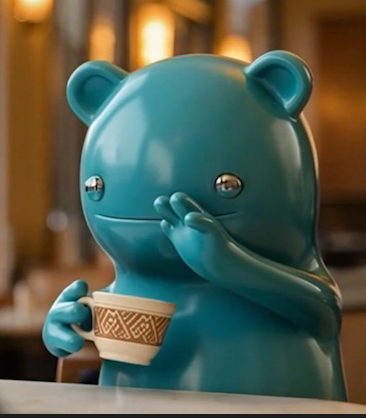
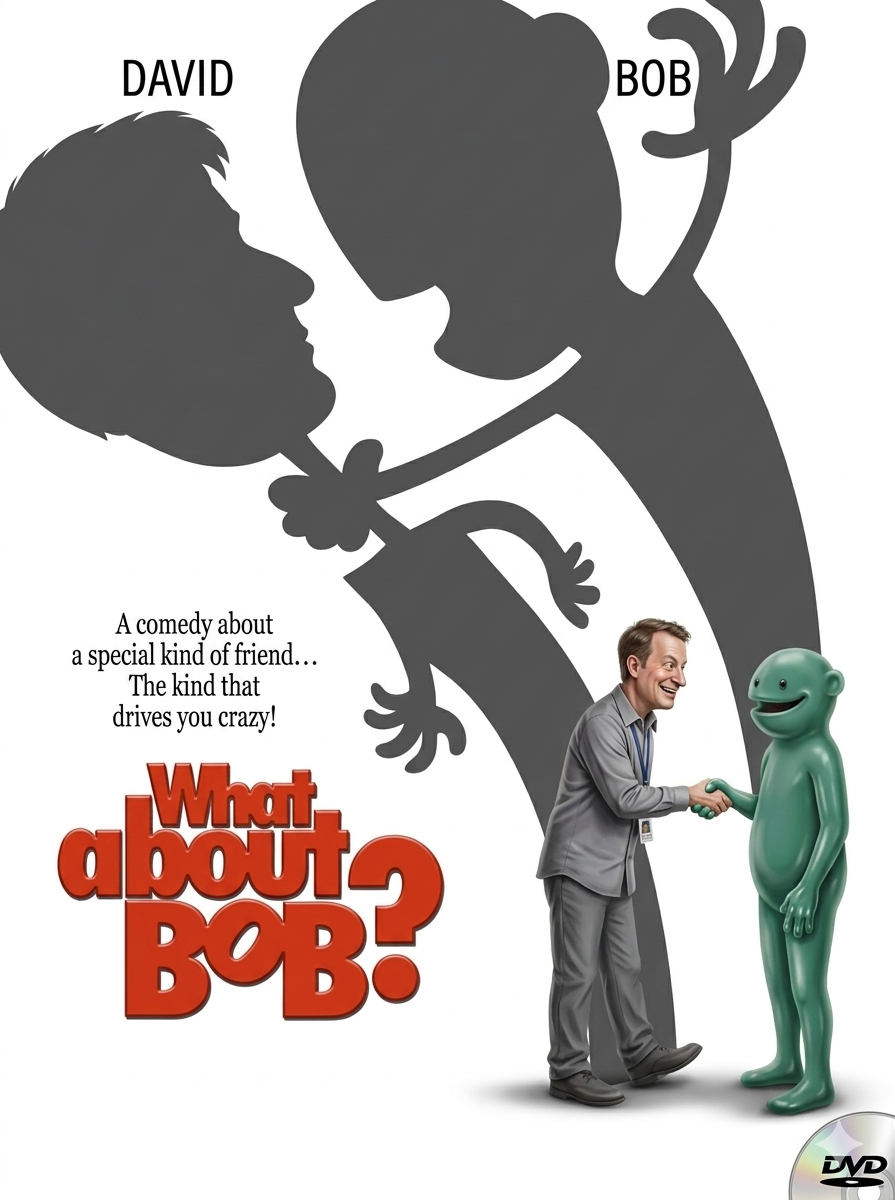
This is Bob. Bob is an AI generated character. You might love Bob, you might hate Bob, you might not really get what the big deal is about Bob… but Bob is here and he is not leaving.
Schools are buzzing about AI and it's impact on education. Your own school is probably having conversations about what it means for teaching and what it means for learning. There is likely a lot of anxiety about cheating, some discussions about appropriate use and perhaps some designs for integrating it into effective teaching and assessing.
I haven't heard as much about the impact of Generative AI, especially in the arts. IB has some very clear guidance, but again, this covers a more general use of AI as a research tool or writing assistant. I decided that in order to really explore the potentials and pitfalls, I would need to explore some Generative AI myself. Here is that exploration:
I have to admit; there is a certain drive (maybe a bit of FOMO) about diving in to investigate this new technology and figure out where it fits within contemporary filmmaking, even before it is refined enough to produce dependable results. However, I also think that we have to be ready to meet the students where they are; understand the tools that they might be learning outside of class.
This page is not intended to provide definitive answers about how an examiner may or may not view the inclusion of AI in a film portfolio, but rather to start a conversation.
What Does AI Mean for IB Film?
In their statement about AI in Education, the IB has made clear these two important points;
AI is a transformative innovation that will change our lives in ways that must not be shied away from.
AI work will not be accepted as a substitute for student work, even in part.
You can read more about what that means in terms of student work in a more holistic way on our AI and IB page. Here I want to explore what that means for generative AI and the creative and technical processes that are embedded in the film curriculum specifically.
Note that the Collaborative Film Project restricts all use of non-original materials. Whether or not AI could be considered ‘original’ is perhaps another conversation for another day; but this page will assume, for the purposes of IB assessment, that AI is non-original.
Non-Original Materials
The IB Curriculum Update in 2019 gave students the ability to integrate non-original material into Film Portfolio reels. When those revisions were crafted, the goal was to give students more flexibility to work in the ways that actual filmmakers work. This could mean leveraging outside music, images, even film clips that help them craft meaningful work; to the extent that it does not obscure or interfere with the performance and demonstration of their own work in a given role.
Creative Integration
This is how the film guide defines creative integration:
Creative integration refers to the selection, curation, manipulation, and/or alteration of the non-original materials, in order to effectively adjust and/or incorporate the materials into the film reel. The inclusion of non-original materials in the film portfolio is intended to help to support the effectiveness of the student’s own original work, in line with their filmmaker intentions. Non-original materials must not be used as a substitute for student creativity. Thus, any decision to incorporate non-original material within a chosen film production role must be clearly linked to filmmaker intentions, and the explanation of how the materials have been creatively integrated is likely to include consideration of how and why these materials were required, the methods, techniques and/or processes undertaken to integrate them, and the ways in which these have helped fulfill the stated filmmaker intentions.
[p.62]
The phrase creatively integrated presents both a fascinating opportunity and a significant challenge to understanding what it means to work with AI. In some ways, co-creating with AI is in itself an act of creative integration. AI creations are a complex juxtaposition of original and non-original user prompts and synthesized outputs that are simultaneously original (as in they did not previously exist) and non-original (as in they are trained on pre-existing material and, at the very least, co-created by a machine). Can that work that we might do in developing textual and visual prompts as well as curating from a variety of automated results be an act of creative integration itself?
Explaining the use of creative integration is necessary for use of non-original material within the context of a relevant film role is necessary. Non-original material that doesn't materially affect the technical or creative execution of the role does not need to be justified. Let's look at how that might look in both situations.
Within the Role
In the intro video I asked a question about how a director might use AI to gain some more freedom and control over mise-en-scéne.
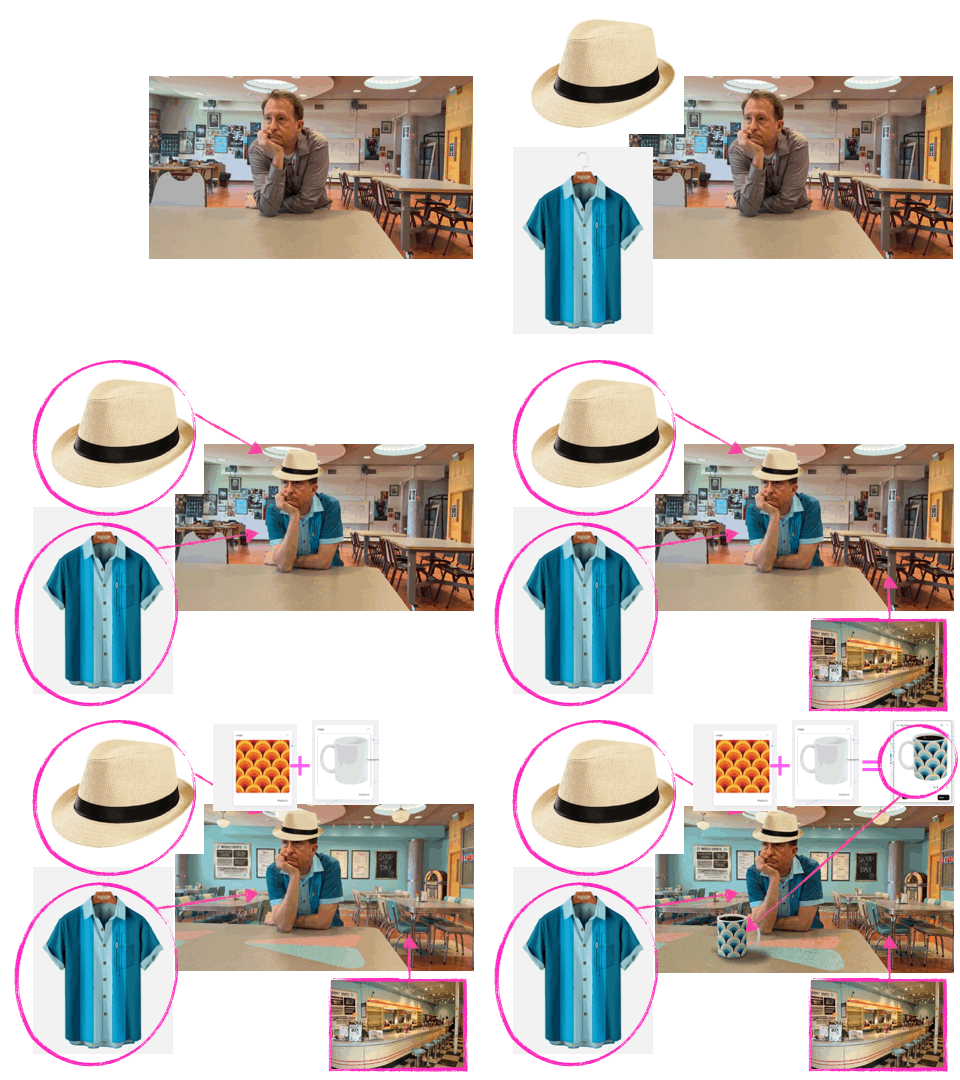
This animation demonstrates how they might use AI to alter an existing scene; allowing the student to consider a more complex and flexible approach to an existing space. Notice how the physical space of the room remains, but is influenced and transformed by the aesthetic of the diner. Notice also that small details, like the mug, can be changed to match the aesthetic of the room, the costumes, everything. Interestingly, the hat doesn't work terrifically well, but I wonder if wearing a brimmed hat as reference would have helped the AI integration better. So when it comes to non-original material; from a Creative Integration perspective, the intersection of a real and imagined space might create fascinating opportunities for a student to discuss how their filmmaker intentions led their choices.
For a slightly deeper dive, the video below describes how to use a workflow in RunwayML to bring these scenic elements together.
As you can see, the creation of an AI manipulated video is more than just typing in a simple prompt.
Is This Creatively Justified?
This checklist might be useful for students in all uses of non-original material, but especially when co-creating with AI;
- How does the use of AI help me achieve my filmmaker intentions?
- To what extent is the use of AI directed by my own creative vision?
- Is this something that I could not have otherwise realistically achieved with practical filmmaking techniques?
How Much is Too Much?
While the Film Guide does not to put specific limitations on the use of non-original material (or by extension the use of AI assisted filmmaking), this is what the guide says about appropriate usage:
While there is no defined limit on the amount of non-original material a student may use in a submitted film reel, students are strongly reminded that assessors expect the majority of audio-visual materials to be created by the students themselves, and the over use of non-original material in the film reel is likely to be self-penalizing. Likewise, the explanations required in the portfolio pages for the excessive use of non-original material are likely to limit the discussion of other important matters related to a student’s creative choices and their overarching filmmaker intentions.
[p.63] (emphasis mine)
Although the IB Guide is intentionally vauge about what ‘over use’ of ‘non-original’ work might mean, this qualification becomes even more complicated when we introduce the use of generative AI.
AI creates an uncomfortable grey zone for the word original.
Example: Lets say two students want to include an arial view of their city for an establishing shot. One finds a creative commons licensed video and drops it in the timeline (citing its source, of course). The other student workshops his idea; he draws what he wants the image to look like and uses Nano Banana to turn it into an image, making changes and edits, and then uses Lumalabs to transform his image into a shot, further describing camera movements, film stocks, etc.
What here might be the quantitative difference between the ‘amount’ of non-original material here?
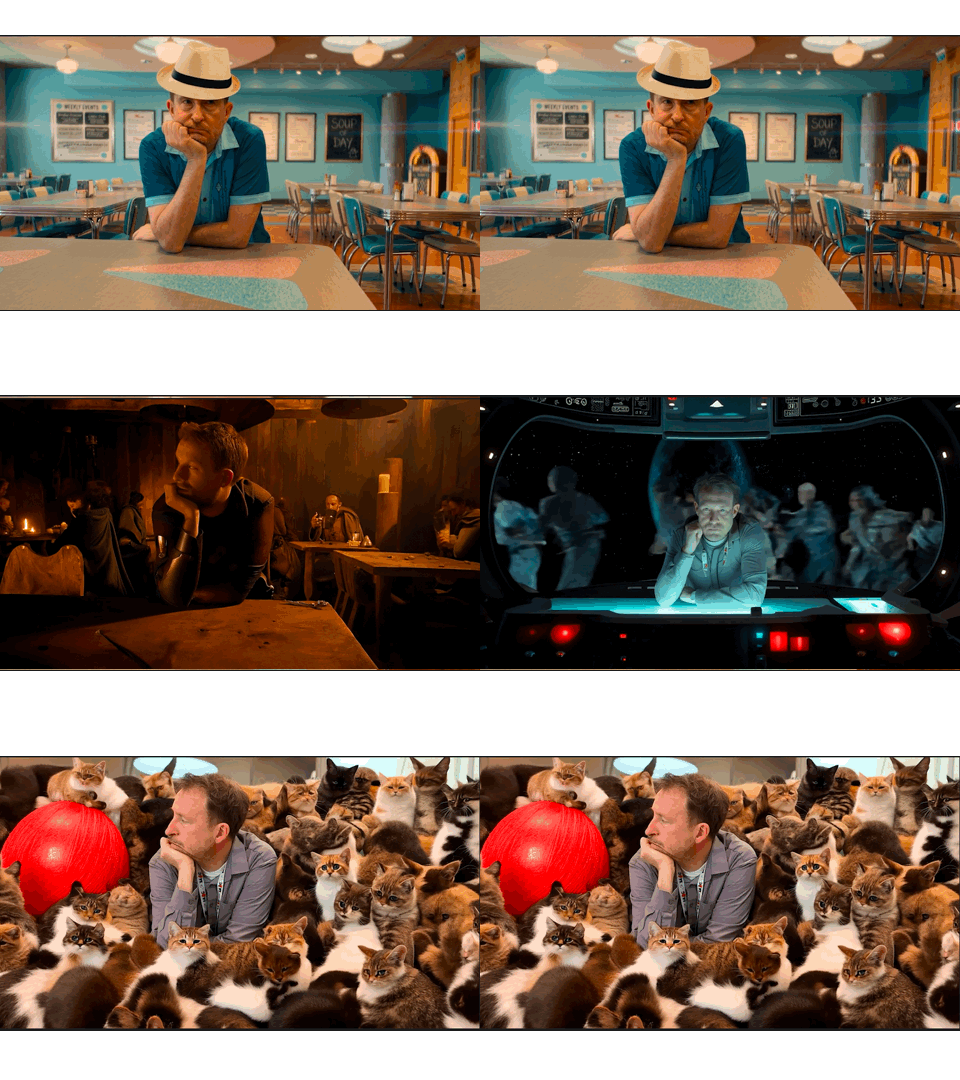
Thinking of some of my own examples from the introduction video above;
We might conclude that the physicality of the 60's Diner is enhanced by an AI generated, but filmmaker led, aesthetic. Perhaps that would be ‘acceptable’.
But what about the space station, or the Middle Earth type tavern?
Is altering the entire setting too much?
How many cats is too many cats?
What About Bob?
Meet Bob. Bob represents a further difficulty in understanding the relationship between ‘original’ and ‘non-original’ content when it comes to AI. Bob began as a (very poor) sketch that I made, so he's obviously original… but he's been reconstructed by Nano Banana in a three dimensional form that has been trained on other images… so he's clearly not original. But bob's movements, that little head jiggle he does…? That's based on my own movement, that I created with my own head. So it's original. Or is it? | |
The Evolution of Bob
Bob started out as a simple sketch, but now he wants to be an actor. If we're going to consider how we might give Bob and his fellow AI brethren some roles in IB films we might first want to consider how his existence impacts the ability of the students to meaningfully address their filmmaker intentions.
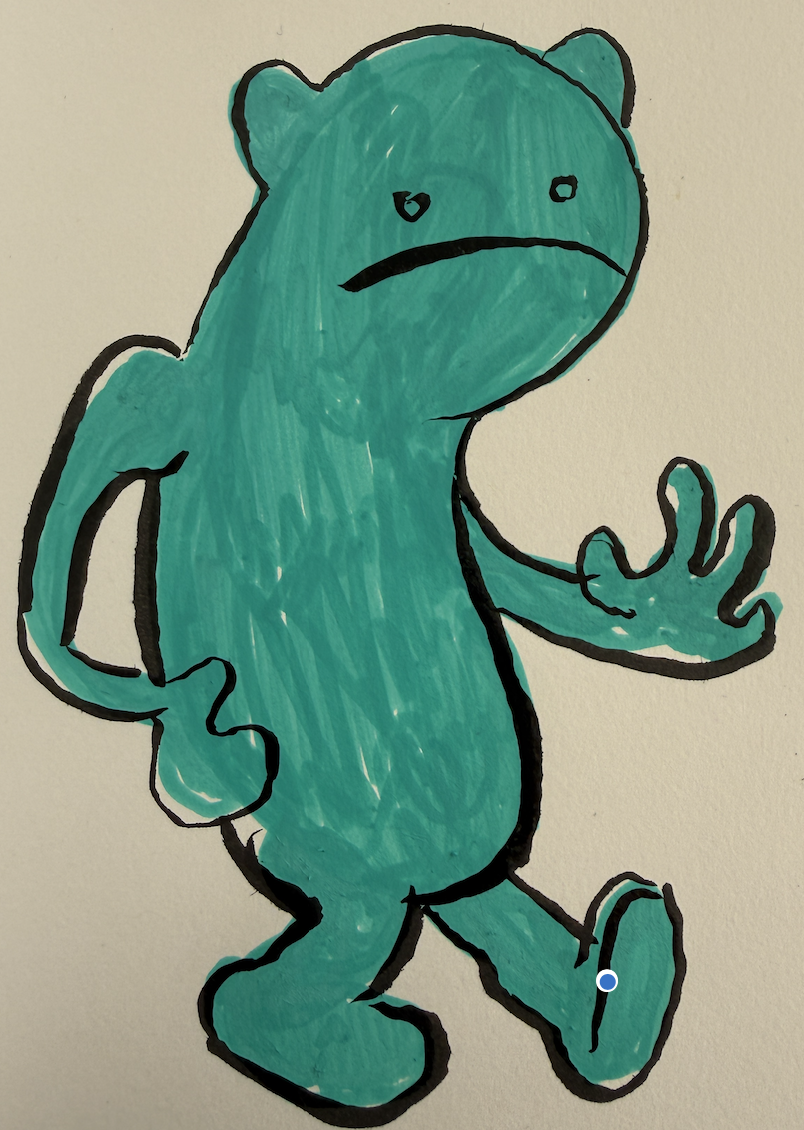 | 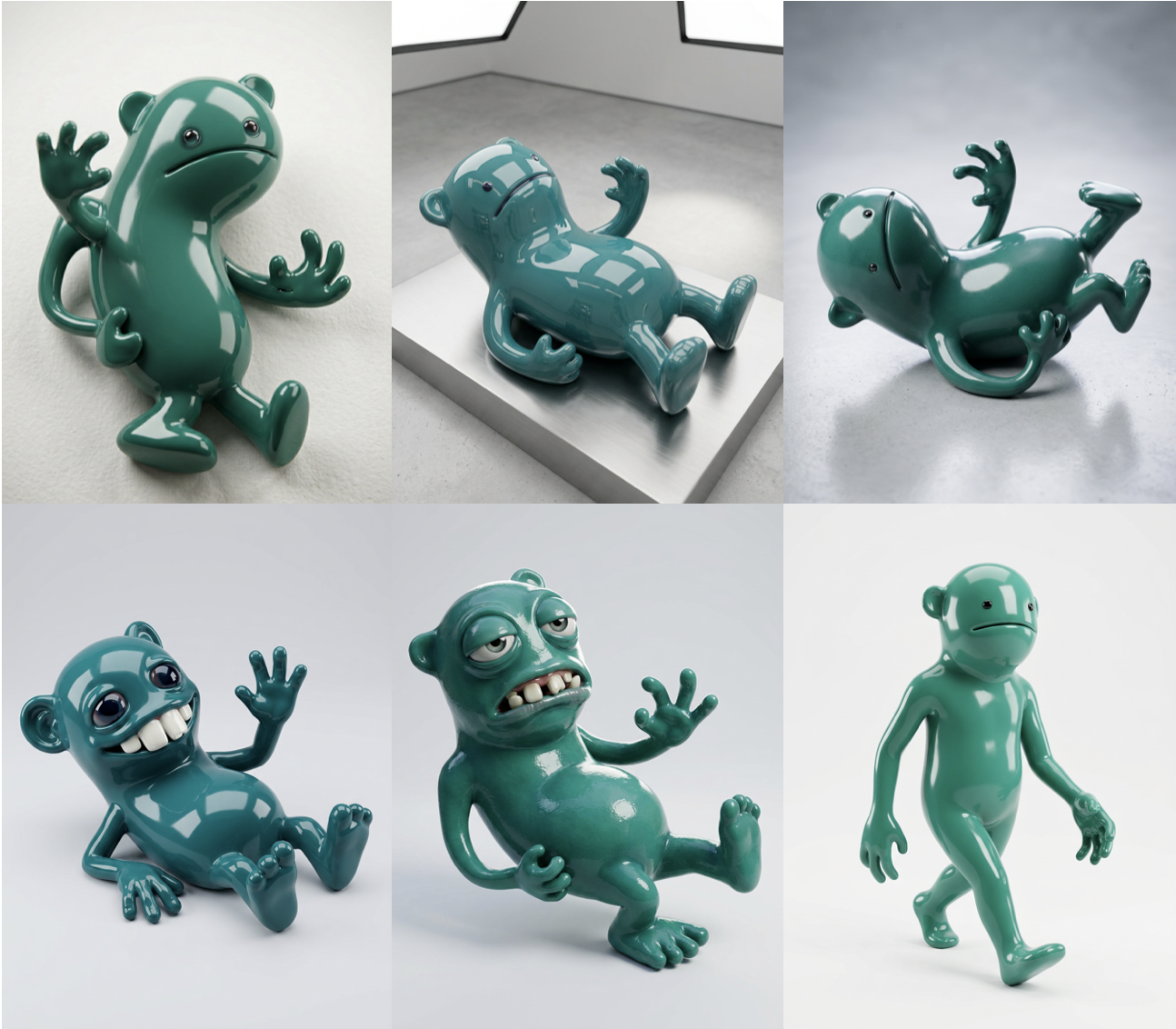 |  |
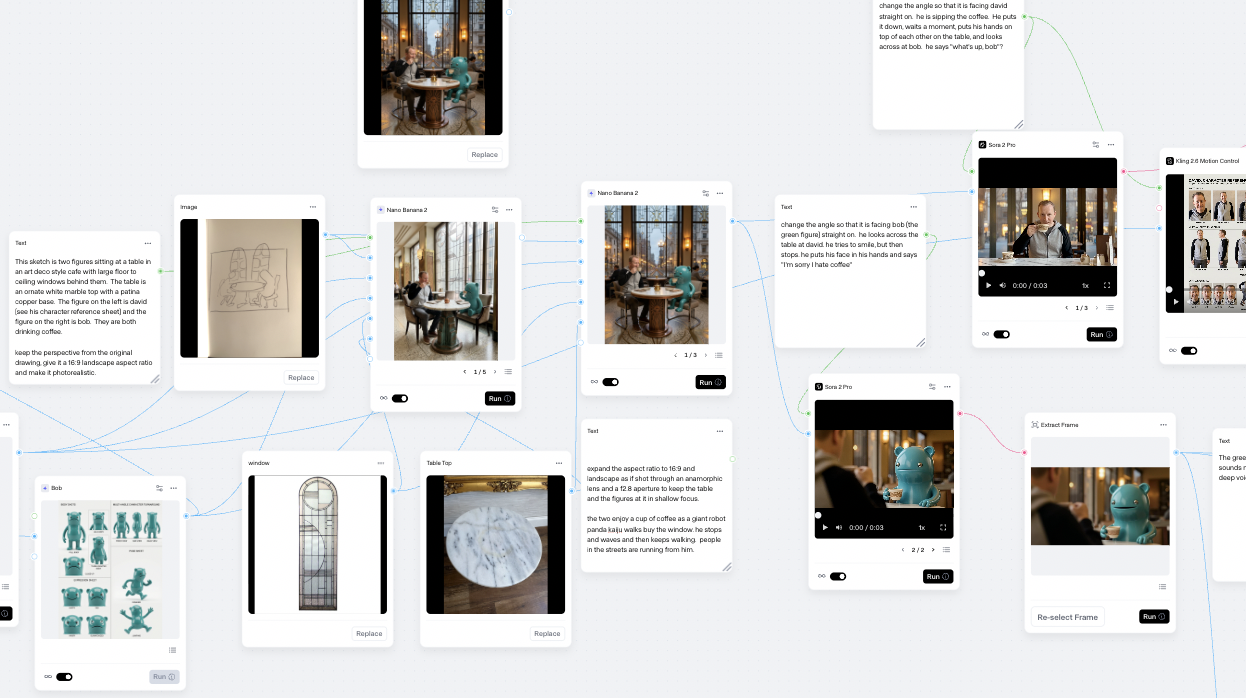
To bring Bob to life, I created another workflow, starting with the sketch above and my original short video of me at the table.
To make the ending sequence, I created a second workflow with different parameters. Here, I designed the space, the props, and tried to give Bob a little personality. This workflow is a mess of experimentation, but it was a worthwhile challenge.
In wrestling with the technology I pulled back on some of the ideas in the scene;
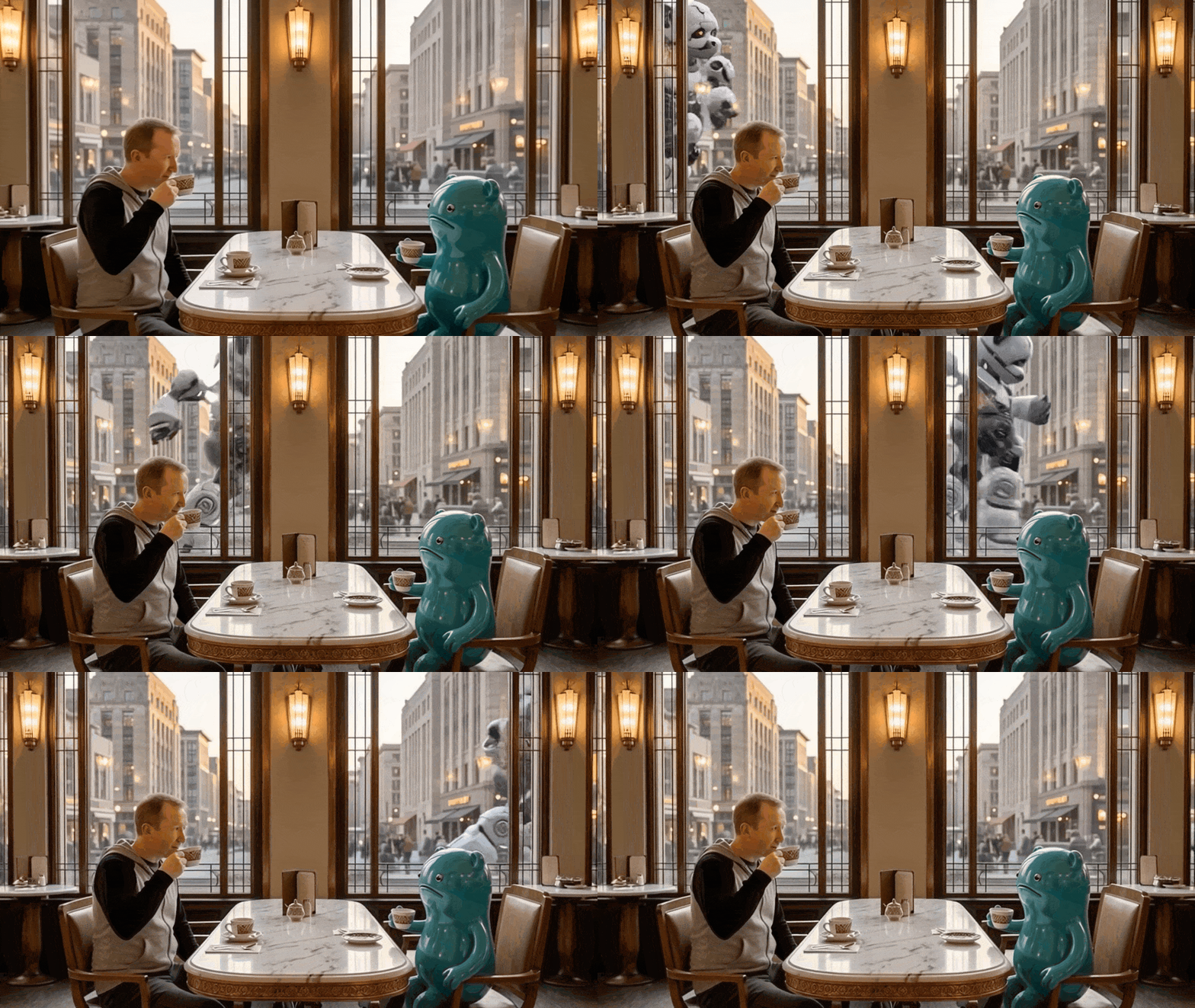
I can't deny that, especially in this scene, there was no shortage of creative friction. This included hours of trying to avoid uncanny valleys, six fingered doppelgängers, and worse. Just like any other creative endeavor, it involved a great deal of trying, failing, adapting, experimenting, and trying something again in a new way.
I am impressed with how the running Pandabot makes the screen shake… but that might also be an element of AI overreach. The shaking screen was not my idea.
Drawing the Line (Literally)
At what point might we draw the line for use of unoriginal material?
Is it in casting Groucho Marx as a supporting actor?
This feels like it might be, in many cases, a bridge too far for me. It is arguably the most impressive capability that Runway offers. Take a photo, and annotate your directions right on it. It's a little hard to read (for us measly humans) but in this example, the text near the red circle reads;
‘camera zooms into his eyes for a close-up. he looks back at the guy dancing on the bar’.
The black text is easier to read and instructs the man in the hat to place a coffee on the table. Notice that the black circle and arrow demonstrates how he should do it as well. The last bit of text asks the man in the back to jump up and dance on the bar; the AI misunderstood me there (or I wasn't clear enough) but overall this is a pretty impressive interpretation of my ‘filmmaker intentions’. Notice also how when the camera pushes in, the whole background drops into shallow focus.
To me, this may be where the AI use becomes excessive, although I wonder if it is used in a limited way or if there isn't some interesting case for using this technique as a way of pre-visualization for a planned sequence.
So what is the final takeaway for ‘how much is too much’?
There is no easy answer, no correct percentage; however, if AI is doing the heavy lifting here, the student has ceased to be the filmmaker.
Fix it in Post?
No don't fix it in post! These words should make an editor's ears bleed… planning is an essential part of filmmaking. The better the plan, the better the execution.
…but mistakes happen.
In the introduction video above, we can see how much control we might have over the image in ways that would have been both time and cost prohibitive in the past. What could it look like if we used AI just to ‘save’ a scene?
Part of the friction in using AI is getting it to do what you'd expect if you were dealing with a real intelligence. If you look at the two images below, there are some impressive similarities, and glaring differences. It matched my original ‘costume’ (what I was wearing that day) pretty well; but the face… it's still not quite right and feels like its circling around the ‘uncanny valley’. This is not to say that the technology isn't there yet, I may not be prompting it with the expertise necessary, and different AI platforms seem to work better for different situations and solutions.
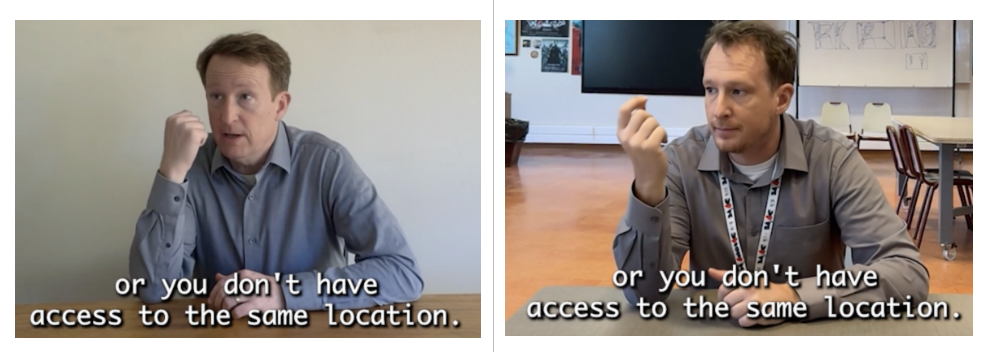
What if that one important worm's eye view angle shot got corrupted?
…I don't even have one Jaws poster but I kinda like the fact that Nano Banana thinks I should have two.
….Ok, maybe we can ‘fix it in post’ if we have to.
Outside the Role
There are of course, many other ways that we might consider using AI in ways that are not within the purview of various roles. Here are a few ways that AI might be used in ways that should always be cited, but only creatively justified by the relevant role. This list is not meant to be exhaustive, or even complete;
| AI Generated Non-Original Material | Roles that need to justify how AI has been creatively integrated: | Roles that need to cite usage: |
| AI generated soundtrack | Sound Designer | All Roles |
| Footage that has been manipulated by AI. | Director, Cinematographer | |
| AI generated transitions | Editor, Director, Cinematographer (if for example, the transition includes a camera movement). | |
| AI generated characters | Director, Cinematographer |
Citations
It is important to cite all non-original material. Although there is no standardized way of citing Generative AI yet, if your students do use it, they might want to stick close to an MLA type format. For example;
Runway ML. AI-generated video (prompt: “Man in back delivers coffee & jumps up on bar. Closeup on Man in front.”). 2026.
Nano Banana. AI-generated image (prompt: “create a highly polished photorealistic 3D image of attached sketch. It should appear on a white background.”). 2026.
Conclusions
I set out to explore Generative AI so that I might better understand what it can do within reasonable time and financial limits (some of these programs are pricy). I wanted to see where it could augment a student's creativity and vision. In the process, I also wondered if we may need to just play with it so we could just even understand when a student is using it inappropriately. The use of AI is, for the most part, pretty obvious now; but will it be just as obvious next year? Will we always recognize it when we see it?
If you're walking away from this page with more questions than answers, I think that sounds about right. I think that's where we need to be to embrace this moment. Trying to disentangle what is possible with what is meaningful, what is original with what has been appropriated (or even stolen) by AI is a herculean undertaking.
What is certain is that a portfolio reel must demonstrate a high level of technical and creative skill in a chosen role independent of any non-original material, no matter its origin.
Therefore, the foundations, the actual, practical filmmaking skills should in no way be obscured by AI usage. In addition to being the skills that the students are being assessed on, working in creative capacity in the physical world cannot be replaced as a meaningful experience for students and artists.
As educators, our primary commitment is to the creative, intellectual, technical, and aesthetic education of our students. While many of us may prefer to rely entirely on more traditional methods, we must acknowledge the new and transformative technology that will influence their future work. As I was writing this page, the Runway AI Summit came to my attention. This conference on Generative AI includes discussions with major players from companies like Lucasfilm, Paramount, and EA about how AI is reshaping the industry.
That doesn't mean that by any stretch of the imagination we need to rush in and embrace these new tools in the classroom. We certainly don't want to lose our students in either spectacle or the significant time and effort it takes to prompt something well at the expense of our core exploration of film language. However, we should at least understand the landscape as it rapidly changes around us, and guide our students with intention.
Wherever we land on how much we include (or avoid) AI, the overall concern remains the same; we need ensure that students creativity is the focus of the assessment. If and when AI is used, it must be limited, and clearly operate within the parameters of the non-original material guidance and be creatively integrated into their work (or not impact the assessed role).
It may be useful to now revisit the two main goal posts that IB presented about AI:
AI is a transformative innovation that will change our lives in ways that must not be shied away from.
AI work will not be accepted as a substitute for student work, even in part.
As teachers, we are best placed to know our own students, their work, and use our own best judgment to make sure that they do not overstep the mark.
AI Acknowledgements
The Generative AI used to create the videos on this page mostly came from Nano Banana and RunwayML. Lumalabs, and Deevid AI were also used as points of exploration. Gemini was, on occasion, used to help craft prompts for those applications. Special thanks of course, to Bob.
Human Acknowledgements
These pages usually don't have a concluding ‘thank you’ paragraph, but I'm not an expert on Generative AI and asked for feedback from a number of sources to challenge my thinking and provide feedback. I don't claim to have the answers, but I wanted to make sure that I was, at the very least, asking the right questions. To that end, I relied on several educators whose wisdom and experience has helped me refine these ideas. Thanks to Thomas Ferrebee, Christopher Winchester, Evan Weinberg, Seth Ruef, Lian Anson, Alex McMillian, Curtis Powell, and Paul Lloyd.
Keep the Conversation Going!
As always, we'd love to know what your thoughts are about the educational possibilities, pitfalls, your hopes and your fears around AI. Let us know in the comments below.