Memory & Chilean Cinema
Change is hard. This summer, my family packed up and left Santiago, our home of three years, threw a b’not mitzvah for our girls and their close friend together, visited family, did tons of paperwork, and landed at our new school in Thailand.
Among the many elements of excitement and regret that come with moving, I felt like I never got to know Chilean cinema as much as I would have liked to. But upon reflection, that’s not entirely true. Looking back at the past three years (and even before that), I realized that I had fallen in love with Chilean Cinema without noticing.
I’d like to share with you some of these films and recommend some of my favorites to you:
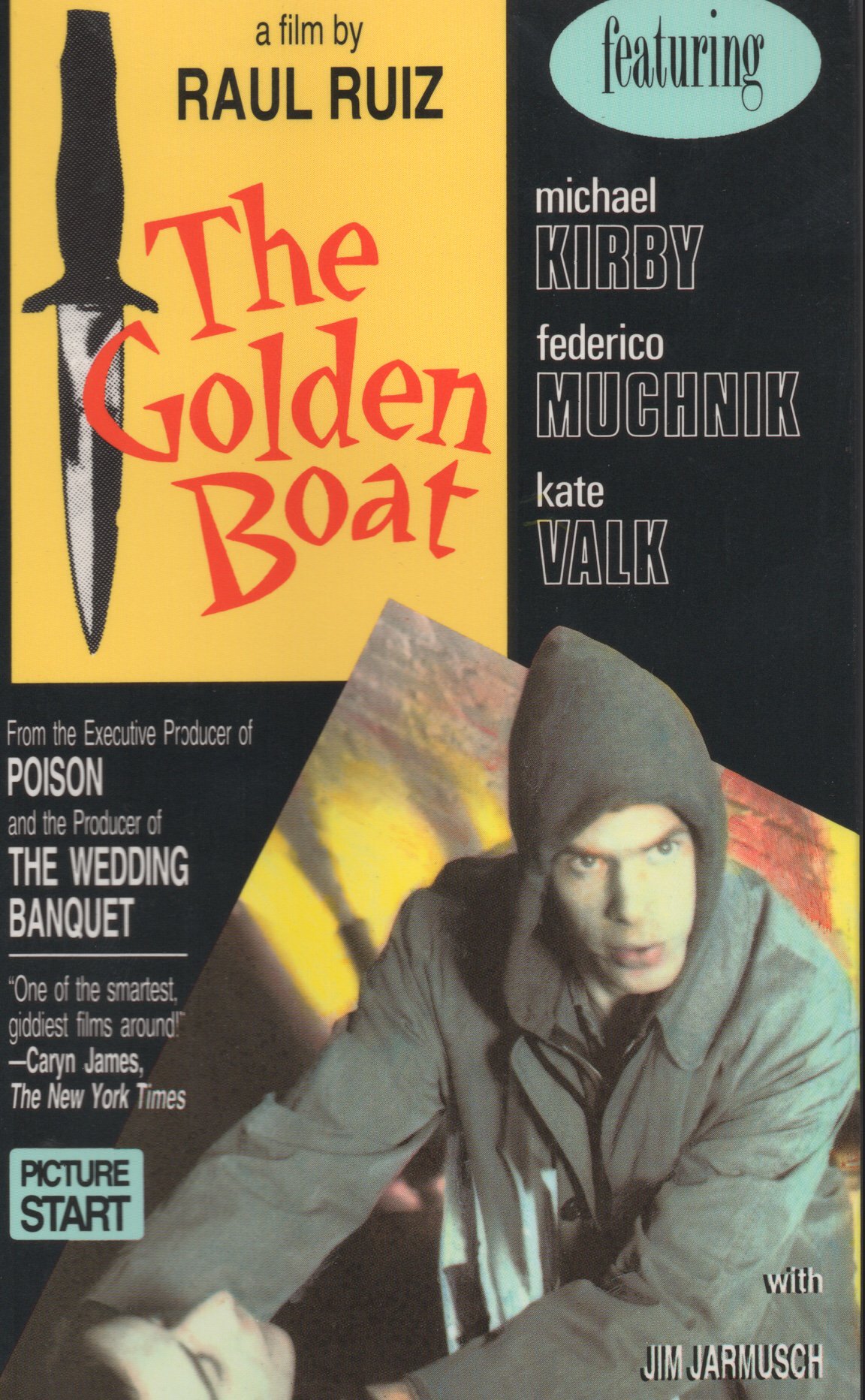
Ironically, one of the first non-mainstream films I’d ever seen was The Golden Boat (1990) by Raul Ruiz. As a teenager, my friends and I used to wander around in downtown Philadelphia without a goal in mind. On one occasion we saw an interesting poster for a film we hadn’t heard of and wandered into The Ritz Cinema. The Golden Boat was one of the first. I was intrigued by the low budget, the blatant disregard for film conventions and most of all the absurdly uncomfortable plot. It all starts when Israel, a philosophy student, finds a man who is dying from stab wounds… but he doesn’t die, and they go wandering the city looking for the man’s estranged son. As the man turns about to be a serial killer, there are a few casual murders along the way as well. The film is not restricted by logic, story arc, continuity editing; it’s not even shot with particularly compelling camerawork. It seemed to be governed by only by its own uncomfortable aesthetic; which made me understand and see film in a different way entirely.
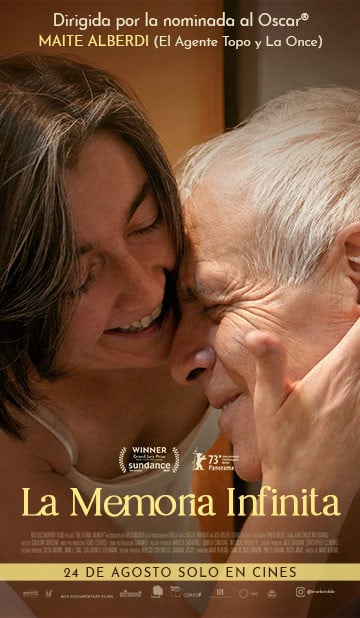
However, my love of Chilean film really began during a trailer before a screening of Oppenheimer, surprisingly enough. I am not ashamed to admit that there was something about the trailer for Maite Alberdi’s La Memoria Infinita (The Eternal Memory) (2023) that brought me to tears. At the time, I couldn’t speak more than a word or two of Spanish*, and yet the images on the screen still spoke to me. When It finally came to streaming services, I watched it immediately and was so moved by the story of her father, Chilean journalist Augusto Gongora. The film follows his struggle with memory loss, and the impact that has on his wife and daughter. In parallel to the loss of his own memory, Alberti tells the story of his life’s work to maintain the memory of Chile’s history during the Pinochet era. It is one of the most thoughtful and touching documentaries I’ve seen in recent history.
| Also be sure to watch her earlier film El Agente Topo (The Mole Agent )(2020)in which she employs an older man to go undercover at a nursing home to investigate some possible elder abuse and petty theft. This is another heartwarming film about what it means to struggle with memory and loss and was also the inspiration for the fictional American TV show Man on the Inside (2024). | 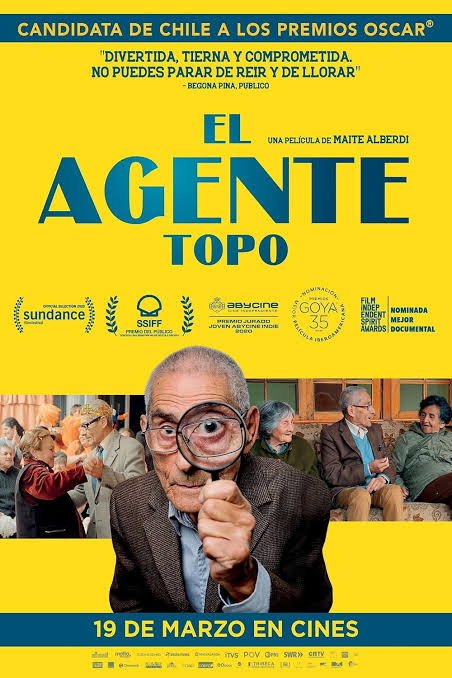 |  |
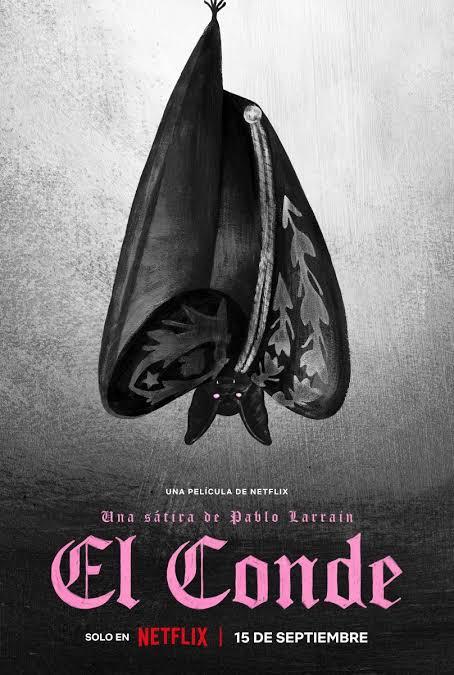
Pablo Larrain is another Chilean filmmaker whose film El Conde (The Count) (2023)premiered on Netflix while I was living there. A gruesome, comical, and completely unique take on Chilean politics with a vampiric version of Augusto Pinochet still haunting the country.
Larrain's No (2012 is also a powerful (and more grounded) look at Chile’s referendum on the end of the dictatorship.
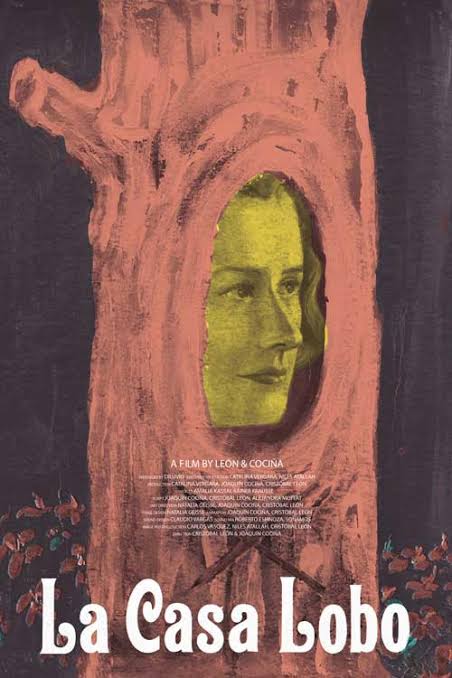
Finally, while horror movies don’t often scare me much, La Casa Lobo (The Wolf House) (2018) completely unsettled and fascinated me. A stop motion animation, The Wolf House fictionalizes and turns into dark fairy tale the true story of a child’s escape from the Colonia Dignidad, a German cult in southern Chile that reportedly murdered dissidents during the Pinochet era and abused children. There is an unrelenting sense of horror to the film, as animators Cristobal León & Joaquín Cociña use claymation techniques to silently and repeatedly break down and rebuild the reality of the story. I don't think I've ever seen anything quite like it.
As a film and art teacher, I also appreciate that the Leon and Cocina filmed most of La Casa Lobo in various museums around the world, sharing the process of making the film as an art in itself.
It should be obvious now how deeply many of these films connect to the cultural context and legacy of the Pinochet era. I'm no expert on Chilean Cinema (and it could be just the films that I've found) but, they seem to both examine personal and political identity through the concept of memory; for all the importance we place on it, and for all of its complexity and unreliability.
Leaving a place that you have come to love is hard; it is wonderful that cinema can take us back there whenever we’d like.
Memories, it seems, are not as reliable.
*I can speak and understand a little more now, but don't try to have a conversation with me.