Revising Paper 2 texts

It is sometimes mistakenly thought that English is a hard subject to revise - or even that you can't revise for it. Whilst it may well differ in comparison with subjects characterised by a lot of prescribed, specific content that you have to memorise, English Literature nonetheless contains a lot of material you need to get to know - especially in reference to the texts for Paper 2. Suggestions are made below as to how you might go about transferring the details of your texts into your long term memory, and in ways that should make them stay there.
1: Using Flashcards
Self-quizzing over time is a very effective way to fix details in your long- term memory. 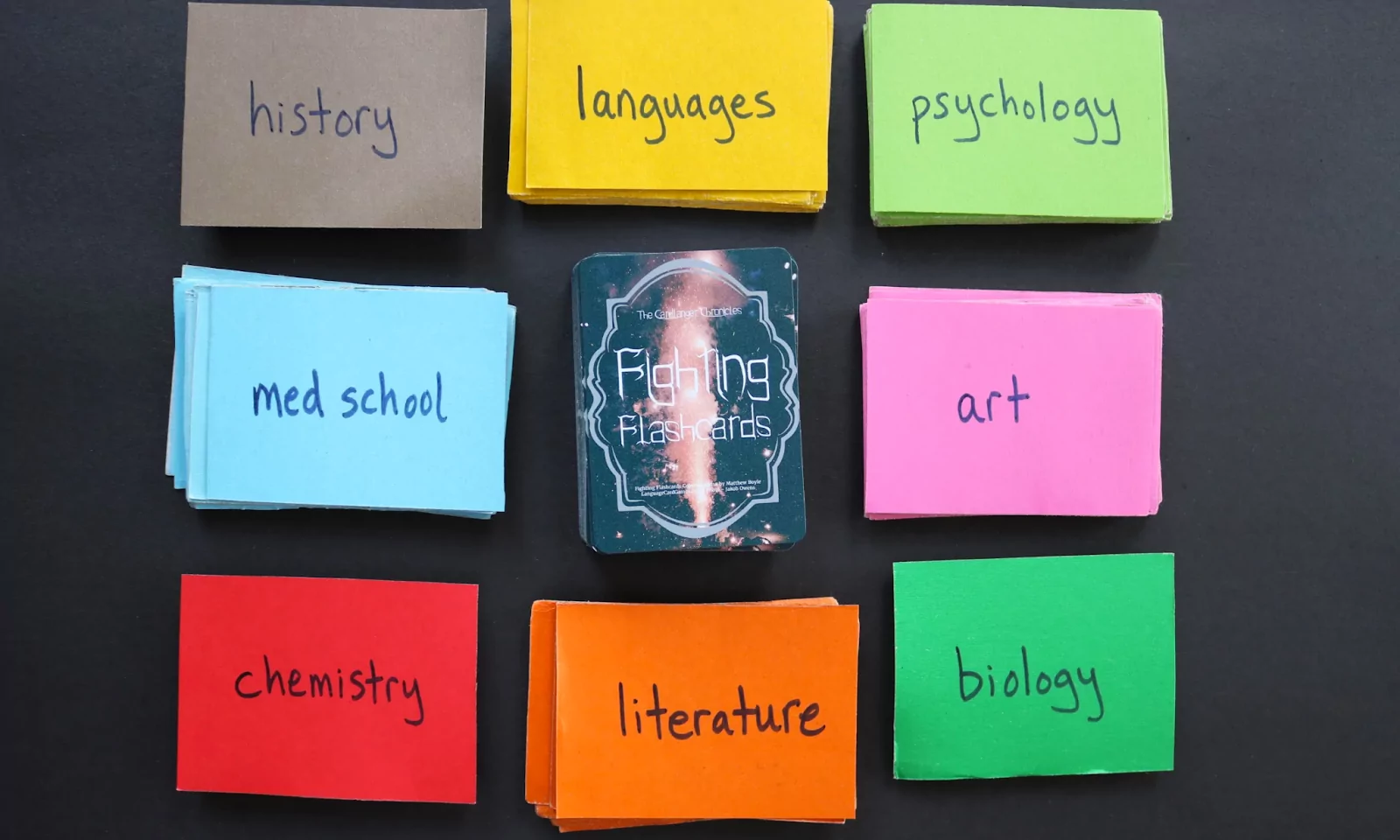 Using Flash Cards is a highly effective and efficient way of doing this. The basic principle (that you probably know already) is to write content on one side of the card and then a word or phrase on the other, so that you can self-test in a relatively straightforward way. You need to consider the nature of the text and elements of it that need to be committed to memory but the following suggestions should help give you inspiration:
| Side A | Side B |
|---|---|
| A single word e.g. character name or relationship | Key quotation/s that illustrate points about the character or relationship |
| Key events for character x | Top 5-10 moments or events that illustrate the character's traits / adjectives to describe the character / |
| A key concept e.g. setting | 5-10 main points you would want to make about the way the concept is used + illustrative moments in the text |
| Literary term/s | Definitions of the term/s |
| Name of a poem / short story | Key features of the poem - aspects of content in one column / literary features on the other |
| Key quotation | An explanation or analysis of the quote - split into 3 key points: 1: what elements of craft does the quote illustrate, 2: what is interesting or impactful about these elements, 3: why the quotation is important to the text from which it comes. |
| Theme or motif | Two columns for two texts: 5-10 points of areas that could be used to analyse how the theme or motif is presented in two texts. This means thinking comparatively. |
| Statement of genre or literary form | A list of important characteristics of that genre |
| Topics taken from previous exam titles | If I had to write comparatively about this topic the key things I would explore are... |
Click here for examples of flashcards that you can use to test your knowledge of literary terms
2: Knowledge organisers
A knowledge organiser is a one page summary of any or all key facts that you want to remember about a text, character, theme or setting. Thinking about how to divide the elements up into different categories is important, and you might want to consider introducing visual elements such as colour or pictures/sketches as visual presentation of elements can help you to remember them. (The posh term for this is dual coding).
An example of an knowledge organiser can be viewed in the drop down below. This is one that a teacher has written - you prefer something less detailed, and of course it is up to you what content you want to include.
3: Graphic Organisers
Graphic organisers reflect some of the thinking outlined in the video above on Dual Coding. We know that our brains learn through encounter with verbal and visual information; using both channels at the same time can promote understanding and memory retention.
Dual coding is the process of blending both words and pictures while learning. Viewing those two formats gives us two different representations of the same piece of information. This works because visual and verbal information are processed differently, which when both viewed simultaneously improves learning - hence the term “dual coding”.
This helps form a stronger connection and gives the information a better chance of cementing into our long-term memory, as well as helping us to recall this information more easily when needed. 
Tests have in fact shown that revising in ways that bring visual and linguistic information together can result in a 50% increase in memory retention.
Click on the icon below to see examples of different kinds of graphic organiser.
Graphic organisers present the relationships between different kinds of information in a clear, accessible, visible manner. They might take the form of mind maps, which group information into categories and identify things that carry more status than others; flow charts present connections between elements in a sequence; Venn diagrams present points of similarity and difference. Consider some of the following possibilities when you are preparing revision materials:
| Type of graphic organiser | Potential use |
|---|---|
| Mind Map |
|
| Flow chart |
|
| Venn Diagram |
|
Click here for more information about graphic organisers and examples of ways they can be used.
4. Summarise
Summarising information is in general terms an effective way of both making and then learning revision materials. Part of the reason for this is that in summarising information you have to think carefully about what is most important or most significant in a text or a section of text, and in making those decisions you are activating parts of your brain that are likely to produce changes in your long term memory. You could engage in summary in different ways, and choose to summarise different kinds of information. One of the most important things, therefore, is to reflect on aspects of the originals text that can be represented in summary form, and also the way/s in which this information can be displayed. You could summarise, for example:
- Individual chapters of the novel or scenes from the play you have studied
- The most important features of an individual poem, or a section from that poem
- Elements associated with the presentation of a particular character, setting or theme
- The way in which a character develops through the course of a text
- The way in which a particular feature of the text changes or develops
Click on the drop down below for a (downloadable) example of a chapter summary proforma:
5: Plan
 The suggestions above have by and large been concerned with preparing your revision materials and using them to transfer knowledge into your long term memory. But of course the final, and no less important stage, is about applying that knowledge and so develop the skills associated with actually taking the exam.
There are many things you can of course do at this point, not the least being actually writing timed essays. But these take time (!) and may not fit into a 30 minute revision session. So if you want to focus on how to organise a response to a Paper 2 question, consider the following, which could easily be done in 30 minutes:
- Decide which question you want to answer by way of practice
- Give yourself 10 minutes or so of time to make notes on WHAT, HOW, WHY? This means notes on where the topic presents itself in two texts and how it compares; relevant authorial choices; the importance or significance of the topic e.g. in terms of theme, development of narrative, presentation of character or something else.
- Decide on your main line of argument
- Use the proforma below to develop your thinking around two key principles:
- What are the topics of each paragraph?
- What are the main points you want to make in each?
- Consider what you could say in in your conclusion that is not just a repetition of things you have already covered.
 Download a copy of this template in Word here