The 2026 Nobel Prize for Chemistry
The Nobel prize for Chemistry this year celebrates the pioneering work of Henri Kagan and Kenso Soai on homochirality - the synthesis of just the required enantiomer of chiral compounds and not the mirror image.
The current syllabus (S3.2.7) requires students to describe and explain a chiral carbon atom which gives rise to stereoisomers with different optical properties and to recognise a pair of enantiomers as non-superimposable images. It goes on to state that the terms "optical activity", "enantiomer" and "racemic mixture" should be understood and know that the enantiomers behave differently in different chiral environments. The problems associated with the use of thalidomide were actually part of the Pharmaceutical products & drug action and Medicines and Drugs options on previous syllabuses and many teachers will use thalidomide as an example to show the behaviour of enantiomers in different chiral environments.
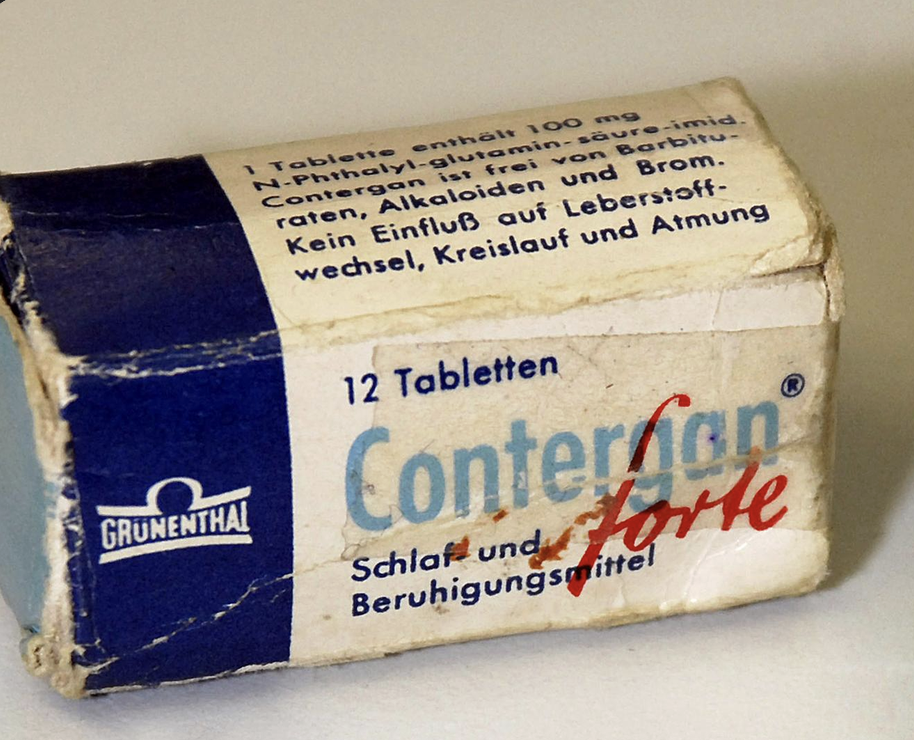
Thalidomide (trade name Contergan) was prescribed to many pregnant women in the late 1950's and early 1960's as it helped to alleviate ‘morning sickness’. It exists in two enantiomeric forms as it contains a chiral (asymmetric) carbon atom.
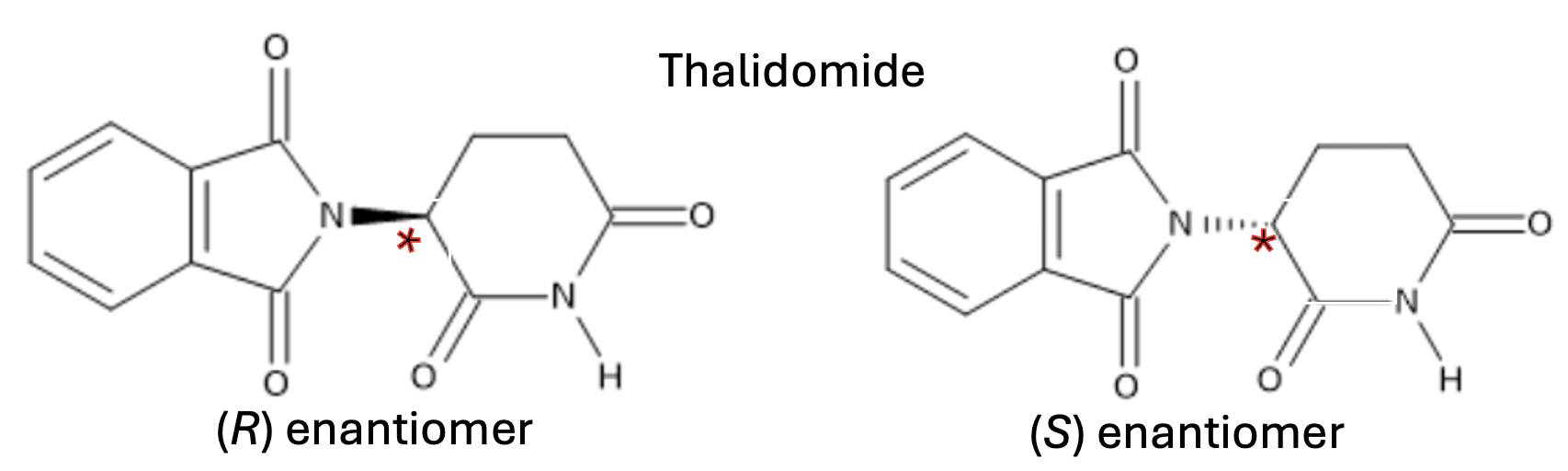
The red asterisk shows the chiral (asymmetric) carbon atom.
One of the enantiomers (the (R) form) in a racemic mixture of thalidomide gave relief for ‘morning sickness’ but the other enantiomer (the (S) form) caused severe birth defects and more than 10,000 children were born with a range of deformities. The drug was eventually withdrawn for use during pregnancy and the regulations involving the testing and use of chiral drugs was changed.
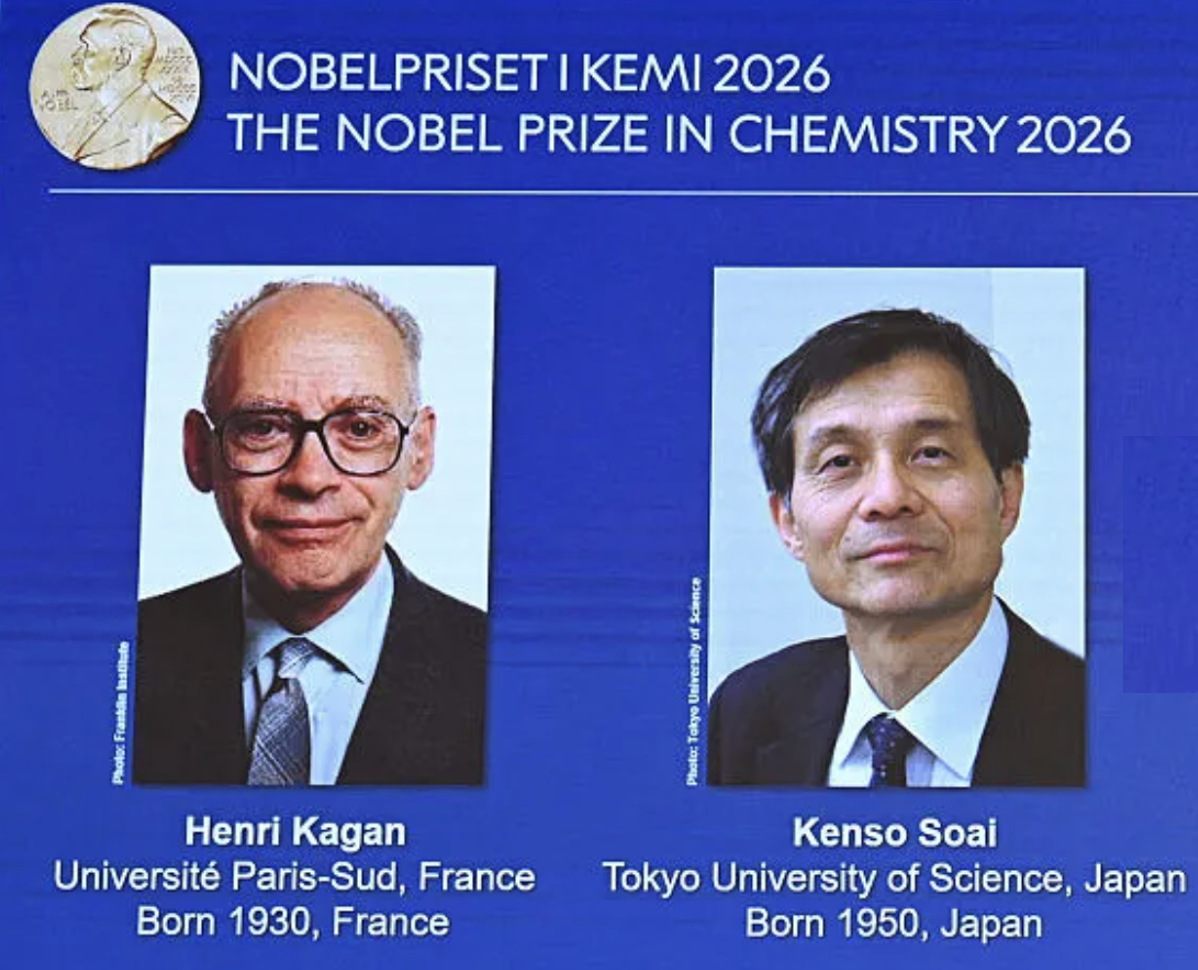
Most syntheses of optically active compounds result in a racemic mixture (a 50:50 mixture of both enantiomers). This year's Nobel Prize for Chemistry recognises the work done by Henri Kagen and Kenso Soai to develop methods to drive the synthesis of chiral compounds which contain only the required enantiomer and not the other enantiomer (mirror image) - a process known as homochirality.