Using real examples to reinforce understanding
Using real examples to reinforce understanding
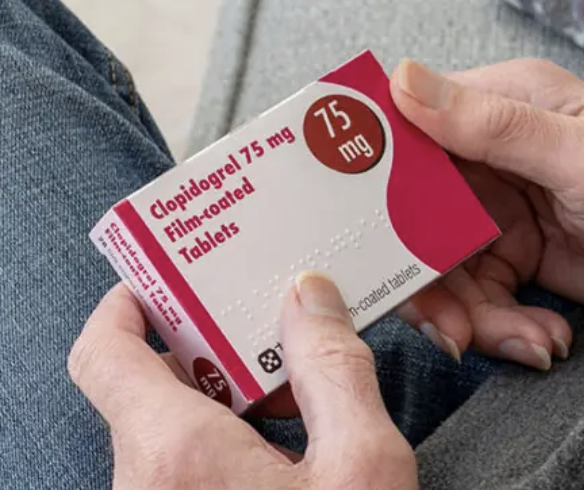
Recently clopidogrel has been shown to be more effective with less side-effects than aspirin when given to prevent heart attacks. This blog shows how the structures of clopidogrel and aspirin can be used to illustrate and test the recognition and chemistry of organic functional groups in line with the syllabus content of the current IB chemistry guide.
Clopidogrel and aspirin
The Medicinal chemistry option is no longer on the syllabus, nevertheless the structures of some drugs can be very useful to reinforce and test the understanding students have of recognising functional groups in molecules covered under Structure 3.2 in the current 2023 syllabus and some of their chemistry.
One drug that almost everyone is familiar with is aspirin. Many millions of people worldwide take a small dose (75 mg) of aspirin every day to help prevent a heart attack as it has the effect of thinning the blood. Unfortunately it also increases the risk of side effects in some people such as stomach ulcers and an increased risk of bleeding. A paper has just been published in the Lancet comparing aspirin with another drug, clopidogrel. It shows that clopidogrel is not only superior to aspirin in preventing blood clotting but also has considerably reduced side effects.
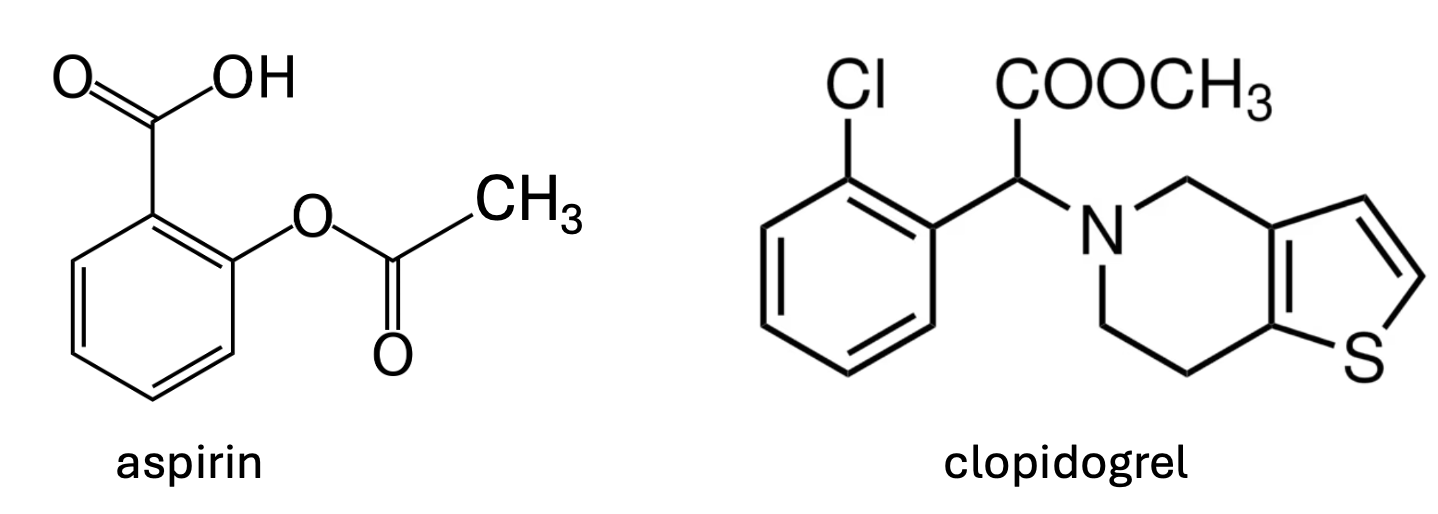
When you are teaching about functional groups it could be useful to get your students to compare the structures of aspirin and clopidogrel together with some of their chemistry using the following questions. (The answers are in the “hidden” box and also include the syllabus reference with a link to the page in the 'Complete course for students' section on this site where the chemistry is covered.) More questions that make links to different topics on the syllabus for the same compound(s) can be found at Making links between topics.
Questions
Question 1. 

Identify by name two functional groups that are present in both aspirin and clopidogrel.
Question 2.
Identify by name one functional group that is present in aspirin but absent in clopidogrel.
Question 3.
Determine the molecular formula of aspirin from its structural formula and give the equation for the reaction between aspirin and sodium hydroxide in aqueous solution.
Question 4.
Identify the class of amine present in clopidogrel.
Question 5.
Clopidogrel is usually taken as its hydrogen sulfate salt. Explain why it can form a salt with sulfuric acid and suggest why clopidogrel is taken orally in this form.
Question 6. Determine the molar mass of clopidogrel to two decimal places.
Question 7.
Suggest one way in which it can be shown whether a solution contains a mixture of both clopidogrel and aspirin.
Question 8.
Determine the degree of unsaturation in a molecule of clopidogrel.
Question 9. only
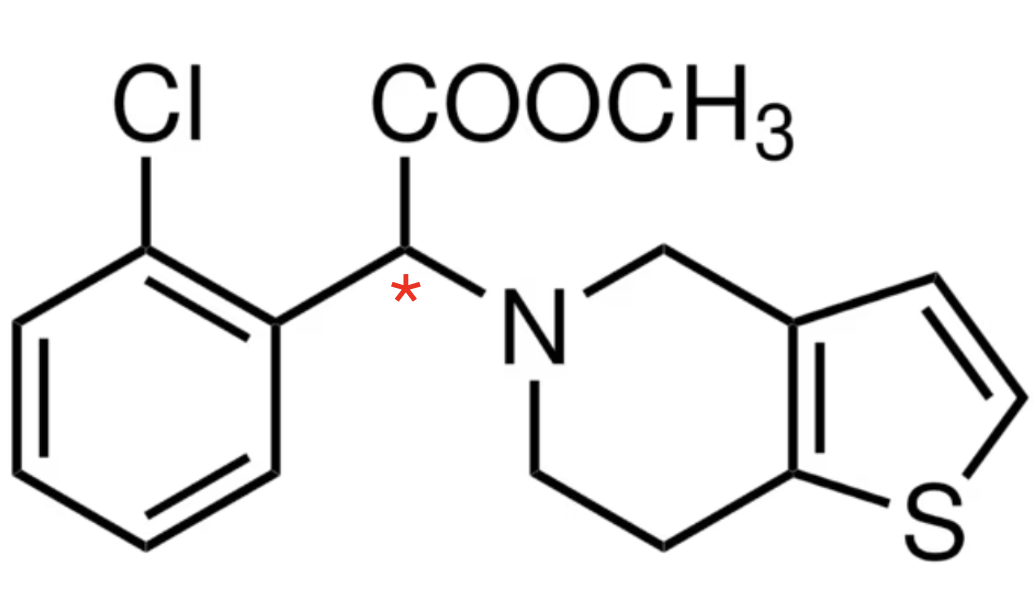
Identify whether aspirin and/or clopidogrel can exist in enantiomeric forms.
Question 10. only
The 1H NMR spectra of both clopidogrel and aspirin contain several signals. Explain why each contains only one signal with an integration trace of 1 and both include two singlets in their splitting patterns.
In aspirin the -COOH and the -OCH3 protons have no other protons attached to neighbouring carbon atoms so are not split and appear as singlets. In clopidogrel the -OCH3 protons and the proton attached to the chiral carbon atom have no protons attached to neighbouring carbon atoms so two singlets are present in its 1H NMR spectrum. (syllabus S3.2.10)