<turbo-stream action="append" target="section-items">
    <template>
            <a href="/computerscience/page/58614/a-117-secondary-memory" class="card text-body rounded-0 text-decoration-none" data-turbo-frame="_top" data-turbo="false">
        <div class="card-body">
            <div class="row align-items-start gx-3">
                <div class="col-4 col-lg-3">
                    <div class="rounded overflow-hidden hover-zoom hover-overlay">
        <img
            class="d-block w-100 height-150 object-cover"
            src="https://teacher-sites-storage.inthinking.net/ib/computerscience/2025/theme-a--concepts-of-computer-science/a1-computer-fundamentals/a1.1-computer-hardware-and-operation/hdd.jpg"
            alt="A 1.1.7 Secondary Memory"
        >
    </div>

                </div>
                <div class="col-8 col-lg-9">
                                            <h6 class="text-accent">
                            eBook
                        </h6>
                                        <h5 class="fw-semibold text-primary mb-2 d-flex gap-1 align-items-end">
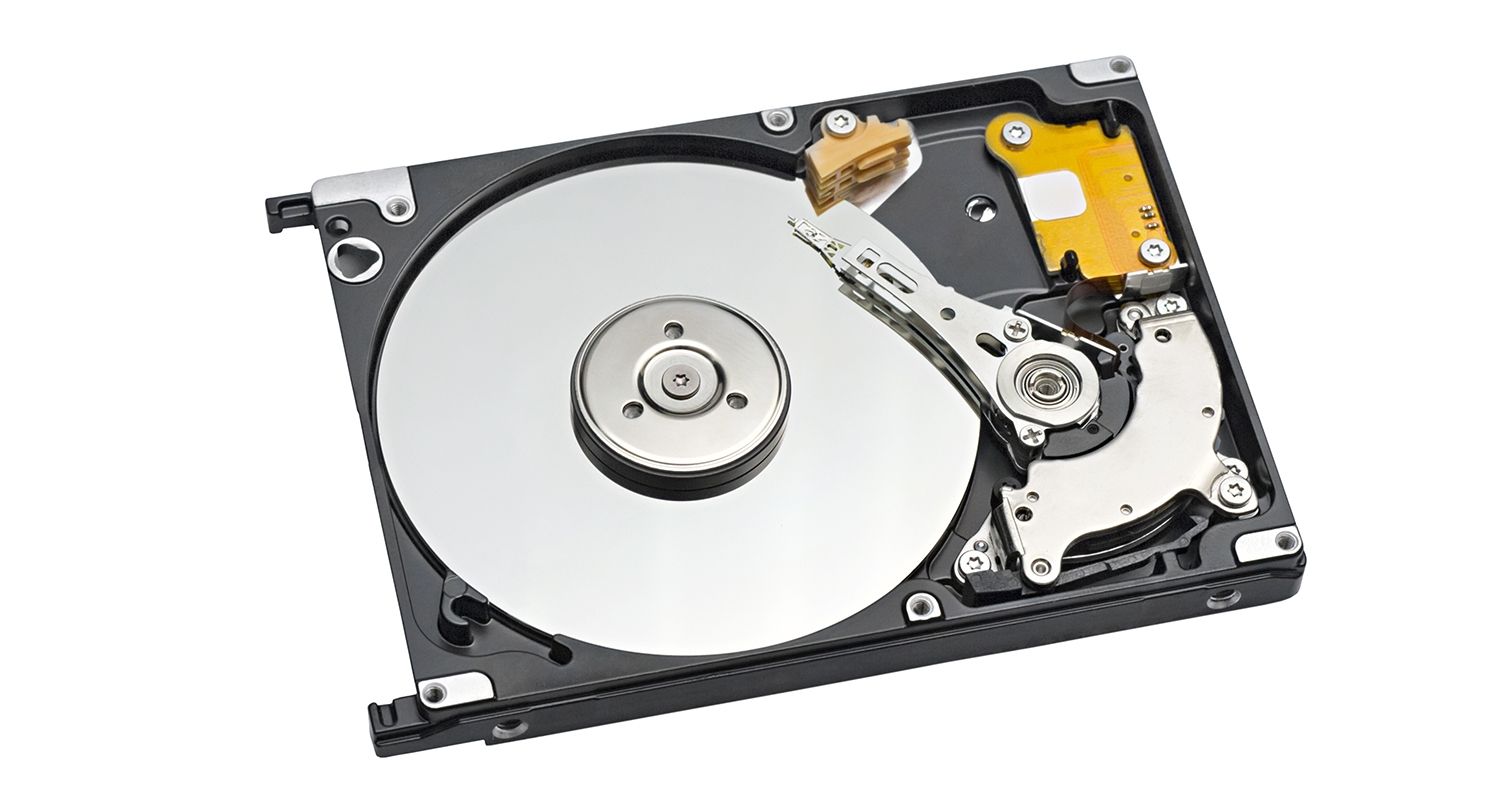
                        A 1.1.7 Secondary Memory
                                    

                    </h5>
                                            <p class="text-body mb-0 mb-lg-3"> Primary memory loses its contents the moment the power goes off, so every computer needs somewhere permanent to keep its operating system, applications and files. That is the job of secondary memory....</p>
                                        <div class="clearfix">
                        <span class="text-muted fs-sm float-end">
                            07 November 2026
                        </span>
                    </div>
                </div>
            </div>
        </div>
    </a>
    <a href="/computerscience/page/58613/a-116-pipelining-hl-only" class="card text-body rounded-0 text-decoration-none" data-turbo-frame="_top" data-turbo="false">
        <div class="card-body">
            <div class="row align-items-start gx-3">
                <div class="col-4 col-lg-3">
                    <div class="rounded overflow-hidden hover-zoom hover-overlay">
        <img
            class="d-block w-100 height-150 object-cover"
            src="https://teacher-sites-storage.inthinking.net/ib/computerscience/2025/theme-a--concepts-of-computer-science/a1-computer-fundamentals/a1.1-computer-hardware-and-operation/multicoreprocessor.jpg"
            alt="A 1.1.6 Pipelining (HL Only)"
        >
    </div>

                </div>
                <div class="col-8 col-lg-9">
                                            <h6 class="text-accent">
                            eBook
                        </h6>
                                        <h5 class="fw-semibold text-primary mb-2 d-flex gap-1 align-items-end">
                        A 1.1.6 Pipelining (HL Only)
                                    

                    </h5>
                                            <p class="text-body mb-0 mb-lg-3"> A single core working through one instruction at a time leaves most of its hardware idle. Pipelining puts that idle hardware to work by overlapping the stages of several instructions, so a core can have...</p>
                                        <div class="clearfix">
                        <span class="text-muted fs-sm float-end">
                            07 November 2026
                        </span>
                    </div>
                </div>
            </div>
        </div>
    </a>
    <a href="/computerscience/page/58612/a-115-the-fetch-decode-and-execute-cycle" class="card text-body rounded-0 text-decoration-none" data-turbo-frame="_top" data-turbo="false">
        <div class="card-body">
            <div class="row align-items-start gx-3">
                <div class="col-4 col-lg-3">
                    <div class="rounded overflow-hidden hover-zoom hover-overlay">
        <img
            class="d-block w-100 height-150 object-cover"
            src="https://teacher-sites-storage.inthinking.net/ib/computerscience/2025/theme-a--concepts-of-computer-science/a1-computer-fundamentals/a1.1-computer-hardware-and-operation/cycle.png"
            alt="A 1.1.5 The fetch, decode and execute cycle"
        >
    </div>

                </div>
                <div class="col-8 col-lg-9">
                                            <h6 class="text-accent">
                            eBook
                        </h6>
                                        <h5 class="fw-semibold text-primary mb-2 d-flex gap-1 align-items-end">
                        A 1.1.5 The fetch, decode and execute cycle
                                                <span class='topic-heading-badge d-inline-flex align-items-center justify-content-center'>Free</span>

                    </h5>
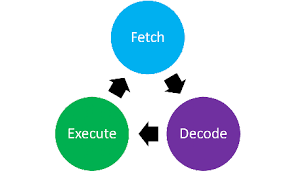
                                            <p class="text-body mb-0 mb-lg-3"> Every program reaches the CPU as a sequence of machine language instructions, and the CPU handles each one in exactly the same way. It fetches the instruction from memory, decodes it to work out what...</p>
                                        <div class="clearfix">
                        <span class="text-muted fs-sm float-end">
                            07 November 2026
                        </span>
                    </div>
                </div>
            </div>
        </div>
    </a>
    <a href="/computerscience/page/58611/a-114-primary-memory" class="card text-body rounded-0 text-decoration-none" data-turbo-frame="_top" data-turbo="false">
        <div class="card-body">
            <div class="row align-items-start gx-3">
                <div class="col-4 col-lg-3">
                    <div class="rounded overflow-hidden hover-zoom hover-overlay">
        <img
            class="d-block w-100 height-150 object-cover"
            src="https://teacher-sites-storage.inthinking.net/ib/computerscience/2025/theme-a--concepts-of-computer-science/a1-computer-fundamentals/a1.1-computer-hardware-and-operation/ram.jpg"
            alt="A 1.1.4 Primary Memory"
        >
    </div>

                </div>
                <div class="col-8 col-lg-9">
                                            <h6 class="text-accent">
                            eBook
                        </h6>
                                        <h5 class="fw-semibold text-primary mb-2 d-flex gap-1 align-items-end">
                        A 1.1.4 Primary Memory
                                    

                    </h5>
                                            <p class="text-body mb-0 mb-lg-3"> When the CPU needs an instruction or a value, where that data happens to be decides how long the CPU waits for it. Primary memory is not one thing but a family of types, each with a distinct purpose:...</p>
                                        <div class="clearfix">
                        <span class="text-muted fs-sm float-end">
                            07 November 2026
                        </span>
                    </div>
                </div>
            </div>
        </div>
    </a>
    <a href="/computerscience/page/60029/b-244-recursion-python-hl-only" class="card text-body rounded-0 text-decoration-none" data-turbo-frame="_top" data-turbo="false">
        <div class="card-body">
            <div class="row align-items-start gx-3">
                <div class="col-4 col-lg-3">
                    <div class="rounded overflow-hidden hover-zoom hover-overlay">
        <img
            class="d-block w-100 height-150 object-cover"
            src="https://teacher-sites-storage.inthinking.net/ib/computerscience/2025/theme-b-computational-thinking/b2-programming/b2.4-programming-algorithms/recursion.jpg"
            alt="B 2.4.4 Recursion Python (HL Only)"
        >
    </div>

                </div>
                <div class="col-8 col-lg-9">
                                            <h6 class="text-accent">
                            eBook
                        </h6>
                                        <h5 class="fw-semibold text-primary mb-2 d-flex gap-1 align-items-end">
                        B 2.4.4 Recursion Python (HL Only)
                                    

                    </h5>
                                            <p class="text-body mb-0 mb-lg-3"> Unlock the power of recursion! This section explores the fascinating world of recursive programming. Learn how functions can call themselves to solve problems, discover the advantages and limitations...</p>
                                        <div class="clearfix">
                        <span class="text-muted fs-sm float-end">
                            07 November 2026
                        </span>
                    </div>
                </div>
            </div>
        </div>
    </a>
    <a href="/computerscience/page/60028/b-244-recursion-java-hl-only" class="card text-body rounded-0 text-decoration-none" data-turbo-frame="_top" data-turbo="false">
        <div class="card-body">
            <div class="row align-items-start gx-3">
                <div class="col-4 col-lg-3">
                    <div class="rounded overflow-hidden hover-zoom hover-overlay">
        <img
            class="d-block w-100 height-150 object-cover"
            src="https://teacher-sites-storage.inthinking.net/ib/computerscience/2025/theme-b-computational-thinking/b2-programming/b2.4-programming-algorithms/recursion.jpg"
            alt="B 2.4.4 Recursion Java (HL Only)"
        >
    </div>

                </div>
                <div class="col-8 col-lg-9">
                                            <h6 class="text-accent">
                            eBook
                        </h6>
                                        <h5 class="fw-semibold text-primary mb-2 d-flex gap-1 align-items-end">
                        B 2.4.4 Recursion Java (HL Only)
                                    

                    </h5>
                                            <p class="text-body mb-0 mb-lg-3"> Unlock the power of recursion! This section explores the fascinating world of recursive programming. Learn how functions can call themselves to solve problems, discover the advantages and limitations...</p>
                                        <div class="clearfix">
                        <span class="text-muted fs-sm float-end">
                            07 November 2026
                        </span>
                    </div>
                </div>
            </div>
        </div>
    </a>
    <a href="/computerscience/page/60693/a-233-packet-switching" class="card text-body rounded-0 text-decoration-none" data-turbo-frame="_top" data-turbo="false">
        <div class="card-body">
            <div class="row align-items-start gx-3">
                <div class="col-4 col-lg-3">
                    <div class="rounded overflow-hidden hover-zoom hover-overlay">
        <img
            class="d-block w-100 height-150 object-cover"
            src="https://teacher-sites-storage.inthinking.net/ib/computerscience/2025/theme-a--concepts-of-computer-science/a2-networks/a2.3-data-transmissions/packets.png"
            alt="A 2.3.3 Packet Switching"
        >
    </div>

                </div>
                <div class="col-8 col-lg-9">
                                            <h6 class="text-accent">
                            eBook
                        </h6>
                                        <h5 class="fw-semibold text-primary mb-2 d-flex gap-1 align-items-end">
                        A 2.3.3 Packet Switching
                                    

                    </h5>
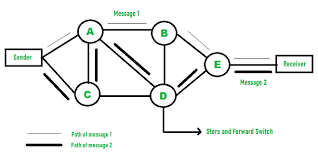
                                            <p class="text-body mb-0 mb-lg-3"> A network rarely sends a message as one piece. It breaks the message into small parts called packets, sends each one separately, and rebuilds the message at the far end. This is packet switching, and...</p>
                                        <div class="clearfix">
                        <span class="text-muted fs-sm float-end">
                            07 November 2026
                        </span>
                    </div>
                </div>
            </div>
        </div>
    </a>
    <a href="/computerscience/page/58622/a-115-fetch-decode-execute-cycle" class="card text-body rounded-0 text-decoration-none" data-turbo-frame="_top" data-turbo="false">
        <div class="card-body">
            <div class="row align-items-start gx-3">
                <div class="col-4 col-lg-3">
                    <div class="rounded overflow-hidden hover-zoom hover-overlay">
        <img
            class="d-block w-100 height-150 object-cover"
            src="https://teacher-sites-storage.inthinking.net/ib/computerscience/2025/theme-a--concepts-of-computer-science/a1-computer-fundamentals/a1.1-computer-hardware-and-operation/cycle.png"
            alt="A 1.1.5 Fetch, Decode, Execute Cycle"
        >
    </div>

                </div>
                <div class="col-8 col-lg-9">
                                            <h6 class="text-accent">
                            Teacher Resources (new)
                        </h6>
                                        <h5 class="fw-semibold text-primary mb-2 d-flex gap-1 align-items-end">
                        A 1.1.5 Fetch, Decode, Execute Cycle
                                    

                    </h5>
                                            <p class="text-body mb-0 mb-lg-3"> The fetch-decode-execute cycle is the core operation of a computer's CPU. It involves fetching instructions from memory, decoding them, and executing the specified operations. Memory and registers interact...</p>
                                        <div class="clearfix">
                        <span class="text-muted fs-sm float-end">
                            06 November 2026
                        </span>
                    </div>
                </div>
            </div>
        </div>
    </a>
    <a href="/computerscience/page/61646/a-341-different-types-of-database-hl-only" class="card text-body rounded-0 text-decoration-none" data-turbo-frame="_top" data-turbo="false">
        <div class="card-body">
            <div class="row align-items-start gx-3">
                <div class="col-4 col-lg-3">
                    <div class="rounded overflow-hidden hover-zoom hover-overlay">
        <img
            class="d-block w-100 height-150 object-cover"
            src="https://teacher-sites-storage.inthinking.net/ib/computerscience/2025/theme-a--concepts-of-computer-science/a3-databases/a3.4-alternative-databases-and-data-warehouses-(hl-only)/gis2.jpeg"
            alt="A 3.4.1 Different types of database (HL Only)"
        >
    </div>

                </div>
                <div class="col-8 col-lg-9">
                                            <h6 class="text-accent">
                            Teacher Resources (new)
                        </h6>
                                        <h5 class="fw-semibold text-primary mb-2 d-flex gap-1 align-items-end">
                        A 3.4.1 Different types of database (HL Only)
                                    

                    </h5>
                                            <p class="text-body mb-0 mb-lg-3"> NoSQL, cloud, spatial, and in-memory databases suit diverse needs like e-commerce, GIS, managed services, real-time analytics, social media, and SaaS. Understanding these models is key. Updated 04/11/2026...</p>
                                        <div class="clearfix">
                        <span class="text-muted fs-sm float-end">
                            04 November 2026
                        </span>
                    </div>
                </div>
            </div>
        </div>
    </a>
    <a href="/computerscience/page/73041/a-341-worksheet-answers" class="card text-body rounded-0 text-decoration-none" data-turbo-frame="_top" data-turbo="false">
        <div class="card-body">
            <div class="row align-items-start gx-3">
                <div class="col-4 col-lg-3">
                    <div class="rounded overflow-hidden hover-zoom hover-overlay">
        <img
            class="d-block w-100 height-150 object-cover"
            src="https://teacher-sites-storage.inthinking.net/subject/generic/44/02.jpg?v=1790338362"
            alt="A 3.4.1 Worksheet Answers"
        >
    </div>

                </div>
                <div class="col-8 col-lg-9">
                                            <h6 class="text-accent">
                            Activities
                        </h6>
                                        <h5 class="fw-semibold text-primary mb-2 d-flex gap-1 align-items-end">
                        A 3.4.1 Worksheet Answers
                                    

                    </h5>
                                            <p class="text-body mb-0 mb-lg-3"> Accept a different model if the reason is valid and refers to how the data is stored....</p>
                                        <div class="clearfix">
                        <span class="text-muted fs-sm float-end">
                            04 November 2026
                        </span>
                    </div>
                </div>
            </div>
        </div>
    </a>


    </template>
</turbo-stream>

    <turbo-stream action="update" target="load-more">
        <template>
            <div class="d-flex justify-content-center my-3">
    <a href="/computerscience/latest-updates?page=3" class="btn btn-secondary loader">
        <i class="fa-regular fa-circle-plus"></i>
        Load more
    </a>
    <div class="spinner-border load-more text-primary" role="status">
        <span class="visually-hidden">Loading...</span>
    </div>
</div>

        </template>
    </turbo-stream>