<turbo-stream action="append" target="section-items">
    <template>
            <a href="/chemistry/page/42638/r21-amount-of-chemical-change" class="card text-body rounded-0 text-decoration-none" data-turbo-frame="_top" data-turbo="false">
        <div class="card-body">
            <div class="row align-items-start gx-3">
                <div class="col-4 col-lg-3">
                    <div class="rounded overflow-hidden hover-zoom hover-overlay">
        <img
            class="d-block w-100 height-150 object-cover"
            src="https://teacher-sites-storage.inthinking.net/ib/chemistry/images/2023-topics/r2/atom-economy.png"
            alt="R2.1 Amount of chemical change"
        >
    </div>

                </div>
                <div class="col-8 col-lg-9">
                                            <h6 class="text-accent">
                            Delivering the programme
                        </h6>
                                        <h5 class="fw-semibold text-primary mb-2 d-flex gap-1 align-items-end">
                        R2.1 Amount of chemical change
                                    

                    </h5>
                                            <p class="text-body mb-0 mb-lg-3"> This section involves the use of chemical equations to show the ratio of reactants to products in a reaction and the mole ratio in order to determine both the masses or volumes of reactants and products...</p>
                                        <div class="clearfix">
                        <span class="text-muted fs-sm float-end">
                            07 May 2026
                        </span>
                    </div>
                </div>
            </div>
        </div>
    </a>
    <a href="/chemistry/page/39620/r14-ahl-entropy-spontaneity" class="card text-body rounded-0 text-decoration-none" data-turbo-frame="_top" data-turbo="false">
        <div class="card-body">
            <div class="row align-items-start gx-3">
                <div class="col-4 col-lg-3">
                    <div class="rounded overflow-hidden hover-zoom hover-overlay">
        <img
            class="d-block w-100 height-150 object-cover"
            src="https://teacher-sites-storage.inthinking.net/ib/chemistry/images/2023-topics/r1/screenshot-2022-10-07-at-20.01.53.png"
            alt="R1.4 (AHL) Entropy &amp; spontaneity"
        >
    </div>

                </div>
                <div class="col-8 col-lg-9">
                                            <h6 class="text-accent">
                            Delivering the programme
                        </h6>
                                        <h5 class="fw-semibold text-primary mb-2 d-flex gap-1 align-items-end">
                        R1.4 (AHL) Entropy & spontaneity
                                    

                    </h5>
                                            <p class="text-body mb-0 mb-lg-3"> This page covers entropy which is a measure of the dispersal or distribution of matter and/or energy in a system and relates it to the Gibbs energy, using the expression ΔG⦵ = ΔH⦵ − TΔS⦵, to determine...</p>
                                        <div class="clearfix">
                        <span class="text-muted fs-sm float-end">
                            07 May 2026
                        </span>
                    </div>
                </div>
            </div>
        </div>
    </a>
    <a href="/chemistry/page/41229/r13-energy-from-fuels" class="card text-body rounded-0 text-decoration-none" data-turbo-frame="_top" data-turbo="false">
        <div class="card-body">
            <div class="row align-items-start gx-3">
                <div class="col-4 col-lg-3">
                    <div class="rounded overflow-hidden hover-zoom hover-overlay">
        <img
            class="d-block w-100 height-150 object-cover"
            src="https://teacher-sites-storage.inthinking.net/ib/chemistry/images/2023-topics/r1/screenshot-2021-09-10-at-17.43.02.png"
            alt="R1.3 Energy from fuels"
        >
    </div>

                </div>
                <div class="col-8 col-lg-9">
                                            <h6 class="text-accent">
                            Delivering the programme
                        </h6>
                                        <h5 class="fw-semibold text-primary mb-2 d-flex gap-1 align-items-end">
                        R1.3 Energy from fuels
                                    

                    </h5>
                                            <p class="text-body mb-0 mb-lg-3"> This section covers the fuels used by man. It involves writing chemical equations for combustion reactions, understanding the difference between renewable and non-renewable energy sources and the advantages...</p>
                                        <div class="clearfix">
                        <span class="text-muted fs-sm float-end">
                            07 May 2026
                        </span>
                    </div>
                </div>
            </div>
        </div>
    </a>
    <a href="/chemistry/page/39551/r12-ahl-standard-enthalpy-changes-born-haber-cycle" class="card text-body rounded-0 text-decoration-none" data-turbo-frame="_top" data-turbo="false">
        <div class="card-body">
            <div class="row align-items-start gx-3">
                <div class="col-4 col-lg-3">
                    <div class="rounded overflow-hidden hover-zoom hover-overlay">
        <img
            class="d-block w-100 height-150 object-cover"
            src="https://teacher-sites-storage.inthinking.net/ib/chemistry/images/2023-topics/r1/screenshot-2022-10-07-at-19.56.07.png"
            alt="R1.2 (AHL) Standard enthalpy changes &amp; Born-Haber cycle"
        >
    </div>

                </div>
                <div class="col-8 col-lg-9">
                                            <h6 class="text-accent">
                            Delivering the programme
                        </h6>
                                        <h5 class="fw-semibold text-primary mb-2 d-flex gap-1 align-items-end">
                        R1.2 (AHL) Standard enthalpy changes & Born-Haber cycle
                                    

                    </h5>
                                            <p class="text-body mb-0 mb-lg-3"> This AHL page effectively builds on Hess's law, firstly by using standard enthalpies of combustion and formation in thermodynamic calculations, and then by applying the law to the formation of ionic compounds...</p>
                                        <div class="clearfix">
                        <span class="text-muted fs-sm float-end">
                            07 May 2026
                        </span>
                    </div>
                </div>
            </div>
        </div>
    </a>
    <a href="/chemistry/page/39540/r12-energy-cycles-in-reactions" class="card text-body rounded-0 text-decoration-none" data-turbo-frame="_top" data-turbo="false">
        <div class="card-body">
            <div class="row align-items-start gx-3">
                <div class="col-4 col-lg-3">
                    <div class="rounded overflow-hidden hover-zoom hover-overlay">
        <img
            class="d-block w-100 height-150 object-cover"
            src="https://teacher-sites-storage.inthinking.net/ib/chemistry/images/2023-topics/r1/screenshot-2022-10-07-at-17.43.41.png"
            alt="R1.2 Energy cycles in reactions"
        >
    </div>

                </div>
                <div class="col-8 col-lg-9">
                                            <h6 class="text-accent">
                            Delivering the programme
                        </h6>
                                        <h5 class="fw-semibold text-primary mb-2 d-flex gap-1 align-items-end">
                        R1.2 Energy cycles in reactions
                                    

                    </h5>
                                            <p class="text-body mb-0 mb-lg-3"> This page combines the law of conservation with the facts that bond-breaking absorbs and bond-forming releases energy to arrive at Hess's law. The law, which states that the enthalpy change for a reaction...</p>
                                        <div class="clearfix">
                        <span class="text-muted fs-sm float-end">
                            07 May 2026
                        </span>
                    </div>
                </div>
            </div>
        </div>
    </a>
    <a href="/chemistry/page/39516/r11-measuring-energy-changes" class="card text-body rounded-0 text-decoration-none" data-turbo-frame="_top" data-turbo="false">
        <div class="card-body">
            <div class="row align-items-start gx-3">
                <div class="col-4 col-lg-3">
                    <div class="rounded overflow-hidden hover-zoom hover-overlay">
        <img
            class="d-block w-100 height-150 object-cover"
            src="https://teacher-sites-storage.inthinking.net/ib/chemistry/images/2023-topics/r1/reaction-profile-for-ex-reaction.png"
            alt="R1.1 Measuring energy changes"
        >
    </div>

                </div>
                <div class="col-8 col-lg-9">
                                            <h6 class="text-accent">
                            Delivering the programme
                        </h6>
                                        <h5 class="fw-semibold text-primary mb-2 d-flex gap-1 align-items-end">
                        R1.1 Measuring energy changes
                                    

                    </h5>
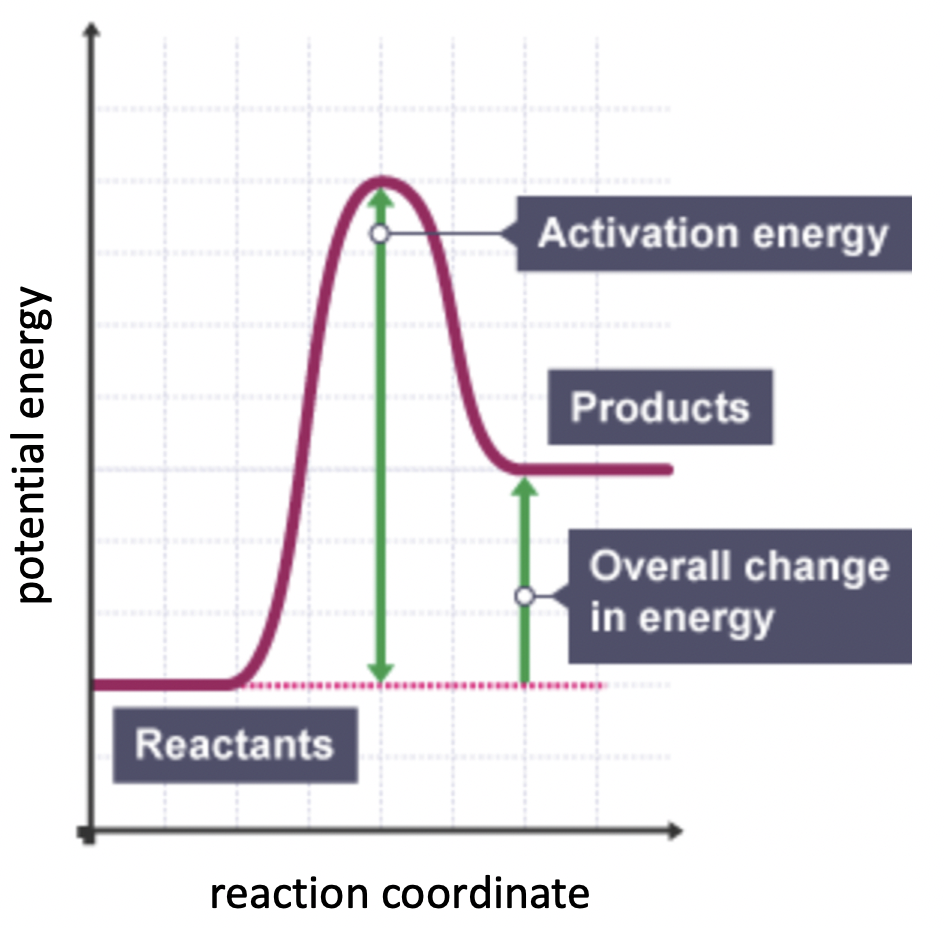
                                            <p class="text-body mb-0 mb-lg-3"> This section distinguishes between exothermic and endothermic reactions depending on the direction of energy transfer between the system and the surroundings and explains that whether reactions are endothermic...</p>
                                        <div class="clearfix">
                        <span class="text-muted fs-sm float-end">
                            07 May 2026
                        </span>
                    </div>
                </div>
            </div>
        </div>
    </a>
    <a href="/chemistry/page/39074/s32-ahl-mass-spectrometry-ir-1h-nmr-spectroscopy" class="card text-body rounded-0 text-decoration-none" data-turbo-frame="_top" data-turbo="false">
        <div class="card-body">
            <div class="row align-items-start gx-3">
                <div class="col-4 col-lg-3">
                    <div class="rounded overflow-hidden hover-zoom hover-overlay">
        <img
            class="d-block w-100 height-150 object-cover"
            src="https://teacher-sites-storage.inthinking.net/ib/chemistry/images/2014%20Core%20%26%20AHL/Topics%2011%20%26%2021/GeoffRunner(small).jpg"
            alt="S3.2 (AHL) Mass spectrometry, IR &amp; &lt;sup&gt;1&lt;/sup&gt;H NMR spectroscopy"
        >
    </div>

                </div>
                <div class="col-8 col-lg-9">
                                            <h6 class="text-accent">
                            Delivering the programme
                        </h6>
                                        <h5 class="fw-semibold text-primary mb-2 d-flex gap-1 align-items-end">
                        S3.2 (AHL) Mass spectrometry, IR & <sup>1</sup>H NMR spectroscopy
                                    

                    </h5>
                                            <p class="text-body mb-0 mb-lg-3"> This AHL section looks at how mass spectrometry, infrared spectroscopy and 1H NMR spectroscopy can be used individually and collectively to help determine the structural identity of an organic molecule. ...</p>
                                        <div class="clearfix">
                        <span class="text-muted fs-sm float-end">
                            07 May 2026
                        </span>
                    </div>
                </div>
            </div>
        </div>
    </a>
    <a href="/chemistry/page/37858/s31-ahl-periodic-table-transition-elements" class="card text-body rounded-0 text-decoration-none" data-turbo-frame="_top" data-turbo="false">
        <div class="card-body">
            <div class="row align-items-start gx-3">
                <div class="col-4 col-lg-3">
                    <div class="rounded overflow-hidden hover-zoom hover-overlay">
        <img
            class="d-block w-100 height-150 object-cover"
            src="https://teacher-sites-storage.inthinking.net/ib/chemistry/images/2023-topics/s3.2/screenshot-2022-10-06-at-11.48.44.png"
            alt="S3.1 (AHL) Periodic table - transition elements"
        >
    </div>

                </div>
                <div class="col-8 col-lg-9">
                                            <h6 class="text-accent">
                            Delivering the programme
                        </h6>
                                        <h5 class="fw-semibold text-primary mb-2 d-flex gap-1 align-items-end">
                        S3.1 (AHL) Periodic table - transition elements
                                    

                    </h5>
                                            <p class="text-body mb-0 mb-lg-3"> This AHL section on periodicity covers the transition elements. It characterizes them as having an incomplete d sub-level in one of more of their oxidation states and explains why they form coloured compounds....</p>
                                        <div class="clearfix">
                        <span class="text-muted fs-sm float-end">
                            07 May 2026
                        </span>
                    </div>
                </div>
            </div>
        </div>
    </a>
    <a href="/chemistry/page/37746/s31-periodic-table-3-oxidation-states" class="card text-body rounded-0 text-decoration-none" data-turbo-frame="_top" data-turbo="false">
        <div class="card-body">
            <div class="row align-items-start gx-3">
                <div class="col-4 col-lg-3">
                    <div class="rounded overflow-hidden hover-zoom hover-overlay">
        <img
            class="d-block w-100 height-150 object-cover"
            src="https://teacher-sites-storage.inthinking.net/ib/chemistry/images/TOK%20images/thiosulfate-ion.jpg"
            alt="S3.1 Periodic table (3) - oxidation states"
        >
    </div>

                </div>
                <div class="col-8 col-lg-9">
                                            <h6 class="text-accent">
                            Delivering the programme
                        </h6>
                                        <h5 class="fw-semibold text-primary mb-2 d-flex gap-1 align-items-end">
                        S3.1 Periodic table (3) - oxidation states
                                    

                    </h5>
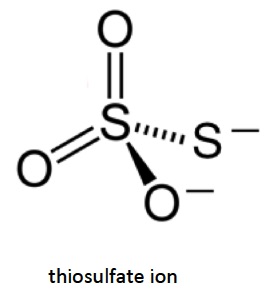
                                            <p class="text-body mb-0 mb-lg-3"> This is the third section on the periodic table and focuses on how to deduce the oxidation state of an atom in an ion or in its compounds and in its elemental state. The difference between oxidation state...</p>
                                        <div class="clearfix">
                        <span class="text-muted fs-sm float-end">
                            07 May 2026
                        </span>
                    </div>
                </div>
            </div>
        </div>
    </a>
    <a href="/chemistry/page/37743/s31-periodic-table-2-periodicity-trends" class="card text-body rounded-0 text-decoration-none" data-turbo-frame="_top" data-turbo="false">
        <div class="card-body">
            <div class="row align-items-start gx-3">
                <div class="col-4 col-lg-3">
                    <div class="rounded overflow-hidden hover-zoom hover-overlay">
        <img
            class="d-block w-100 height-150 object-cover"
            src="https://teacher-sites-storage.inthinking.net/ib/chemistry/images/Core%20and%20AHL/Periodicity/ionisation-energies.png"
            alt="S3.1 Periodic table (2) - periodicity &amp; trends"
        >
    </div>

                </div>
                <div class="col-8 col-lg-9">
                                            <h6 class="text-accent">
                            Delivering the programme
                        </h6>
                                        <h5 class="fw-semibold text-primary mb-2 d-flex gap-1 align-items-end">
                        S3.1 Periodic table (2) - periodicity & trends
                                    

                    </h5>
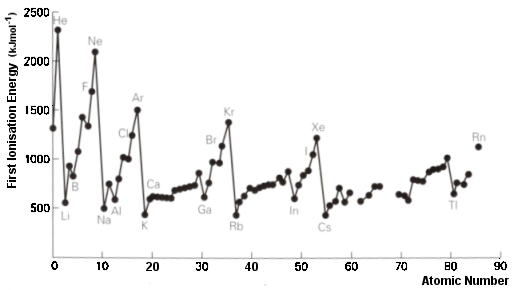
                                            <p class="text-body mb-0 mb-lg-3"> This section on the periodic table focuses on periodicity, i.e. the repeating trends in the properties of elements and their compounds across a period. This is exemplified by atomic radius, ionic radius,...</p>
                                        <div class="clearfix">
                        <span class="text-muted fs-sm float-end">
                            07 May 2026
                        </span>
                    </div>
                </div>
            </div>
        </div>
    </a>


    </template>
</turbo-stream>

    <turbo-stream action="update" target="load-more">
        <template>
            <div class="d-flex justify-content-center my-3">
    <a href="/chemistry/latest-updates?page=21" class="btn btn-secondary loader">
        <i class="fa-regular fa-circle-plus"></i>
        Load more
    </a>
    <div class="spinner-border load-more text-primary" role="status">
        <span class="visually-hidden">Loading...</span>
    </div>
</div>

        </template>
    </turbo-stream>