<turbo-stream action="append" target="section-items">
    <template>
            <a href="/chemistry/page/19512/materials-science-introduction-questions" class="card text-body rounded-0 text-decoration-none" data-turbo-frame="_top" data-turbo="false">
        <div class="card-body">
            <div class="row align-items-start gx-3">
                <div class="col-4 col-lg-3">
                    <div class="rounded overflow-hidden hover-zoom hover-overlay">
        <img
            class="d-block w-100 height-150 object-cover"
            src="https://teacher-sites-storage.inthinking.net/subject/generic/3/03.jpg?v=1790338359"
            alt="Materials science introduction questions"
        >
    </div>

                </div>
                <div class="col-8 col-lg-9">
                                            <h6 class="text-accent">
                            eBook
                        </h6>
                                        <h5 class="fw-semibold text-primary mb-2 d-flex gap-1 align-items-end">
                        Materials science introduction questions
                                    

                    </h5>
                                            <p class="text-body mb-0 mb-lg-3"> 1. Elemental copper does occur in nature, but copper is mainly extracted from its sulfide, carbonate or oxide minerals. Tin does not occur naturally in the elemental state. The main ore of tin is cassiterite,...</p>
                                        <div class="clearfix">
                        <span class="text-muted fs-sm float-end">
                            07 May 2026
                        </span>
                    </div>
                </div>
            </div>
        </div>
    </a>
    <a href="/chemistry/page/43533/r34-ahl-electron-pair-sharing-reactions" class="card text-body rounded-0 text-decoration-none" data-turbo-frame="_top" data-turbo="false">
        <div class="card-body">
            <div class="row align-items-start gx-3">
                <div class="col-4 col-lg-3">
                    <div class="rounded overflow-hidden hover-zoom hover-overlay">
        <img
            class="d-block w-100 height-150 object-cover"
            src="https://teacher-sites-storage.inthinking.net/ib/chemistry/images/2023-topics/r3/r3.4-intro.png"
            alt="R3.4 (AHL) Electron-pair sharing reactions"
        >
    </div>

                </div>
                <div class="col-8 col-lg-9">
                                            <h6 class="text-accent">
                            Delivering the programme
                        </h6>
                                        <h5 class="fw-semibold text-primary mb-2 d-flex gap-1 align-items-end">
                        R3.4 (AHL) Electron-pair sharing reactions
                                    

                    </h5>
                                            <p class="text-body mb-0 mb-lg-3"> This large AHL sub-topic covers Lewis acids and bases and the formation of coordination bonds. This is followed by considering the role of nucleophiles in organic substitution reactions, where the rate...</p>
                                        <div class="clearfix">
                        <span class="text-muted fs-sm float-end">
                            07 May 2026
                        </span>
                    </div>
                </div>
            </div>
        </div>
    </a>
    <a href="/chemistry/page/43484/r34-electron-pair-sharing-reactions" class="card text-body rounded-0 text-decoration-none" data-turbo-frame="_top" data-turbo="false">
        <div class="card-body">
            <div class="row align-items-start gx-3">
                <div class="col-4 col-lg-3">
                    <div class="rounded overflow-hidden hover-zoom hover-overlay">
        <img
            class="d-block w-100 height-150 object-cover"
            src="https://teacher-sites-storage.inthinking.net/ib/chemistry/images/2023-topics/r3/screenshot-2022-10-05-at-15.55.29.png"
            alt="R3.4 Electron-pair sharing reactions"
        >
    </div>

                </div>
                <div class="col-8 col-lg-9">
                                            <h6 class="text-accent">
                            Delivering the programme
                        </h6>
                                        <h5 class="fw-semibold text-primary mb-2 d-flex gap-1 align-items-end">
                        R3.4 Electron-pair sharing reactions
                                    

                    </h5>
                                            <p class="text-body mb-0 mb-lg-3"> This section concerns the movement of electron pairs which can be represented by curly arrows.  Nucleophiles donate an electron pair to form a new bond, as another bond breaks heterolytically producing...</p>
                                        <div class="clearfix">
                        <span class="text-muted fs-sm float-end">
                            07 May 2026
                        </span>
                    </div>
                </div>
            </div>
        </div>
    </a>
    <a href="/chemistry/page/43357/r33-electron-sharing-reactions" class="card text-body rounded-0 text-decoration-none" data-turbo-frame="_top" data-turbo="false">
        <div class="card-body">
            <div class="row align-items-start gx-3">
                <div class="col-4 col-lg-3">
                    <div class="rounded overflow-hidden hover-zoom hover-overlay">
        <img
            class="d-block w-100 height-150 object-cover"
            src="https://teacher-sites-storage.inthinking.net/ib/chemistry/images/2023-topics/r3/screenshot-2022-10-05-at-15.50.07.png"
            alt="R3.3 Electron sharing reactions"
        >
    </div>

                </div>
                <div class="col-8 col-lg-9">
                                            <h6 class="text-accent">
                            Delivering the programme
                        </h6>
                                        <h5 class="fw-semibold text-primary mb-2 d-flex gap-1 align-items-end">
                        R3.3 Electron sharing reactions
                                    

                    </h5>
                                            <p class="text-body mb-0 mb-lg-3"> This section looks at the formation and reactivity of free radicals formed by the homolytic fission of covalent bonds by ultraviolet light. The initiation, propagation and termination steps for the substitution...</p>
                                        <div class="clearfix">
                        <span class="text-muted fs-sm float-end">
                            07 May 2026
                        </span>
                    </div>
                </div>
            </div>
        </div>
    </a>
    <a href="/chemistry/page/43330/r32-organic-redox-reactions" class="card text-body rounded-0 text-decoration-none" data-turbo-frame="_top" data-turbo="false">
        <div class="card-body">
            <div class="row align-items-start gx-3">
                <div class="col-4 col-lg-3">
                    <div class="rounded overflow-hidden hover-zoom hover-overlay">
        <img
            class="d-block w-100 height-150 object-cover"
            src="https://teacher-sites-storage.inthinking.net/ib/chemistry/images/2023-topics/r3/breathalyzer.png"
            alt="R3.2 Organic redox reactions"
        >
    </div>

                </div>
                <div class="col-8 col-lg-9">
                                            <h6 class="text-accent">
                            Delivering the programme
                        </h6>
                                        <h5 class="fw-semibold text-primary mb-2 d-flex gap-1 align-items-end">
                        R3.2 Organic redox reactions
                                    

                    </h5>
                                            <p class="text-body mb-0 mb-lg-3"> This sub-topic concerns the redox reactions of organic compounds. It includes the deduction of the products of oxidation of primary and secondary alcohols (including the two-step oxidation of primary...</p>
                                        <div class="clearfix">
                        <span class="text-muted fs-sm float-end">
                            07 May 2026
                        </span>
                    </div>
                </div>
            </div>
        </div>
    </a>
    <a href="/chemistry/page/43309/r32-ahl-electrochemical-cells" class="card text-body rounded-0 text-decoration-none" data-turbo-frame="_top" data-turbo="false">
        <div class="card-body">
            <div class="row align-items-start gx-3">
                <div class="col-4 col-lg-3">
                    <div class="rounded overflow-hidden hover-zoom hover-overlay">
        <img
            class="d-block w-100 height-150 object-cover"
            src="https://teacher-sites-storage.inthinking.net/ib/chemistry/images/2023-topics/r3/standard-h-electrode.png"
            alt="R3.2 (AHL) Electrochemical cells"
        >
    </div>

                </div>
                <div class="col-8 col-lg-9">
                                            <h6 class="text-accent">
                            Delivering the programme
                        </h6>
                                        <h5 class="fw-semibold text-primary mb-2 d-flex gap-1 align-items-end">
                        R3.2 (AHL) Electrochemical cells
                                    

                    </h5>
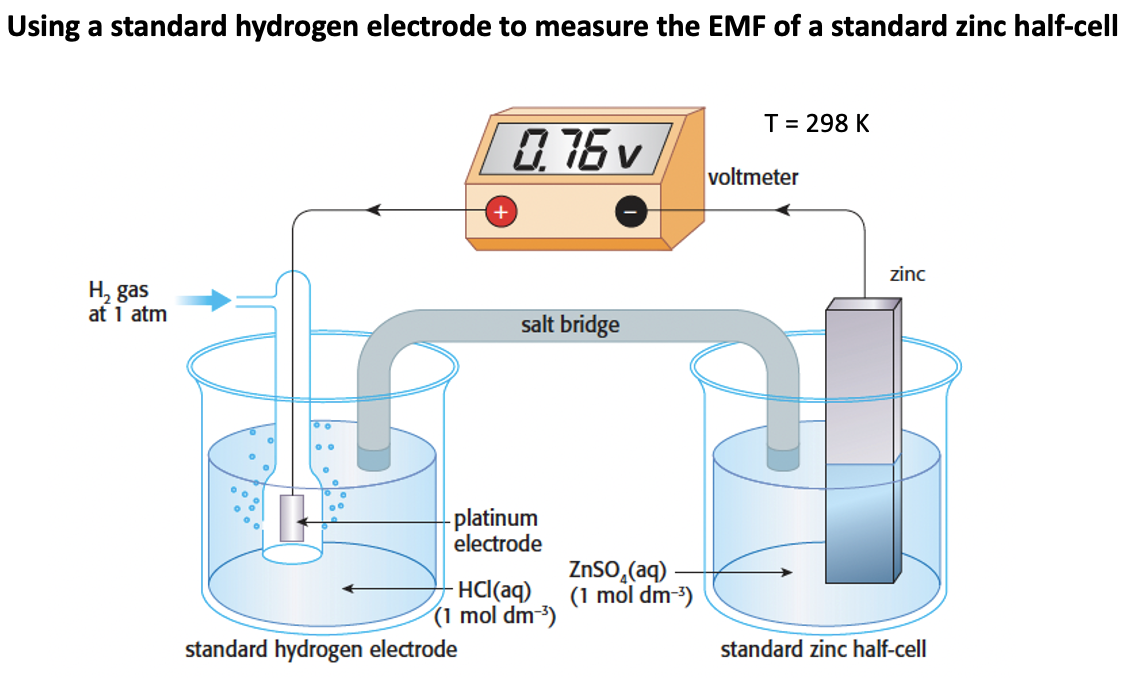
                                            <p class="text-body mb-0 mb-lg-3"> This AHL section on electrochemical cells includes the standard hydrogen electrode leading to the standard electrode potentials of half-cells. These values are used to obtain the redox reaction that occurs...</p>
                                        <div class="clearfix">
                        <span class="text-muted fs-sm float-end">
                            07 May 2026
                        </span>
                    </div>
                </div>
            </div>
        </div>
    </a>
    <a href="/chemistry/page/43121/r32-electrochemical-cells" class="card text-body rounded-0 text-decoration-none" data-turbo-frame="_top" data-turbo="false">
        <div class="card-body">
            <div class="row align-items-start gx-3">
                <div class="col-4 col-lg-3">
                    <div class="rounded overflow-hidden hover-zoom hover-overlay">
        <img
            class="d-block w-100 height-150 object-cover"
            src="https://teacher-sites-storage.inthinking.net/ib/chemistry/images/2023-topics/r3/screenshot-2022-10-05-at-15.24.31.png"
            alt="R3.2 Electrochemical cells"
        >
    </div>

                </div>
                <div class="col-8 col-lg-9">
                                            <h6 class="text-accent">
                            Delivering the programme
                        </h6>
                                        <h5 class="fw-semibold text-primary mb-2 d-flex gap-1 align-items-end">
                        R3.2 Electrochemical cells
                                    

                    </h5>
                                            <p class="text-body mb-0 mb-lg-3"> The chemistry of primary and secondary (rechargeable) voltaic cells are covered in this section which also covers the electrolysis of molten electrolytes in electrolytic cells. Voltaic cells involves...</p>
                                        <div class="clearfix">
                        <span class="text-muted fs-sm float-end">
                            07 May 2026
                        </span>
                    </div>
                </div>
            </div>
        </div>
    </a>
    <a href="/chemistry/page/43101/r32-oxidation-reduction" class="card text-body rounded-0 text-decoration-none" data-turbo-frame="_top" data-turbo="false">
        <div class="card-body">
            <div class="row align-items-start gx-3">
                <div class="col-4 col-lg-3">
                    <div class="rounded overflow-hidden hover-zoom hover-overlay">
        <img
            class="d-block w-100 height-150 object-cover"
            src="https://teacher-sites-storage.inthinking.net/ib/chemistry/images/Core%20and%20AHL/redox/hydrogen%20combustion.jpg"
            alt="R3.2 Oxidation &amp; reduction"
        >
    </div>

                </div>
                <div class="col-8 col-lg-9">
                                            <h6 class="text-accent">
                            Delivering the programme
                        </h6>
                                        <h5 class="fw-semibold text-primary mb-2 d-flex gap-1 align-items-end">
                        R3.2 Oxidation & reduction
                                    

                    </h5>
                                            <p class="text-body mb-0 mb-lg-3"> Oxidation and reduction are considered in terms of loss or gain of electrons. Half-equations show the separate processes taking place in acid or neutral solutions and also show the increase in oxidation...</p>
                                        <div class="clearfix">
                        <span class="text-muted fs-sm float-end">
                            07 May 2026
                        </span>
                    </div>
                </div>
            </div>
        </div>
    </a>
    <a href="/chemistry/page/42405/r31-ahl-buffer-solutions" class="card text-body rounded-0 text-decoration-none" data-turbo-frame="_top" data-turbo="false">
        <div class="card-body">
            <div class="row align-items-start gx-3">
                <div class="col-4 col-lg-3">
                    <div class="rounded overflow-hidden hover-zoom hover-overlay">
        <img
            class="d-block w-100 height-150 object-cover"
            src="https://teacher-sites-storage.inthinking.net/ib/chemistry/images/2023-topics/r3/buffer-solutions(1).png"
            alt="R3.1 (AHL) Buffer solutions"
        >
    </div>

                </div>
                <div class="col-8 col-lg-9">
                                            <h6 class="text-accent">
                            Delivering the programme
                        </h6>
                                        <h5 class="fw-semibold text-primary mb-2 d-flex gap-1 align-items-end">
                        R3.1 (AHL) Buffer solutions
                                    

                    </h5>
                                            <p class="text-body mb-0 mb-lg-3"> This section covers the chemistry of buffer solutions. It describes how they can resist a change in pH when small amounts of an acid or alkali are added to the solution or when the solution is diluted....</p>
                                        <div class="clearfix">
                        <span class="text-muted fs-sm float-end">
                            07 May 2026
                        </span>
                    </div>
                </div>
            </div>
        </div>
    </a>
    <a href="/chemistry/page/42367/r31-ahl-salt-hydrolysis-ph-titration-curves-and-indicators" class="card text-body rounded-0 text-decoration-none" data-turbo-frame="_top" data-turbo="false">
        <div class="card-body">
            <div class="row align-items-start gx-3">
                <div class="col-4 col-lg-3">
                    <div class="rounded overflow-hidden hover-zoom hover-overlay">
        <img
            class="d-block w-100 height-150 object-cover"
            src="https://teacher-sites-storage.inthinking.net/ib/chemistry/images/2023-topics/r3/screenshot-2022-10-11-at-11.48.31.png"
            alt="R3.1 (AHL) Salt hydrolysis, pH titration curves and indicators"
        >
    </div>

                </div>
                <div class="col-8 col-lg-9">
                                            <h6 class="text-accent">
                            Delivering the programme
                        </h6>
                                        <h5 class="fw-semibold text-primary mb-2 d-flex gap-1 align-items-end">
                        R3.1 (AHL) Salt hydrolysis, pH titration curves and indicators
                                    

                    </h5>
                                            <p class="text-body mb-0 mb-lg-3"> This AHL section explains why the pH of a salt (i.e. whether it is neutral, acidic or basic in aqueous solution) depends on the relative strengths of the parent acid and base. The characteristic shapes...</p>
                                        <div class="clearfix">
                        <span class="text-muted fs-sm float-end">
                            07 May 2026
                        </span>
                    </div>
                </div>
            </div>
        </div>
    </a>


    </template>
</turbo-stream>

    <turbo-stream action="update" target="load-more">
        <template>
            <div class="d-flex justify-content-center my-3">
    <a href="/chemistry/latest-updates?page=19" class="btn btn-secondary loader">
        <i class="fa-regular fa-circle-plus"></i>
        Load more
    </a>
    <div class="spinner-border load-more text-primary" role="status">
        <span class="visually-hidden">Loading...</span>
    </div>
</div>

        </template>
    </turbo-stream>