<turbo-stream action="append" target="section-items">
    <template>
            <a href="/englishalanglit/page/2984/gatekeeper" class="card text-body rounded-0 text-decoration-none" data-turbo-frame="_top" data-turbo="false">
        <div class="card-body">
            <div class="row align-items-start gx-3">
                <div class="col-4 col-lg-3">
                    <div class="rounded overflow-hidden hover-zoom hover-overlay">
        <img
            class="d-block w-100 height-150 object-cover"
            src="https://teacher-sites-storage.inthinking.net/ib/englishalanglit/images/key.jpeg"
            alt="Gatekeeper"
        >
    </div>

                </div>
                <div class="col-8 col-lg-9">
                                            <h6 class="text-accent">
                            Resources
                        </h6>
                                        <h5 class="fw-semibold text-primary mb-2 d-flex gap-1 align-items-end">
                        Gatekeeper
                                    

                    </h5>
                                            <p class="text-body mb-0 mb-lg-3"> As we explore the role of the Internet, as a medium that is changing our lives, we come across in an important term: the gatekeeper. A gatekeeper is a person who has access to a particular medium and...</p>
                                        <div class="clearfix">
                        <span class="text-muted fs-sm float-end">
                            09 March 2012
                        </span>
                    </div>
                </div>
            </div>
        </div>
    </a>
    <a href="/englishalanglit/page/3286/free-indirect-speech" class="card text-body rounded-0 text-decoration-none" data-turbo-frame="_top" data-turbo="false">
        <div class="card-body">
            <div class="row align-items-start gx-3">
                <div class="col-4 col-lg-3">
                    <div class="rounded overflow-hidden hover-zoom hover-overlay">
        <img
            class="d-block w-100 height-150 object-cover"
            src="https://teacher-sites-storage.inthinking.net/ib/englishalanglit/images/iStock_000002422788XSmall.jpg"
            alt="Free indirect speech"
        >
    </div>

                </div>
                <div class="col-8 col-lg-9">
                                            <h6 class="text-accent">
                            Resources
                        </h6>
                                        <h5 class="fw-semibold text-primary mb-2 d-flex gap-1 align-items-end">
                        Free indirect speech
                                    

                    </h5>
                                            <p class="text-body mb-0 mb-lg-3"> When stories are told in the third person, they are usually told in the third-person omniscient or third-person limited point-of-view. In the latter variety we see that the narrator shows us the thoughts...</p>
                                        <div class="clearfix">
                        <span class="text-muted fs-sm float-end">
                            09 March 2012
                        </span>
                    </div>
                </div>
            </div>
        </div>
    </a>
    <a href="/englishalanglit/page/3014/formalism" class="card text-body rounded-0 text-decoration-none" data-turbo-frame="_top" data-turbo="false">
        <div class="card-body">
            <div class="row align-items-start gx-3">
                <div class="col-4 col-lg-3">
                    <div class="rounded overflow-hidden hover-zoom hover-overlay">
        <img
            class="d-block w-100 height-150 object-cover"
            src="https://teacher-sites-storage.inthinking.net/ib/englishalanglit/images/iStock_000002422788XSmall.jpg"
            alt="Formalism"
        >
    </div>

                </div>
                <div class="col-8 col-lg-9">
                                            <h6 class="text-accent">
                            Resources
                        </h6>
                                        <h5 class="fw-semibold text-primary mb-2 d-flex gap-1 align-items-end">
                        Formalism
                                    

                    </h5>
                                            <p class="text-body mb-0 mb-lg-3"> Formalism is a school of literary criticism that looks at texts at face value, without biographical, historical or contextual considerations. At the heart of formalism is this notion that a text can have...</p>
                                        <div class="clearfix">
                        <span class="text-muted fs-sm float-end">
                            06 March 2012
                        </span>
                    </div>
                </div>
            </div>
        </div>
    </a>
    <a href="/englishalanglit/page/3315/first-person-point-of-view" class="card text-body rounded-0 text-decoration-none" data-turbo-frame="_top" data-turbo="false">
        <div class="card-body">
            <div class="row align-items-start gx-3">
                <div class="col-4 col-lg-3">
                    <div class="rounded overflow-hidden hover-zoom hover-overlay">
        <img
            class="d-block w-100 height-150 object-cover"
            src="https://teacher-sites-storage.inthinking.net/ib/englishalanglit/images/iStock_000014542157XSmall.jpg"
            alt="First-person point-of-view"
        >
    </div>

                </div>
                <div class="col-8 col-lg-9">
                                            <h6 class="text-accent">
                            Resources
                        </h6>
                                        <h5 class="fw-semibold text-primary mb-2 d-flex gap-1 align-items-end">
                        First-person point-of-view
                                    

                    </h5>
                                            <p class="text-body mb-0 mb-lg-3"> When a narrator is included in his or her story, we refer to a form known as the first-person point-of-view. It is the 'I' perspective. This is not to say that the first-person narrator is always the...</p>
                                        <div class="clearfix">
                        <span class="text-muted fs-sm float-end">
                            06 March 2012
                        </span>
                    </div>
                </div>
            </div>
        </div>
    </a>
    <a href="/englishalanglit/page/11331/euphemism" class="card text-body rounded-0 text-decoration-none" data-turbo-frame="_top" data-turbo="false">
        <div class="card-body">
            <div class="row align-items-start gx-3">
                <div class="col-4 col-lg-3">
                    <div class="rounded overflow-hidden hover-zoom hover-overlay">
        <img
            class="d-block w-100 height-150 object-cover"
            src="https://teacher-sites-storage.inthinking.net/ib/englishalanglit/images/euphemism.jpg"
            alt="Euphemism"
        >
    </div>

                </div>
                <div class="col-8 col-lg-9">
                                            <h6 class="text-accent">
                            Resources
                        </h6>
                                        <h5 class="fw-semibold text-primary mb-2 d-flex gap-1 align-items-end">
                        Euphemism
                                    

                    </h5>
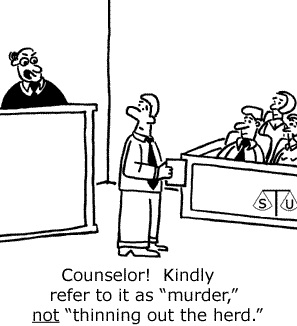
                                            <p class="text-body mb-0 mb-lg-3"> 'Euphemism' is a word or phrase that makes something sound better than it actually is. Euphemisms can be found in political speeches, advertsing campaigns or everyday conversation. For example, instead...</p>
                                        <div class="clearfix">
                        <span class="text-muted fs-sm float-end">
                            06 March 2012
                        </span>
                    </div>
                </div>
            </div>
        </div>
    </a>
    <a href="/englishalanglit/page/9788/equivocation" class="card text-body rounded-0 text-decoration-none" data-turbo-frame="_top" data-turbo="false">
        <div class="card-body">
            <div class="row align-items-start gx-3">
                <div class="col-4 col-lg-3">
                    <div class="rounded overflow-hidden hover-zoom hover-overlay">
        <img
            class="d-block w-100 height-150 object-cover"
            src="https://teacher-sites-storage.inthinking.net/ib/englishalanglit/images/equivocation.jpg"
            alt="Equivocation"
        >
    </div>

                </div>
                <div class="col-8 col-lg-9">
                                            <h6 class="text-accent">
                            Resources
                        </h6>
                                        <h5 class="fw-semibold text-primary mb-2 d-flex gap-1 align-items-end">
                        Equivocation
                                    

                    </h5>
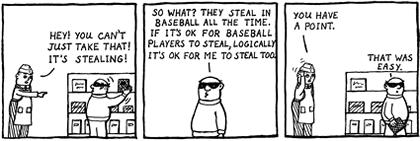
                                            <p class="text-body mb-0 mb-lg-3"> Equivocation is when a word is used in two different senses in an argument. Take for example the following syllogism: A hamburger is better than nothing Nothing is better than good health Therefore a...</p>
                                        <div class="clearfix">
                        <span class="text-muted fs-sm float-end">
                            06 March 2012
                        </span>
                    </div>
                </div>
            </div>
        </div>
    </a>
    <a href="/englishalanglit/page/3285/direct-speech" class="card text-body rounded-0 text-decoration-none" data-turbo-frame="_top" data-turbo="false">
        <div class="card-body">
            <div class="row align-items-start gx-3">
                <div class="col-4 col-lg-3">
                    <div class="rounded overflow-hidden hover-zoom hover-overlay">
        <img
            class="d-block w-100 height-150 object-cover"
            src="https://teacher-sites-storage.inthinking.net/ib/englishalanglit/images/iStock_000015563797XSmall.jpg"
            alt="Direct speech"
        >
    </div>

                </div>
                <div class="col-8 col-lg-9">
                                            <h6 class="text-accent">
                            Resources
                        </h6>
                                        <h5 class="fw-semibold text-primary mb-2 d-flex gap-1 align-items-end">
                        Direct speech
                                    

                    </h5>
                                            <p class="text-body mb-0 mb-lg-3"> There are several ways to tell a story. Writers can choose to let the characters do all of the talking or they can summarize what their characters say for the reader. The first case is known as direct...</p>
                                        <div class="clearfix">
                        <span class="text-muted fs-sm float-end">
                            06 March 2012
                        </span>
                    </div>
                </div>
            </div>
        </div>
    </a>
    <a href="/englishalanglit/page/3282/direct-narration" class="card text-body rounded-0 text-decoration-none" data-turbo-frame="_top" data-turbo="false">
        <div class="card-body">
            <div class="row align-items-start gx-3">
                <div class="col-4 col-lg-3">
                    <div class="rounded overflow-hidden hover-zoom hover-overlay">
        <img
            class="d-block w-100 height-150 object-cover"
            src="https://teacher-sites-storage.inthinking.net/ib/englishalanglit/images/iStock_000015563797XSmall.jpg"
            alt="Direct narration"
        >
    </div>

                </div>
                <div class="col-8 col-lg-9">
                                            <h6 class="text-accent">
                            Resources
                        </h6>
                                        <h5 class="fw-semibold text-primary mb-2 d-flex gap-1 align-items-end">
                        Direct narration
                                    

                    </h5>
                                            <p class="text-body mb-0 mb-lg-3"> Sometimes in works of fiction, the narrator seems to tell the reader what to think. Interpretations of the events and characters are made for the reader. Take for example this passage from Emma by Jane...</p>
                                        <div class="clearfix">
                        <span class="text-muted fs-sm float-end">
                            06 March 2012
                        </span>
                    </div>
                </div>
            </div>
        </div>
    </a>
    <a href="/englishalanglit/page/3009/dialect" class="card text-body rounded-0 text-decoration-none" data-turbo-frame="_top" data-turbo="false">
        <div class="card-body">
            <div class="row align-items-start gx-3">
                <div class="col-4 col-lg-3">
                    <div class="rounded overflow-hidden hover-zoom hover-overlay">
        <img
            class="d-block w-100 height-150 object-cover"
            src="https://teacher-sites-storage.inthinking.net/ib/englishalanglit/images/Aunt Jemima.jpg"
            alt="Dialect"
        >
    </div>

                </div>
                <div class="col-8 col-lg-9">
                                            <h6 class="text-accent">
                            Resources
                        </h6>
                                        <h5 class="fw-semibold text-primary mb-2 d-flex gap-1 align-items-end">
                        Dialect
                                    

                    </h5>
                                            <p class="text-body mb-0 mb-lg-3"> A dialect is a unique and distinguishable combination of vocabulary, pronunciation and syntax. Technically speaking from a linguistic perspective, the only difference between a language and a dialect...</p>
                                        <div class="clearfix">
                        <span class="text-muted fs-sm float-end">
                            06 March 2012
                        </span>
                    </div>
                </div>
            </div>
        </div>
    </a>
    <a href="/englishalanglit/page/9225/crowdsourcing" class="card text-body rounded-0 text-decoration-none" data-turbo-frame="_top" data-turbo="false">
        <div class="card-body">
            <div class="row align-items-start gx-3">
                <div class="col-4 col-lg-3">
                    <div class="rounded overflow-hidden hover-zoom hover-overlay">
        <img
            class="d-block w-100 height-150 object-cover"
            src="https://teacher-sites-storage.inthinking.net/ib/englishalanglit/images/crowdsourcing.jpg"
            alt="Crowdsourcing"
        >
    </div>

                </div>
                <div class="col-8 col-lg-9">
                                            <h6 class="text-accent">
                            Resources
                        </h6>
                                        <h5 class="fw-semibold text-primary mb-2 d-flex gap-1 align-items-end">
                        Crowdsourcing
                                    

                    </h5>
                                            <p class="text-body mb-0 mb-lg-3"> In a 2006 Wired Magazine article, Jeffo Howe defined 'crowdsourcing' the act of taking a job traditionally performed by a designated employee and outsourcing it to an undefined, generally large group...</p>
                                        <div class="clearfix">
                        <span class="text-muted fs-sm float-end">
                            06 March 2012
                        </span>
                    </div>
                </div>
            </div>
        </div>
    </a>


    </template>
</turbo-stream>

    <turbo-stream action="update" target="load-more">
        <template>
            <div class="d-flex justify-content-center my-3">
    <a href="/englishalanglit/latest-updates?page=146" class="btn btn-secondary loader">
        <i class="fa-regular fa-circle-plus"></i>
        Load more
    </a>
    <div class="spinner-border load-more text-primary" role="status">
        <span class="visually-hidden">Loading...</span>
    </div>
</div>

        </template>
    </turbo-stream>