<turbo-stream action="append" target="section-items">
    <template>
            <a href="/chemistry/page/44262/determining-the-pka-of-a-weak-acid" class="card text-body rounded-0 text-decoration-none" data-turbo-frame="_top" data-turbo="false">
        <div class="card-body">
            <div class="row align-items-start gx-3">
                <div class="col-4 col-lg-3">
                    <div class="rounded overflow-hidden hover-zoom hover-overlay">
        <img
            class="d-block w-100 height-150 object-cover"
            src="https://teacher-sites-storage.inthinking.net/ib/chemistry/images/1_13Using%20a%20pH%20meter(1).jpg"
            alt="Determining the p&lt;i&gt;K&lt;/i&gt;&lt;sub&gt;a&lt;/sub&gt; of a weak acid"
        >
    </div>

                </div>
                <div class="col-8 col-lg-9">
                                            <h6 class="text-accent">
                            Experimental programme & IA
                        </h6>
                                        <h5 class="fw-semibold text-primary mb-2 d-flex gap-1 align-items-end">
                        Determining the p<i>K</i><sub>a</sub> of a weak acid
                                    

                    </h5>
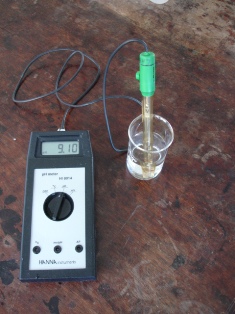
                                            <p class="text-body mb-0 mb-lg-3"> This Higher Level practical gives your students practice at determining the pKa of a weak acid by two different methods. This practical involves a strong acid - strong alkali titration using a pH probe...</p>
                                        <div class="clearfix">
                        <span class="text-muted fs-sm float-end">
                            27 April 2026
                        </span>
                    </div>
                </div>
            </div>
        </div>
    </a>
    <a href="/chemistry/page/44221/titrations-with-a-ph-meter" class="card text-body rounded-0 text-decoration-none" data-turbo-frame="_top" data-turbo="false">
        <div class="card-body">
            <div class="row align-items-start gx-3">
                <div class="col-4 col-lg-3">
                    <div class="rounded overflow-hidden hover-zoom hover-overlay">
        <img
            class="d-block w-100 height-150 object-cover"
            src="https://teacher-sites-storage.inthinking.net/ib/chemistry/images/Practicals/pH%20meter%20AC.jpg"
            alt="Titrations with a pH meter"
        >
    </div>

                </div>
                <div class="col-8 col-lg-9">
                                            <h6 class="text-accent">
                            Experimental programme & IA
                        </h6>
                                        <h5 class="fw-semibold text-primary mb-2 d-flex gap-1 align-items-end">
                        Titrations with a pH meter
                                    

                    </h5>
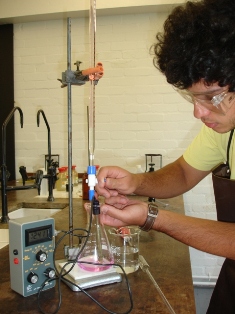
                                            <p class="text-body mb-0 mb-lg-3"> This practical gives students experience of using a pH meter to cover permutations of strong and weak acid titrations with strong and weak bases. It also lends itself well to data logging to record the...</p>
                                        <div class="clearfix">
                        <span class="text-muted fs-sm float-end">
                            27 April 2026
                        </span>
                    </div>
                </div>
            </div>
        </div>
    </a>
    <a href="/chemistry/page/44004/acid-alkali-titration" class="card text-body rounded-0 text-decoration-none" data-turbo-frame="_top" data-turbo="false">
        <div class="card-body">
            <div class="row align-items-start gx-3">
                <div class="col-4 col-lg-3">
                    <div class="rounded overflow-hidden hover-zoom hover-overlay">
        <img
            class="d-block w-100 height-150 object-cover"
            src="https://teacher-sites-storage.inthinking.net/ib/chemistry/images/2023-practicals/rhubarb-small.png?_t=1669614187"
            alt="Acid-alkali titration"
        >
    </div>

                </div>
                <div class="col-8 col-lg-9">
                                            <h6 class="text-accent">
                            Experimental programme & IA
                        </h6>
                                        <h5 class="fw-semibold text-primary mb-2 d-flex gap-1 align-items-end">
                        Acid-alkali titration
                                    

                    </h5>
                                            <p class="text-body mb-0 mb-lg-3"> This practical is a relatively straightforward acid-base titration problem to determine the amount  of water of crystallisation in crystals of ethane-1,2-dioic acid (commonly known as oxalic acid) which...</p>
                                        <div class="clearfix">
                        <span class="text-muted fs-sm float-end">
                            27 April 2026
                        </span>
                    </div>
                </div>
            </div>
        </div>
    </a>
    <a href="/chemistry/page/44222/determining-kc-for-an-esterification-reaction" class="card text-body rounded-0 text-decoration-none" data-turbo-frame="_top" data-turbo="false">
        <div class="card-body">
            <div class="row align-items-start gx-3">
                <div class="col-4 col-lg-3">
                    <div class="rounded overflow-hidden hover-zoom hover-overlay">
        <img
            class="d-block w-100 height-150 object-cover"
            src="https://teacher-sites-storage.inthinking.net/ib/chemistry/images/2023-practicals/reagent-bottles.png?_t=1669613273"
            alt="Determining &lt;i&gt;K&lt;/i&gt;&lt;sub&gt;c&lt;/sub&gt; for an esterification reaction"
        >
    </div>

                </div>
                <div class="col-8 col-lg-9">
                                            <h6 class="text-accent">
                            Experimental programme & IA
                        </h6>
                                        <h5 class="fw-semibold text-primary mb-2 d-flex gap-1 align-items-end">
                        Determining <i>K</i><sub>c</sub> for an esterification reaction
                                    

                    </h5>
                                            <p class="text-body mb-0 mb-lg-3"> This practical uses the method of titration to determine the value of the equilibrium constant for the esterification reaction between ethanol and ethanoic acid.  Although the reaction of alcohols with...</p>
                                        <div class="clearfix">
                        <span class="text-muted fs-sm float-end">
                            27 April 2026
                        </span>
                    </div>
                </div>
            </div>
        </div>
    </a>
    <a href="/chemistry/page/44107/le-chateliers-principle" class="card text-body rounded-0 text-decoration-none" data-turbo-frame="_top" data-turbo="false">
        <div class="card-body">
            <div class="row align-items-start gx-3">
                <div class="col-4 col-lg-3">
                    <div class="rounded overflow-hidden hover-zoom hover-overlay">
        <img
            class="d-block w-100 height-150 object-cover"
            src="https://teacher-sites-storage.inthinking.net/ib/chemistry/images/2023-practicals/le-chatelier.png?_t=1669390822"
            alt="Le Chatelier&#039;s principle"
        >
    </div>

                </div>
                <div class="col-8 col-lg-9">
                                            <h6 class="text-accent">
                            Experimental programme & IA
                        </h6>
                                        <h5 class="fw-semibold text-primary mb-2 d-flex gap-1 align-items-end">
                        Le Chatelier's principle
                                    

                    </h5>
                                            <p class="text-body mb-0 mb-lg-3"> This practical illustrates the principles of dynamic equilibrium using colour changes and also introduces students to microscale chemistry by using only one or two drops of each chemical solution. Using...</p>
                                        <div class="clearfix">
                        <span class="text-muted fs-sm float-end">
                            27 April 2026
                        </span>
                    </div>
                </div>
            </div>
        </div>
    </a>
    <a href="/chemistry/page/44057/determining-ea-for-a-reaction" class="card text-body rounded-0 text-decoration-none" data-turbo-frame="_top" data-turbo="false">
        <div class="card-body">
            <div class="row align-items-start gx-3">
                <div class="col-4 col-lg-3">
                    <div class="rounded overflow-hidden hover-zoom hover-overlay">
        <img
            class="d-block w-100 height-150 object-cover"
            src="https://teacher-sites-storage.inthinking.net/ib/chemistry/images/2023-practicals/cross-on-a-tile.png?_t=1669292777"
            alt="Determining &lt;i&gt;E&lt;/i&gt;&lt;sub&gt;a&lt;/sub&gt; for a reaction"
        >
    </div>

                </div>
                <div class="col-8 col-lg-9">
                                            <h6 class="text-accent">
                            Experimental programme & IA
                        </h6>
                                        <h5 class="fw-semibold text-primary mb-2 d-flex gap-1 align-items-end">
                        Determining <i>E</i><sub>a</sub> for a reaction
                                    

                    </h5>
                                            <p class="text-body mb-0 mb-lg-3"> This practical is a really neat extension of the “cross on a tile” experiment which enables Higher Level students to determine the activation energy for the reaction.  This is one of the few practicals...</p>
                                        <div class="clearfix">
                        <span class="text-muted fs-sm float-end">
                            27 April 2026
                        </span>
                    </div>
                </div>
            </div>
        </div>
    </a>
    <a href="/chemistry/page/44062/measuring-rate-of-reaction" class="card text-body rounded-0 text-decoration-none" data-turbo-frame="_top" data-turbo="false">
        <div class="card-body">
            <div class="row align-items-start gx-3">
                <div class="col-4 col-lg-3">
                    <div class="rounded overflow-hidden hover-zoom hover-overlay">
        <img
            class="d-block w-100 height-150 object-cover"
            src="https://teacher-sites-storage.inthinking.net/ib/chemistry/images/Core%20and%20AHL/Kinetics/Mass%20loss3.jpg"
            alt="Measuring rate of reaction"
        >
    </div>

                </div>
                <div class="col-8 col-lg-9">
                                            <h6 class="text-accent">
                            Experimental programme & IA
                        </h6>
                                        <h5 class="fw-semibold text-primary mb-2 d-flex gap-1 align-items-end">
                        Measuring rate of reaction
                                    

                    </h5>
                                            <p class="text-body mb-0 mb-lg-3"> The rate of the reaction between calcium carbonate and hydrochloric acid is followed by two different methods and the two methods are compared. One follows the loss in mass as carbon dioxide is evolved...</p>
                                        <div class="clearfix">
                        <span class="text-muted fs-sm float-end">
                            27 April 2026
                        </span>
                    </div>
                </div>
            </div>
        </div>
    </a>
    <a href="/chemistry/page/44063/rate-dependent-factors" class="card text-body rounded-0 text-decoration-none" data-turbo-frame="_top" data-turbo="false">
        <div class="card-body">
            <div class="row align-items-start gx-3">
                <div class="col-4 col-lg-3">
                    <div class="rounded overflow-hidden hover-zoom hover-overlay">
        <img
            class="d-block w-100 height-150 object-cover"
            src="https://teacher-sites-storage.inthinking.net/ib/chemistry/images/2023-practicals/cross-on-a-tile.png?_t=1669292777"
            alt="Rate-dependent factors"
        >
    </div>

                </div>
                <div class="col-8 col-lg-9">
                                            <h6 class="text-accent">
                            Experimental programme & IA
                        </h6>
                                        <h5 class="fw-semibold text-primary mb-2 d-flex gap-1 align-items-end">
                        Rate-dependent factors
                                    

                    </h5>
                                            <p class="text-body mb-0 mb-lg-3"> The “cross on a tile” experiment to show the reaction between thiosulfate ions and an acid is one of the classic high school chemistry experiments but it is well worth doing to illustrate how the rate...</p>
                                        <div class="clearfix">
                        <span class="text-muted fs-sm float-end">
                            27 April 2026
                        </span>
                    </div>
                </div>
            </div>
        </div>
    </a>
    <a href="/chemistry/page/44033/enthalpy-changes" class="card text-body rounded-0 text-decoration-none" data-turbo-frame="_top" data-turbo="false">
        <div class="card-body">
            <div class="row align-items-start gx-3">
                <div class="col-4 col-lg-3">
                    <div class="rounded overflow-hidden hover-zoom hover-overlay">
        <img
            class="d-block w-100 height-150 object-cover"
            src="https://teacher-sites-storage.inthinking.net/ib/chemistry/images/2023-practicals/polystyrene-cup-for-enthalpy.png?_t=1669291545"
            alt="Enthalpy changes"
        >
    </div>

                </div>
                <div class="col-8 col-lg-9">
                                            <h6 class="text-accent">
                            Experimental programme & IA
                        </h6>
                                        <h5 class="fw-semibold text-primary mb-2 d-flex gap-1 align-items-end">
                        Enthalpy changes
                                    

                    </h5>
                                            <p class="text-body mb-0 mb-lg-3"> This practical on enthalpy changes is in two parts. The first part records the increase in temperature of the reaction between zinc and copper(II) ions over time and the need for extrapolation. The second...</p>
                                        <div class="clearfix">
                        <span class="text-muted fs-sm float-end">
                            27 April 2026
                        </span>
                    </div>
                </div>
            </div>
        </div>
    </a>
    <a href="/chemistry/page/44179/preparation-of-nylon-66" class="card text-body rounded-0 text-decoration-none" data-turbo-frame="_top" data-turbo="false">
        <div class="card-body">
            <div class="row align-items-start gx-3">
                <div class="col-4 col-lg-3">
                    <div class="rounded overflow-hidden hover-zoom hover-overlay">
        <img
            class="d-block w-100 height-150 object-cover"
            src="https://teacher-sites-storage.inthinking.net/ib/chemistry/images/2023-snippet-headings/handson-snippets/nylon.png"
            alt="Preparation of nylon 6,6"
        >
    </div>

                </div>
                <div class="col-8 col-lg-9">
                                            <h6 class="text-accent">
                            Experimental programme & IA
                        </h6>
                                        <h5 class="fw-semibold text-primary mb-2 d-flex gap-1 align-items-end">
                        Preparation of nylon 6,6
                                    

                    </h5>
                                            <p class="text-body mb-0 mb-lg-3"> The preparation of nylon 6,6 is a fun practical to do and gives students hands-on experience of carrying out a polycondensation reaction (covered in AHL S2.4.6) and practice at writing relevant equations...</p>
                                        <div class="clearfix">
                        <span class="text-muted fs-sm float-end">
                            27 April 2026
                        </span>
                    </div>
                </div>
            </div>
        </div>
    </a>


    </template>
</turbo-stream>

    <turbo-stream action="update" target="load-more">
        <template>
            <div class="d-flex justify-content-center my-3">
    <a href="/chemistry/latest-updates?page=35" class="btn btn-secondary loader">
        <i class="fa-regular fa-circle-plus"></i>
        Load more
    </a>
    <div class="spinner-border load-more text-primary" role="status">
        <span class="visually-hidden">Loading...</span>
    </div>
</div>

        </template>
    </turbo-stream>