<turbo-stream action="append" target="section-items">
    <template>
            <a href="/chemistry/page/36321/s14-3-s15-avogadros-law-ideal-gases" class="card text-body rounded-0 text-decoration-none" data-turbo-frame="_top" data-turbo="false">
        <div class="card-body">
            <div class="row align-items-start gx-3">
                <div class="col-4 col-lg-3">
                    <div class="rounded overflow-hidden hover-zoom hover-overlay">
        <img
            class="d-block w-100 height-150 object-cover"
            src="https://teacher-sites-storage.inthinking.net/ib/chemistry/images/2023-topics/s1-particulate-nature-of-matter/screenshot-2022-10-06-at-10.53.00.png"
            alt="S1.4 (3) &amp; S1.5 Avogadro&#039;s law &amp; ideal gases"
        >
    </div>

                </div>
                <div class="col-8 col-lg-9">
                                            <h6 class="text-accent">
                            Delivering the programme
                        </h6>
                                        <h5 class="fw-semibold text-primary mb-2 d-flex gap-1 align-items-end">
                        S1.4 (3) & S1.5 Avogadro's law & ideal gases
                                    

                    </h5>
                                            <p class="text-body mb-0 mb-lg-3"> This third section on S1.4 also includes S1.5. and covers Avogadro's law which states that equal volumes of all gases at the same temperature and pressure contain the same number of molecules. This leads...</p>
                                        <div class="clearfix">
                        <span class="text-muted fs-sm float-end">
                            07 May 2026
                        </span>
                    </div>
                </div>
            </div>
        </div>
    </a>
    <a href="/chemistry/page/36318/s14-2-r21-concentration-amount-of-chemical-change" class="card text-body rounded-0 text-decoration-none" data-turbo-frame="_top" data-turbo="false">
        <div class="card-body">
            <div class="row align-items-start gx-3">
                <div class="col-4 col-lg-3">
                    <div class="rounded overflow-hidden hover-zoom hover-overlay">
        <img
            class="d-block w-100 height-150 object-cover"
            src="https://teacher-sites-storage.inthinking.net/ib/chemistry/images/2023-topics/s1-particulate-nature-of-matter/screenshot-2022-10-06-at-10.48.24.png"
            alt="S1.4 (2) &amp; R2.1 Concentration &amp; amount of chemical change"
        >
    </div>

                </div>
                <div class="col-8 col-lg-9">
                                            <h6 class="text-accent">
                            Delivering the programme
                        </h6>
                                        <h5 class="fw-semibold text-primary mb-2 d-flex gap-1 align-items-end">
                        S1.4 (2) & R2.1 Concentration & amount of chemical change
                                    

                    </h5>
                                            <p class="text-body mb-0 mb-lg-3"> This page covers molar concentrations (S1.4.5) but, rather than simply following the way the syllabus is laid out, it also includes some of the material covered in the Reactivity strand (R2.1) as students...</p>
                                        <div class="clearfix">
                        <span class="text-muted fs-sm float-end">
                            07 May 2026
                        </span>
                    </div>
                </div>
            </div>
        </div>
    </a>
    <a href="/chemistry/page/36305/s14-1-counting-particles-by-mass-the-mole" class="card text-body rounded-0 text-decoration-none" data-turbo-frame="_top" data-turbo="false">
        <div class="card-body">
            <div class="row align-items-start gx-3">
                <div class="col-4 col-lg-3">
                    <div class="rounded overflow-hidden hover-zoom hover-overlay">
        <img
            class="d-block w-100 height-150 object-cover"
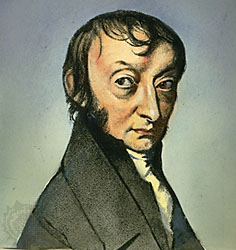
            src="https://teacher-sites-storage.inthinking.net/ib/chemistry/images/Core%20and%20AHL/Quantitative%20chemistry/Amedeo%20Avogadro.jpg"
            alt="S1.4 (1) Counting particles by mass: the mole"
        >
    </div>

                </div>
                <div class="col-8 col-lg-9">
                                            <h6 class="text-accent">
                            Delivering the programme
                        </h6>
                                        <h5 class="fw-semibold text-primary mb-2 d-flex gap-1 align-items-end">
                        S1.4 (1) Counting particles by mass: the mole
                                    

                    </h5>
                                            <p class="text-body mb-0 mb-lg-3"> This page covers the mole concept and Avogadro's constant, NA.  It includes relative atomic mass, Ar and relative formula mass Mr which leads to understanding and calculating emprical and molecular formulas...</p>
                                        <div class="clearfix">
                        <span class="text-muted fs-sm float-end">
                            07 May 2026
                        </span>
                    </div>
                </div>
            </div>
        </div>
    </a>
    <a href="/chemistry/page/36276/s13-s31-ahl-electron-configuration" class="card text-body rounded-0 text-decoration-none" data-turbo-frame="_top" data-turbo="false">
        <div class="card-body">
            <div class="row align-items-start gx-3">
                <div class="col-4 col-lg-3">
                    <div class="rounded overflow-hidden hover-zoom hover-overlay">
        <img
            class="d-block w-100 height-150 object-cover"
            src="https://teacher-sites-storage.inthinking.net/ib/chemistry/images/2023-topics/s1-particulate-nature-of-matter/screenshot-2022-10-06-at-10.39.58.png"
            alt="S1.3 &amp; S3.1 (AHL) Electron configuration"
        >
    </div>

                </div>
                <div class="col-8 col-lg-9">
                                            <h6 class="text-accent">
                            Delivering the programme
                        </h6>
                                        <h5 class="fw-semibold text-primary mb-2 d-flex gap-1 align-items-end">
                        S1.3 & S3.1 (AHL) Electron configuration
                                    

                    </h5>
                                            <p class="text-body mb-0 mb-lg-3"> This Higher Level section considers that the limit of convergence at higher frequency in an emission spectrum corresponds to ionization. From this the first ionization energy can be calculated, provided...</p>
                                        <div class="clearfix">
                        <span class="text-muted fs-sm float-end">
                            07 May 2026
                        </span>
                    </div>
                </div>
            </div>
        </div>
    </a>
    <a href="/chemistry/page/36268/s13-electron-configuration" class="card text-body rounded-0 text-decoration-none" data-turbo-frame="_top" data-turbo="false">
        <div class="card-body">
            <div class="row align-items-start gx-3">
                <div class="col-4 col-lg-3">
                    <div class="rounded overflow-hidden hover-zoom hover-overlay">
        <img
            class="d-block w-100 height-150 object-cover"
            src="https://teacher-sites-storage.inthinking.net/ib/chemistry/images/2023-topics/s1-particulate-nature-of-matter/screenshot-2022-10-06-at-10.35.10.png"
            alt="S1.3 Electron configuration"
        >
    </div>

                </div>
                <div class="col-8 col-lg-9">
                                            <h6 class="text-accent">
                            Delivering the programme
                        </h6>
                                        <h5 class="fw-semibold text-primary mb-2 d-flex gap-1 align-items-end">
                        S1.3 Electron configuration
                                    

                    </h5>
                                            <p class="text-body mb-0 mb-lg-3"> This section uses the evidence from emission spectra to explain how electrons are configured in energy levels around an atom. Each main energy level can hold a maximum of 2n2 electrons and is divided...</p>
                                        <div class="clearfix">
                        <span class="text-muted fs-sm float-end">
                            07 May 2026
                        </span>
                    </div>
                </div>
            </div>
        </div>
    </a>
    <a href="/chemistry/page/36232/s12-ahl-the-nuclear-atom" class="card text-body rounded-0 text-decoration-none" data-turbo-frame="_top" data-turbo="false">
        <div class="card-body">
            <div class="row align-items-start gx-3">
                <div class="col-4 col-lg-3">
                    <div class="rounded overflow-hidden hover-zoom hover-overlay">
        <img
            class="d-block w-100 height-150 object-cover"
            src="https://teacher-sites-storage.inthinking.net/ib/chemistry/images/2023-topics/s1-particulate-nature-of-matter/screenshot-2022-10-06-at-10.32.18.png"
            alt="S1.2 (AHL) The nuclear atom"
        >
    </div>

                </div>
                <div class="col-8 col-lg-9">
                                            <h6 class="text-accent">
                            Delivering the programme
                        </h6>
                                        <h5 class="fw-semibold text-primary mb-2 d-flex gap-1 align-items-end">
                        S1.2 (AHL) The nuclear atom
                                    

                    </h5>
                                            <p class="text-body mb-0 mb-lg-3"> This Higher Level page covers the use of mass spectrometry to determine the relative atomic masses of elements from their isotopic composition. It includes the basic principles of mass spectrometry but...</p>
                                        <div class="clearfix">
                        <span class="text-muted fs-sm float-end">
                            07 May 2026
                        </span>
                    </div>
                </div>
            </div>
        </div>
    </a>
    <a href="/chemistry/page/36223/s12-the-nuclear-atom" class="card text-body rounded-0 text-decoration-none" data-turbo-frame="_top" data-turbo="false">
        <div class="card-body">
            <div class="row align-items-start gx-3">
                <div class="col-4 col-lg-3">
                    <div class="rounded overflow-hidden hover-zoom hover-overlay">
        <img
            class="d-block w-100 height-150 object-cover"
            src="https://teacher-sites-storage.inthinking.net/ib/chemistry/images/student-learning/atom.png"
            alt="S1.2 The nuclear atom"
        >
    </div>

                </div>
                <div class="col-8 col-lg-9">
                                            <h6 class="text-accent">
                            Delivering the programme
                        </h6>
                                        <h5 class="fw-semibold text-primary mb-2 d-flex gap-1 align-items-end">
                        S1.2 The nuclear atom
                                    

                    </h5>
                                            <p class="text-body mb-0 mb-lg-3"> This section covers the three fundamental sub-atomic particles, protons and neutrons (which make up the nucleus) and electrons (which occupy the space outside of the nucleus) together with their mass...</p>
                                        <div class="clearfix">
                        <span class="text-muted fs-sm float-end">
                            07 May 2026
                        </span>
                    </div>
                </div>
            </div>
        </div>
    </a>
    <a href="/chemistry/page/40849/s11-introduction-to-the-particulate-nature-of-matter" class="card text-body rounded-0 text-decoration-none" data-turbo-frame="_top" data-turbo="false">
        <div class="card-body">
            <div class="row align-items-start gx-3">
                <div class="col-4 col-lg-3">
                    <div class="rounded overflow-hidden hover-zoom hover-overlay">
        <img
            class="d-block w-100 height-150 object-cover"
            src="https://teacher-sites-storage.inthinking.net/ib/chemistry/images/2023-topics/s1-particulate-nature-of-matter/distillation.png"
            alt="S1.1 Introduction to the particulate nature of matter"
        >
    </div>

                </div>
                <div class="col-8 col-lg-9">
                                            <h6 class="text-accent">
                            Delivering the programme
                        </h6>
                                        <h5 class="fw-semibold text-primary mb-2 d-flex gap-1 align-items-end">
                        S1.1 Introduction to the particulate nature of matter
                                    

                    </h5>
                                            <p class="text-body mb-0 mb-lg-3"> This page provides full coverage of the syllabus content of Topic S1.1 Introduction to the particulate nature of matter.  It encourages your students to think critically and provides many questions, all...</p>
                                        <div class="clearfix">
                        <span class="text-muted fs-sm float-end">
                            07 May 2026
                        </span>
                    </div>
                </div>
            </div>
        </div>
    </a>
    <a href="/chemistry/page/44563/tools-hl-2" class="card text-body rounded-0 text-decoration-none" data-turbo-frame="_top" data-turbo="false">
        <div class="card-body">
            <div class="row align-items-start gx-3">
                <div class="col-4 col-lg-3">
                    <div class="rounded overflow-hidden hover-zoom hover-overlay">
        <img
            class="d-block w-100 height-150 object-cover"
            src="https://teacher-sites-storage.inthinking.net/ib/chemistry/images/2023-multiple-choice-tests/hl-mc-topic-test.png"
            alt="Tools (HL) (2)"
        >
    </div>

                </div>
                <div class="col-8 col-lg-9">
                                            <h6 class="text-accent">
                            Assessment
                        </h6>
                                        <h5 class="fw-semibold text-primary mb-2 d-flex gap-1 align-items-end">
                        Tools (HL) (2)
                                    

                    </h5>
                                            <p class="text-body mb-0 mb-lg-3"> only: This second HL multiple choice test on Tools (2) contains 20 questions covering the content of this topic. Explanations as to why A, B, C or D is the best answer to each and every question are provided...</p>
                                        <div class="clearfix">
                        <span class="text-muted fs-sm float-end">
                            07 May 2026
                        </span>
                    </div>
                </div>
            </div>
        </div>
    </a>
    <a href="/chemistry/page/44562/tools-hl-1" class="card text-body rounded-0 text-decoration-none" data-turbo-frame="_top" data-turbo="false">
        <div class="card-body">
            <div class="row align-items-start gx-3">
                <div class="col-4 col-lg-3">
                    <div class="rounded overflow-hidden hover-zoom hover-overlay">
        <img
            class="d-block w-100 height-150 object-cover"
            src="https://teacher-sites-storage.inthinking.net/ib/chemistry/images/2023-multiple-choice-tests/hl-mc-topic-test.png"
            alt="Tools (HL) (1)"
        >
    </div>

                </div>
                <div class="col-8 col-lg-9">
                                            <h6 class="text-accent">
                            Assessment
                        </h6>
                                        <h5 class="fw-semibold text-primary mb-2 d-flex gap-1 align-items-end">
                        Tools (HL) (1)
                                    

                    </h5>
                                            <p class="text-body mb-0 mb-lg-3"> only: This first HL multiple choice test on Tools (1) contains 20 questions covering the content of this topic. Explanations as to why A, B, C or D is the best answer to each and every question are provided...</p>
                                        <div class="clearfix">
                        <span class="text-muted fs-sm float-end">
                            07 May 2026
                        </span>
                    </div>
                </div>
            </div>
        </div>
    </a>


    </template>
</turbo-stream>

    <turbo-stream action="update" target="load-more">
        <template>
            <div class="d-flex justify-content-center my-3">
    <a href="/chemistry/latest-updates?page=23" class="btn btn-secondary loader">
        <i class="fa-regular fa-circle-plus"></i>
        Load more
    </a>
    <div class="spinner-border load-more text-primary" role="status">
        <span class="visually-hidden">Loading...</span>
    </div>
</div>

        </template>
    </turbo-stream>