<turbo-stream action="append" target="section-items">
    <template>
            <a href="/chemistry/blog/24891/chemistry-question-bank-now-live" class="card text-body rounded-0 text-decoration-none" data-turbo-frame="_top" data-turbo="false">
        <div class="card-body">
            <div class="row align-items-start gx-3">
                <div class="col-4 col-lg-3">
                    <div class="rounded overflow-hidden hover-zoom hover-overlay">
        <img
            class="d-block w-100 height-150 object-cover"
            src="https://teacher-sites-storage.inthinking.net/ib/chemistry/images/2014-blog/qbank.png"
            alt="Chemistry question bank now live"
        >
    </div>

                </div>
                <div class="col-8 col-lg-9">
                                            <h6 class="text-accent">
                            Blog
                        </h6>
                                        <h5 class="fw-semibold text-primary mb-2 d-flex gap-1 align-items-end">
                        Chemistry question bank now live
                                                <span class='topic-heading-badge d-inline-flex align-items-center justify-content-center'>Free</span>

                    </h5>
                                            <p class="text-body mb-0 mb-lg-3"> The Chemistry question bank (qBank) is now up and running on this site.  Information on how to access it can be found in Using student access. It contains brand new multiple choice type questions and...</p>
                                        <div class="clearfix">
                        <span class="text-muted fs-sm float-end">
                            18 October 2017
                        </span>
                    </div>
                </div>
            </div>
        </div>
    </a>
    <a href="/chemistry/blog/24880/how-precious-metals-were-first-formed" class="card text-body rounded-0 text-decoration-none" data-turbo-frame="_top" data-turbo="false">
        <div class="card-body">
            <div class="row align-items-start gx-3">
                <div class="col-4 col-lg-3">
                    <div class="rounded overflow-hidden hover-zoom hover-overlay">
        <img
            class="d-block w-100 height-150 object-cover"
            src="https://teacher-sites-storage.inthinking.net/ib/chemistry/images/2014-blog/palladium.png"
            alt="How precious metals were first formed"
        >
    </div>

                </div>
                <div class="col-8 col-lg-9">
                                            <h6 class="text-accent">
                            Blog
                        </h6>
                                        <h5 class="fw-semibold text-primary mb-2 d-flex gap-1 align-items-end">
                        How precious metals were first formed
                                                <span class='topic-heading-badge d-inline-flex align-items-center justify-content-center'>Free</span>

                    </h5>
                                            <p class="text-body mb-0 mb-lg-3"> In the week when the price of the precious metal palladium reached $1000 per ounce it was interesting to see that the problem as to how precious metals such as gold, silver, platinum and palladium were...</p>
                                        <div class="clearfix">
                        <span class="text-muted fs-sm float-end">
                            16 October 2017
                        </span>
                    </div>
                </div>
            </div>
        </div>
    </a>
    <a href="/chemistry/page/24869/nucleic-acids-answers" class="card text-body rounded-0 text-decoration-none" data-turbo-frame="_top" data-turbo="false">
        <div class="card-body">
            <div class="row align-items-start gx-3">
                <div class="col-4 col-lg-3">
                    <div class="rounded overflow-hidden hover-zoom hover-overlay">
        <img
            class="d-block w-100 height-150 object-cover"
            src="https://teacher-sites-storage.inthinking.net/ib/chemistry/images/2014-Options/Option-B/H-bonding-in-base-pairs.jpg"
            alt="Nucleic acids answers"
        >
    </div>

                </div>
                <div class="col-8 col-lg-9">
                                            <h6 class="text-accent">
                            eBook
                        </h6>
                                        <h5 class="fw-semibold text-primary mb-2 d-flex gap-1 align-items-end">
                        Nucleic acids answers
                                    

                    </h5>
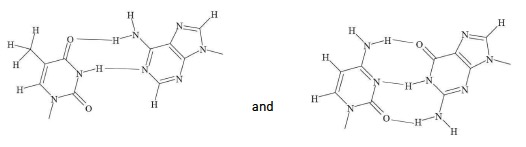
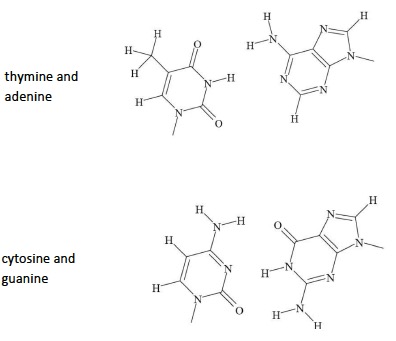
                                            <p class="text-body mb-0 mb-lg-3"> 1. (a) Hydrogen bonding (b) Show two bonds between thymine and adenine and three bonds between cytosine and guanine in the correct positions.  (c) A sugar (deoxyribose) and a phosphate group. (d) The...</p>
                                        <div class="clearfix">
                        <span class="text-muted fs-sm float-end">
                            16 October 2017
                        </span>
                    </div>
                </div>
            </div>
        </div>
    </a>
    <a href="/chemistry/page/19373/stereochemistry-in-biomolecules-questions" class="card text-body rounded-0 text-decoration-none" data-turbo-frame="_top" data-turbo="false">
        <div class="card-body">
            <div class="row align-items-start gx-3">
                <div class="col-4 col-lg-3">
                    <div class="rounded overflow-hidden hover-zoom hover-overlay">
        <img
            class="d-block w-100 height-150 object-cover"
            src="https://teacher-sites-storage.inthinking.net/ib/chemistry/images/2014-Options/Option-B/beta-D-fructoses.jpg"
            alt="Stereochemistry in biomolecules questions"
        >
    </div>

                </div>
                <div class="col-8 col-lg-9">
                                            <h6 class="text-accent">
                            eBook
                        </h6>
                                        <h5 class="fw-semibold text-primary mb-2 d-flex gap-1 align-items-end">
                        Stereochemistry in biomolecules questions
                                    

                    </h5>
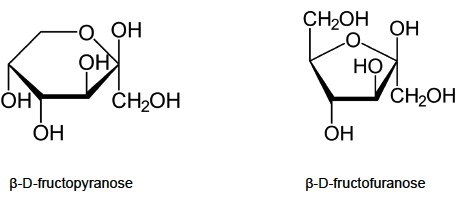
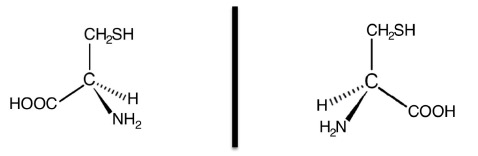
                                            <p class="text-body mb-0 mb-lg-3"> 1. (a) Draw 3-D representations of the two enantiomers of cysteine that show clearly that they are mirror images of each other. (b) Identify, with a reason, which of the two configurations you have drawn...</p>
                                        <div class="clearfix">
                        <span class="text-muted fs-sm float-end">
                            16 October 2017
                        </span>
                    </div>
                </div>
            </div>
        </div>
    </a>
    <a href="/chemistry/page/24871/stereochemistry-in-biomolecules-answers" class="card text-body rounded-0 text-decoration-none" data-turbo-frame="_top" data-turbo="false">
        <div class="card-body">
            <div class="row align-items-start gx-3">
                <div class="col-4 col-lg-3">
                    <div class="rounded overflow-hidden hover-zoom hover-overlay">
        <img
            class="d-block w-100 height-150 object-cover"
            src="https://teacher-sites-storage.inthinking.net/ib/chemistry/images/2014-Options/Option-B/Enantiomers-of-cysteine.jpg"
            alt="Stereochemistry in biomolecules answers"
        >
    </div>

                </div>
                <div class="col-8 col-lg-9">
                                            <h6 class="text-accent">
                            eBook
                        </h6>
                                        <h5 class="fw-semibold text-primary mb-2 d-flex gap-1 align-items-end">
                        Stereochemistry in biomolecules answers
                                    

                    </h5>
                                            <p class="text-body mb-0 mb-lg-3"> 1. (a)  (b) The one on the left is the D- isomer and the one of the right, the L-configuration, is the one that occurs in proteins. (c) Glycine (0), isoleucine (2), threonine (2) 2. (a) Cis/trans isomerisation...</p>
                                        <div class="clearfix">
                        <span class="text-muted fs-sm float-end">
                            16 October 2017
                        </span>
                    </div>
                </div>
            </div>
        </div>
    </a>
    <a href="/chemistry/page/19365/biological-pigments-questions" class="card text-body rounded-0 text-decoration-none" data-turbo-frame="_top" data-turbo="false">
        <div class="card-body">
            <div class="row align-items-start gx-3">
                <div class="col-4 col-lg-3">
                    <div class="rounded overflow-hidden hover-zoom hover-overlay">
        <img
            class="d-block w-100 height-150 object-cover"
            src="https://teacher-sites-storage.inthinking.net/ib/chemistry/images/2014-Options/Option-B/conjugated-cyanodin.jpg"
            alt="Biological pigments questions"
        >
    </div>

                </div>
                <div class="col-8 col-lg-9">
                                            <h6 class="text-accent">
                            eBook
                        </h6>
                                        <h5 class="fw-semibold text-primary mb-2 d-flex gap-1 align-items-end">
                        Biological pigments questions
                                    

                    </h5>
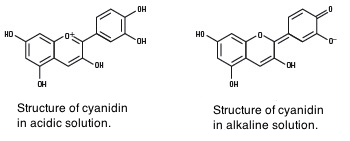
                                            <p class="text-body mb-0 mb-lg-3"> 1. Cyanidin is an anthocyanin found in berries and other fruits. The diagram below shows the structure of cyanidin in acidic solution and in alkaline solution.  (a) Explain why cyanidin is coloured in...</p>
                                        <div class="clearfix">
                        <span class="text-muted fs-sm float-end">
                            16 October 2017
                        </span>
                    </div>
                </div>
            </div>
        </div>
    </a>
    <a href="/chemistry/page/24870/biological-pigments-answers" class="card text-body rounded-0 text-decoration-none" data-turbo-frame="_top" data-turbo="false">
        <div class="card-body">
            <div class="row align-items-start gx-3">
                <div class="col-4 col-lg-3">
                    <div class="rounded overflow-hidden hover-zoom hover-overlay">
        <img
            class="d-block w-100 height-150 object-cover"
            src="https://teacher-sites-storage.inthinking.net/subject/generic/3/01.jpg?v=1790338359"
            alt="Biological pigments answers"
        >
    </div>

                </div>
                <div class="col-8 col-lg-9">
                                            <h6 class="text-accent">
                            eBook
                        </h6>
                                        <h5 class="fw-semibold text-primary mb-2 d-flex gap-1 align-items-end">
                        Biological pigments answers
                                    

                    </h5>
                                            <p class="text-body mb-0 mb-lg-3"> 1. (a) In both acidic and alkaline solution cyanidin contains extensive conjugation. The delocalised pi electrons absorbs energy in the visible region of the spectrum as they are excited (to an empty...</p>
                                        <div class="clearfix">
                        <span class="text-muted fs-sm float-end">
                            16 October 2017
                        </span>
                    </div>
                </div>
            </div>
        </div>
    </a>
    <a href="/chemistry/page/19360/nucleic-acids-questions" class="card text-body rounded-0 text-decoration-none" data-turbo-frame="_top" data-turbo="false">
        <div class="card-body">
            <div class="row align-items-start gx-3">
                <div class="col-4 col-lg-3">
                    <div class="rounded overflow-hidden hover-zoom hover-overlay">
        <img
            class="d-block w-100 height-150 object-cover"
            src="https://teacher-sites-storage.inthinking.net/ib/chemistry/images/2014-Options/Option-B/base-pairs.jpg"
            alt="Nucleic acids questions"
        >
    </div>

                </div>
                <div class="col-8 col-lg-9">
                                            <h6 class="text-accent">
                            eBook
                        </h6>
                                        <h5 class="fw-semibold text-primary mb-2 d-flex gap-1 align-items-end">
                        Nucleic acids questions
                                    

                    </h5>
                                            <p class="text-body mb-0 mb-lg-3"> 1. Two strands of nucleotides bond together to form the double helix structure of DNA. This bonding is caused by the pairing of particular nitrogen-containing bases. The diagram shows the two different...</p>
                                        <div class="clearfix">
                        <span class="text-muted fs-sm float-end">
                            16 October 2017
                        </span>
                    </div>
                </div>
            </div>
        </div>
    </a>
    <a href="/chemistry/page/19341/proteins-enzymes-hl-questions" class="card text-body rounded-0 text-decoration-none" data-turbo-frame="_top" data-turbo="false">
        <div class="card-body">
            <div class="row align-items-start gx-3">
                <div class="col-4 col-lg-3">
                    <div class="rounded overflow-hidden hover-zoom hover-overlay">
        <img
            class="d-block w-100 height-150 object-cover"
            src="https://teacher-sites-storage.inthinking.net/ib/chemistry/images/2014-Options/Option-B/enzyme-kinetics-graph-copy.jpg"
            alt="Proteins &amp; enzymes (HL) questions"
        >
    </div>

                </div>
                <div class="col-8 col-lg-9">
                                            <h6 class="text-accent">
                            eBook
                        </h6>
                                        <h5 class="fw-semibold text-primary mb-2 d-flex gap-1 align-items-end">
                        Proteins & enzymes (HL) questions
                                    

                    </h5>
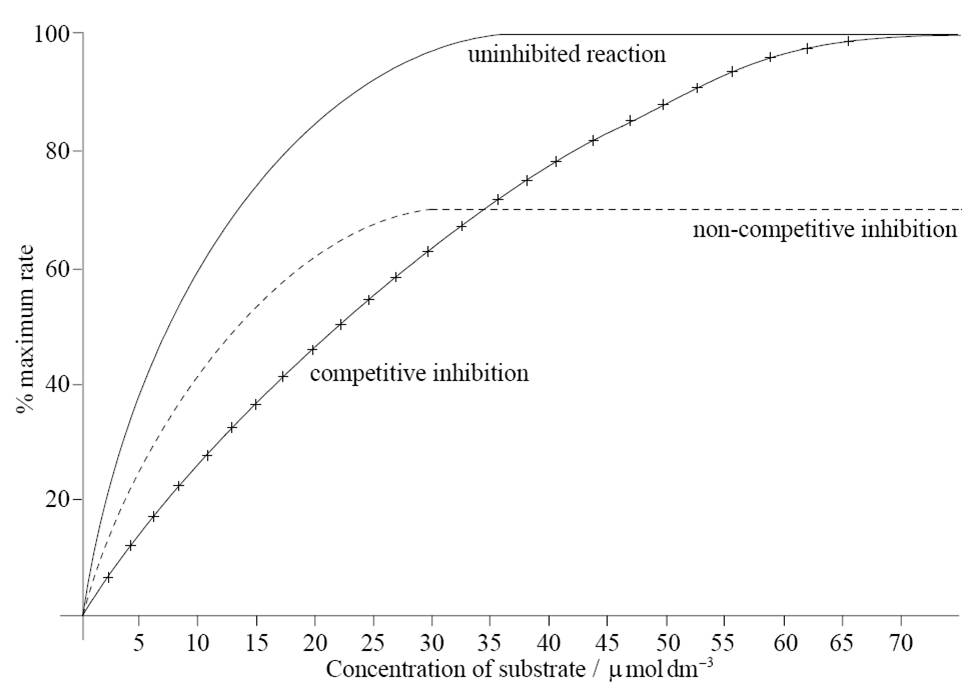
                                            <p class="text-body mb-0 mb-lg-3"> 1. The graph below shows how the rate of an enzyme-catalysed reaction varies with the concentration of substrate when there is no inhibitor present, when there is a competitive inhibitor present and in...</p>
                                        <div class="clearfix">
                        <span class="text-muted fs-sm float-end">
                            16 October 2017
                        </span>
                    </div>
                </div>
            </div>
        </div>
    </a>
    <a href="/chemistry/page/19335/biochemistry-the-environment-questions" class="card text-body rounded-0 text-decoration-none" data-turbo-frame="_top" data-turbo="false">
        <div class="card-body">
            <div class="row align-items-start gx-3">
                <div class="col-4 col-lg-3">
                    <div class="rounded overflow-hidden hover-zoom hover-overlay">
        <img
            class="d-block w-100 height-150 object-cover"
            src="https://teacher-sites-storage.inthinking.net/ib/chemistry/images/2014-Options/Option-B/DDT.png"
            alt="Biochemistry &amp; the environment questions"
        >
    </div>

                </div>
                <div class="col-8 col-lg-9">
                                            <h6 class="text-accent">
                            eBook
                        </h6>
                                        <h5 class="fw-semibold text-primary mb-2 d-flex gap-1 align-items-end">
                        Biochemistry & the environment questions
                                    

                    </h5>
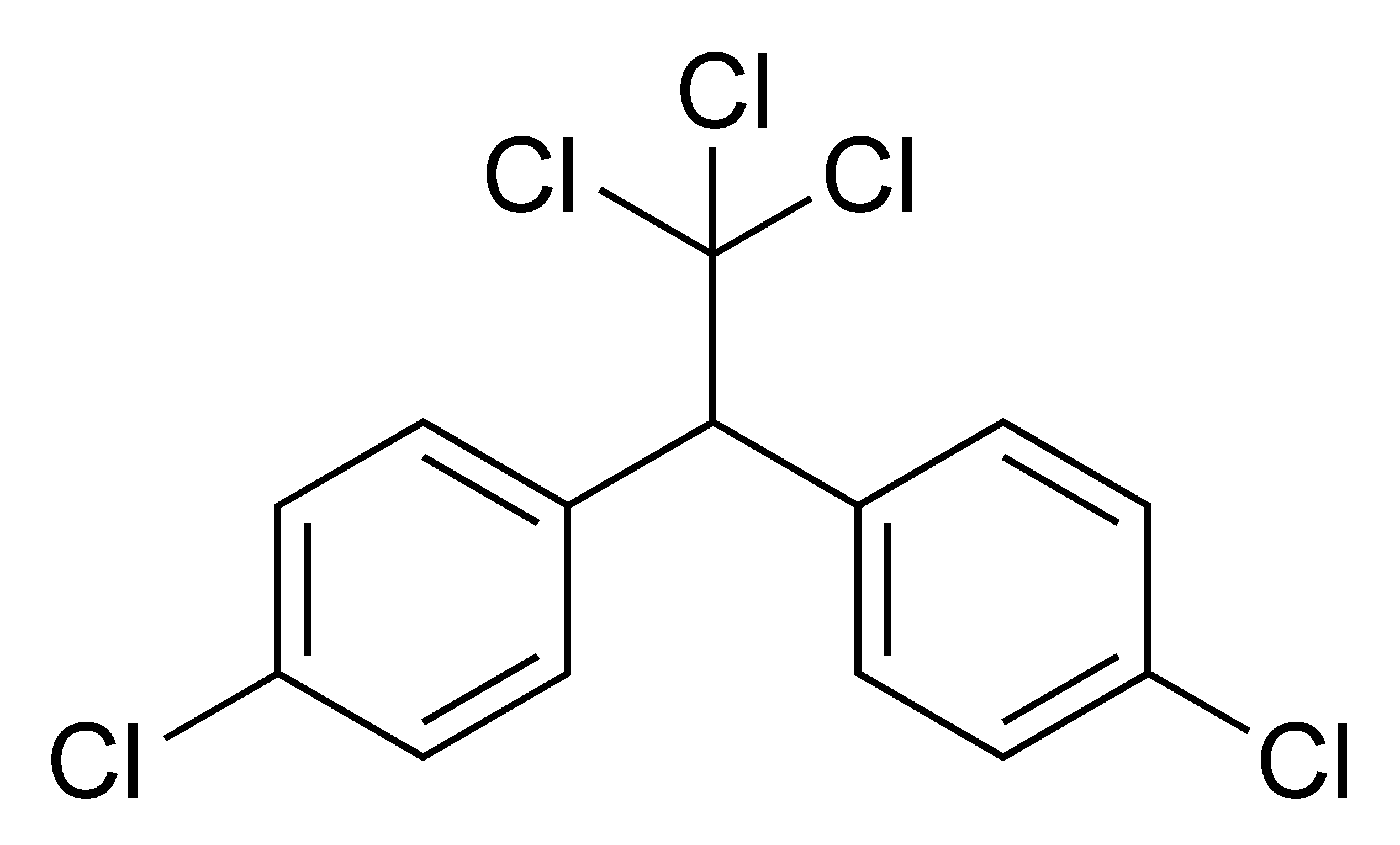
                                            <p class="text-body mb-0 mb-lg-3"> 1. DDT was used extensively as an insecticide against malaria until its use was banned in many countries. One of the reasons for the ban was the effect it had on wildlife – particularly certain birds...</p>
                                        <div class="clearfix">
                        <span class="text-muted fs-sm float-end">
                            16 October 2017
                        </span>
                    </div>
                </div>
            </div>
        </div>
    </a>


    </template>
</turbo-stream>

    <turbo-stream action="update" target="load-more">
        <template>
            <div class="d-flex justify-content-center my-3">
    <a href="/chemistry/latest-updates?page=109" class="btn btn-secondary loader">
        <i class="fa-regular fa-circle-plus"></i>
        Load more
    </a>
    <div class="spinner-border load-more text-primary" role="status">
        <span class="visually-hidden">Loading...</span>
    </div>
</div>

        </template>
    </turbo-stream>