<turbo-stream action="append" target="section-items">
    <template>
            <a href="/chemistry/page/19390/option-c" class="card text-body rounded-0 text-decoration-none" data-turbo-frame="_top" data-turbo="false">
        <div class="card-body">
            <div class="row align-items-start gx-3">
                <div class="col-4 col-lg-3">
                    <div class="rounded overflow-hidden hover-zoom hover-overlay">
        <img
            class="d-block w-100 height-150 object-cover"
            src="https://teacher-sites-storage.inthinking.net/ib/chemistry/images/2014-Options/Option-C/Future-Energy-Solutions-(1).jpg"
            alt="Option C"
        >
    </div>

                </div>
                <div class="col-8 col-lg-9">
                                            <h6 class="text-accent">
                            eBook
                        </h6>
                                        <h5 class="fw-semibold text-primary mb-2 d-flex gap-1 align-items-end">
                        Option C
                                    

                    </h5>
                                            <p class="text-body mb-0 mb-lg-3"> Energy was one of the old SL Applied Chemistry options. When Applied Chemistry became subsumed into Chemistry it became Fuels and Energy and then completely disappeared as an option for the 2007 programme...</p>
                                        <div class="clearfix">
                        <span class="text-muted fs-sm float-end">
                            06 October 2018
                        </span>
                    </div>
                </div>
            </div>
        </div>
    </a>
    <a href="/chemistry/page/19284/option-b" class="card text-body rounded-0 text-decoration-none" data-turbo-frame="_top" data-turbo="false">
        <div class="card-body">
            <div class="row align-items-start gx-3">
                <div class="col-4 col-lg-3">
                    <div class="rounded overflow-hidden hover-zoom hover-overlay">
        <img
            class="d-block w-100 height-150 object-cover"
            src="https://teacher-sites-storage.inthinking.net/ib/chemistry/images/Options/dna.jpg"
            alt="Option B"
        >
    </div>

                </div>
                <div class="col-8 col-lg-9">
                                            <h6 class="text-accent">
                            eBook
                        </h6>
                                        <h5 class="fw-semibold text-primary mb-2 d-flex gap-1 align-items-end">
                        Option B
                                    

                    </h5>
                                            <p class="text-body mb-0 mb-lg-3"> Teenagers have a natural curiosity about who they are and how their body functions. They want to know the answers to questions like, ‘How is light converted into electrical signals in the eye?’, ‘Why...</p>
                                        <div class="clearfix">
                        <span class="text-muted fs-sm float-end">
                            06 October 2018
                        </span>
                    </div>
                </div>
            </div>
        </div>
    </a>
    <a href="/chemistry/blog/27440/applying-ib-chemistry-to-a-diet-pill" class="card text-body rounded-0 text-decoration-none" data-turbo-frame="_top" data-turbo="false">
        <div class="card-body">
            <div class="row align-items-start gx-3">
                <div class="col-4 col-lg-3">
                    <div class="rounded overflow-hidden hover-zoom hover-overlay">
        <img
            class="d-block w-100 height-150 object-cover"
            src="https://teacher-sites-storage.inthinking.net/ib/chemistry/images/blog/obesity.png"
            alt="Applying IB chemistry to a diet pill"
        >
    </div>

                </div>
                <div class="col-8 col-lg-9">
                                            <h6 class="text-accent">
                            Blog
                        </h6>
                                        <h5 class="fw-semibold text-primary mb-2 d-flex gap-1 align-items-end">
                        Applying IB chemistry to a diet pill
                                                <span class='topic-heading-badge d-inline-flex align-items-center justify-content-center'>Free</span>

                    </h5>
                                            <p class="text-body mb-0 mb-lg-3"> One of the reasons why life expectancy is starting to fall in certain parts of the world is the increase in obesity.  The number of overweight and obese people worldwide has increased from 857 million...</p>
                                        <div class="clearfix">
                        <span class="text-muted fs-sm float-end">
                            23 September 2018
                        </span>
                    </div>
                </div>
            </div>
        </div>
    </a>
    <a href="/chemistry/blog/27078/is-my-own-hand-rub-still-safe-to-use" class="card text-body rounded-0 text-decoration-none" data-turbo-frame="_top" data-turbo="false">
        <div class="card-body">
            <div class="row align-items-start gx-3">
                <div class="col-4 col-lg-3">
                    <div class="rounded overflow-hidden hover-zoom hover-overlay">
        <img
            class="d-block w-100 height-150 object-cover"
            src="https://teacher-sites-storage.inthinking.net/ib/chemistry/images/2014-blog/my-handrub-2.png"
            alt="Is my own hand rub still safe to use?"
        >
    </div>

                </div>
                <div class="col-8 col-lg-9">
                                            <h6 class="text-accent">
                            Blog
                        </h6>
                                        <h5 class="fw-semibold text-primary mb-2 d-flex gap-1 align-items-end">
                        Is my own hand rub still safe to use?
                                                <span class='topic-heading-badge d-inline-flex align-items-center justify-content-center'>Free</span>

                    </h5>
                                            <p class="text-body mb-0 mb-lg-3"> One of the topics covered in Option D: Medicinal chemistry is antibiotic resistance. This occurs when micro-organisms become resistant to antibacterials. There is considerable concern in many parts of...</p>
                                        <div class="clearfix">
                        <span class="text-muted fs-sm float-end">
                            08 August 2018
                        </span>
                    </div>
                </div>
            </div>
        </div>
    </a>
    <a href="/chemistry/page/26058/superconducting-metals-x-ray-crystallography-answers" class="card text-body rounded-0 text-decoration-none" data-turbo-frame="_top" data-turbo="false">
        <div class="card-body">
            <div class="row align-items-start gx-3">
                <div class="col-4 col-lg-3">
                    <div class="rounded overflow-hidden hover-zoom hover-overlay">
        <img
            class="d-block w-100 height-150 object-cover"
            src="https://teacher-sites-storage.inthinking.net/subject/generic/3/02.jpg?v=1790338359"
            alt="Superconducting metals &amp; X-ray crystallography answers"
        >
    </div>

                </div>
                <div class="col-8 col-lg-9">
                                            <h6 class="text-accent">
                            eBook
                        </h6>
                                        <h5 class="fw-semibold text-primary mb-2 d-flex gap-1 align-items-end">
                        Superconducting metals & X-ray crystallography answers
                                    

                    </h5>
                                            <p class="text-body mb-0 mb-lg-3"> Answers to Superconducting metals & X-ray crystallography questions. 1. (a) i. The number of closest neighbouring atoms surrounding each atom.ii. The number of coordinate bonds formed by the ligand(s)...</p>
                                        <div class="clearfix">
                        <span class="text-muted fs-sm float-end">
                            30 July 2018
                        </span>
                    </div>
                </div>
            </div>
        </div>
    </a>
    <a href="/chemistry/blog/26698/ai-deduces-the-periodic-table" class="card text-body rounded-0 text-decoration-none" data-turbo-frame="_top" data-turbo="false">
        <div class="card-body">
            <div class="row align-items-start gx-3">
                <div class="col-4 col-lg-3">
                    <div class="rounded overflow-hidden hover-zoom hover-overlay">
        <img
            class="d-block w-100 height-150 object-cover"
            src="https://teacher-sites-storage.inthinking.net/ib/chemistry/images/2014-blog/periodic-table-ai.png"
            alt="AI deduces the periodic table"
        >
    </div>

                </div>
                <div class="col-8 col-lg-9">
                                            <h6 class="text-accent">
                            Blog
                        </h6>
                                        <h5 class="fw-semibold text-primary mb-2 d-flex gap-1 align-items-end">
                        AI deduces the periodic table
                                                <span class='topic-heading-badge d-inline-flex align-items-center justify-content-center'>Free</span>

                    </h5>
                                            <p class="text-body mb-0 mb-lg-3"> There is an interesting report from Professor Shoucheng Zhang, a professor of physics at Stanford University which claims that he has used artificial intelligence to recreate the periodic table.  Zhang's...</p>
                                        <div class="clearfix">
                        <span class="text-muted fs-sm float-end">
                            26 June 2018
                        </span>
                    </div>
                </div>
            </div>
        </div>
    </a>
    <a href="/chemistry/page/24865/vitamins-answers" class="card text-body rounded-0 text-decoration-none" data-turbo-frame="_top" data-turbo="false">
        <div class="card-body">
            <div class="row align-items-start gx-3">
                <div class="col-4 col-lg-3">
                    <div class="rounded overflow-hidden hover-zoom hover-overlay">
        <img
            class="d-block w-100 height-150 object-cover"
            src="https://teacher-sites-storage.inthinking.net/ib/chemistry/images/2014-Options/Option-B/vitamins-answers.jpg"
            alt="Vitamins answers"
        >
    </div>

                </div>
                <div class="col-8 col-lg-9">
                                            <h6 class="text-accent">
                            eBook
                        </h6>
                                        <h5 class="fw-semibold text-primary mb-2 d-flex gap-1 align-items-end">
                        Vitamins answers
                                    

                    </h5>
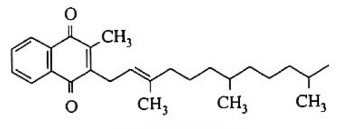
                                            <p class="text-body mb-0 mb-lg-3"> 1. Vitamin K1 is a large non-polar hydrocarbon molecule so will be fat-soluble as it can form London dispersion forces of attractions to non-polar lipids. Because it is non-polar it will be water-insoluble....</p>
                                        <div class="clearfix">
                        <span class="text-muted fs-sm float-end">
                            16 April 2018
                        </span>
                    </div>
                </div>
            </div>
        </div>
    </a>
    <a href="/chemistry/page/19410/vitamins-questions" class="card text-body rounded-0 text-decoration-none" data-turbo-frame="_top" data-turbo="false">
        <div class="card-body">
            <div class="row align-items-start gx-3">
                <div class="col-4 col-lg-3">
                    <div class="rounded overflow-hidden hover-zoom hover-overlay">
        <img
            class="d-block w-100 height-150 object-cover"
            src="https://teacher-sites-storage.inthinking.net/ib/chemistry/images/2014-Options/Option-B/vitamin-K.jpg"
            alt="Vitamins questions"
        >
    </div>

                </div>
                <div class="col-8 col-lg-9">
                                            <h6 class="text-accent">
                            eBook
                        </h6>
                                        <h5 class="fw-semibold text-primary mb-2 d-flex gap-1 align-items-end">
                        Vitamins questions
                                    

                    </h5>
                                            <p class="text-body mb-0 mb-lg-3"> 1. Vitamin K is the name given to a particular group of vitamins. They are found mainly in leafy green vegetables such as spinach, broccoli and cabbage. Vitamin K1 has the chemical name phylloquinone....</p>
                                        <div class="clearfix">
                        <span class="text-muted fs-sm float-end">
                            16 April 2018
                        </span>
                    </div>
                </div>
            </div>
        </div>
    </a>
    <a href="/chemistry/blog/26141/when-were-elements-discovered" class="card text-body rounded-0 text-decoration-none" data-turbo-frame="_top" data-turbo="false">
        <div class="card-body">
            <div class="row align-items-start gx-3">
                <div class="col-4 col-lg-3">
                    <div class="rounded overflow-hidden hover-zoom hover-overlay">
        <img
            class="d-block w-100 height-150 object-cover"
            src="https://teacher-sites-storage.inthinking.net/ib/chemistry/images/2014-blog/the-discovery-of-electrolysis-2.png"
            alt="When were elements discovered?"
        >
    </div>

                </div>
                <div class="col-8 col-lg-9">
                                            <h6 class="text-accent">
                            Blog
                        </h6>
                                        <h5 class="fw-semibold text-primary mb-2 d-flex gap-1 align-items-end">
                        When were elements discovered?
                                                <span class='topic-heading-badge d-inline-flex align-items-center justify-content-center'>Free</span>

                    </h5>
                                            <p class="text-body mb-0 mb-lg-3"> There are many links on the IB chemistry syllabus that relate to when elements were discovered. Probably the most important one is Topic 3.1 The periodic table. One of the reasons why Mendeleyev was able...</p>
                                        <div class="clearfix">
                        <span class="text-muted fs-sm float-end">
                            12 April 2018
                        </span>
                    </div>
                </div>
            </div>
        </div>
    </a>
    <a href="/chemistry/page/25638/taxol-answers" class="card text-body rounded-0 text-decoration-none" data-turbo-frame="_top" data-turbo="false">
        <div class="card-body">
            <div class="row align-items-start gx-3">
                <div class="col-4 col-lg-3">
                    <div class="rounded overflow-hidden hover-zoom hover-overlay">
        <img
            class="d-block w-100 height-150 object-cover"
            src="https://teacher-sites-storage.inthinking.net/ib/chemistry/images/2014-Options/Option-D/Taxol-structure-with-eleven-asterisks.png"
            alt="Taxol answers"
        >
    </div>

                </div>
                <div class="col-8 col-lg-9">
                                            <h6 class="text-accent">
                            eBook
                        </h6>
                                        <h5 class="fw-semibold text-primary mb-2 d-flex gap-1 align-items-end">
                        Taxol answers
                                    

                    </h5>
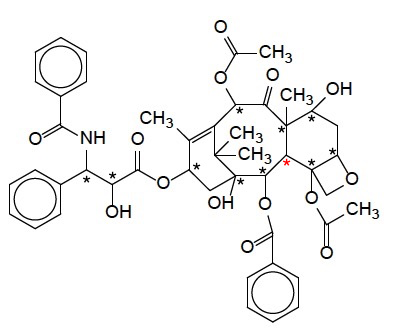
                                            <p class="text-body mb-0 mb-lg-3"> Answers to Taxol questions   1.  2. (a) The phenyl group and the hydroxyl group lie on opposite sides of the plane (in the enantiomer shown in the question the phenyl group is above the plane and the...</p>
                                        <div class="clearfix">
                        <span class="text-muted fs-sm float-end">
                            12 April 2018
                        </span>
                    </div>
                </div>
            </div>
        </div>
    </a>


    </template>
</turbo-stream>

    <turbo-stream action="update" target="load-more">
        <template>
            <div class="d-flex justify-content-center my-3">
    <a href="/chemistry/latest-updates?page=104" class="btn btn-secondary loader">
        <i class="fa-regular fa-circle-plus"></i>
        Load more
    </a>
    <div class="spinner-border load-more text-primary" role="status">
        <span class="visually-hidden">Loading...</span>
    </div>
</div>

        </template>
    </turbo-stream>